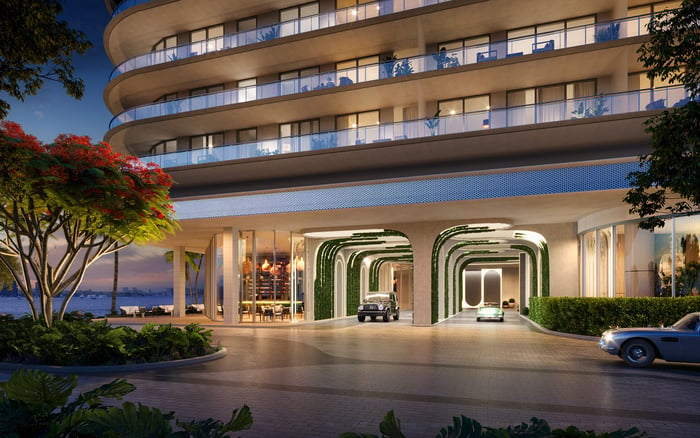
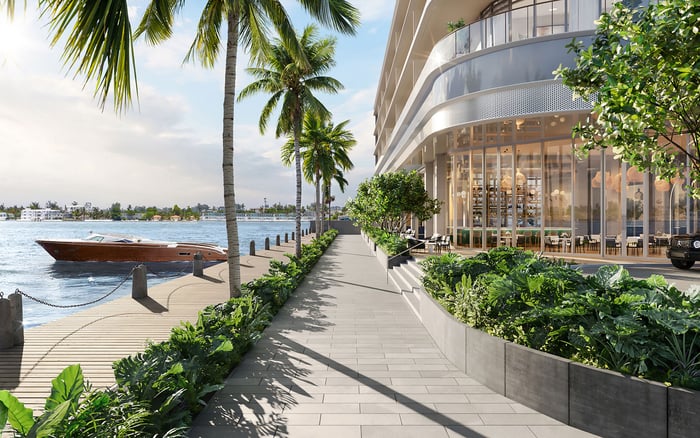
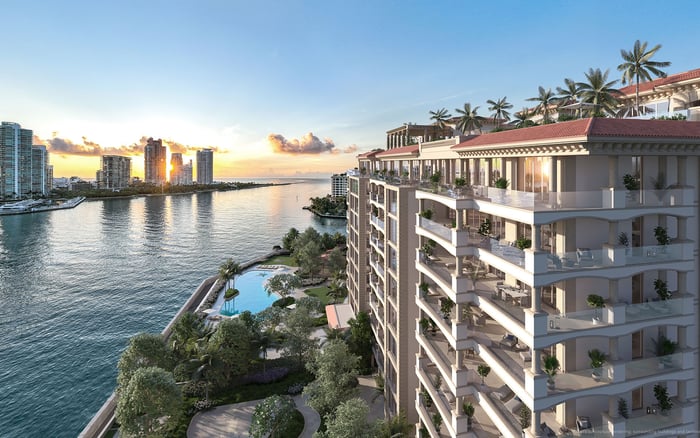
South Florida’s next chapter in luxury real estate is being written by constraints: limited land, stronger coastal rules, tighter approval timelines, and climate risk that is increasingly priced in. For buyers, that shifts the definition of a “prime” address from simple proximity to water to a more nuanced mix of elevation, building quality, governance, and long-term resilience. This editorial frames the market forces pushing Miami-Dade and the broader region toward infill and vertical construction, why trophy waterfront still commands premiums, and where sophisticated buyers are focusing their due diligence.
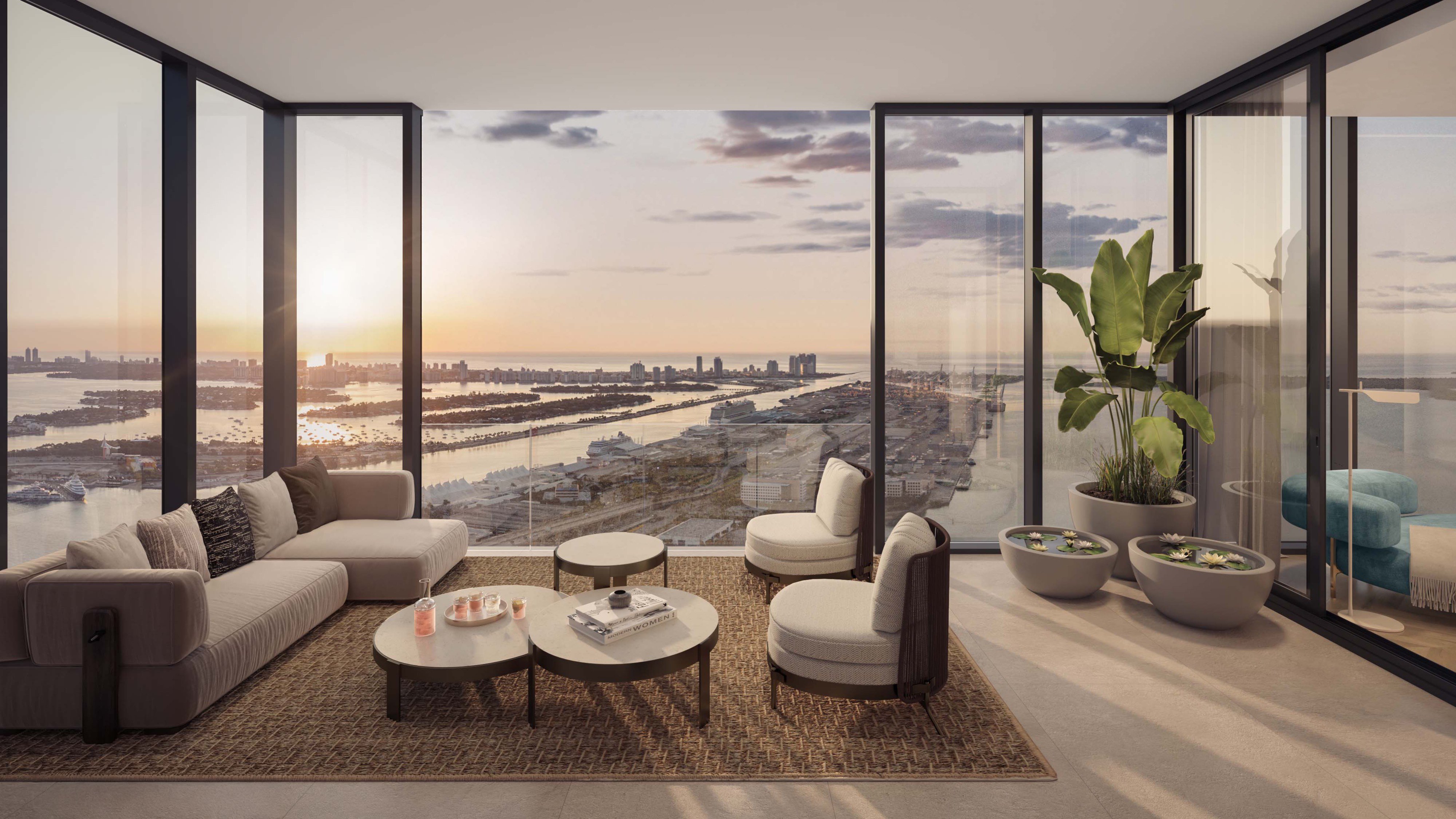
South Florida has always sold scarcity, but the narrative is shifting. In Miami-Dade County, growth is physically boxed in by the Atlantic Ocean to the east and the Everglades and protected wetlands to the west. That geography directs development toward infill and vertical construction rather than outward sprawl. Layered over the map is policy. The county’s Urban Development Boundary was created to limit sprawl and protect environmentally sensitive lands. For luxury buyers, the takeaway is clear: as buildable land tightens inside the boundary, the region’s most durable value tends to concentrate in well-located, well-executed projects, where entitlement is more predictable and neighborhood fundamentals are already established. In other words, “rare” is no longer defined only by a water view. It is also about being in the right district, on a site that can actually be built, and in a building designed for modern expectations around insurance, maintenance, and long-term performance.
The waterfront mystique remains intact. In the broader U.S. context, the premium for waterfront homes has been estimated at roughly 116% versus similar non-waterfront properties. South Florida, with its lifestyle and global buyer base, sits squarely in that gravitational pull. At the same time, the market is becoming more discerning about coastal risk. Sea-level-rise exposure is already reflected in housing prices, with more-exposed properties selling at discounts relative to less-exposed comparable homes. That does not erase the waterfront premium, it refines it. Increasingly, the premium concentrates in waterfront that also reads as “defensible” over the long term. For buyers evaluating oceanfront and bayfront, the sophisticated lens is less about fear and more about underwriting. Separate what you are paying for, view and access, versus what you are paying for, durability. Building design, reserve discipline, governance quality, and the ability to execute future capital projects can matter as much as the panorama. Put simply: Miami Beach remains one of the region’s most emotionally resonant markets, but the highest-confidence purchases tend to sit at the intersection of architectural credibility and long-term stewardship. That is why residences associated with well-positioned, design-forward projects such as 57 Ocean Miami Beach continue to draw attention from buyers who want both proximity and polish.
The impulse to “build up” is not unlimited, but it is powerful. Miami’s maximum practical tower heights are constrained by FAA rules that cap the skyline around 1,049 feet above sea level, shaping the economics of ultra-prime sites. In a market where land is scarce and demand persists, height becomes a form of inventory creation. A vivid example is the planned Waldorf Astoria Residences Downtown Miami, designed to reach that 1,049-foot limit and conceived as a hotel-and-residences supertall often described as about 100 stories. For buyers, the point is not just spectacle. It is that the next generation of trophy product is increasingly vertical, highly serviced, and positioned as a global asset class, not merely a local condo. In Brickell, the appeal is similar but more financial-district in temperament: walkability, dining, and a concentration of new construction that continues to lift the neighborhood’s quality-of-life curve. Buyers looking for a more residential cadence within Brickell’s energy often gravitate to newer, lower-density-feeling luxury offerings like 2200 Brickell, where the value proposition is as much about daily livability as it is about a skyline address.
Florida Senate Bill 1080, effective October 1, 2025, requires local governments to publish minimum application submittal requirements and provide written notice of missing information. It also imposes statutory deadlines for local government action on certain development orders, including 120 days when no quasi-judicial hearing is required and 180 days when one is required, with fee-refund consequences if deadlines are missed. For luxury buyers, these reforms matter in two ways. First, predictability is a form of value. Clearer timelines allow projects to be financed and executed with fewer open-ended delays, reducing the “entropy” that can surround complex urban development. Second, deadlines do not eliminate risk, they front-load the work. If you are buying pre-construction or early-cycle resale in a newly delivered building, your diligence should still map the approvals that shaped the project, any conditions that remain outstanding, and the neighborhood dynamics that could change the view corridor, traffic patterns, and adjacent land uses.
South Florida is entering a period in which aging waterfront condo buildings are increasingly becoming redevelopment targets, as owners weigh developer buyouts amid rising maintenance and insurance pressures and a tighter regulatory environment. This is not a uniform story. Some buildings will successfully recapitalize through major renovations and disciplined reserve planning. Others will face a more existential decision: fund large-scale capital work over time, or pursue a redevelopment path that converts today’s land value into a future project. For buyers, this creates both opportunity and complexity. A well-timed purchase in a building that later becomes a redevelopment target can produce an attractive outcome, but only if the legal mechanics support it. Condo terminations in Florida can hinge on the specific language of a building’s original declaration, and disputes can arise when amended documents attempt to change consent thresholds. The Biscayne 21 dispute in Edgewater is a cautionary illustration of how holdout dynamics and document interpretation can reshape outcomes. If you own in an older coastal building, treat the condo documents and the association’s long-range capital plan as core components of value, not administrative footnotes.
Policy changes also reshape new supply. In Fort Lauderdale, The Quay at 17th Street, a 33-story project with 521 apartments, was approved administratively under Florida’s Live Local Act and includes affordable or workforce components plus marina-related elements. Outside the core tri-county conversation, similar patterns are visible. In Lake Park, officials approved comprehensive plan and zoning changes enabling the 24-story Nautilus 220 waterfront condo project, reported at about $180 million, above a prior eight-story limit. Even if you are strictly a luxury buyer, these developments matter. They influence future inventory, traffic, retail evolution, and the character of waterfront districts. They also signal a broader reality: the entitlement environment is increasingly designed to channel growth into denser, more vertical forms.
Florida’s coastal construction and coastal management framework governs how waterfront land can be altered or protected. In practice, this affects what can be built near the shoreline, how dunes and coastal systems are treated, and what kinds of interventions are permissible over time. Luxury buyers should read this as a design and ownership issue, not merely a planning issue. Buildings engineered with a long view, supported by thoughtful site planning and an operational mindset, tend to hold their desirability as the regulatory environment and insurance landscape evolve.
The most sophisticated South Florida buyers are making decisions across three axes: location, building integrity, and long-term optionality. In North Bay Village, for instance, the appeal is the feeling of being “on the water” while remaining tightly connected to Miami’s cultural and business corridors. Projects such as Continuum Club & Residences North Bay Village reflect how the market is reimagining mid-bay living as a full-service luxury proposition. In Miami Beach, the conversation is increasingly about selectivity: which micro-locations combine walkability and privacy, and which buildings have the governance and capital planning to thrive. In Brickell, the underwriting is about vertical convenience and the durability of a true live-work-play core. And in every submarket, the higher the price point, the more the buyer is effectively purchasing management quality. The quiet differentiator is not marble, it is whether the building can execute.
Why does South Florida keep building upward instead of outward? Growth is constrained by the ocean and protected wetlands, and policy reinforces infill, making vertical development the most viable way to add supply.
Is waterfront still worth paying for if sea-level risk is rising? Waterfront still commands a major premium, but more-exposed properties can trade at discounts versus less-exposed comparables.
What is the Urban Development Boundary and why does it matter to buyers? It limits sprawl and encourages infill; that can support values in established areas where new land supply is restricted.
How do FAA height limits affect Miami luxury condos? Height caps around 1,049 feet above sea level shape which sites can deliver true trophy towers and influence pricing at the top.
What changes with Florida SB 1080 for development approvals? It standardizes application requirements and imposes statutory decision deadlines, improving predictability for many projects.
Are older waterfront condos good redevelopment opportunities? Sometimes, but outcomes depend on finances, governance, and the specific termination language in the condo documents.
What is a key legal risk in condo terminations? Consent thresholds can be contested; disputes can arise if amendments attempt to lower the approval bar versus original declarations.
How does the Live Local Act influence luxury markets? It can enable more density and administrative approvals, changing neighborhood supply and accelerating mixed-income development.
Do coastal construction rules affect everyday ownership? Yes. They influence what shoreline-adjacent properties can modify and how future protective or repair work may be executed.
What should a luxury buyer prioritize beyond finishes and views? Focus on building governance, reserves, and the ability to execute capital projects as conditions and regulations evolve.
For curated South Florida new-development and resale opportunities aligned with long-term value, explore MILLION Luxury.
If branded residences are on your mind — as a home or as an allocation — we would be glad to share what we are seeing, privately.
Begin a quiet conversation