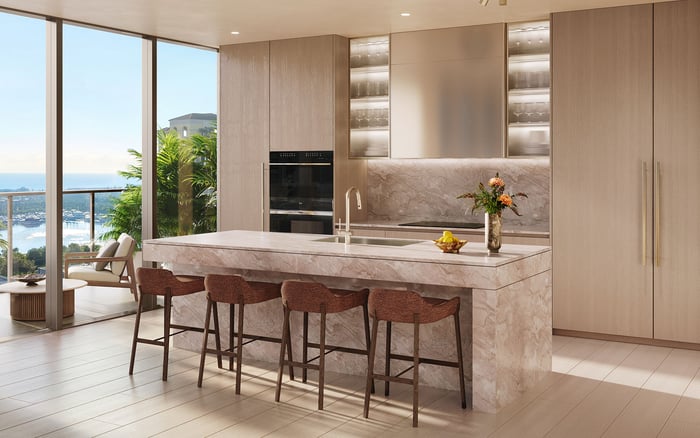
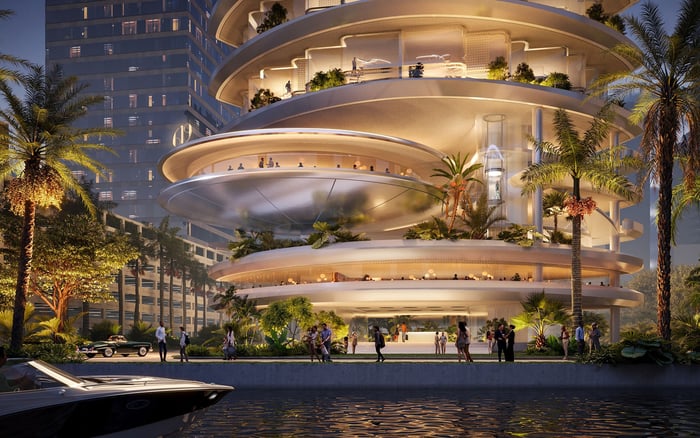
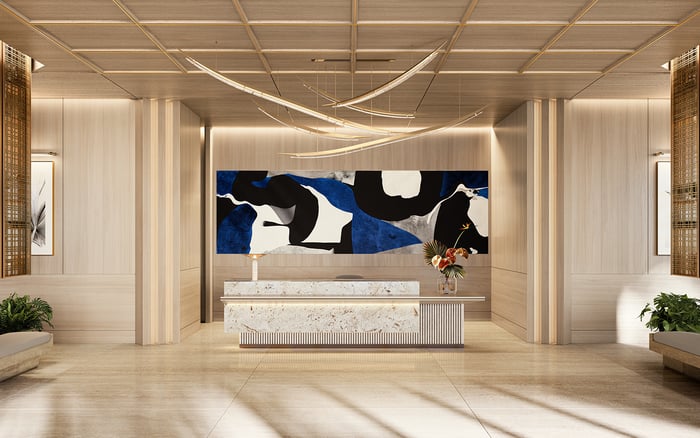
A buyer-focused look at The Berkeley Palm Beach and the rising value of operational simplicity in luxury residential ownership, where privacy, predictability, and restraint can matter more than spectacle.
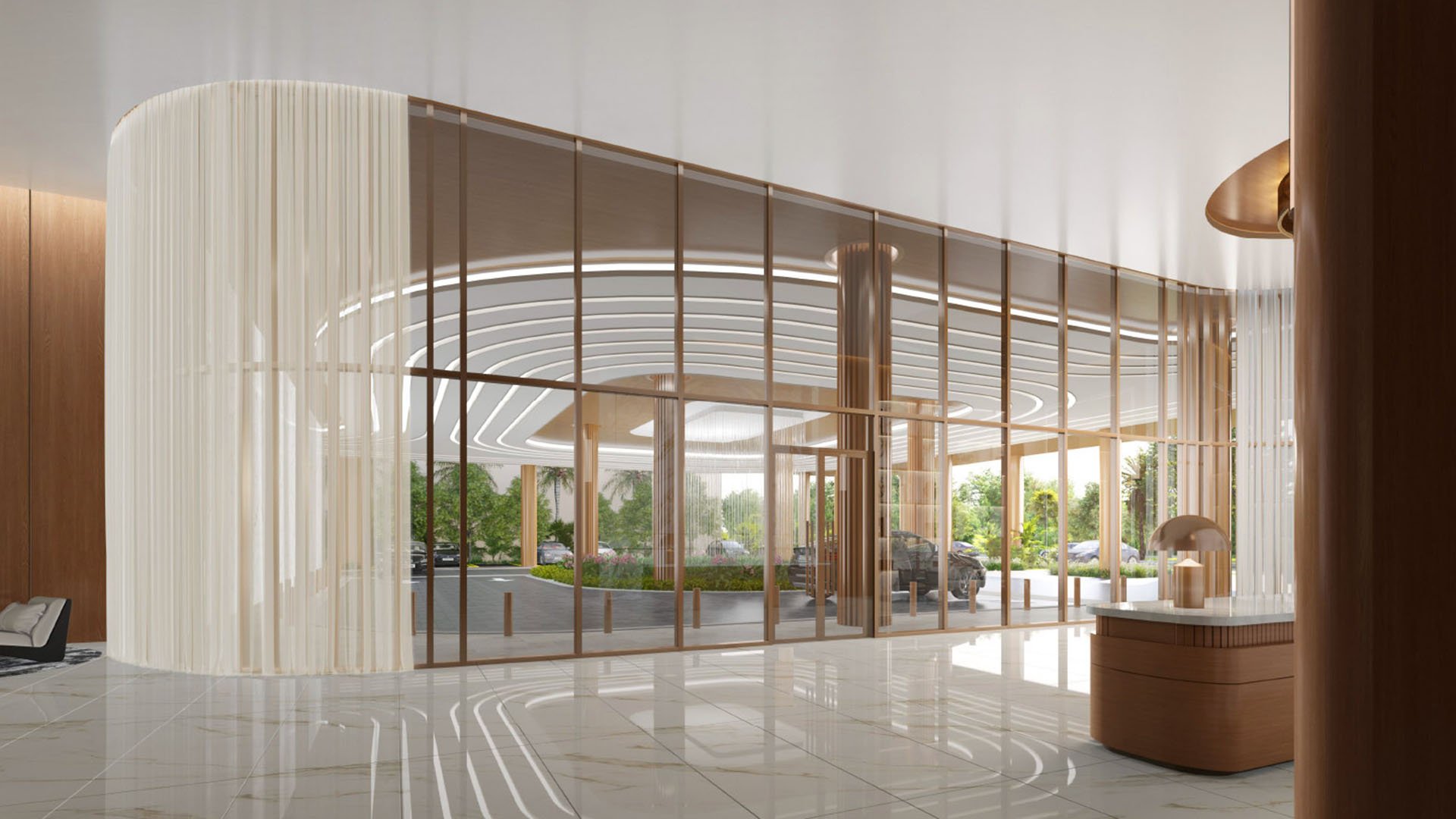
In Palm Beach, luxury has never depended solely on scale. Its most enduring expression is often quieter: privacy at arrival, ease in the daily routine, discretion in service, and a building that understands when not to overperform. Through that lens, The Berkeley Palm Beach becomes more compelling than a standard new-development story.
The Berkeley Palm Beach is best understood as a residence-first alternative to the amenity-heavy, spectacle-driven tower. Its premise is not austerity. It is discipline. For certain buyers, true luxury is not another programmed room or headline facility, but a building that is easier to live with, easier to manage, and less dependent on operational complexity to feel complete.
That distinction matters in a market where affluent owners often already have access to dining, clubs, wellness, boating, culture, and private social infrastructure beyond the building. If life is already full, the home base does not need to replicate a resort. It needs to provide calm.
Operational simplicity is rarely the first idea presented in a sales gallery, but after closing, it can become one of ownership’s most important questions. How many systems require constant coordination? How many staff layers are needed to deliver the promised experience? How predictable are the costs? How clear is the building’s governance model when decisions need to be made?
These are not minimalist concerns. They are luxury concerns. A residence can be beautifully designed and still feel cumbersome if daily life depends on overlapping service promises. Conversely, a more restrained building can feel exceptionally refined when the essential elements work smoothly.
For a boutique residential building, fewer moving parts can reduce friction for owners, boards, managers, and staff. That does not mean lower standards. It means fewer opportunities for service dilution, scheduling conflict, maintenance surprise, and budgetary drift. The point is not to strip away pleasure. The point is to protect the experience from becoming too complicated to sustain.
The Berkeley Palm Beach can be read as a case study in disciplined amenity programming rather than amenity accumulation. Its appeal sits in livability and day-to-day function, not resort-style spectacle. That is a distinctly Palm Beach idea: the best address is not always the one that announces itself most loudly.
A buyer considering The Berkeley is likely asking practical questions. Will the building feel private? Will the service model be manageable? Will the common experience feel elegant without requiring a sprawling operational apparatus? Will long-term ownership feel predictable rather than theatrical?
This is where restraint becomes strategic. Amenity-rich development can be compelling, especially in urban neighborhoods where the building may function as a complete lifestyle ecosystem. But in Palm Beach and West Palm Beach, many buyers do not need the building to be their entire social world. They may prefer a refined residential setting that complements the broader lifestyle they already maintain.
South Florida has embraced a wide range of luxury models, from branded hospitality residences to towers with restaurants, spas, wellness concepts, and entertainment-heavy programs. Some buyers want that energy. Others see it as unnecessary operational load.
The difference is not about one model being inherently superior. It is about fit. In Brickell or Downtown Miami, a buyer may be drawn to the branded urban energy of Baccarat Residences Brickell or the skyline statement of Waldorf Astoria Residences Downtown Miami. In Palm Beach, the calculus can change. If a buyer already has preferred restaurants, private clubs, trainers, physicians, salons, and social circuits, the most desirable building may be the one that stays elegantly out of the way.
That is why operational simplicity should not be mistaken for a lack of ambition. It can be a more mature form of ambition, especially for owners who value continuity. A calm, well-managed home base may offer more daily utility than a building trying to reproduce every component of a resort.
The most important questions are not always visible in renderings. Buyers should think about maintenance burden, staffing complexity, cost predictability, governance, and long-term resilience. A beautiful amenity is only as valuable as the operating model that supports it.
Does the building’s promise require unusually intensive staffing? Are amenities likely to be used consistently by the resident base, or do they exist mainly as marketing theater? Can the association manage the property with clarity? Will the service culture feel personal, or will it become diffuse because there are too many spaces and obligations to supervise?
In pricing and trends conversations, buyers often focus on purchase price, views, finishes, and location. Those still matter. Yet operational design can shape the lived value of a residence over time. If two residences appear comparable on paper, the one with simpler, more predictable operations may offer the more graceful ownership experience.
West Palm Beach continues to give luxury buyers a broader set of choices near the Palm Beach orbit. Some residences lean into waterfront living, others into branded hospitality, and others into privacy and restraint. Projects such as Alba West Palm Beach and The Ritz-Carlton Residences® West Palm Beach illustrate the range of positioning available to buyers considering the area.
The Berkeley belongs to the more understated side of that spectrum. Its message is not that amenities do not matter. It is that the right amenities matter, and that a building’s operational temperament can be as important as its physical design. In new-construction discussions, that temperament deserves more attention.
For Palm Beach-oriented buyers, restraint can feel more aligned with how life is actually lived. The residence should support the owner’s schedule, not compete with it. It should provide privacy without isolation, service without fuss, and common spaces that feel considered rather than crowded with concepts.
Over time, luxury ownership becomes less about novelty and more about confidence. Owners want to know that the building will age well, decisions will be manageable, staffing will remain coherent, and costs will not be distorted by amenities that look impressive but are difficult to operate.
That is the strongest buyer-facing argument for The Berkeley Palm Beach. Simpler operations can make a luxury residence easier to live with over time. Not because simplicity is fashionable, but because it can create a more durable form of comfort.
For the right buyer, the question is not whether a building has enough to impress a guest on arrival. It is whether the building will still feel effortless on an ordinary Tuesday, after the initial novelty has passed. In that sense, operational simplicity is not a secondary feature. It is part of the architecture of peace.
What is the main idea behind The Berkeley Palm Beach? The Berkeley Palm Beach is positioned around residence-first living, with an emphasis on privacy, ease, and operational restraint rather than spectacle.
Why can operational simplicity matter to luxury buyers? Fewer operational moving parts can help reduce friction for owners, boards, managers, and staff while supporting a more predictable ownership experience.
Does a simpler building mean a less luxurious building? No. In this context, simplicity means discipline, clarity, and livability rather than a lack of refinement.
Who is the likely buyer for this type of residence? It may appeal to buyers who already have access to dining, clubs, wellness, and social infrastructure outside the building.
How does The Berkeley differ from amenity-heavy towers? The contrast is between a calm residential home base and buildings that rely more heavily on branded hospitality, entertainment, or resort-style programming.
What should buyers ask before choosing a luxury condominium? They should consider maintenance burden, staffing complexity, cost predictability, governance, and how the building is likely to function over time.
Is Palm Beach suited to quieter residential design? Yes. Palm Beach luxury often values discretion, privacy, and ease, making a restrained residential model especially relevant.
Can amenities still matter in an operationally simple building? Yes. The argument is not against amenities, but in favor of amenities that are useful, manageable, and aligned with daily living.
Why is West Palm Beach relevant to Palm Beach buyers? West Palm Beach offers a range of residential options near the Palm Beach lifestyle, giving buyers different balances of privacy, service, and convenience.
What is the long-term advantage of operational restraint? A simpler operating model can help a residence feel more predictable, manageable, and comfortable well beyond the first impression.
For a confidential assessment and a building-by-building shortlist, connect with MILLION.
If branded residences are on your mind — as a home or as an allocation — we would be glad to share what we are seeing, privately.
Begin a quiet conversation