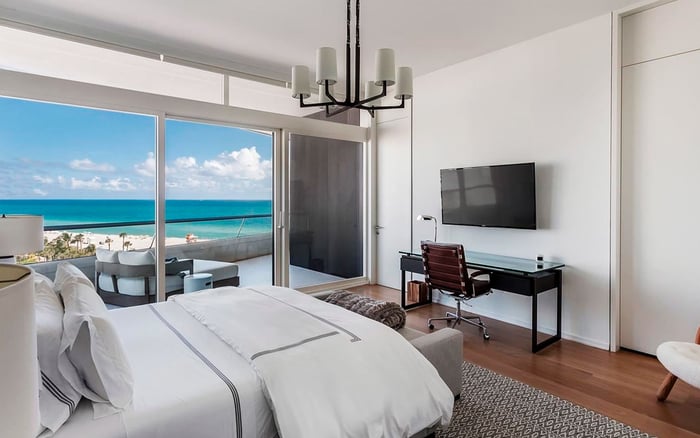
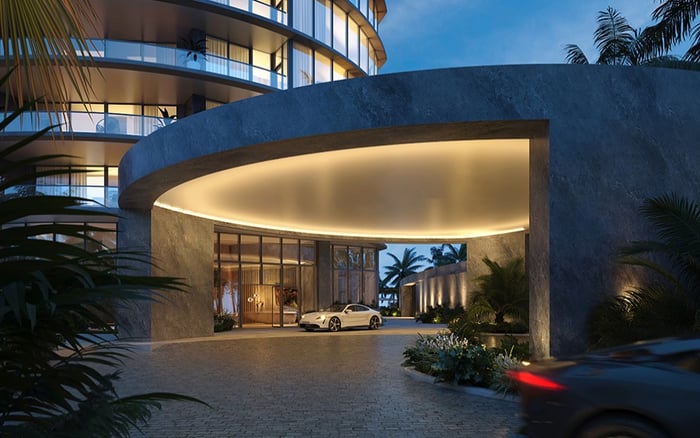
A buyer-focused editorial analysis of Rivage Bal Harbour, examining oceanfront access, privacy, low-density living, and long-term maintenance considerations for high-net-worth owners.
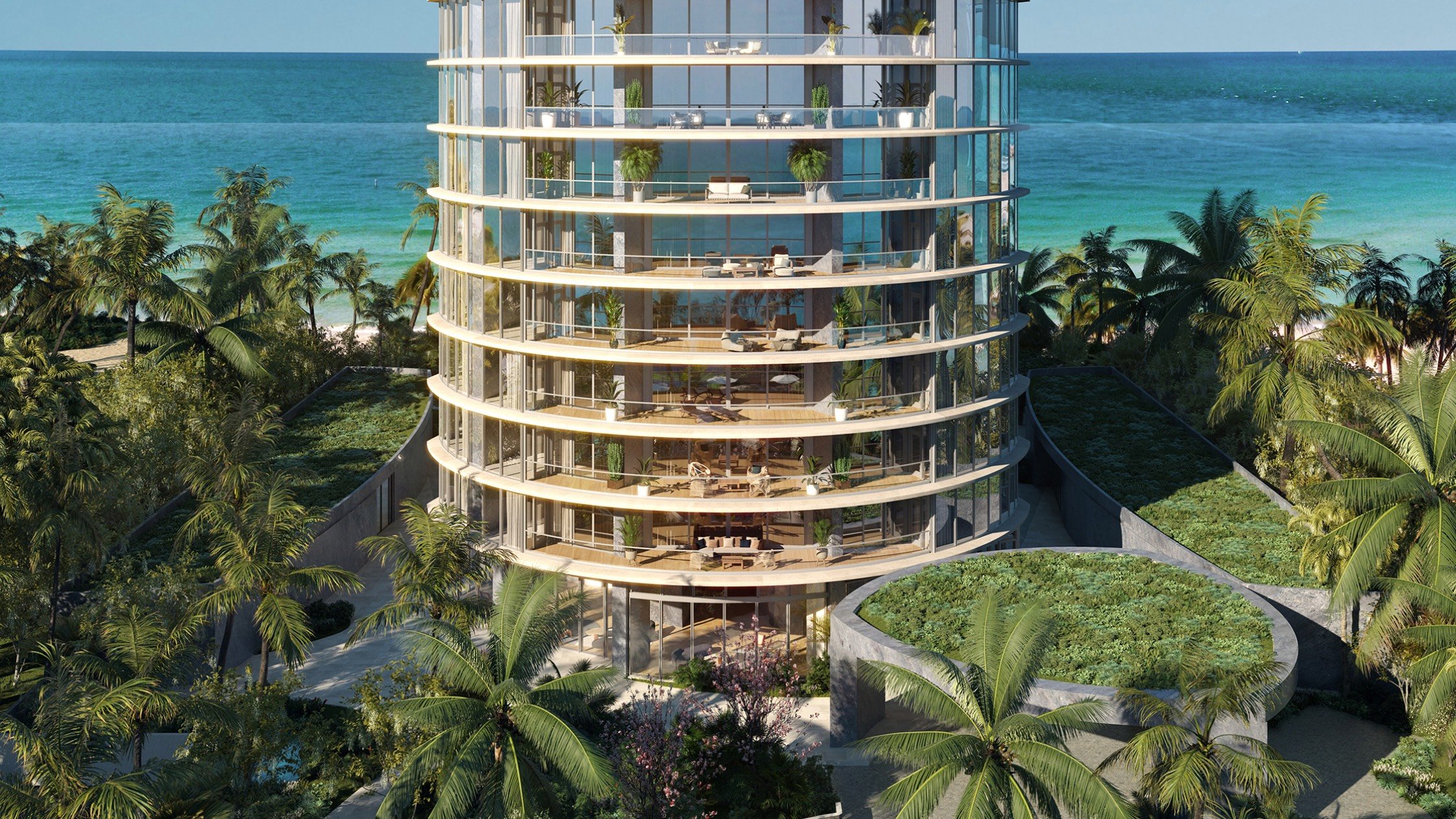
Rivage Bal Harbour occupies one of South Florida’s most scrutinized luxury-condo settings: the oceanfront Collins Avenue corridor in Bal Harbour. The appeal is immediate. The building is presented as an ultra-luxury, low-density oceanfront condominium, with a value proposition built around beachfront living, privacy, and long-term ownership durability. Yet for serious buyers, the question is not only whether the lifestyle is beautiful. It is whether the property can remain elegant, functional, and defensible over a 20- to 30-year holding period.
That distinction matters. In Bal Harbour, the most coveted addresses do not compete only on finishes or views. They compete on control: control of arrival, amenity space, exposure to neighbors and beachgoers, service routes, and weather. A buyer evaluating Rivage Bal Harbour is considering a rare combination: a quieter municipal setting, direct oceanfront positioning, and the promise of a more private residential rhythm than higher-intensity Miami Beach submarkets can often provide.
Beach access is one of the first areas where luxury language must become legal and operational diligence. Rivage’s oceanfront setting places the Atlantic-facing side at the center of the building’s lifestyle positioning, with outdoor amenities oriented toward the beach. The typical Bal Harbour oceanfront pattern is also important: vehicular and lobby access from Collins Avenue, with the pool, terraces, gardens, and beach-facing amenities to the east.
The key buyer question is the transition point. Where do private building amenities end, and where does the public beach zone begin? In Florida, exclusivity at the oceanfront is often experienced through design, staffing, landscaping, and managed access, rather than through a simple assumption of private beach ownership. Buyers should verify beach access rights, maintenance obligations, easements, surveys, condominium documents, and any restrictions governing furniture, service, access paths, or beach-adjacent operations.
For ultra-premium owners, this is not a minor issue. A seamless path from residence to sand is part of the daily value. But the quality of that experience depends on specific details: gate placement, line of sight from public areas, towel and chair service logistics, dune or landscape buffers, and how residents move between the pool deck and shoreline. The best beach access feels effortless. The best due diligence makes clear exactly why it works.
Privacy at Rivage should be evaluated through more than the number of residences. Low-density positioning implies fewer homes, larger residences, and a more private residential experience, but density is only one layer. Tower orientation, setbacks, landscaping, vertical circulation, service routes, pool placement, and exposure to adjacent public or semi-public areas all shape the lived reality.
A buyer should ask how elevator arrivals are organized, how guests enter, how staff and deliveries circulate, and whether amenity spaces are layered to reduce visual overlap. In an oceanfront building, the most desirable views can also create the most visible spaces. Terraces, pool decks, cabanas, and wellness areas should be studied for sightlines from neighboring towers and from the beach.
This is where Bal Harbour’s restraint becomes part of the asset. Compared with busier Miami Beach environments, Bal Harbour offers a quieter, more controlled atmosphere. That does not eliminate privacy questions, but it improves the context in which those questions are answered. Buyers comparing Rivage with Oceana Bal Harbour are not only comparing architecture or residence size. They are comparing how each building choreographs privacy along the same rare oceanfront corridor.
Bal Harbour’s Collins Avenue oceanfront corridor has a particular character. It is formal without feeling institutional, residential without feeling sleepy, and prestigious without needing constant display. For buyers who want beach access and cultural proximity without the daily intensity of denser Miami Beach nodes, that balance is central.
The corridor also gives Rivage a clear frame of comparison. To the north and south, Surfside and Miami Beach offer their own versions of ultra-prime coastal living. A buyer considering Arte Surfside or The Delmore Surfside may be asking similar questions about scale, privacy, and oceanfront maintenance, but the municipal tone and building context shift with each address. Farther south, 57 Ocean Miami Beach speaks to buyers who want an oceanfront setting with a stronger Miami Beach identity.
For Rivage, the Bal Harbour context is a core part of the proposition. The address is not trying to be the loudest coastal statement. Its value is measured permanence: ocean, arrival, amenities, privacy, and a setting that privileges control over spectacle.
Oceanfront ownership in South Florida is beautiful, but it is not passive. Salt air, wind, rain, sun exposure, and storm planning create a maintenance environment that rewards disciplined stewardship. For Rivage, long-term maintenance should be treated as a central ownership question from the beginning, not as an afterthought once the building matures.
The most important areas of inquiry include salt-air exposure, hurricane resilience, exterior envelope upkeep, waterproofing systems, balcony and terrace maintenance, mechanical systems, glazing, façade materials, and condominium association reserve planning. A new or newly delivered luxury tower can look pristine at acquisition, but the more relevant question is how the building is designed, governed, and funded to remain pristine over decades.
This is especially important for owners who view the residence as a legacy asset, seasonal base, or long-term South Florida allocation. Oceanfront buildings require a strong association culture. Reserve planning should be understood not as a burden, but as part of asset preservation. Deferred work is rarely discreet at the beach. The ocean reveals weak details quickly.
A refined due-diligence process for Rivage should include both lifestyle and structural questions. On the lifestyle side, buyers should understand arrival privacy, amenity capacity, guest policies, beach transitions, pool-deck exposure, staffing assumptions, and how the building will manage peak-season use. On the ownership side, they should review condominium documents, insurance structure, maintenance responsibilities, reserve policies, exterior maintenance plans, and storm protocols.
New-construction buyers often focus on floor plans, finishes, and views. Those matter. But in Bal Harbour, the better question is how the entire building behaves over time. Does the site plan protect privacy? Does the eastern amenity sequence feel intuitive? Are circulation routes discreet? Is the beach experience elegant without relying on unverified claims of ownership or exclusivity?
Investment discipline also requires attention to exit value. Future buyers will evaluate the same fundamentals: location, beachfront access, privacy, building condition, association strength, and perceived maintenance risk. A residence that feels luxurious on day one but lacks a convincing long-term maintenance story may not command the same confidence later. Oceanfront value is emotional, but its preservation is technical.
Rivage is best understood as a building for owners who want beachfront living with restraint. The likely buyer values privacy, architectural calm, and a prestigious Bal Harbour setting more than nightlife proximity or high-traffic visibility. This is a residence for those who see the beach as a daily ritual, not a backdrop for performance.
That profile often includes families, seasonal residents, international owners, and long-term South Florida participants who understand that the rarest luxury is not always size. It is controlled ease. The right oceanfront building should make arrival, privacy, beach access, and maintenance feel quietly resolved.
For Rivage, the opportunity is clear: an ultra-luxury, low-density oceanfront condominium in a corridor built for durable prestige. The responsibility for buyers is equally clear: examine the access, privacy, and maintenance framework with the same seriousness as the view.
Is Rivage Bal Harbour an oceanfront condominium? Yes. Rivage Bal Harbour is presented as an ultra-luxury, low-density oceanfront condominium in Bal Harbour.
Does Rivage Bal Harbour have a private beach? Buyers should not assume private beach ownership unless it is confirmed in official documents. The distinction between private amenities and the public beach zone should be reviewed carefully.
Why is beach access such an important due-diligence point? The transition from private building amenities to the beach affects privacy, service, convenience, and daily lifestyle quality.
What defines privacy at Rivage Bal Harbour? Privacy should be evaluated through tower orientation, setbacks, landscaping, circulation routes, and exposure to neighboring or public areas.
What does low-density positioning imply for buyers? It generally signals fewer residences, larger homes, and a more private residential environment, subject to the final building program and operations.
Why is Bal Harbour different from higher-intensity Miami Beach submarkets? Bal Harbour is framed as a quieter and more controlled coastal environment, which appeals to buyers prioritizing discretion and order.
What maintenance risks matter most for oceanfront owners? Salt-air exposure, hurricane resilience, exterior envelope upkeep, waterproofing, glazing, and reserve planning should all be examined.
Should reserves matter to a luxury buyer? Yes. Strong reserve planning helps preserve building quality and can reduce the risk of deferred maintenance over a long ownership period.
Is Rivage mainly a lifestyle purchase or an asset decision? It should be viewed as both. The beach lifestyle is central, but long-term asset preservation is equally important.
What should buyers verify before signing? Buyers should review condominium documents, beach access details, maintenance obligations, insurance structure, and association planning with qualified advisors.
If you'd like a private walkthrough and a curated shortlist, connect with MILLION.
If branded residences are on your mind — as a home or as an allocation — we would be glad to share what we are seeing, privately.
Begin a quiet conversation