A practical, buyer-oriented look at Park Grove Coconut Grove as a private condominium for multi-week guests, with emphasis on arrival coordination, household rhythm, access, amenities and the distinction between luxury residential service and hotel-style hospitality.

At Park Grove Coconut Grove, the essential distinction for an owner planning to host family or friends for several weeks is straightforward: this is a luxury residential condominium, not a hotel and not a hotel-residence hybrid. That difference informs everything from the arrival sequence to amenity expectations. The building may feel highly serviced, but its operating logic remains private, residential and owner-centered.
For buyers considering Park Grove Coconut Grove as a seasonal home, a primary Miami base or a second home, this distinction is not a limitation. It is the point. Multi-week guests are best understood as temporary household occupants within the owner’s residence, not independent resort guests arriving with their own separate hospitality program. The experience can be polished, secure and exceptionally comfortable when it is handled through the condominium’s established procedures.
That places responsibility where sophisticated owners usually prefer it: in advance coordination, clear guest information and an understanding that privacy is protected through governance. In a building like Park Grove, luxury is not measured by how casually someone can drift in. It is measured by how seamlessly a known guest can be received into a controlled residential environment.
The practical work begins before the plane lands. Owners planning a multi-week visit should coordinate guest names, arrival timing, access permissions, vehicles and amenity expectations with building staff in advance. Exact procedures should always be confirmed with current building management and condominium documents, since rules can evolve, but the principle is consistent: long-stay guests need to be recognized by the private-building system.
That recognition matters because their stay will not resemble a weekend visit. Someone staying for several weeks may come and go daily, receive deliveries, use elevators repeatedly, meet a car at valet or accompany the owner to amenities. The smoother the initial setup, the less friction there is over time.
This is where Park Grove’s residential character becomes visible. Concierge, valet, security, elevator access and amenity-use procedures all become part of a quiet operating choreography. The best outcomes tend to come from clarity. Who is arriving? When? Are they driving? Will they need recurring access? Are they expected to use amenities with the owner, or under the rules allowed by the association? These are not hotel check-in questions. They are private-household coordination questions.
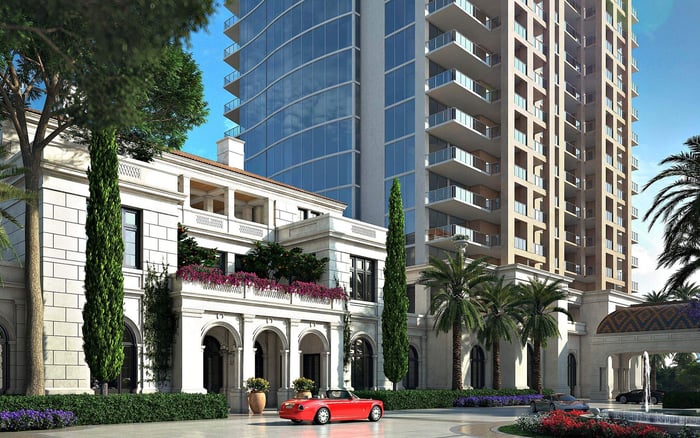
In many luxury buildings, the first few minutes establish the tone of the stay. At Park Grove, arriving guests enter a condominium environment defined by privacy and building standards. Valet and concierge teams may be the visible service touchpoints, but security and access control are equally central to the experience.
That is why owners should think of arrival less as a theatrical welcome and more as a secure handoff. The guest is expected, identified and connected to the residence. Elevator access and entry procedures should align with permissions already arranged. Over several weeks, those first moments become the foundation for recognition by building teams.
For families, this can be especially valuable. Parents, adult children, grandparents or close friends staying for an extended period benefit from a setting that feels personal without feeling casual. The guest does not need a resort script. They need a building that knows they belong there, within the framework of the owner’s residence.
The architecture of daily life is often more important than the amenity list. Park Grove residences are associated with expansive glass, deep terraces and indoor-outdoor living, precisely the type of physical setting that helps a guest stay feel residential rather than temporary. A visitor who is in Miami for two or three weeks needs places to work, read, cook, take calls, unpack and retreat.
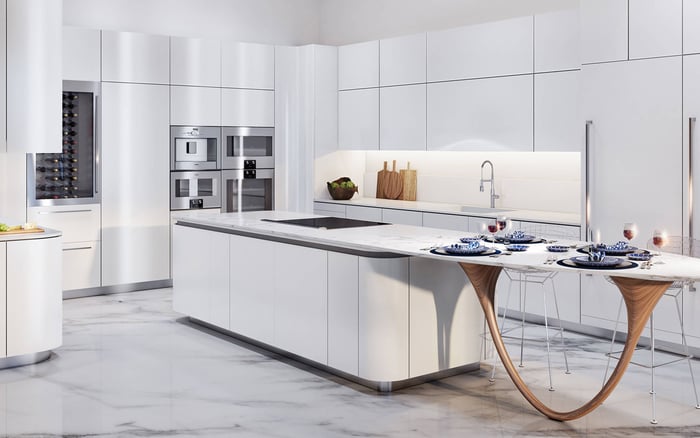
Open-plan living areas and generous kitchens support that rhythm. A guest can make breakfast without relying on room service, join the household for dinner or step onto a terrace for a private moment between plans. Usable balconies and bay-facing living areas are not decorative extras in this context. They are pressure valves for a longer stay.
The residence mix, from two-bedroom layouts to large penthouses, also gives owners meaningful flexibility. A couple hosting adult children has different needs than an owner welcoming friends for a winter stretch. Penthouses may create more separation and entertaining capacity, while smaller layouts require more deliberate planning around storage, privacy and daily flow. In either case, the stay works best when the unit is treated as a home first.
South Florida buyers often use the word service broadly, but Park Grove rewards more precise language. Luxury service in a condominium is not the same as hotel service. The former is rooted in privacy, recognition, building standards and owner control. The latter is built around transient occupancy and independent guest consumption.
This difference is especially important when comparing Coconut Grove with more overtly hospitality-driven concepts elsewhere in the market. A buyer looking at Four Seasons Residences Coconut Grove may be thinking about branded residential polish, while a buyer considering Arbor Coconut Grove may be focused on a more intimate neighborhood residential posture. Park Grove sits firmly in the private condominium lane, where services support the owner’s household rather than replacing it with a hotel model.
For multi-week guests, that means expectations should be framed carefully. The building may feel resort-like in setting and attentiveness, but the access model remains condominium-based. Guests should not assume independent, unlimited amenity use or hotel-style privileges unless those are expressly permitted under current rules. The owner’s preparation is what turns a luxury building into a gracious extended host.
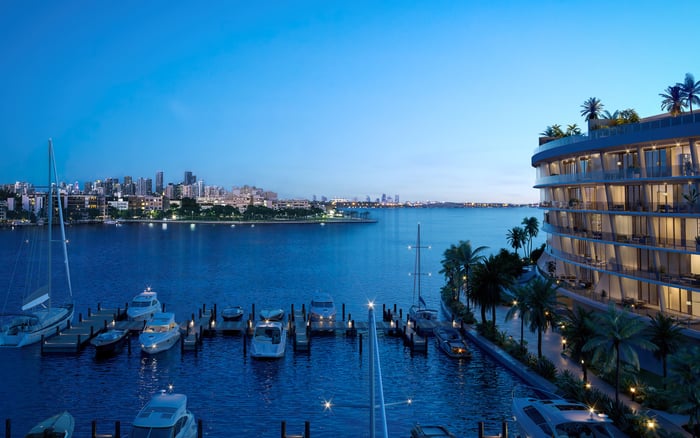
Coconut Grove is central to the proposition. A multi-week guest does not simply occupy a residence. They settle into a neighborhood. The Grove’s bayfront character, walkable scale and mature residential identity give guests a softer Miami cadence than many urban or beachfront districts. That matters when the stay stretches beyond a long weekend.
For buyers comparing Grove options, the neighborhood now offers a wide spectrum of luxury living. The Well Coconut Grove speaks to wellness-led residential demand, while Vita at Grove Isle frames waterfront living through a distinct island setting. Park Grove’s appeal is the combination of design-driven towers overlooking Biscayne Bay and a deeply residential base in Coconut Grove.
That mix creates a compelling lifestyle for guests who will be in residence long enough to develop routines. Morning coffee, work calls, walks, dinners and quiet evenings on the terrace become part of the visit. The guest is not consuming Miami from a suite. They are borrowing, temporarily, the owner’s private version of Miami life.
The most successful extended stays are intentional. Owners should decide how much autonomy guests will have, what spaces are private, how vehicles will be handled and how amenity expectations will be communicated. They should also consider housekeeping, deliveries, pets if relevant and the rhythm of work-from-home days inside the residence.
None of this needs to feel formal. In fact, the better it is handled, the more invisible it becomes. The elegance of a private condominium stay lies in removing uncertainty before it reaches the lobby. When names are known, access is aligned and expectations are reasonable, the experience feels effortless.
For Park Grove owners, that is the real answer to how the residence works when guests arrive for weeks. It works as a private home within a disciplined luxury condominium. Its services support continuity. Its design supports daily life. Its Coconut Grove setting gives the stay context. And its rules preserve the privacy that makes the building desirable in the first place.
Is Park Grove Coconut Grove a hotel residence? No. It is best understood as a luxury residential condominium with private-building services, not a hotel or hotel-residence hybrid.
Can guests stay for multiple weeks at Park Grove? Multi-week guests should be treated as temporary household occupants, subject to the building’s current governance, registration and access procedures.
What should owners coordinate before guests arrive? Owners should coordinate names, arrival timing, access permissions, vehicles and amenity expectations with building staff in advance.
Do long-stay guests receive hotel-style access? They should not assume hotel-style privileges. Access and amenity use remain condominium-based and should follow current building rules.
Which service touchpoints matter most on arrival? Valet, concierge, security, elevator access and amenity procedures are the key practical touchpoints for arriving guests.
Why do repeated entries matter during a longer stay? Guests who come and go daily benefit when security, concierge and valet teams can recognize them within the approved access framework.
Are Park Grove residences suited to longer guest stays? Yes. Expansive glass, deep terraces, open living areas, generous kitchens and usable balconies help support a residential daily rhythm.
What types of residences help owners host more comfortably? The mix ranges from two-bedroom layouts to large penthouses, giving owners different ways to accommodate family or friends.
Why is Coconut Grove important for extended guests? Coconut Grove gives guests a walkable, bayfront residential base, which can feel more settled than a short-stay resort environment.
What is the main hosting lesson for owners? Treat the stay as part of a private household, not as a separate hospitality booking, and confirm all current procedures before arrival.
For a confidential assessment and a building-by-building shortlist, connect with MILLION.
If branded residences are on your mind — as a home or as an allocation — we would be glad to share what we are seeing, privately.
Begin a quiet conversation