A buyer-focused look at The Well Coconut Grove through the two patterns that may define its value most: weekday family logistics and hospitality-style guest use.
The strongest case for The Well Coconut Grove is not simply its place in the luxury wellness conversation. It is whether the residence can stand up to the way a certain Coconut Grove household actually lives: morning school runs, afternoon pickups, after-school transitions, visiting grandparents, long-weekend friends, and the quiet desire to make health, dining, and social life feel embedded rather than scheduled.
For this audience, ownership is less about accumulating amenities than removing friction. A residence can be architecturally refined, beautifully serviced, and fluent in wellness language, yet still fall short if the daily pattern is awkward. The Well Coconut Grove poses a more specific question: can a home operate as a family base, a resort-like second home, and a membership-style social and wellness environment without pulling residents out of Coconut Grove’s natural rhythm?
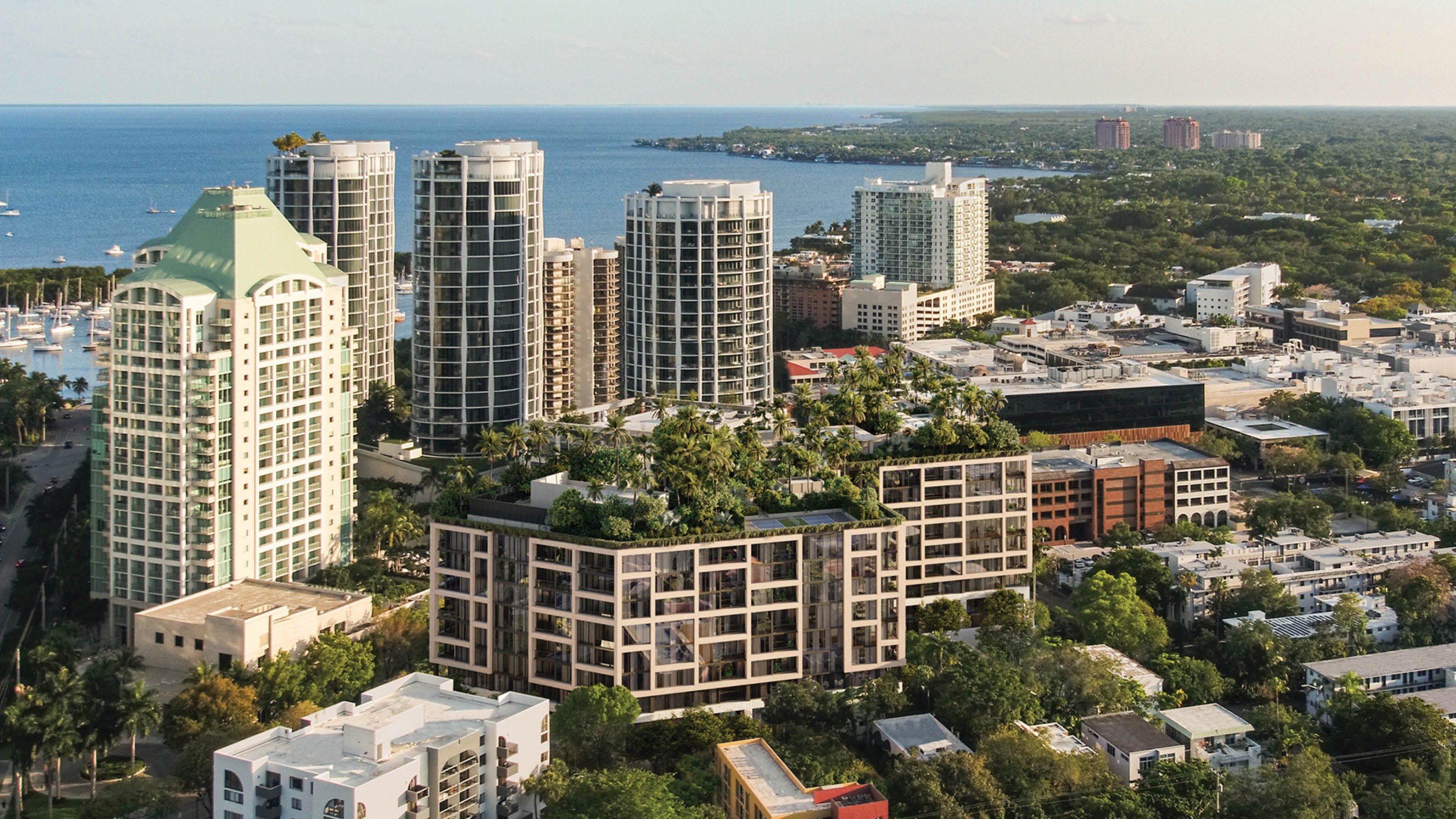
That question matters because Coconut Grove has a distinct residential psychology. It is green, village-like, waterfront-oriented, and often chosen by buyers who want Miami access without surrendering to a purely vertical, urban lifestyle. In that setting, the best luxury is not always spectacle. It is continuity.
For families, the private-school conversation is often more nuanced than a map suggests. Nominal proximity is only the first layer. The more important test is whether the drive is low-friction during the windows that matter most, especially morning drop-off and afternoon pickup. A home that appears farther away may function better if the route is cleaner; a home that appears close can feel inconvenient if the path depends on heavier traffic patterns.
That is why buyers evaluating The Well Coconut Grove should think in loops, not lines. How does the morning begin? Can one parent complete drop-off and return for a workout, a treatment, breakfast, a call, or a quiet hour before the next appointment? Can afternoon pickup fold into errands, a lounge stop, or an early family dinner without turning the day into a sequence of separate trips?
This is where Coconut Grove’s intimate scale becomes an ownership asset. The neighborhood’s appeal is not just its canopy and waterfront orientation, but the way daily life can feel less compartmentalized. Nearby Grove references such as Arbor Coconut Grove have helped frame the area as a family-sensitive luxury market, while The Well Coconut Grove leans into the next layer: wellness and social use as part of the weekday cadence.
A wellness-branded residence becomes most persuasive when its amenities are useful in short, repeatable windows. The high-value use case is not only the long spa day or the destination-style afternoon. It is the 45 minutes after drop-off, the treatment before pickup, the class between calls, the lunch with another parent, the quiet lounge moment before the evening begins.
That is the difference between an amenity package and an integrated wellness ecosystem. Pools, lounges, restaurant-style food and beverage, treatment rooms, programmed classes, and wellness facilities are most powerful when they are accessible often enough to change behavior. The ownership logic depends on actual frequency of use, not impressive names on a brochure.
For a buyer, this means asking practical questions. Are the most desirable spaces easy to reserve? Are peak family periods understood by the operating model? Is resident-priority access clear enough to protect the day-to-day experience? If outside membership demand is part of the broader ecosystem, how does that demand coexist with the expectations of owners paying for residential priority?
The Grove is well suited to this kind of scrutiny because buyers already compare lifestyle texture as much as unit specifications. Four Seasons Residences Coconut Grove speaks to the area’s appetite for service and discretion, while The Well Coconut Grove focuses attention on how wellness, family routines, and social connection can operate within the same ownership decision.
The second recurring use pattern is guest life. In Coconut Grove, visiting family and friends are rarely an occasional footnote. They are central to how many owners imagine the home functioning. Parents visit for extended weekends. Friends arrive for Miami events. Children host school friends. A sibling or grandparent may use the residence as a familiar base rather than a hotel alternative.
In this context, The Well Coconut Grove is not simply evaluated as an apartment. It is evaluated as private hospitality. The strongest amenity value may come from spaces that can serve both residents and guests: a pool that feels natural to use together, a lounge that makes arrivals feel gracious, food and beverage that reduces hosting pressure, wellness programming that gives visitors something to do, and treatment rooms that make a stay feel considered.
This is also where policies matter. Guest access should be generous enough to support real life, but not so loose that the resident experience is diluted. A property can be beautifully conceived and still disappoint if the guest framework is vague, restrictive in the wrong places, or overwhelmed during high-demand periods. The ownership case is therefore both emotional and operational.
The comparison is useful across South Florida’s wellness-branded landscape. The Well Bay Harbor Islands reflects the broader appeal of wellness-led residential thinking, but The Well Coconut Grove must be judged through the Grove’s particular family base, outdoor orientation, and village rhythm.
Coconut Grove rewards residences that feel embedded rather than imposed. The neighborhood’s greenery, walkable pockets, waterfront sensibility, and preference for outdoor living create an environment where wellness can feel authentic. Buyers are not only seeking a gym, a spa room, or a beautiful pool. They are seeking a daily setting that makes those features easier to use.
That is why The Well Coconut Grove sits at the intersection of three ownership categories. It can appeal to primary-residence buyers who need the week to function. It can appeal to secondary-home buyers who want resort-like ease without the impersonality of a hotel. It can appeal to wellness and social-club-minded owners who value programming, connection, and routine.
Other Grove projects help illustrate the diversity of demand. Park Grove Coconut Grove has long represented a polished waterfront-adjacent luxury sensibility, while The Lincoln Coconut Grove points to the continuing appetite for design-conscious living within the neighborhood. The Well Coconut Grove adds a more explicit lifestyle thesis: ownership should support the health, hosting, and family patterns that already define the buyer’s week.
The best evaluation begins with a calendar. A buyer should imagine a normal Tuesday, not only a holiday weekend. Where are the morning pressure points? When would wellness actually be used? Which spaces would a spouse, child, parent, or guest enjoy independently? What happens during school peaks, rainy afternoons, and busy social periods?
Then comes the operational layer. Resident-priority access, guest policies, reservation systems, membership demand, and peak-period management are not minor details. They are the difference between a residence that feels effortless and one that requires negotiation. For The Well Coconut Grove, the ownership case becomes strongest when the ecosystem respects the people who live there first.
Finally, buyers should separate aspiration from repetition. A feature used once a quarter is a luxury amenity. A feature used three times a week is part of the home’s value. The Well Coconut Grove should be understood through that lens: not as a conventional condo with wellness accents, but as a daily-use proposition for families, hosts, and Grove loyalists who want the residence to make life more fluid.
Why does the school run matter for The Well Coconut Grove? It is one of the clearest tests of daily ownership value. Low-friction routines can matter more than simple map proximity.
Is The Well Coconut Grove only for families with children? No. The family use case is important, but the concept also speaks to second-home owners and wellness-oriented residents.
How should buyers evaluate wellness amenities here? They should focus on frequency of use. Amenities are more valuable when they fit between errands, calls, school runs, and hosting.
Why are guest visits central to the ownership case? Guests can turn the residence into a private hospitality base. The value depends on spaces and policies that support real hosting.
What makes Coconut Grove relevant to this concept? Coconut Grove offers greenery, village scale, waterfront orientation, and an outdoor lifestyle that supports daily wellness habits.
Should buyers compare The Well Coconut Grove with other Grove residences? Yes. Comparisons help clarify whether wellness integration, service, location, or design is the buyer’s highest priority.
What operational details should owners review? Resident-priority access, guest rules, reservation systems, peak family periods, and membership demand all deserve attention.
Is a long amenity list enough to justify ownership? Not by itself. The stronger question is whether the amenities will be used consistently within the household’s actual routine.
How does guest policy affect luxury value? A balanced guest policy can support gracious hosting while protecting resident comfort, privacy, and access to shared spaces.
What is the simplest way to test the ownership fit? Build a sample week around school, wellness, dining, work, and visitors. If the residence reduces friction, the case becomes clearer.
For a confidential assessment and a building-by-building shortlist, connect with MILLION.
If branded residences are on your mind — as a home or as an allocation — we would be glad to share what we are seeing, privately.
Begin a quiet conversation