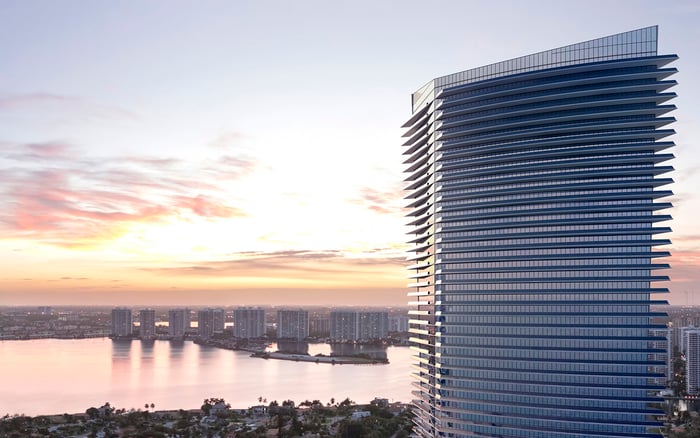
For luxury buyers moving between New York and South Florida, the smartest mortgage decision is rarely just the lowest quoted rate. Deduction limits, jumbo underwriting, second-home use, Florida homestead rules and New York residency facts can materially change the after-tax cost and planning value of debt.

For buyers who maintain a meaningful New York presence while acquiring a residence in South Florida, mortgage planning is no longer a simple comparison of quoted rates. The sharper question is whether the debt structure, property use, itemized deductions, liquidity plan and residency facts are aligned before the contract is signed.
That is especially true at the luxury level, where many purchases in Brickell, Miami Beach, Sunny Isles Beach and West Palm Beach sit well above standard lending thresholds. A residence at The Residences at 1428 Brickell may require a very different financing conversation than a conventional primary-home mortgage. For readers using Buyer's Guides as a starting point, the central issue is not whether debt is available. It is whether the debt is efficient.
For mortgages taken out after Dec. 15, 2017, the federal home mortgage interest deduction generally applies only to interest on up to $750,000 of qualified residence acquisition debt, or $375,000 for married taxpayers filing separately. That ceiling can surprise luxury buyers who assume a multimillion-dollar mortgage will create a proportionate federal tax benefit.
Older acquisition debt can remain grandfathered under the prior $1 million limit, which makes loan history and refinancing structure important for buyers who already own a New York residence. A refinance, additional borrowing or change in loan purpose can alter the analysis, so the tax treatment should be modeled before funds are moved.
Qualified residence interest can apply to a taxpayer’s main home and one second home. That matters for a buyer maintaining a Manhattan apartment while acquiring a South Florida condominium. But the benefit is relevant only if the taxpayer itemizes deductions rather than taking the standard deduction, and the federal deduction for state and local taxes is generally capped at $10,000 per return, or $5,000 if married filing separately. High property-tax bills may therefore carry less federal value than the gross numbers suggest.
Second-home planning can be elegant, but it must be precise. If a Florida residence is held for personal use, the mortgage-interest analysis may differ from that of a residence rented for part of the year. Mixed personal and rental use can trigger allocation rules, and buyers should decide before closing whether the home is primarily a personal retreat, an income asset or a flexible hybrid.
This is particularly relevant in resort-oriented submarkets, including Miami Beach, where residences such as The Perigon Miami Beach may appeal to owners planning seasonal use. The question is not simply whether rental income is attractive. It is whether rental use changes the tax, lending and insurance profile of the ownership.
Home equity debt also requires care. Interest on a home equity loan or HELOC is deductible only when the borrowed funds are used to buy, build or substantially improve the home securing the loan. Using home equity for portfolio investments, lifestyle expenses or a separate property may not receive the treatment a buyer expects.
A mortgage above the applicable conforming loan limit is a jumbo or nonconforming loan. For 2025, the baseline conforming loan limit for a one-unit property is $806,500, with a higher ceiling of $1,209,750 in designated high-cost areas. Many South Florida luxury acquisitions exceed those amounts quickly, which means buyers are often working with jumbo, portfolio or private-bank structures.
That can be useful. Portfolio lenders may offer flexible terms for complex balance sheets, concentrated equity positions or global income. But flexibility does not eliminate underwriting. Condo eligibility can still matter, especially where project issues involve deferred maintenance, unsafe conditions, special assessments or reserve deficiencies. Coastal property can also require flood insurance when the building is in a Special Flood Hazard Area and the loan is federally regulated or insured.
For trophy coastal purchases, including towers such as Bentley Residences Sunny Isles, financing strategy should be reviewed alongside building documentation, insurance requirements and liquidity reserves. A low nominal rate is only one part of the purchase architecture.
High-net-worth buyers often compare a traditional mortgage with cash, interest-only financing, securities-backed lines of credit and other portfolio-based liquidity tools. Each can be rational in the right circumstances. A cash purchase may simplify closing and reduce interest expense. An interest-only mortgage may preserve liquidity. A securities-backed line may avoid selling appreciated assets.
But these are not interchangeable. Securities-backed lines of credit carry market and collateral-call risk, including the possibility that pledged assets may need to be sold if values decline. Investment-interest expense is generally deductible only up to net investment income, so portfolio borrowing does not automatically function like qualified mortgage interest.
The best analysis compares after-tax interest cost, liquidity preservation, call risk, estate-planning objectives and asset-protection considerations. In markets such as West Palm Beach, where buyers may be weighing waterfront condominium living at Mandarin Oriental Residences, West Palm Beach against a larger single-family allocation, the financing choice can influence far more than the monthly payment.
Florida does not impose a personal income tax, which is one reason high-income New York buyers often coordinate mortgage planning with Florida domicile planning. But buying or financing a Florida home does not, by itself, eliminate New York residency risk.
New York treats a person as a resident if they are domiciled in New York or qualify as a statutory resident by maintaining a permanent place of abode and spending more than 183 days in the state. New York residents are generally taxed on income from all sources, while nonresidents are taxed on New York-source income. The practical result is clear: day-count records, domicile evidence and household logistics should be organized before closing, not reconstructed later.
Florida homestead benefits also depend on facts. The homestead exemption can reduce taxable value for qualifying permanent residences, but generally requires the property to be the owner’s permanent residence as of Jan. 1. The Save Our Homes assessment limitation generally caps annual increases in assessed value for homestead property at 3 percent or the change in the Consumer Price Index, whichever is lower. Florida’s constitutional homestead protection may also shield a qualifying homestead from forced sale by many creditors, subject to acreage and other legal limits.
The luxury takeaway is understated but important: a South Florida mortgage should be designed around how the owner will actually live.
Can mortgage interest still matter on a luxury South Florida purchase? Yes, but the benefit is often limited because post-2017 acquisition debt is generally capped at $750,000 for deduction purposes.
Can I deduct mortgage interest on both a New York home and a Florida home? Qualified residence interest can apply to a main home and one second home, subject to the applicable debt limits and itemizing rules.
Does a jumbo mortgage receive the same tax treatment as a smaller mortgage? The loan may be larger, but the deductible acquisition-debt ceiling can still limit the federal benefit.
Does buying in Florida automatically end New York residency exposure? No. New York looks to domicile and statutory-residency facts, including whether you maintain an abode and spend more than 183 days in the state.
Is a HELOC always deductible if it is secured by the home? No. Interest is generally deductible only when the proceeds buy, build or substantially improve the home securing the loan.
Can rental use affect second-home mortgage interest? Yes. Mixed personal and rental use can require separate allocation rules, so the intended use should be planned before closing.
Why do conforming loan limits matter for luxury buyers? Loans above the applicable limit are jumbo or nonconforming, which can change underwriting, pricing and documentation expectations.
Can condo project issues affect financing? Yes. Deferred maintenance, unsafe conditions, special assessments or reserve deficiencies can affect project eligibility and lender comfort.
Why is flood insurance part of the financing conversation? Lenders must require it for buildings in Special Flood Hazard Areas when the loan is federally regulated or insured.
Should I compare a securities-backed line with a mortgage? Yes, but compare risk as well as rate because collateral calls and investment-interest limits can materially change the outcome.
When you're ready to tour or underwrite the options, connect with MILLION.
If branded residences are on your mind — as a home or as an allocation — we would be glad to share what we are seeing, privately.
Begin a quiet conversation