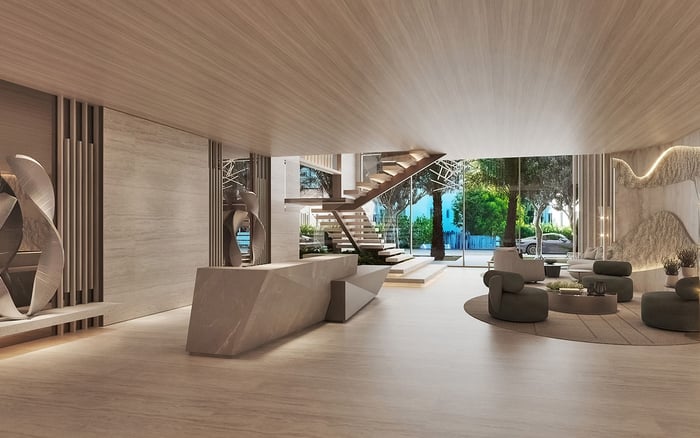
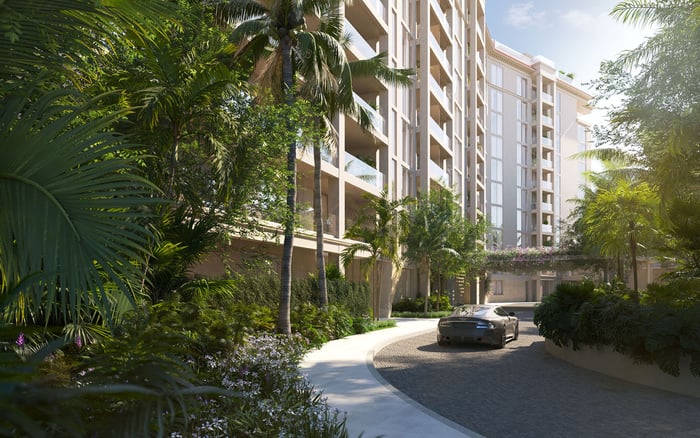
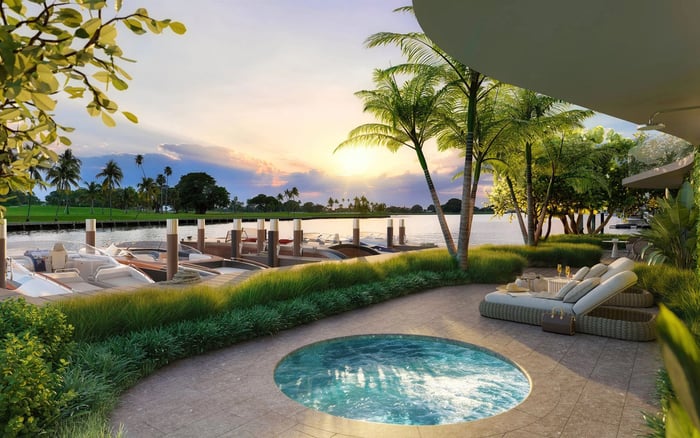
A buyer-focused guide to evaluating tower privacy in Brickell and South Florida, from sightlines and floor height to balconies, exposures, waterfront setbacks, and quieter alternatives beyond the urban core.
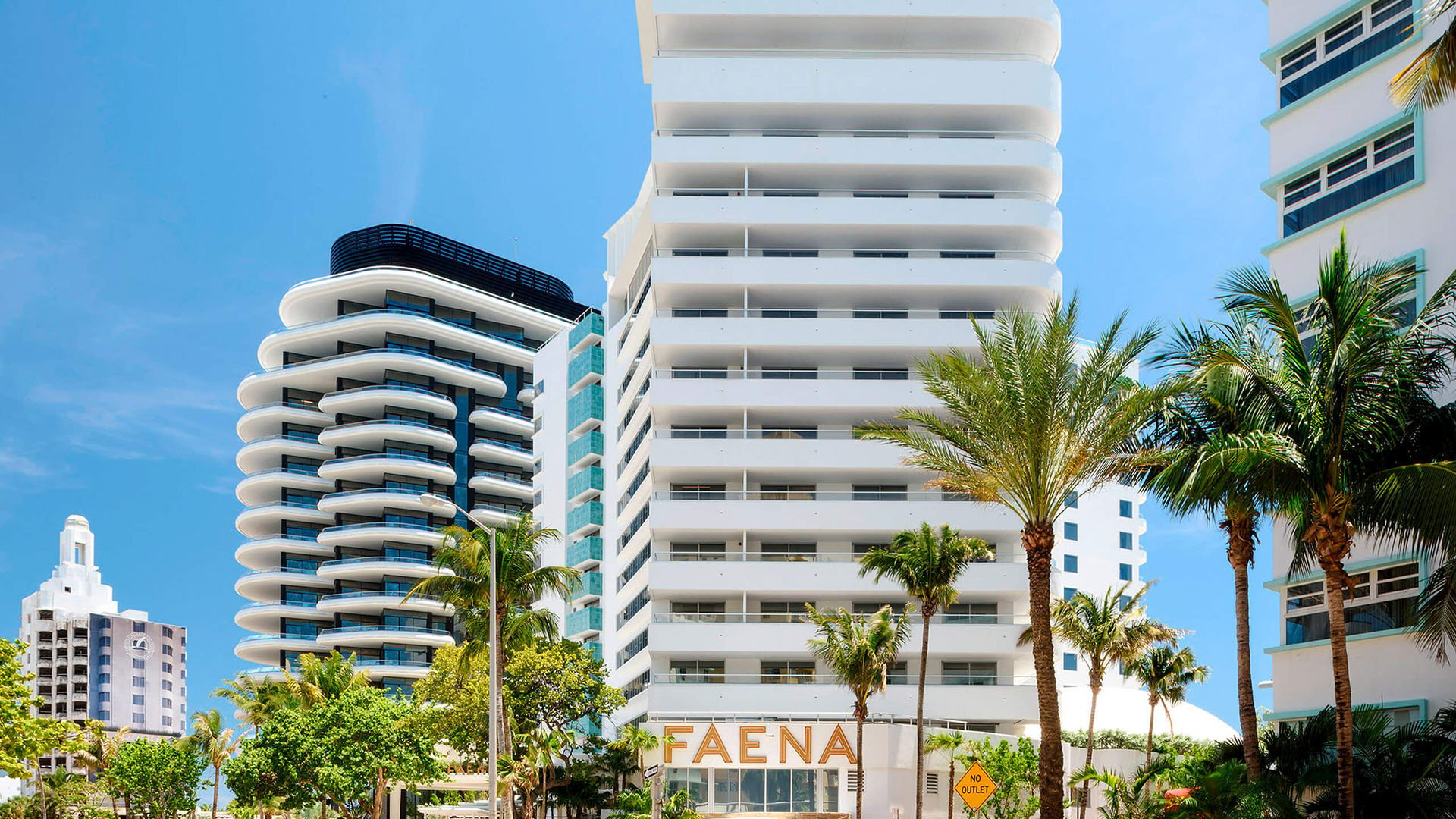
For a San Francisco buyer, privacy is often shaped by hillside orientation, neighboring windows, fog, and the choreography of dense urban living. In Brickell, the equation changes. The towers are taller, the glass is broader, the light is brighter, and a view corridor can feel both expansive and exposed. Choosing well is not simply a matter of going higher. It means understanding what another tower can see, what your own home reveals, and how the architecture manages the threshold between spectacle and retreat.
In South Florida, the most private residence is not always the penthouse, the newest launch, or the apartment with the widest panorama. It is often the home with the cleanest angle, the least compromised bedroom exposure, the deepest terrace, and the fewest future surprises across the street. That is especially true in Brickell, where proximity is part of the appeal. Buyers want restaurants, offices, bay access, and cultural energy, but they also want to have breakfast, work, swim, and entertain without feeling observed.
High floors can be seductive, but height alone does not solve privacy. A high residence can still look directly into another high residence if towers are aligned face to face. Conversely, a mid-level home can feel remarkably private if it is angled toward open water, a lower-rise edge, a landscaped podium, or a broad setback.
The first exercise is visual, not emotional. Stand where the primary bed, living room seating, kitchen island, and terrace dining table will actually sit. Then look outward from each position. A view that feels cinematic from the center of an empty sales gallery may feel less private once daily life is staged against the glass. Privacy is measured from the places where you live, not from the places where renderings are most flattering.
In Brickell, residences such as The Residences at 1428 Brickell belong in the conversation for buyers comparing new-generation tower living, but the same rule applies to every address: evaluate the specific line, exposure, and neighboring massing before falling in love with the skyline.
A floor plan shows where exposure is concentrated. Corner glass can be beautiful, but it can also create a theater effect if the corner faces another building. Long glass walls may be ideal when they open to bay, ocean, park, or low-rise neighborhood views. They deserve more scrutiny when they face a comparable tower at a close angle.
Begin with the bedroom wing. Primary suites deserve the most protected exposure, because drapery should be a choice, not a necessity. Secondary bedrooms and offices also matter, particularly for buyers who work from home or host family for long stays. If the only solution is to keep shades down all day, the residence may be borrowing light rather than owning privacy.
Flow-through units can help when they allow different modes of living throughout the day. A buyer may use the more open exposure for entertaining and the quieter side for sleeping, reading, or working. The value is not only cross-light or air movement. It is the ability to choose which side of the home feels public and which side remains private.
Balcony privacy is often underestimated. Inside, shades, furniture placement, and lighting control can soften exposure. Outside, the geometry is more honest. If neighboring terraces stack directly across from yours, the outdoor room may feel social when you want it to feel serene.
Ask how you intend to use the terrace. Morning coffee requires a different level of enclosure than evening entertaining. A plunge pool, summer kitchen, or dining table needs more discretion than a narrow viewing ledge. Deep terraces, angled railings, side walls, landscaping, and building curvature can all change the lived experience, but they must be reviewed against the actual neighboring tower field.
For Brickell buyers studying bay-facing alternatives, Una Residences Brickell can be considered within a broader review of waterfront orientation and terrace exposure. The key is not simply whether a home sees water. It is whether the water view gives the residence breathing room from adjacent glass.
Not every buyer relocating from San Francisco wants to replace one vertical environment with another. Some want the convenience of Miami with a softer residential edge. Coconut Grove is often part of that discussion because it offers a different rhythm: more canopy, more neighborhood texture, and a lower-slung sense of arrival in many pockets.
The privacy calculus changes in Coconut Grove. Instead of asking only which tower is across the avenue, buyers may weigh tree cover, street orientation, neighboring homes, and the relationship between indoor rooms and garden-like setbacks. Projects such as Four Seasons Residences Coconut Grove and Vita at Grove Isle sit within that broader buyer conversation about discretion, water, greenery, and a less exposed daily life.
This does not mean Coconut Grove is universally more private. It means the variables are different. A lower building can still have compromised sightlines, and a beautiful residence can still face an active neighbor. The advantage is that buyers may find more ways to create privacy through landscape, orientation, and site planning rather than relying only on altitude.
Waterfront living is one of South Florida’s great luxuries, but it should not be treated as a privacy guarantee. A residence may have a wide water view in one direction and a direct tower view in another. It may feel open during the day and exposed at night, when interior lighting turns glass into a stage.
Study the home at different imagined hours. Where will lamps glow after sunset? Can a neighboring residence see into the kitchen, bath, or primary suite? Are the terrace and living room on the same exposure, or does the plan allow separation between entertaining and retreat? In Miami Beach, a project such as The Perigon Miami Beach may enter the discussion for buyers comparing coastal privacy with urban convenience, but the same discipline applies: water, architecture, and neighboring context must be read together.
A private view today can become a shared view tomorrow if the surrounding parcels are not understood. Buyers should ask what sits next door, what sits across the street, and whether nearby sites appear underbuilt relative to the neighborhood. The question is not only, “What do I see now?” It is, “What could reasonably stand there later?”
This is especially important in growth corridors. A buyer may prefer an exposure toward a park, waterway, protected edge, established low-rise district, or broad infrastructure corridor because those conditions can reduce the chance of a direct future neighbor. No exposure is risk-free, but some are naturally more defensible than others.
Before choosing a South Florida home around privacy, tour with a narrow purpose. Do not only admire the view. Test the angles. Stand at the bed wall, the shower entry, the dining table, the desk, and the terrace rail. Notice whether you instinctively want shades. Notice whether neighboring balconies feel close enough for eye contact. Notice whether the best view belongs to the room you use most.
Then compare the residence to your lifestyle. If you entertain frequently, the living room and terrace need the strongest privacy. If you work from home, the office exposure matters. If the home is primarily a second residence, ease and serenity may matter more than dramatic urban energy. The right answer is not universal. It is personal, spatial, and specific to the line within the building.
For the San Francisco buyer arriving in Brickell, the most successful purchase is often the one that balances urban pleasure with controlled exposure. South Florida rewards buyers who look beyond shine and study the quiet architecture of privacy.
Is a higher floor always more private in Brickell? No. High floors can still face neighboring towers directly, so angle and spacing matter as much as elevation.
What is the first privacy feature to evaluate? Start with sightlines from the bed, living room seating, kitchen, office, and terrace, not from the entry or sales-view position.
Are corner residences more private? Sometimes. A corner can provide openness, but it can also expose two sides of the home if nearby towers align with the glass.
How important is terrace depth? Very important. A deeper terrace can create a more usable outdoor room, especially when paired with favorable orientation and side protection.
Can window treatments solve tower-to-tower exposure? They help, but they should not be the only solution. The best homes feel comfortable with shades open during normal daily use.
Should buyers visit at different times of day? Yes. Morning sun, afternoon glare, and evening interior lighting can all change how private a residence feels.
Does waterfront positioning guarantee privacy? No. A water view can add openness, but side exposures and nearby buildings still need careful review.
Why consider Coconut Grove instead of only Brickell? Coconut Grove may offer a softer privacy profile through landscape, neighborhood texture, and less intensely vertical surroundings.
What should remote workers prioritize? They should focus on office sightlines, glare control, acoustic comfort, and whether video-call spaces feel discreet.
What is the best way to shortlist comparable options for touring? Start with location fit, delivery status, and daily lifestyle priorities, then compare stacks and elevations to validate views and privacy.
To compare the best-fit options with clarity, connect with MILLION.
If branded residences are on your mind — as a home or as an allocation — we would be glad to share what we are seeing, privately.
Begin a quiet conversation