A discreet buyer’s framework for assessing Miami Beach amenities that are substantive, private, well-managed, and genuinely useful without creating a resort-style atmosphere.
In Miami Beach, sophisticated buyers are no longer asking only whether a building has amenities. They are asking whether those amenities will improve daily life without turning home into a resort lobby. That distinction matters. A residence can offer wellness, dining, pool, beach service, lounges, guest suites, and concierge support, yet still feel composed, private, and residential. Another can offer a similar menu and feel performative by noon.
The difference is not the length of the amenity sheet. It is the relationship among space, staffing, access, acoustics, programming, and resident culture. Amenity depth should read as ease, not activity. It should make the building feel more livable, not more public.
For buyers comparing Miami Beach options such as The Perigon Miami Beach or Shore Club Private Collections Miami Beach, the right question is not simply what is offered. It is how those offerings behave on an ordinary Tuesday morning, a holiday weekend, and an evening when privacy matters most.
A well-designed amenity program gives every room a clear reason to exist. The fitness area should support daily routines, not merely provide a photogenic equipment line. The lounge should be useful for reading, informal meetings, or quiet conversation, not function as overflow seating for a bar. The spa should feel calm because of its layout and operating rules, not because it happens to be empty during a tour.
Ask whether each amenity solves a real residential need. Does it reduce friction? Does it replace an errand? Does it allow you to host without opening your private residence? Does it support wellness without requiring interaction? If the answer is yes, the amenity has depth. If the answer is mostly visual, it may have marketing value but limited daily value.
This is where boutique sensibility often matters. Boutique does not have to mean small, and large does not have to mean impersonal. The better lens is proportion. Are there enough intimate zones for the number of residences? Are the most desirable spaces subdivided so residents can use them simultaneously without feeling exposed? Can one person work quietly while another hosts coffee nearby? Depth is revealed in these small separations.
Buyers are often shown finishes first. Marble, wood, lighting, and art create an impression, but circulation determines how a building lives. In a private residential building, amenity routes should feel intuitive and discreet. You should not have to pass through an active social area to reach a wellness room. Guests should not drift through resident-only spaces. Service functions should operate without constant visibility.
Walk the sequence in your mind: from residence to elevator, from elevator to gym, from lobby to pool deck, from beach return to changing area. The experience should feel calm and controlled. If every path converges in the same lobby or lounge, the building may feel busier than expected, even with a strong amenity list.
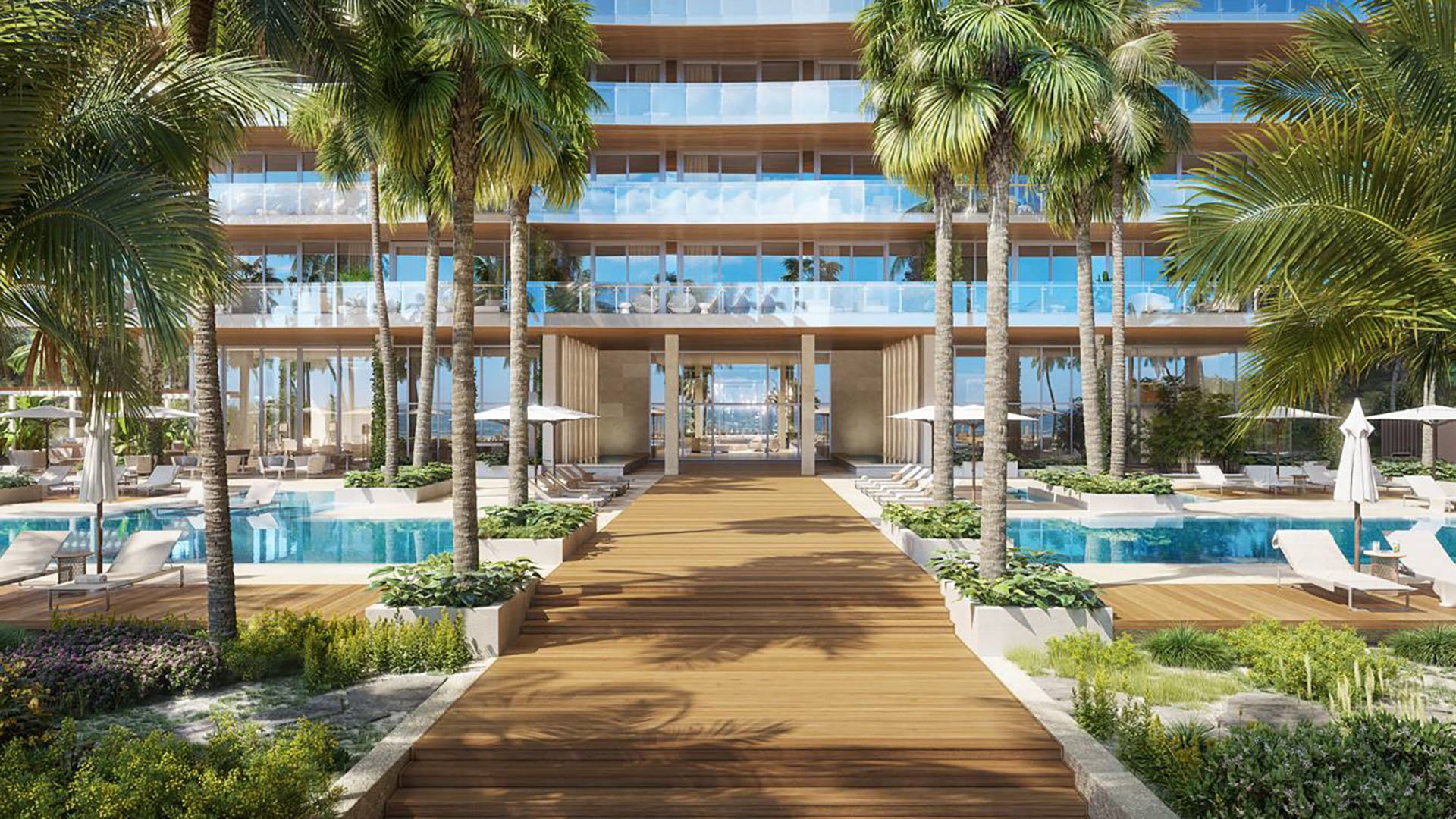
In Miami Beach, where indoor and outdoor life often overlap, transitions are especially important. Oceanfront living is at its best when beach, terrace, lobby, wellness, and private residence feel connected without becoming porous. Beach access should be convenient, but convenience should not compromise discretion.
Amenities are not static. They are managed every day. A quiet room can become a party room if reservation policies are loose. A pool deck can become territorial if seating is not thoughtfully administered. A wellness suite can become frustrating if it is understaffed or overbooked.
Before purchasing, review how private rooms are reserved, how many guests residents may bring, whether certain spaces have set hours, and how rules are enforced. Pay attention to tone. A building that depends on constant policing may not have the right culture. A building with clear expectations and elegant execution often feels effortless because the rules are already embedded in operations.
This is particularly relevant for buyers who value lifestyle but do not want a programmed resort feeling. The strongest residential programs allow choice. They can support a private dinner, a quiet swim, a trainer session, or an afternoon with family without making every day feel scheduled.
Privacy does not mean the building is empty. It means you can use the property without feeling observed or interrupted. Layered privacy is achieved through sightlines, landscaping, elevator placement, reception protocol, seating orientation, and acoustic design. A lounge facing directly into an arrival path may look dramatic but feel less usable. A pool deck with too few quiet corners may feel scenic but not serene.
Tour at different times if possible. Morning reveals fitness demand. Late afternoon reveals pool culture. Weekend visits reveal guest patterns. Evening shows whether social spaces become elegant extensions of home or a quasi-hospitality scene.
Buildings such as The Ritz-Carlton Residences® Miami Beach can be considered within this broader lens: how does the amenity experience preserve residential calm while still offering meaningful service and variety? The answer depends less on the brand or building name than on execution.
Service is one of the most misunderstood elements of amenity depth. True residential service is anticipatory but restrained. It should reduce effort without creating a hotel atmosphere. The best staff presence is felt in preparedness, cleanliness, timing, and memory, not in constant performance.
Ask practical questions. Who manages the amenities? How are staff trained? Is there a dedicated point of contact for residents? How are deliveries, guests, cars, pets, wellness appointments, and beach needs coordinated? A building can have fewer headline amenities and still feel more luxurious if service is precise.
Spectacle, by contrast, tends to age quickly. Oversized public rooms, dramatic but underused features, and excessive programming can create an initial impression that does not translate into daily comfort. Waterfront buyers should be especially selective. The view is already the drama; the amenity program should frame it, not compete with it.
Amenity depth has a financial dimension. Maintenance, staffing, replacement cycles, insurance, utilities, and operating standards all flow into the ownership experience. The question is not whether amenities cost money. They do. The question is whether the cost supports a lifestyle you will actually use.
A private dining room you use twice a year may still be valuable if it prevents disruption inside your residence. A serene wellness room may be worth more than a larger but busier gym. A smaller pool area with excellent seating discipline may outperform a larger deck that feels crowded. Value is not always measured in square footage. It is measured in frequency, quality, and control.
For buyer guides, the most useful exercise is to rank amenities in three categories: daily essentials, occasional privileges, and decorative extras. Daily essentials should carry the most weight. Occasional privileges should be judged by how smoothly they function. Decorative extras should be discounted unless they contribute meaningfully to atmosphere.
Miami Beach rewards restraint. The city already offers sun, water, dining, design, and movement. A residence does not need to reproduce a resort to feel complete. It needs to provide a private counterbalance to the energy outside.
The best amenity depth is almost quiet. It appears when towels are where they should be, when guests are guided without confusion, when the pool feels composed, when wellness spaces are available, when service is present but not theatrical, and when the route home feels protected. That is the measure buyers should apply before purchasing.
What is amenity depth in a luxury condo? Amenity depth means the spaces, staffing, rules, and design work together to support daily life, rather than simply adding more features.
How can I tell if a building will feel too much like a resort? Look for heavy programming, busy shared spaces, unclear guest policies, and amenity routes that make residents pass through social areas constantly.
Are more amenities always better in Miami Beach? No. A shorter list of well-managed, frequently useful amenities can be more valuable than a long list of underused or crowded spaces.
Why is circulation important when evaluating amenities? Circulation shapes privacy. If residents, guests, staff, and beach traffic all overlap, the building can feel busier than expected.
Should I visit amenities at different times of day? Yes. Morning, evening, and weekend visits can reveal patterns that a scheduled tour may not show.
How should buyers evaluate a pool deck? Study seating, shade, privacy, service flow, guest policies, and whether the atmosphere feels calm during peak use.
What makes wellness amenities feel residential? They should be easy to access, quietly managed, acoustically comfortable, and designed for regular use rather than display.
Do branded residences always feel more like hotels? Not necessarily. The deciding factor is how service is delivered and whether the building protects residential privacy.
What should second-home buyers prioritize? They should prioritize clear management, secure access, guest coordination, and amenities that make short stays effortless.
How do I compare two buildings with similar amenity lists? Compare rules, staffing, layout, crowd patterns, maintenance standards, and how each building feels outside the sales presentation.
When you're ready to tour or underwrite the options, connect with MILLION.
If branded residences are on your mind — as a home or as an allocation — we would be glad to share what we are seeing, privately.
Begin a quiet conversation