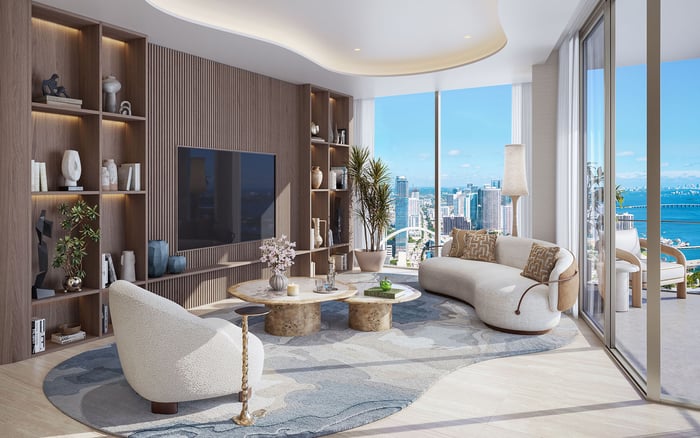
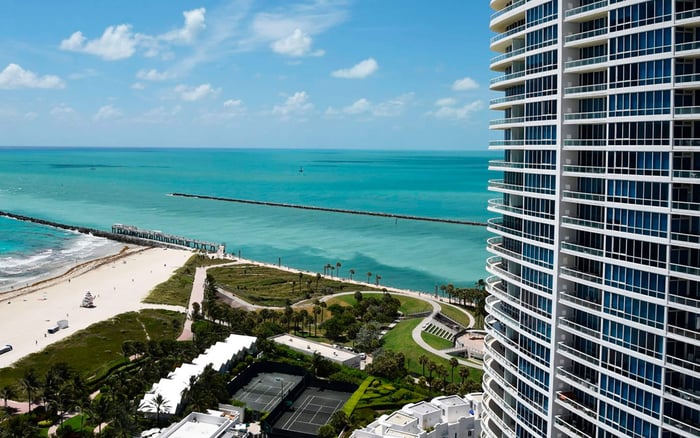
A buyer-oriented editorial on how Delano Residences & Hotel Miami can be evaluated as a more disciplined second-home choice, with emphasis on service, discretion, flexibility, and long-term lifestyle fit.
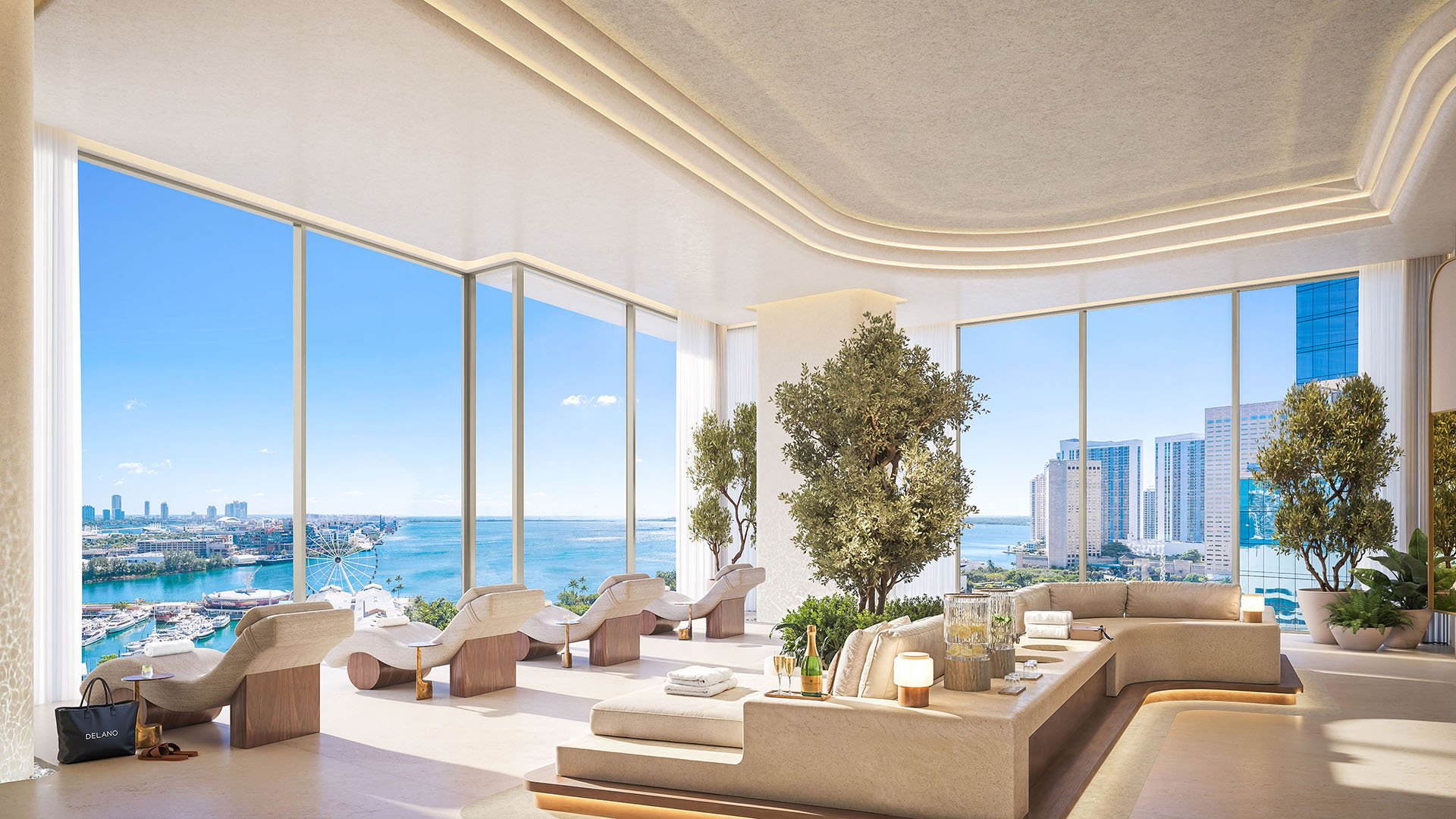
The most sophisticated second-home buyers in Miami are no longer asking only where they want to escape. They are asking how a residence performs when they are away, how it receives them when they return, and whether ownership feels calm rather than performative. That is the lens through which Delano Residences & Hotel Miami becomes interesting.
A refined second-home strategy is not defined by the loudest amenity deck or the most theatrical arrival sequence. It is defined by continuity. The owner wants the apartment to feel ready, the building to feel intuitive, and the surrounding setting to support business, leisure, dining, and culture without turning each stay into a logistical exercise. In Miami, that often means prioritizing service architecture as carefully as physical architecture.
Delano’s residence-and-hotel format speaks to that mindset. The name itself places the project within the world of hospitality, where the buyer is not merely purchasing square footage but considering a more managed rhythm of use. For a global or bi-coastal owner, that distinction matters.
A traditional condominium can work beautifully as a primary home, but a second residence has a different job. It may sit empty for stretches, host family for concentrated periods, and become the base for art week, winter travel, school breaks, business dinners, and long weekends. The residence must be private enough to feel like home, yet supported enough to reduce the friction that comes with distance.
That is why the hotel-residence model has become a meaningful part of the branded residences conversation. The appeal is not simply a recognizable name. It is the promise of a more legible standard. Buyers want to understand how service will be delivered, how guests will be received, and how the property’s daily language will feel when they are in town for only a few days.
The best version of this model is subtle. It does not make a private residence feel transient. Instead, it allows an owner to arrive, settle, host, and leave with fewer loose ends. For the second-home buyer, that is often more valuable than another seldom-used amenity.
For some buyers, the phrase Downtown Miami suggests energy, access, and immediacy. For others, it signals a shift away from the purely resort-led image of Miami into something more layered. A second home in this context can function as a city residence, a cultural base, and a warm-weather retreat at once.
This is where Delano’s positioning can be considered alongside other urban luxury addresses. A buyer studying Faena Residences Miami Downtown Miami may be thinking about the evolving relationship between branded hospitality, design culture, and city living. Another comparing Waldorf Astoria Residences Downtown Miami may be weighing skyline identity, service recognition, and the appeal of a lock-and-leave urban base.
The more refined buyer is not choosing Downtown Miami simply because it is active. They are choosing it because time is scarce. If a stay is brief, proximity to the city’s business, dining, arts, and waterfront life becomes more than convenience. It becomes part of the ownership thesis.
A second home should not be reduced to a spreadsheet, but it should withstand one. The clearest strategy begins with personal use. Will the owner actually come? Will the residence support the way the family travels? Does the building match the owner’s preferred level of privacy? These questions are more revealing than speculative assumptions.
Investment discipline still matters. A buyer should evaluate the depth of demand for the location, the distinction of the residence, the character of competing supply, and the flexibility of the ownership structure. Yet the most resilient second-home purchase is usually the one that remains desirable to its owner even when market narratives become noisy.
This is especially true in the condo-hotel category, where the details of use, governance, and rental flexibility can vary meaningfully from one property to another. Buyers should focus on what is permitted, what is practical, and what aligns with their own tolerance for shared hospitality infrastructure. The strategy is not to chase optionality for its own sake. It is to understand whether optionality supports the way the owner already lives.
For many buyers, the key words are simple but demanding: second-home clarity, lifestyle quality, investment restraint, and a building experience that feels effortless rather than overdesigned.
Delano belongs in a comparison set that extends beyond geography. A buyer may look at Brickell, Downtown, Miami Beach, or the oceanfront and still be asking the same question: which residence best supports my actual pattern of use?
In Brickell, Baccarat Residences Brickell offers a different expression of branded luxury, one tied to a financial-district lifestyle and a more vertical urban rhythm. On Miami Beach, Shore Club Private Collections Miami Beach brings the conversation closer to sand, resort memory, and coastal identity. Delano, by contrast, should be evaluated for how its residence-and-hotel premise fits the buyer who wants Miami to be easy, polished, and ready on demand.
The comparison should be practical. Consider arrival and departure patterns. Consider whether guests will visit without the owner. Consider whether the residence is primarily for couples, extended family, entertaining, or quiet solo time. Consider how often the buyer wants the energy of a hotel environment near the private home.
A refined purchase is rarely about the most dramatic answer. It is about the most repeatable one.
For second-home buyers, the lock-and-leave test is decisive. The residence must feel secure when unused and alive when occupied. It must be easy to prepare, easy to maintain, and easy to enjoy. A beautiful apartment that requires constant orchestration can become less relaxing over time.
Delano’s relevance rests in how it may answer that test for buyers who value hospitality as an operating layer. The more often an owner travels, the more service consistency matters. The more frequently plans change, the more flexibility matters. The more the residence is used for concentrated stays, the more arrival quality matters.
This is also why restraint matters. A second home should not feel like a stage set that demands performance. It should make a certain life easier: mornings without rush, evenings that require no explanation, and a sense that Miami is available without becoming exhausting.
The strongest case for Delano Residences & Hotel Miami is not that every second-home buyer needs a hotel component. Many do not. The stronger point is that a residence connected to hospitality can support a more deliberate ownership strategy when the buyer prizes ease, privacy, service, and urban access in equal measure.
A refined second-home strategy begins with self-knowledge. If the owner wants a purely private enclave, the answer may be elsewhere. If the owner wants a residence that can function as a polished Miami base with a service-forward sensibility, Delano deserves consideration. The goal is not to own more. It is to own more intelligently.
What makes Delano Residences & Hotel Miami relevant for second-home buyers? Its residence-and-hotel format may appeal to buyers who want privacy supported by a more service-oriented ownership experience.
Is a hotel-residence model right for every buyer? No. It best suits owners who value managed arrival, service consistency, and a building culture influenced by hospitality.
How should buyers think about Downtown Miami for a second home? Downtown Miami can work for buyers who want an urban base with access to dining, culture, business, and waterfront life.
Does a second home need to be oceanfront to feel luxurious? Not necessarily. For some buyers, luxury is defined by service, access, privacy, and ease rather than direct beachfront positioning.
What should be reviewed before buying in a condo-hotel setting? Buyers should review use rights, building rules, rental policies if applicable, fees, and how private residential life is separated from hotel activity.
How does Delano compare with other branded residences in Miami? The comparison should focus on lifestyle fit, service character, location, privacy, and how often the owner expects to use the home.
Should investment potential drive the purchase? It should inform the decision, but the strongest second-home purchases usually begin with genuine personal use and long-term desirability.
What is the most important lifestyle question to ask? Ask whether the residence will make each arrival, stay, and departure easier for the way you actually live.
Can a second home be both private and hospitality-oriented? Yes, but the balance depends on building design, operations, governance, and the owner’s preference for proximity to hotel energy.
What is the best way to shortlist comparable options for touring? Start with location fit, delivery status, and daily lifestyle priorities, then compare stacks and elevations to validate views and privacy.
To compare the best-fit options with clarity, connect with MILLION.
If branded residences are on your mind — as a home or as an allocation — we would be glad to share what we are seeing, privately.
Begin a quiet conversation