A discreet buyer’s guide to trust ownership, privacy expectations, financing friction, condo approvals, and deal choreography for Silicon Valley wealth entering Miami’s luxury residential market.
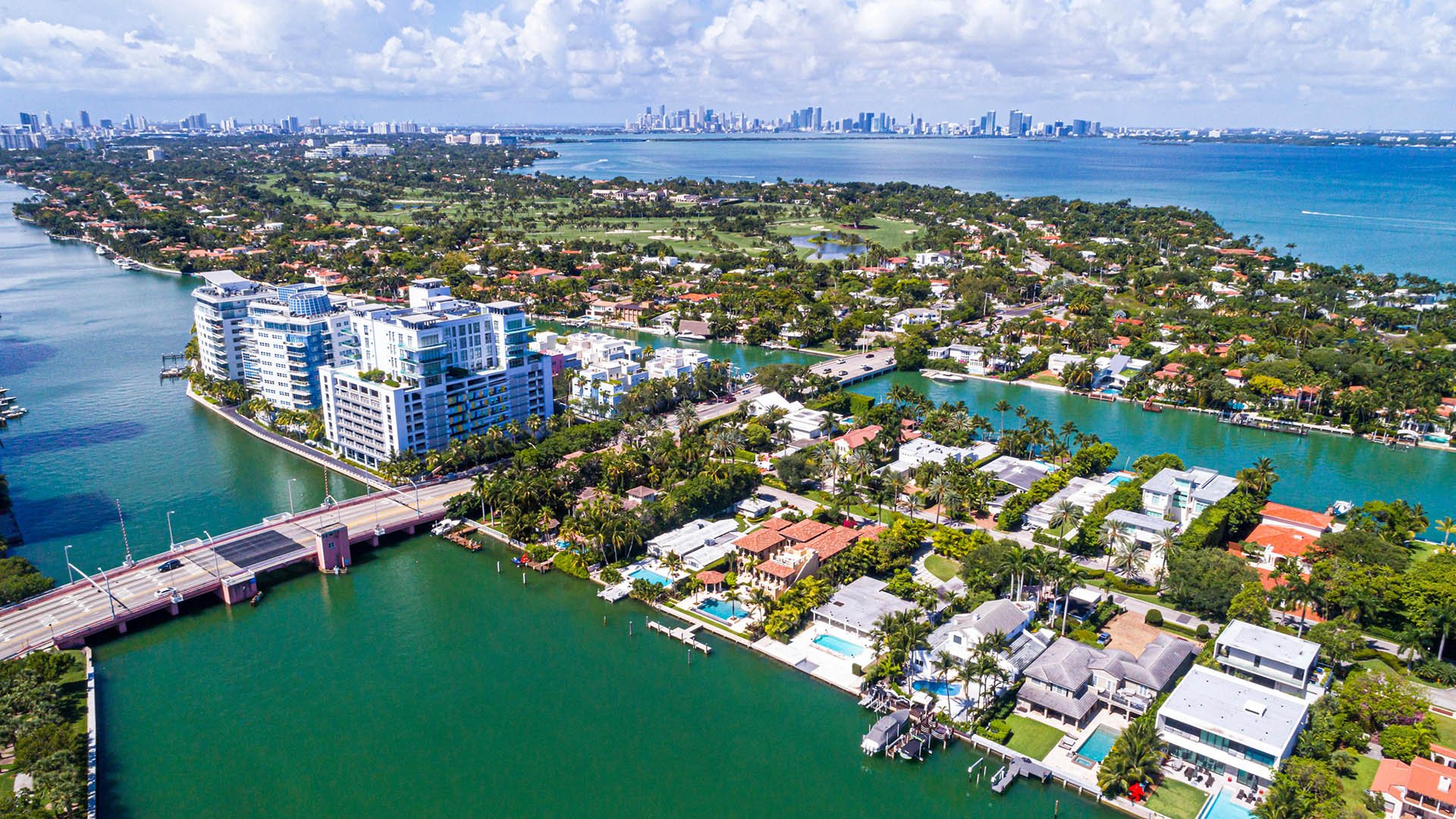
For a founder, investor, or executive arriving from Silicon Valley, Miami is rarely a simple lifestyle purchase. A waterfront residence may serve as a family base, a tax-residency anchor, a long-duration investment, and a visible marker of personal success. That combination makes ownership structure a first-order decision, not a closing-table afterthought.
Trust ownership often enters the discussion because it can help organize estate planning, succession, family governance, and administrative continuity. It may also reduce some forms of casual visibility compared with buying in an individual name. Yet sophisticated buyers should begin with a sober principle: privacy is a design discipline, not a single document. A trust can be useful, but it is only one layer among counsel, banking, title, insurance, association approval, household staffing, and day-to-day lifestyle choices.
In South Florida’s top tier, the strongest buyers treat privacy as part of the acquisition brief. They decide early who signs, who communicates, who receives notices, who appears on forms, and how the residence will be used. That early choreography is especially important in competitive buildings and enclaves where seller confidence, clean documentation, and speed still matter.
The most common misconception is that a trust makes a buyer invisible. It does not. A purchase can create records, counterparties, compliance reviews, association files, lender files, insurance files, and service-provider relationships. Each may require different information, and each may apply its own standards for identity verification or authority to act.
The stronger goal is controlled disclosure. A buyer wants the right information in the right hands, with the fewest unnecessary names circulating among brokers, assistants, vendors, and building personnel. This is where experienced legal and advisory teams matter. They can establish consistent answers before questions arise: who is the trustee, who is the authorized signer, who is the beneficial owner, who can approve contract changes, and who receives sensitive communications.
For Silicon Valley buyers accustomed to cap tables, special-purpose vehicles, and venture-style documentation, the instinct to structure is natural. Residential real estate, however, has its own rhythm. A seller may care less about elegance than certainty. A condominium association may focus on application completeness. A lender may require personal documentation even when title is held elsewhere. Privacy works best when it does not slow the deal.
A personal-name purchase is the simplest to understand and often the simplest to finance, but it provides the least structural separation. A trust may support estate planning and continuity, particularly for families that want a residence to pass or be managed according to a broader plan. An entity may be considered for liability, management, or family-office reasons, though it can introduce its own documentation requirements and perception issues.
The right answer depends on use. A primary residence, seasonal pied-à-terre, family compound, and investment-oriented condominium may call for different structures. Buyers should also distinguish between privacy from casual public curiosity and privacy from legitimate parties to the transaction. The former may be improved through careful planning. The latter cannot be avoided and should not be treated as an obstacle.
Before signing a contract, ask counsel to model several scenarios: individual ownership, revocable trust ownership, trust combined with an entity, and entity-only ownership. The comparison should include transfer mechanics, financing requirements, tax coordination, insurance, homestead or residency considerations where relevant, estate planning, and exit strategy. The best structure is not the most complex one. It is the one that performs cleanly under pressure.
The first alignment is among the family office, estate counsel, real-estate counsel, tax adviser, banker, and residential agent. If one group assumes the buyer will purchase personally while another assumes a trust will take title, the transaction can become unnecessarily exposed and inefficient.
Second, clarify the source and path of funds. High-end Miami sellers often want confidence that deposits and closing funds can move quickly. If funds sit across brokerage accounts, company liquidity events, crypto-related proceeds, or multiple entities, the advisory team should prepare a clean explanation before it is needed. The goal is not drama. It is quiet readiness.
Third, establish communication protocol. Use one transaction-facing point of contact. Limit forwarding chains. Avoid casual text threads with sensitive personal details. Decide whether the buyer’s personal email, assistant, family office, trustee, or attorney will appear in routine correspondence. These choices sound administrative, but they often define the practical level of privacy.
Fourth, review building expectations before falling in love with a residence. In Brickell, a buyer considering The Residences at 1428 Brickell may have different priorities than a buyer focused on a resort-like coastal address. Application materials, interview expectations, leasing rules, pet policies, guest protocols, and renovation procedures can all affect how discreetly a household functions after closing.
Luxury condominium ownership is not only about title. It is also about governance. Associations may require applications, financial information, references, identification, interviews, or other materials before approval or closing. A trust or entity owner may need to demonstrate authority through trustee certificates, resolutions, organizational documents, or similar paperwork.
This does not mean privacy is lost. It means privacy must be organized. Buyers should ask their attorney what can be provided in summary form, what must be provided in full, and who at the association or management office will handle sensitive material. They should also understand whether the building’s procedures are compatible with the household’s expectations.
On Miami Beach, a residence such as The Perigon Miami Beach may appeal to buyers who want architectural presence and coastal living without abandoning discretion. The privacy question then shifts from legal title to daily life: arrival sequence, elevator flow, staffing, guest access, beach presence, service entries, and how management handles resident information.
Privacy looks different across South Florida. Brickell offers proximity, vertical living, and an urban rhythm. Miami Beach offers oceanfront identity, design cachet, and social visibility that can be managed but not erased. Fisher Island offers an enclave mindset, where access, community norms, and residential separation become part of the appeal. Coconut Grove offers a softer residential cadence, mature landscaping, and a village sensibility that can feel less performative than more obvious trophy settings.
For buyers considering Fisher Island, The Residences at Six Fisher Island illustrates why the ownership conversation should include both legal structure and access culture. A trust may help with succession planning, but the lived experience of privacy is shaped by approach, circulation, amenities, and the way a family actually uses the property.
In Coconut Grove, Vita at Grove Isle represents another version of discretion: waterfront living with a more residential atmosphere. For some buyers, that setting may do as much for privacy as a complicated ownership structure. The lesson for buyers is straightforward: legal planning and neighborhood selection should be evaluated together.
A thoughtful pre-offer checklist should begin with the proposed owner name and signer authority. If a trust will own the property, the team should know who has authority to sign the contract, who can approve amendments, and who will sign closing documents. If an entity is involved, the team should confirm whether documents are current and whether any consents are needed.
Next, consider financing. Some buyers prefer cash for speed and discretion, while others use financing as part of broader liquidity management. Either way, the ownership structure should be discussed with the lender before the offer is made. Changing the buyer name late in the process can invite delays, additional review, or seller concern.
Insurance also deserves early attention. The named insured, additional insured parties, trustee capacity, entity ownership, umbrella coverage, flood considerations, art, collectibles, staff, and guest use should all be coordinated. Privacy loses its value if the household is underinsured or if claims authority is unclear.
Finally, plan for the exit before entry. A residence acquired in trust should still be easy to sell, refinance, gift, lease if allowed, or transfer under the family’s long-term plan. A beautiful structure that creates friction at resale is not elegant. It is merely complicated.
The most successful private acquisitions are calm. The buyer does not over-explain, over-negotiate, or overcomplicate. The advisory team is prepared, documents are clean, and the structure is proportionate to the objective. Sellers see certainty. Associations receive complete materials. Service providers receive only what they need.
For Silicon Valley buyers, the temptation may be to engineer the transaction as though every risk can be solved through architecture. Miami rewards a more residential form of intelligence. Choose the right address, use the right structure, disclose appropriately, and let discretion be felt in conduct as much as paperwork.
Should I buy a Miami residence through a trust? It depends on estate planning, financing, tax coordination, and privacy goals. Review the structure with Florida real-estate counsel and your broader advisory team before making an offer.
Does a trust make my Miami purchase anonymous? No structure should be treated as absolute anonymity. A trust may help control certain disclosures, but legitimate transaction parties may still require information.
Will a condo association accept a trust as owner? Many luxury transactions involve structured ownership, but each building has its own application process. Confirm requirements before contract deadlines become tight.
Can I finance a property held in trust? Financing may be possible, but lender requirements vary. Discuss the trust structure with the lender before signing the contract.
Is an LLC better than a trust for privacy? Not necessarily. An entity and a trust solve different problems, and the best answer depends on liability, tax, estate planning, financing, and resale goals.
When should I involve estate counsel? Involve counsel before the offer is written. Early coordination helps avoid buyer-name changes, delayed approvals, and inconsistent documentation.
What is the biggest privacy mistake buyers make? The biggest mistake is treating privacy as a closing document rather than a complete operating plan. Communications, vendors, insurance, and building protocols all matter.
Does neighborhood choice affect privacy? Yes. Building design, access control, staffing culture, arrival sequence, and community norms can shape daily privacy as much as legal ownership.
Should my family office handle the purchase directly? It can, but roles should be clear. Decide who communicates, who signs, who approves changes, and who receives sensitive information.
Can I change ownership structure after closing? Sometimes, but post-closing changes can create legal, tax, lender, insurance, or association issues. It is usually better to structure correctly from the beginning.
If you'd like a private walkthrough and a curated shortlist, connect with MILLION.
If branded residences are on your mind — as a home or as an allocation — we would be glad to share what we are seeing, privately.
Begin a quiet conversation