A buyer-focused guide to evaluating Continuum on South Beach as a full-time Florida residence, with emphasis on privacy, South of Fifth living, beach access, commuting, and daily rhythm.
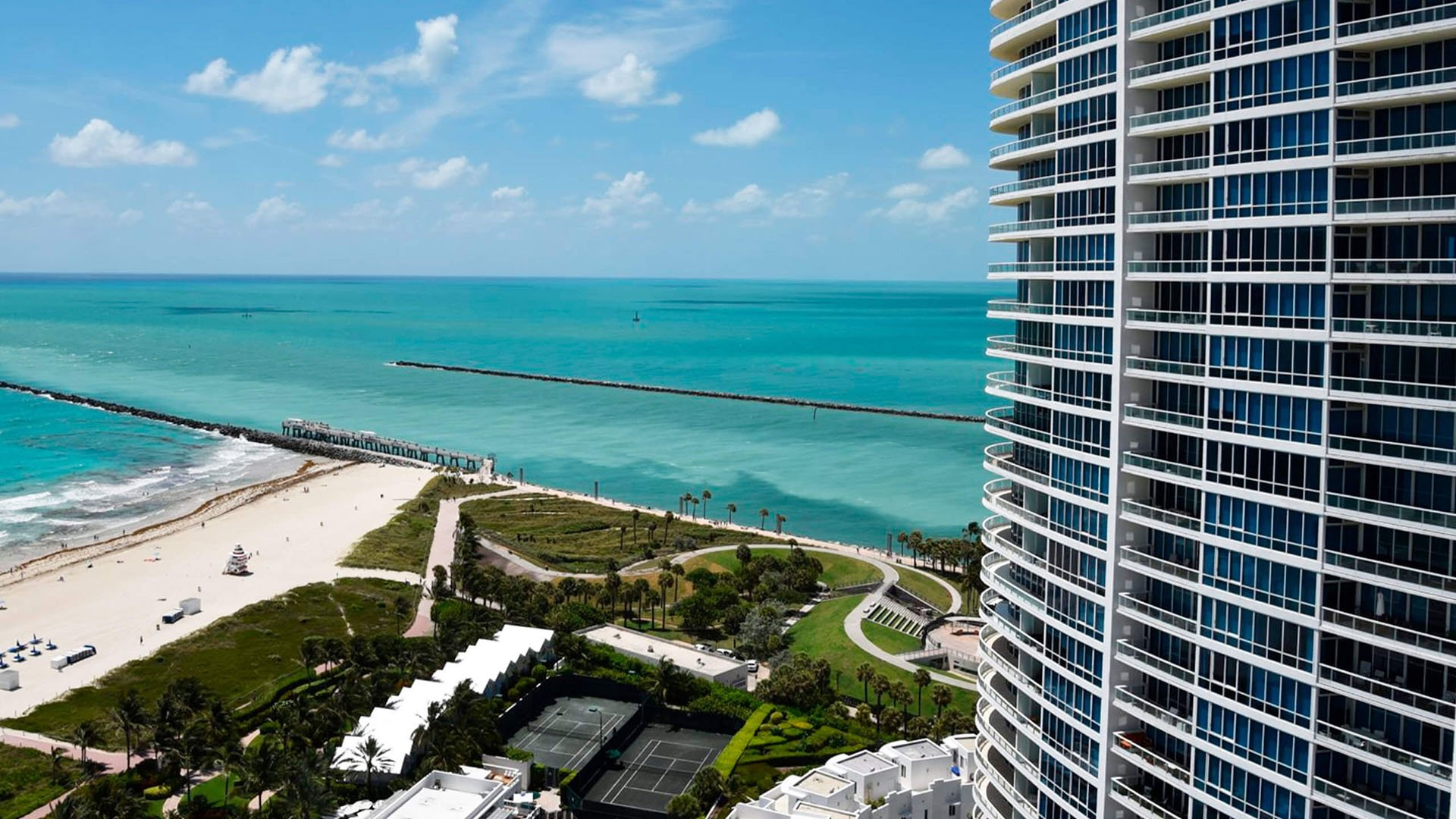
For buyers relocating to Florida full time, Continuum on South Beach should be considered less as a conventional condominium choice and more as a lifestyle architecture decision. The question is not only which residence, view, exposure, or price point feels right. It is whether the building and its South Beach setting can support the buyer’s daily rituals with enough privacy, wellness, walkability, and continuity to become a true primary home.
That distinction matters. A vacation buyer may prioritize intensity, immediacy, and the emotional charge of South Beach. A primary-residence buyer needs a different calculus. Morning routines, grocery patterns, fitness habits, guests, remote work, commuting, dining frequency, and quiet hours all become part of the due diligence. Continuum’s appeal is its position at the intersection of resort-scale oceanfront living and a genuine residential ecosystem, where the day can be curated without requiring constant participation in the city’s busiest rhythms.
In that sense, lifestyle is the asset class. The best buyers for Continuum are not simply purchasing a Miami Beach address. They are choosing a base from which to live in South Beach while retaining a meaningful measure of separation from its most touristed patterns.
Continuum’s surrounding context is South of Fifth, the micro-neighborhood south of Fifth Street. For many full-time buyers, that geography is what makes the conversation more nuanced. South Beach is internationally known for energy, nightlife, hotels, events, restaurants, and beach culture. South of Fifth offers access to that identity while feeling more residential and refined than the heavier corridors farther north.
The useful phrase is simple: in South Beach, but not of South Beach. Continuum’s southern-edge positioning does not erase tourism, traffic, sound, or seasonal activity. It moderates them. That moderation is essential for buyers who want restaurants, the ocean, and cultural charge close at hand, but do not want their residence to feel permanently exposed to the city’s most public face.
In search language, Sofi and South of Fifth often point to the same buyer impulse: proximity with restraint. The buyer is not rejecting South Beach. The buyer is editing it. This is why Continuum can be compelling for someone seeking a primary Florida home with energy nearby, rather than a quiet enclave disconnected from the Miami Beach experience.
Buyers comparing the broader South Beach set may also study Apogee South Beach or The Ritz-Carlton Residences® South Beach, but the central exercise remains the same: determine whether the address supports ordinary weekdays as elegantly as it supports holidays and winter entertaining.
A primary residence succeeds when it reduces friction. At Continuum, the daily promise is built around walkability, beach access, dining access, wellness-oriented routines, and the ability to live with resort-style ease without surrendering the steadiness of home. Beach access becomes part of the daily schedule, not an occasional amenity. A walk before calls, a swim after travel, or dinner reached on foot can reshape the way a buyer experiences Miami Beach.
This is where Continuum should be evaluated as an ecosystem. The residence, common environment, privacy expectations, neighbor profile, seasonal occupancy, staff interaction, and surrounding blocks all influence whether the lifestyle feels natural. A buyer moving from New York, Chicago, London, Toronto, São Paulo, or Los Angeles may be accustomed to highly serviced living, but full-time Florida life still asks for practical analysis: where the day begins, where it bottlenecks, and where it feels effortless.
For some, the answer will be that Continuum offers enough scale and privacy to feel complete. For others, a newer Miami Beach alternative such as Five Park Miami Beach or a North Beach oceanfront option such as 57 Ocean Miami Beach may enter the conversation. Those comparisons are useful not because they replace the South of Fifth thesis, but because they sharpen the buyer’s understanding of pace, neighborhood mood, and the meaning of home.
The most sophisticated Continuum buyer does not ask whether South Beach is active. It is. The better question is whether that activity is a feature, an acceptable condition, or a long-term irritant. Seasonal occupancy patterns matter because winter can feel more animated, while summer may feel calmer. Event cycles, tourism peaks, traffic, sound, and congestion should all be tested against the buyer’s tolerance for movement around the home.
This is especially important for families, executives, semi-retired buyers, and those planning to host frequently. Privacy is not only about the residence. It is about arrival, departure, elevator rhythm, building culture, beach flow, nearby dining patterns, and the atmosphere just beyond the property line. Continuum’s location can help create a more private base, but no buyer should confuse moderation with isolation.
The best fit is a buyer who enjoys access, but values control. They want the choice to step into South Beach, not the obligation to absorb it every day. For that buyer, Continuum can offer a rare balance: a recognizable Miami Beach lifestyle with enough residential discipline to support permanence.
Full-time buyers should also evaluate Continuum through the practical lens of Greater Miami movement. If the buyer works in Downtown Miami, Brickell, or another central mainland district, the MacArthur Causeway becomes part of the weekly equation. It is the main connection to consider, and its role should be tested at the times that matter: school runs if relevant, office arrivals, evening returns, airport departures, and weekend event periods.
This does not diminish the appeal of living at the southern edge of Miami Beach. It frames the purchase correctly. A buyer whose professional life is concentrated in Brickell may compare Continuum with vertical urban choices such as The Residences at 1428 Brickell, then decide whether oceanfront routine outweighs mainland convenience. That is not a purely financial choice. It is a question of identity, time, and the desired texture of daily life.
For many primary-residence buyers, the answer will become clear after several real-world trials: a weekday morning departure, a late dinner return, a high-season weekend, and a quiet summer afternoon. Continuum should be experienced across those moods before it is judged.
Continuum is best suited to buyers who want a curated South Beach life rather than a purely investment-driven or vacation-driven purchase. They value Miami Beach, but they also value routine. They want dining, wellness, walking, sand, and a strong sense of place, yet they are not seeking constant nightlife immersion. They see the condominium as part of a long-term personal plan, not merely a trophy asset.
The right buyer will think beyond unit selection and pricing. They will ask how the building supports work, rest, privacy, social life, guests, movement, and health. They will study how the neighborhood changes by season. They will accept that South Beach energy is part of the package while choosing a location designed to soften that energy into something more livable.
For a Florida primary residence, that is the essential point. Continuum is not about escaping South Beach. It is about editing South Beach into a more intentional, more private, and more sustainable everyday life.
Is Continuum on South Beach suitable for full-time Florida living? Yes, for buyers who want oceanfront South Beach access with a more residential base in South of Fifth.
What makes South of Fifth different from the rest of South Beach? It is generally considered more residential and refined than the heavier tourist and nightlife corridors north of Fifth Street.
Does Continuum eliminate South Beach tourism and nightlife impacts? No. Its southern-edge location may moderate those impacts, but buyers should still test sound, traffic, and seasonal activity.
What should primary-residence buyers evaluate beyond the unit itself? They should consider routine, wellness, privacy, commuting, social life, walkability, and how the property feels in different seasons.
Is walkability an important part of the Continuum lifestyle? Yes. Walkability, beach access, dining access, and wellness routines are central to the full-time living proposition.
How should commuters think about the location? Buyers traveling to Downtown Miami, Brickell, or central Miami should evaluate the MacArthur Causeway during their real commute windows.
Is Continuum better for investors or primary residents? This guide frames it as a primary-residence choice, where lifestyle fit matters as much as financial or vacation appeal.
Does the neighborhood feel the same year-round? No. Winter may feel more active, while summer can feel calmer, so buyers should experience both if possible.
Who is the best fit for Continuum on South Beach? A buyer who wants proximity to South Beach energy while maintaining a private, wellness-oriented residential base.
What is the main lifestyle question before buying? Whether the buyer wants to be close to South Beach’s energy without living fully inside its busiest rhythms.
For a confidential assessment and a building-by-building shortlist, connect with MILLION.
If branded residences are on your mind — as a home or as an allocation — we would be glad to share what we are seeing, privately.
Begin a quiet conversation