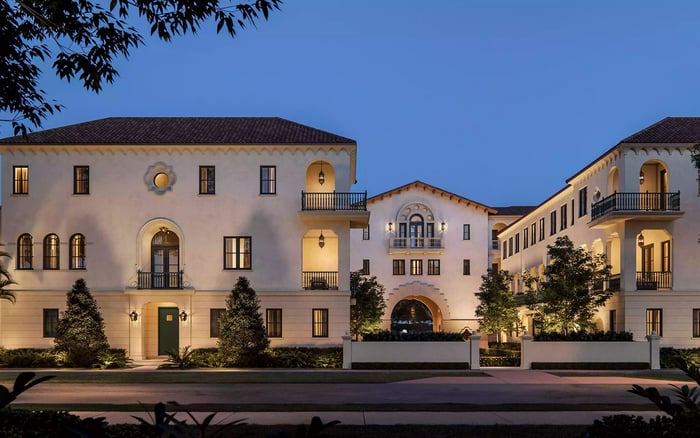
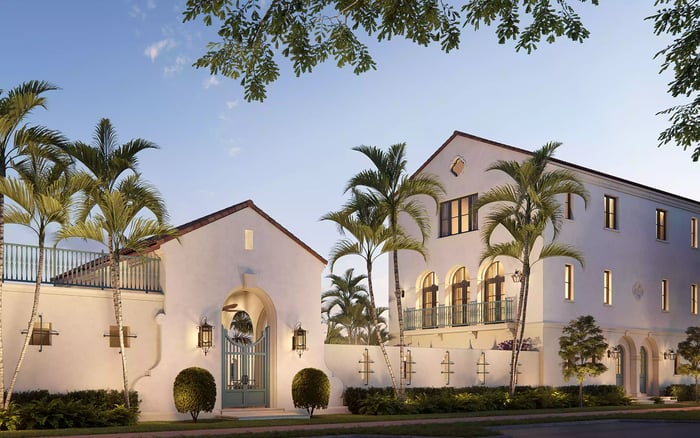
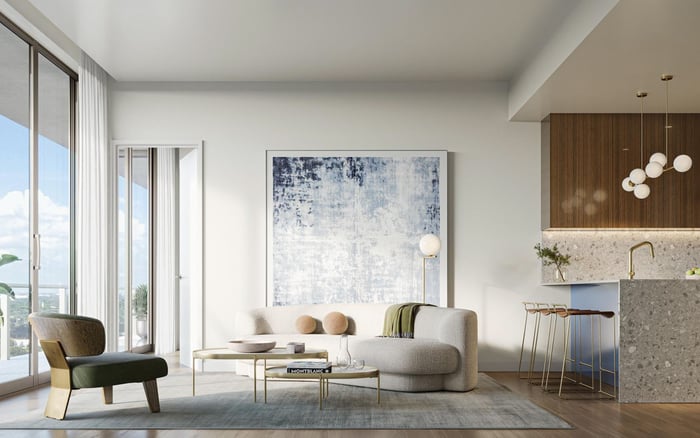
A discreet buyer’s guide for New Yorkers evaluating Coral Gables and nearby South Florida residences through the lens of hosting, staff flow, private dining and service support.
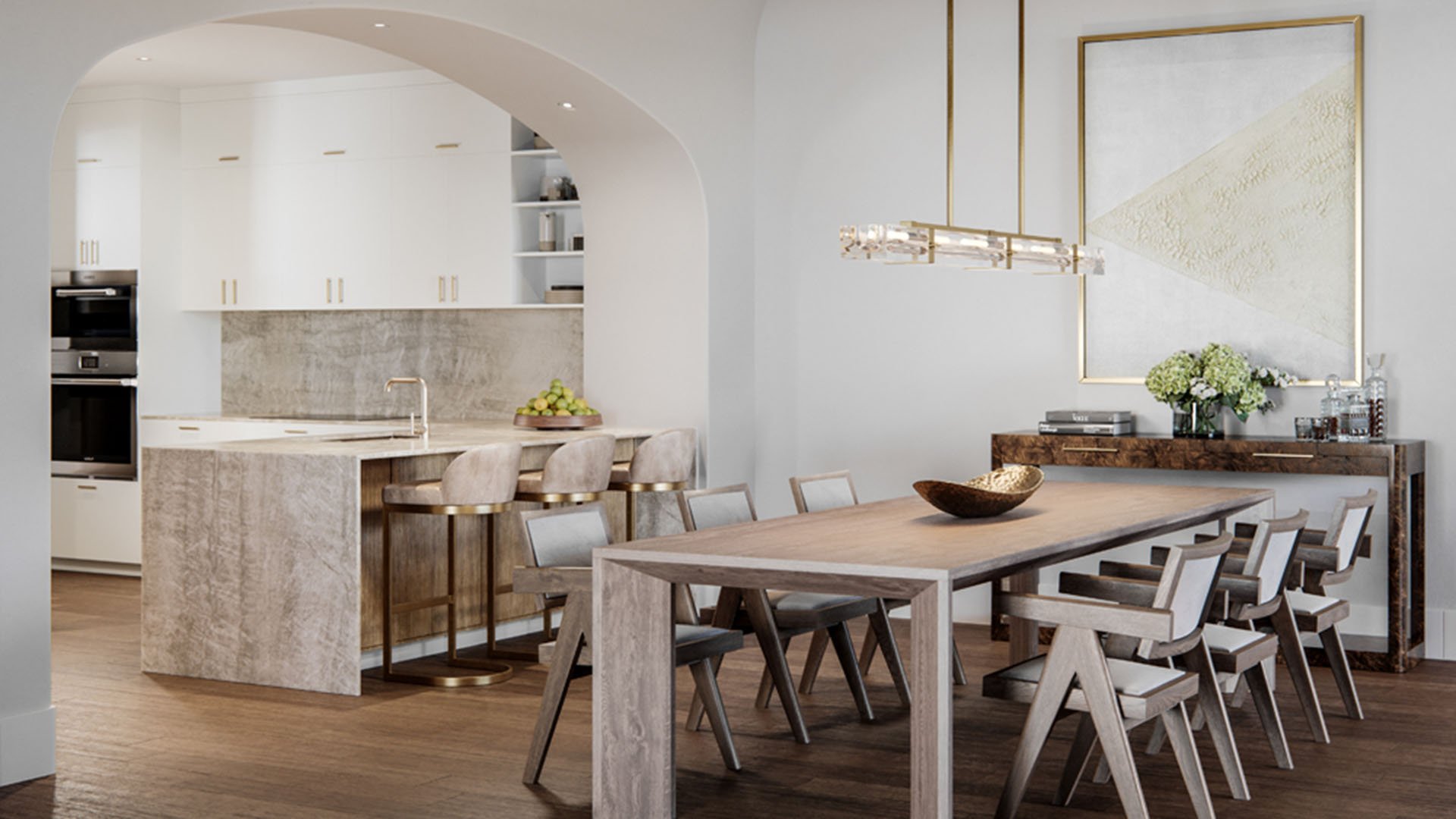
For New Yorkers arriving in Coral Gables, the most revealing question is rarely square footage alone. It is how the home performs on the night of a dinner. Where does the chef enter? Can flowers, wine, rentals and valet support arrive without crossing the principal living room? Is there a graceful place for guests to gather before they sit down? Does the home allow the host to be present, rather than operational?
This is the quiet distinction between a beautiful residence and one genuinely built for entertaining. In Manhattan, much of the labor of hosting is often absorbed by restaurants, private clubs and building staff. In South Florida, especially in single-family and low-density environments, the home itself carries more of the occasion. The best purchase understands service, privacy and tempo before the first invitation is sent.
Coral Gables has a particular appeal for buyers accustomed to formality who want more room for ease. The mood is residential, established and gardened, with a sense of arrival that can feel composed rather than overtly resort-like. For hosts, that matters. The neighborhood can support lunches that move outdoors, family holidays requiring overnight guest capacity and dinner parties where the transition from aperitif to table feels natural.
The search should not begin with a checklist of amenities. It should begin with a hosting profile. A couple who entertains ten guests twice a month needs a different home than a family that hosts multi-generational holidays, philanthropic dinners or extended winter visits. A buyer comparing The Village at Coral Gables, Ponce Park Coral Gables and Cora Merrick Park should ask not only where the residence is located, but how it supports arrival, dining, cleanup and privacy in real use.
A floor plan reveals its hospitality intelligence quickly. Look for a dining area that is not stranded between circulation paths. Guests should not have to pass through the kitchen to reach the powder room, and staff should not have to cross the dining table to clear plates. If the residence has outdoor space, the connection between interior dining and terrace life should be generous enough to feel intentional, not like an afterthought.
The kitchen deserves particular scrutiny. Open kitchens can be magnificent for family life, but serious entertaining often benefits from a secondary prep zone, pantry capacity or a way to separate catering activity from the social room. Wine storage, refrigeration, ice, linen storage and serviceware are not glamorous details, yet they often determine whether the evening feels effortless.
New York buyers should also consider acoustics and sightlines. A dramatic room can be less useful if every operational sound travels. A long gallery can be elegant, but it may complicate service if the kitchen sits too far from the table. The goal is a home where hospitality has its own choreography.
In the ultra-premium market, service flow is not secondary. It is the hidden architecture of comfort. A residence suited to private dining should have a logical place for deliveries, a discreet path for catering teams, space for staging and enough storage to keep the home from feeling improvised before each event.
This is especially important for buyers moving from New York, where building systems often absorb many daily frictions. In South Florida, private homes and boutique residences can offer more autonomy, but they also place more responsibility on the household. A well-chosen property anticipates the valet, the florist, the chef, the house manager and the guest who arrives early.
Ask practical questions during showings. Where would a caterer park? Where would staff pause between courses? Can a back-of-house route remain invisible to guests? Where do trash and recycling go after a dinner? If the answers feel awkward in daylight, they will not improve during a formal evening.
South Florida’s climate is a privilege, but good entertaining design still requires discipline. Outdoor dining should feel connected to the home’s principal spaces, with enough cover, lighting and circulation to function beyond a casual lunch. The best homes create a sequence: arrival, greeting, cocktails, dinner, conversation and departure.
Privacy is part of that sequence. A garden, courtyard, loggia or elevated terrace may be visually beautiful, but the question is whether guests feel protected from neighboring views and street noise. For some buyers, Coral Gables delivers the desired residential quiet. Others may want to compare the softer village rhythm of Coconut Grove or the more vertical energy of Brickell. A residence such as Four Seasons Residences Coconut Grove may enter the conversation for buyers who want proximity to the Grove’s atmosphere while maintaining a refined residential posture. For those who prefer a hospitality-forward urban setting, ORA by Casa Tua Brickell may be part of a broader comparison.
The decision is not about which neighborhood is universally superior. It is about which setting supports the way the household hosts.
Entertaining does not end at dessert. For many New York families, South Florida becomes a winter gathering point. Adult children, parents, friends and business guests may come for weekends or longer stays. The home must be able to expand without losing serenity.
Guest rooms should be positioned with care. A suite near the main living areas may be convenient for older visitors, while a more separate wing can better serve long stays. If the home includes staff accommodations or flexible rooms, consider how those spaces perform during holidays and peak hosting periods. A media room may be useful, but a quiet guest suite with proper storage may prove more valuable over time.
Bathrooms, closets and laundry are equally important. A home that photographs beautifully can become strained if every guest shares the same circulation path or if linens have nowhere to live. In private entertaining, luxury often appears as absence: no clutter, no waiting, no visible strain.
Before falling in love with finishes, test the residence against real scenarios. Host a mental dinner for twelve. Then host a family weekend. Then host a catered charity evening. If the same home performs across those situations, it deserves closer attention.
Buyers should ask about household staffing, storage, parking, loading, building rules, outdoor-use parameters and any limitations that could affect private events. In a condominium or managed residential setting, the building’s culture is as important as the floor plan. Some buildings feel naturally suited to discreet hosting; others are better for owners who prefer to entertain elsewhere.
For single-family homes, inspect mechanical capacity, kitchen ventilation, exterior lighting, security, landscape privacy and service access. For residences in boutique buildings, understand elevator logistics, guest arrival, deliveries and any protocols that shape the experience of hosting at home.
The strongest Coral Gables purchase is not necessarily the most theatrical. It is the one that lets a household live beautifully on ordinary days and entertain with composure when the house is full. That may mean choosing a slightly quieter address with better service access, a less dramatic dining room with better proportions or a home whose outdoor area feels genuinely private.
For New Yorkers, this is a shift in mindset. The South Florida home is not simply a warmer version of a city residence. It is often the primary stage for hospitality, family gathering and seasonal life. Choose the property that understands the backstage as well as the table.
What should New York buyers prioritize first when choosing in Coral Gables? Start with lifestyle and hosting patterns, then test whether the floor plan supports those needs with privacy, storage and service flow.
Is a large dining room enough for private entertaining? No. The dining room matters, but kitchen access, staff circulation, powder room placement and cleanup logistics are equally important.
Should buyers consider condominium residences for private dining? Yes, if the building’s rules, arrival experience, elevator logistics and residence layout support discreet entertaining.
Why is staff flow so important? It allows chefs, house managers, florists and catering teams to work without interrupting the guest experience.
How should outdoor space be evaluated? Look at privacy, shade, lighting, access from interior rooms and whether the space can support a real dining sequence.
Is Coral Gables the only area to consider? No. Coral Gables is compelling, but Coconut Grove and Brickell may suit certain buyers depending on desired energy and services.
What is the biggest mistake buyers make? They focus on finishes before testing how the home functions during a dinner, weekend visit or catered event.
Do guest suites matter for entertaining? Yes. Overnight guests are often part of South Florida ownership, so privacy and storage should be planned carefully.
Should parking and deliveries affect the purchase decision? Absolutely. Valet, catering access, floral deliveries and post-event removal can shape the quality of the hosting experience.
What makes a home feel truly discreet? A discreet home separates public and private moments, keeps service activity quiet and makes hospitality feel effortless.
If you'd like a private walkthrough and a curated shortlist, connect with MILLION.
If branded residences are on your mind — as a home or as an allocation — we would be glad to share what we are seeing, privately.
Begin a quiet conversation