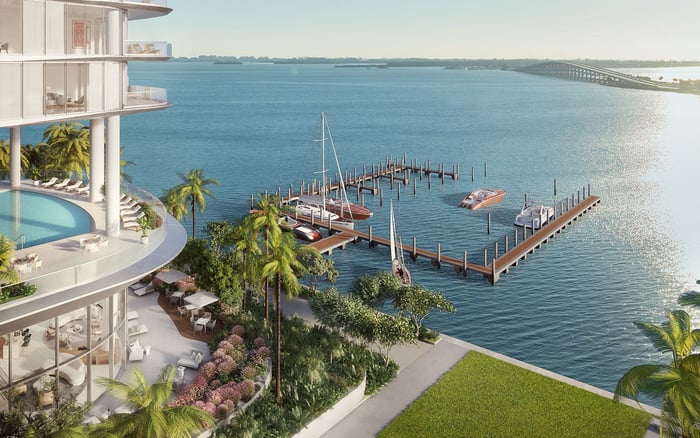
A buyer-focused look at how One Thousand Museum’s Downtown Miami setting, service model, privacy, and Zaha Hadid design language support frequent travelers.
For a globally mobile buyer, a Miami residence has to do more than impress on arrival. It has to function in the owner’s absence, welcome them back without friction, and make a brief stay feel complete rather than compressed. That is the central appeal of One Thousand Museum Downtown Miami, a luxury residential tower conceived around a high-service, hospitality-like way of living.
Its value for frequent travelers comes from an unusually balanced mix: a central Downtown Miami setting, distinctive architectural identity, privacy, staffing, operational confidence, and curated amenities. It is not best understood as a conventional condominium that happens to be expensive. It reads more like an urban base for owners whose lives move between cities and who need Miami to feel both effortless and deeply personal.
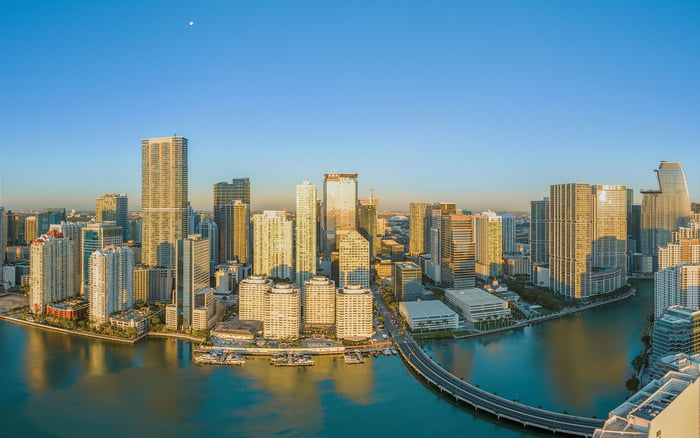
Frequent travelers measure location differently. They are less interested in a theoretical map of the city than in what can be accomplished within a concentrated window: a dinner, a meeting, a waterfront walk, a cultural stop, and a quiet return home. One Thousand Museum’s Downtown Miami position places residents near the downtown waterfront cultural district, giving the tower a practical advantage for owners who may arrive for only a few days at a time.
This is where Downtown Miami works as a second-home setting. It offers an urban rhythm without requiring residents to build every stay around long transitions. Buyers comparing the area will often look at other vertical landmarks such as Aston Martin Residences Downtown Miami and Waldorf Astoria Residences Downtown Miami, but One Thousand Museum’s particular identity is tied to the way it combines cultural proximity with a more private, residential sense of arrival.
The result is a home that supports both planned seasonal use and unexpected visits. For the owner landing in Miami between commitments, the residence is positioned to make the city immediately accessible without sacrificing discretion.
In the ultra-premium market, service is often described as an amenity. For frequent travelers, it is infrastructure. A lock-and-leave residence depends on the building’s ability to maintain continuity while the owner is away and make re-entry feel seamless when they return. One Thousand Museum’s service model is central to that proposition.
The practical questions are simple: Can the home sit empty without feeling neglected? Can an owner arrive on short notice and feel that the building is ready? Can privacy and security be maintained without turning daily life into a procedure? The tower’s appeal rests on operational reliability, the kind of discreet support that matters most when a residence is used intensely, then left behind for weeks or months.
This is one reason the building has such strong relevance for Second-home buyers. The luxury is not only in finishes or views. It is in knowing the residence can function as a stable private base even when the owner’s calendar is anything but stable.
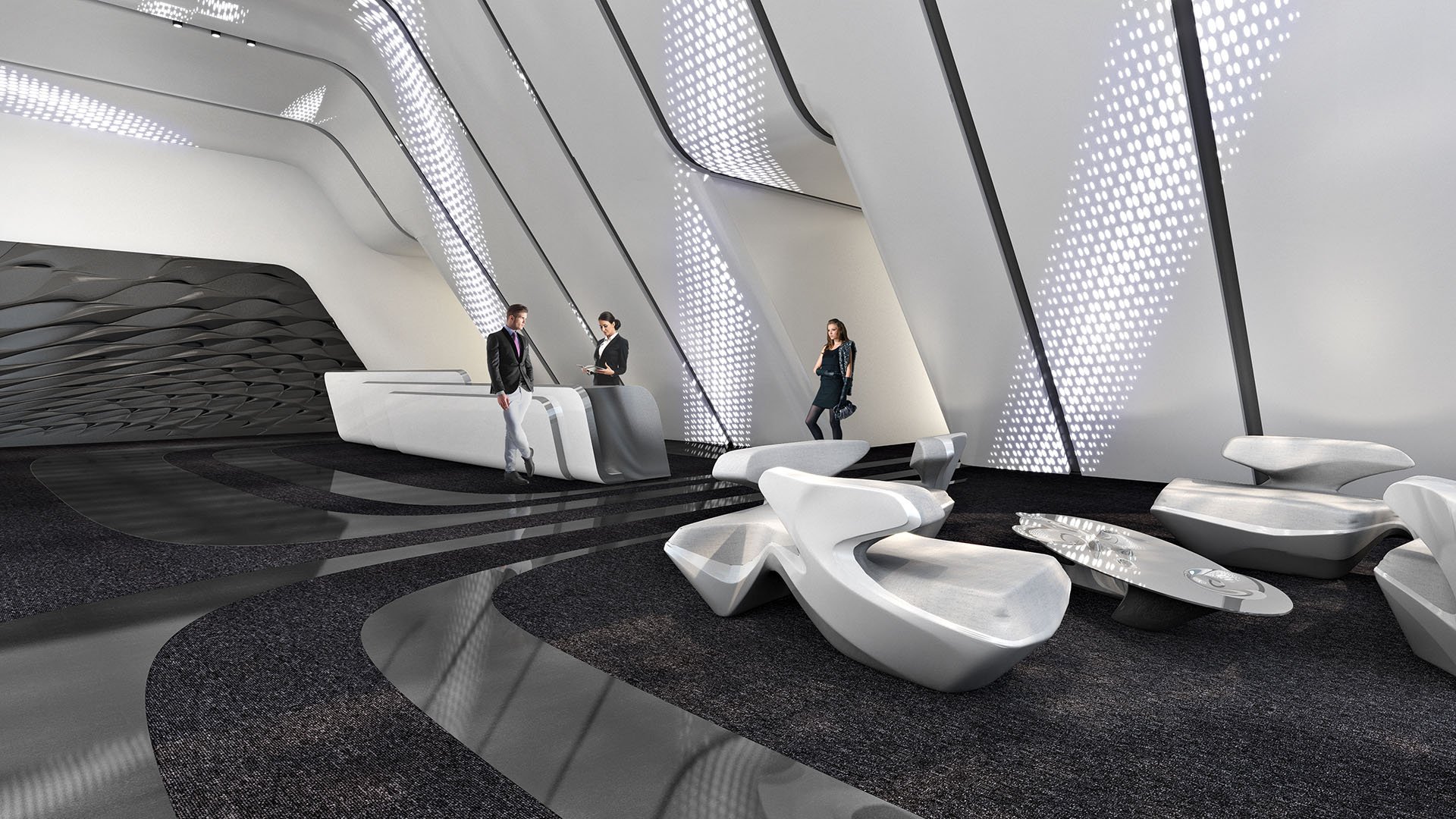
One Thousand Museum is inseparable from its architectural presence. Its design identity is associated with Zaha Hadid’s design language, and the building’s sculptural exoskeleton is its defining visual feature. For buyers who care about Design & Architecture, that exterior gives the tower immediate recognizability in the Miami skyline.
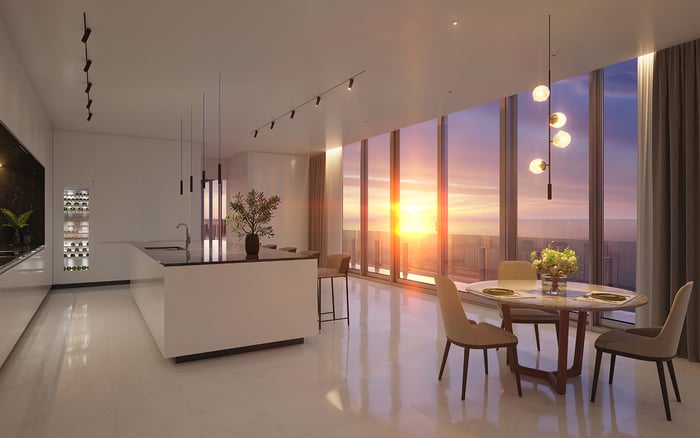
The exoskeleton is not merely an aesthetic gesture. It is presented as both a signature and a structural feature, helping reduce the need for intrusive internal structural elements and enabling more open interior layouts. For a frequent traveler, that matters. A residence used in shorter stays benefits from clarity, openness, and an immediate sense of orientation. The home should feel legible the moment one enters.
This design logic also contributes to the tower’s emotional appeal. A globally mobile owner may own in multiple cities, but each residence needs a distinct reason to exist. One Thousand Museum’s architecture gives the Miami home a memorable identity, rather than allowing it to become just another polished apartment in a luxury portfolio.
South Florida ownership comes with a practical reality: owners may be away for extended periods. At One Thousand Museum, building operations and buyer due diligence are part of the conversation for owners who travel often. That does not mean buyers should ignore their own review process, but it does explain why infrastructure and confidence carry real weight in the decision.
For a lock-and-leave owner, privacy and security are equally central. The best building is not necessarily the one with the longest amenity menu. It is the one that allows absence to feel controlled and return to feel calm. One Thousand Museum’s positioning as a high-service residential environment speaks directly to that concern.
In this sense, Waterfront proximity and cultural access are only part of the equation. The more important luxury is composure. A frequent traveler wants the city nearby, the home protected, and the experience of arrival to feel private rather than public.
Downtown Miami has evolved into a serious luxury residential corridor, with each new or established tower appealing to a slightly different buyer psychology. Some residences lean into brand association, some into design, some into skyline height, and others into hospitality. One Thousand Museum’s distinction is the way it blends architectural collectibility with a private-club sensibility.
Nearby comparisons such as Casa Bella by B&B Italia Downtown Miami help illustrate the broader movement toward design-led urban living. In Brickell, projects such as Baccarat Residences Brickell reflect a different expression of service and polish, closer to the financial district’s daily energy. One Thousand Museum, by contrast, is most compelling for buyers who want Downtown access with a calmer, more rarefied residential atmosphere.
That distinction matters for Lifestyle. A frequent traveler is not simply buying square footage in Miami. They are buying a repeatable pattern of use: arrive, settle, connect with the city, retreat, depart, and trust the residence to remain ready.
One Thousand Museum is especially well suited to owners who spend only part of the year in Miami, value architectural distinction, and expect a high level of service without wanting the full public nature of a hotel. It suits the buyer who wants proximity to culture, waterfront activity, business, and entertainment, while also expecting a controlled private environment.
It may be less about the traditional idea of a primary home and more about the modern idea of a global residence. The building gives Miami a role in a larger life pattern. For some buyers, that role is seasonal. For others, it is opportunistic: a place to arrive between international travel, family commitments, business, and leisure.
The strongest argument for One Thousand Museum is not one feature in isolation. It is the relationship between location, staffing, privacy, design, and reliability. Together, those elements create a residence that works when the owner is present and continues to make sense when the owner is away.
Where is One Thousand Museum located? One Thousand Museum is in Downtown Miami, near the downtown waterfront cultural district.
Why does the building appeal to frequent travelers? Its appeal comes from the combination of location, service, privacy, operational reliability, and amenities that support lock-and-leave ownership.
Is One Thousand Museum more like a condominium or a hotel residence? It is a private condominium, but its positioning is closer to a high-service, hospitality-like residential environment than a standard luxury condo.
What is the building’s most recognizable design feature? The tower is known for its sculptural exoskeleton, which gives it a distinctive architectural identity.
Does the exoskeleton have a practical role? Yes. It is presented as both an aesthetic signature and a structural feature that helps allow more open interior layouts.
Why does Downtown Miami matter for short stays? The location allows residents to access nearby cultural, waterfront, business, and entertainment areas efficiently during limited time in the city.
Is One Thousand Museum suitable for part-time Miami residents? Yes. The residence is especially relevant for owners who spend only part of the year in Miami and need a dependable urban base.
What should lock-and-leave buyers prioritize here? They should focus on service quality, privacy, security, building operations, and how easily the residence supports arrivals and absences.
How important is architecture to the value proposition? Architecture is central. The Zaha Hadid-associated design language gives the building a collectible identity within the Miami skyline.
Who is the ideal buyer for One Thousand Museum? The ideal buyer is globally mobile, design-conscious, privacy-oriented, and interested in a highly serviced Downtown Miami residence.
For a discreet conversation and a curated building-by-building shortlist, connect with MILLION.
If branded residences are on your mind — as a home or as an allocation — we would be glad to share what we are seeing, privately.
Begin a quiet conversation