A buyer-focused guide to evaluating discreet residential security in Edgewater, with emphasis on arrival design, staff culture, privacy, access control, and livability.
For a certain buyer, security is not a display of force. It is a form of confidence. The best residential buildings allow owners, family members, staff, guests, and service providers to move through the property with clarity, while keeping the experience calm and residential. That distinction matters before purchasing in Edgewater, where buyers often compare architecture, views, amenities, and brand language before asking the harder question: how will this building protect my privacy day after day?
Discreet security is not invisible. It is legible to those who need it and unobtrusive to those who live with it. The front desk recognizes patterns without announcing them. The garage separates public and private movement without turning arrival into a checkpoint. Elevators, package areas, guest registration, and service corridors operate as a sequence rather than as isolated features. When done well, security supports lifestyle rather than interrupting it.
For MILLION readers using this as a Buyer's Guides lens, the goal is not to be impressed by theatrical gestures. The goal is to determine whether a residence will feel protected, private, and effortless after the sales presentation ends.
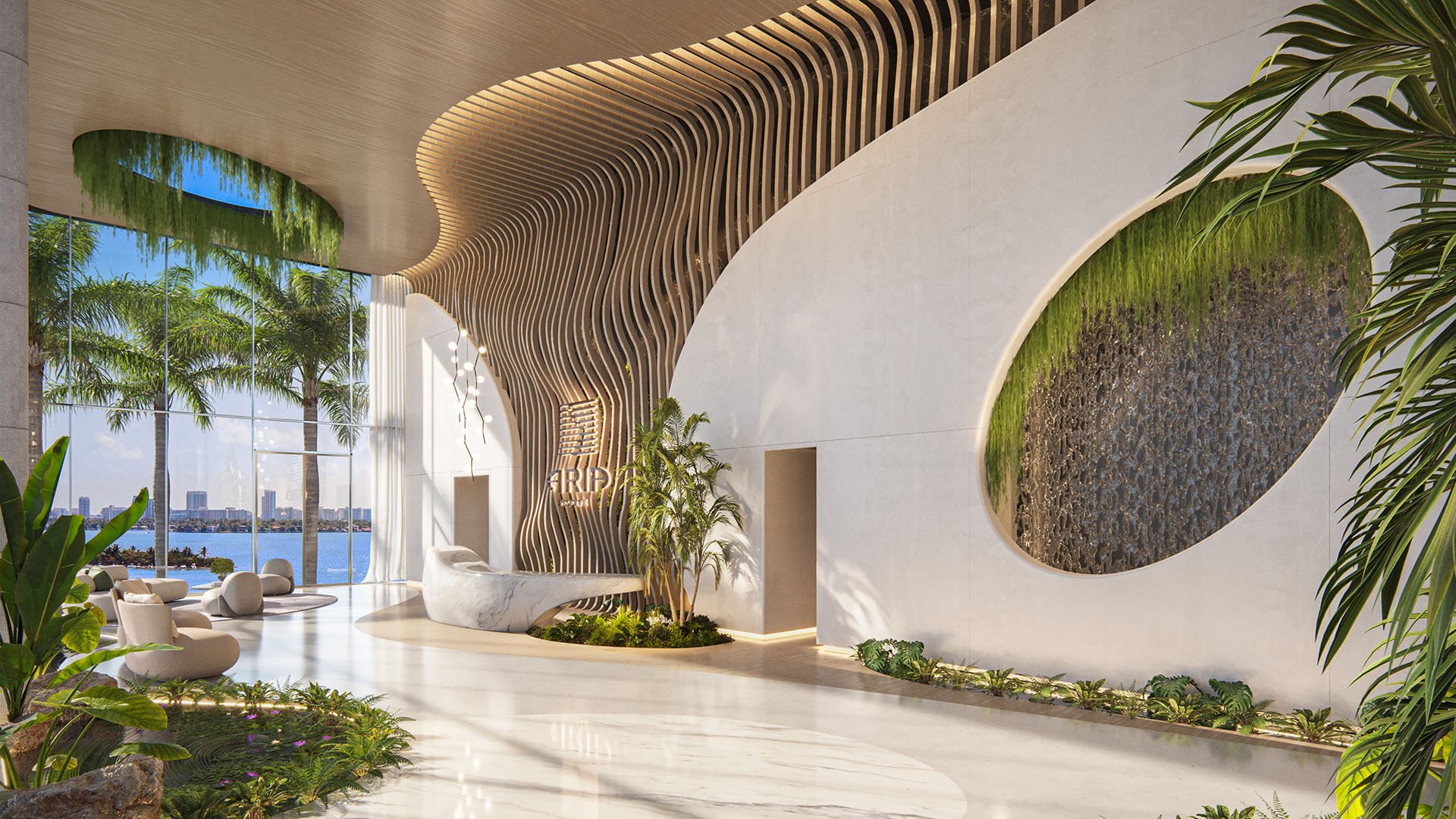
Begin at the curb or porte cochere and slow down. A secure building should make the transition from street to residence feel controlled without feeling tense. Notice whether vehicles, pedestrians, vendors, delivery drivers, and residents share the same path or are subtly separated. Watch how staff members greet people. A polished welcome can be both gracious and firm; an overly dramatic posture can feel insecure in itself.
In Edgewater, buyers comparing residences such as Aria Reserve Miami, EDITION Edgewater, The Cove Residences Edgewater, and Villa Miami should not only ask what security features are offered. They should observe whether the arrival sequence feels intuitive. If staff must explain every step, or if guests appear uncertain about where to go, the system may rely too heavily on personnel and not enough on design.
A composed arrival should answer simple questions without friction. Where does a private car wait? How is a rideshare handled? Can a guest be welcomed without exposing resident patterns? Does the garage feel like a back door or a properly managed private threshold? These details seem small only until they become daily habits.
Security culture is revealed through specific answers. Ask how residents authorize guests, how recurring visitors are managed, how vendors are cleared, and how access changes when a resident is away. Ask whether staff training emphasizes discretion as much as procedure. A building can have advanced access controls and still feel careless if names are spoken loudly, guest information is handled casually, or private routines become visible at the desk.
Buyers should also ask how exceptions are handled. Every property can describe its standard protocol. The more telling conversation is what happens when a contractor arrives early, a dinner guest forgets identification, a family office representative needs access, or a resident wants privacy during an extended stay. Discreet security depends on judgment, not just hardware.
The language used by the sales or management team is instructive. If every answer centers on cameras, locks, and dramatic surveillance, the building may be selling theater. If the conversation includes staffing, circulation, privacy, communication, and escalation, the building is more likely to understand ultra-premium residential life.
Technology matters, but it should not dominate the resident experience. Access systems, elevator controls, cameras, parking management, package tracking, and guest authorization can all contribute to a safer building. Yet buyers should consider how these systems feel in practice. Does technology reduce conversation, or does it create extra steps? Does it protect privacy, or does it create a trail of visible interactions that staff, guests, or vendors can observe?
New-construction presentations can make security sound seamless, but the test is operational. Ask who manages the system, how permissions are updated, how quickly access can be changed, and what happens if a device fails. The most refined buildings plan for human behavior. Phones are lost. Guests arrive in groups. Household staff changes. Children, assistants, and visiting relatives may need different levels of access. A discreet system anticipates complexity without turning daily life into administration.
Waterfront, urban, and high-service residences all carry different rhythms, but the principle is consistent: security should narrow risk while preserving ease. If a building makes a resident feel watched rather than cared for, it may be overcorrecting in the wrong direction.
Security evaluation should continue beyond the lobby. Buyers should study how elevators open, how corridors feel, how service access is separated, and whether the residence itself allows private arrival. A gracious floor plan can be compromised if every guest, delivery, and service call passes through the same visible threshold.
Inside the residence, ask how deliveries are handled, whether maintenance access is scheduled and logged, and how emergency access is balanced with owner control. Privacy is not only about preventing intrusion. It is also about reducing unnecessary visibility into who is home, who is visiting, and how the household operates.
For buyers with art, collectibles, staff, children, or frequent guests, the most important security questions are often practical. Can a household manager coordinate access without repeated calls to the owner? Can a visiting chef, wellness provider, or design team enter without disrupting the front-of-house experience? Can an owner remain anonymous to casual visitors in common areas? These are not eccentric concerns. They are part of the operating reality of high-value residential life.
Before committing, visit at different times if possible and treat the building like a living environment rather than a showroom. Notice whether staff members remain composed when several arrivals happen at once. Watch how deliveries are received. Observe whether residents linger comfortably in common spaces or move quickly through them. A secure building should create calm, not urgency.
Also review the governing documents and owner procedures with professional guidance. Understand guest policies, leasing rules, vendor access, insurance requirements, camera policies, and any restrictions affecting household staff or private events. Discretion depends on rules that are clear enough to enforce and flexible enough to support real life.
The right Edgewater purchase should feel elegant from the first arrival through the most ordinary weekday. Security should not be a performance staged for the lobby. It should be a quiet architecture of trust.
What does discreet security mean in an Edgewater condominium? It means access control, staff awareness, privacy planning, and response protocols are present without making the building feel defensive or performative.
Should buyers prioritize visible guards or integrated systems? Neither should be judged alone. The better question is whether staffing, design, technology, and rules work together smoothly.
What should I watch during a property tour? Watch how guests, vendors, residents, vehicles, and deliveries move through the property. Confusion at arrival often reveals weak operational design.
How can a buyer assess staff discretion? Listen to how names, unit details, guest information, and resident routines are handled. True discretion is quiet, consistent, and unforced.
Are cameras enough to make a building secure? Cameras can support security, but they do not replace trained staff, clear procedures, controlled circulation, or thoughtful access rules.
Why does elevator access matter? Elevator control can shape who reaches residential floors and how privately owners move from arrival areas to their homes.
What should buyers ask about vendors and household staff? Ask how recurring access is approved, changed, monitored, and revoked. A strong policy protects both convenience and privacy.
Can theatrical security hurt the living experience? Yes. Overly visible security can make a residence feel anxious rather than serene, which can undermine the sense of home.
How does security affect resale perception? Buyers often value buildings that feel calm, private, and professionally operated. A refined security culture can support long-term confidence.
What is the most important question before purchasing? Ask whether the building will make your daily life easier while protecting your privacy. If the answer is unclear, keep investigating.
To compare the best-fit options with clarity, connect with MILLION.
If branded residences are on your mind — as a home or as an allocation — we would be glad to share what we are seeing, privately.
Begin a quiet conversation