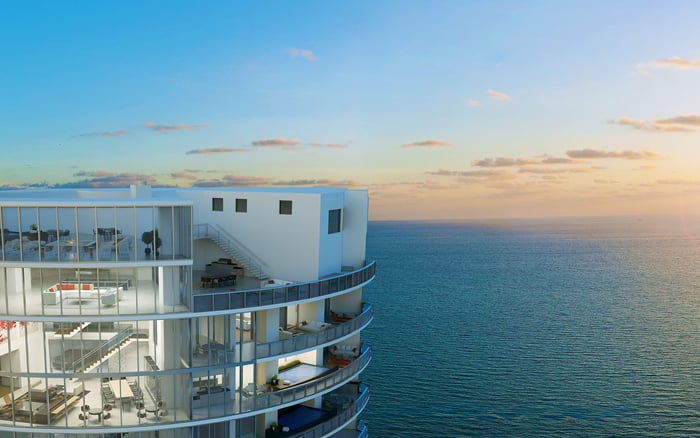
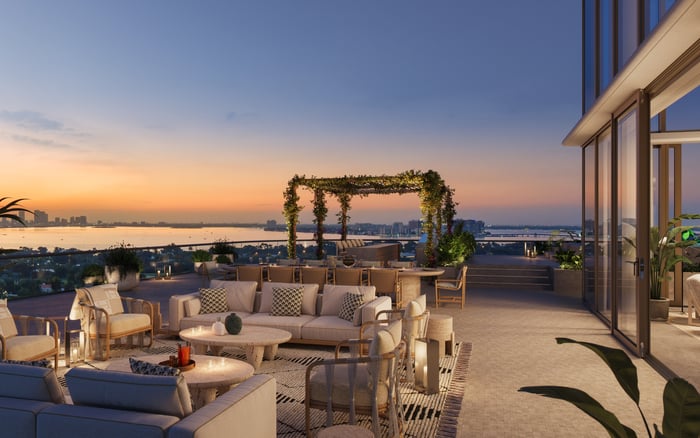
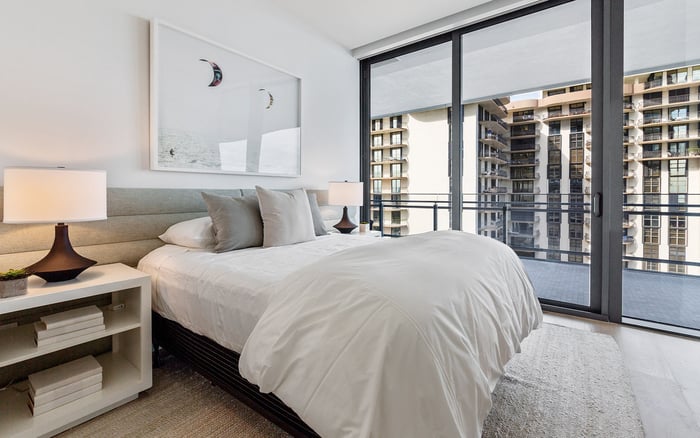
Oceanfront scarcity can support long-term conviction, but it is not a substitute for disciplined underwriting. Luxury buyers should normalize insurance, HOA obligations, governance, liquidity, and daily use before assigning a premium to the waterline.

Oceanfront property in South Florida carries a natural aura: finite shoreline, emotional pull, and a view corridor that cannot be replicated inland. Yet scarcity is not a complete investment thesis. It is the opening premise, not the conclusion. The most sophisticated buyers treat oceanfront supply constraint as a premium to be tested against carrying costs, building governance, liquidity, and the way the residence will actually be used.
The underwriting mistake is separating the view from the obligations that come with owning it. A residence can be rare and still be mispriced for a specific buyer if insurance, HOA fees, reserve posture, or daily lifestyle friction weaken the ownership experience. The goal is not to discount the shoreline. It is to determine how much of the premium is durable, and how much depends on assumptions that deserve closer review.
A disciplined luxury bid begins with a normalized annual carry. That means separating fixed ownership costs, variable exposure, discretionary services, financing assumptions, and potential building-level capital needs. Insurance and HOA fees should not be treated as afterthoughts to the purchase price. They are part of the price.
In practice, two oceanfront residences with similar interiors can behave very differently once monthly obligations are modeled. A buyer should review the recurring association budget, the scope of included services, reserve philosophy, insurance structure, and any known or contemplated assessments. A higher HOA fee may be rational if it supports staffing, maintenance, security, wellness programming, and long-term care of the asset. A lower fee may be attractive, but only if it does not conceal deferred obligations.
Insurance belongs in the valuation conversation because it reflects risk allocation. The relevant question is not simply what the premium is today. It is how the association and owner each absorb exposure, what deductibles apply, how coverage is structured, and how future changes could affect the annual carry.
Luxury buyers should model a base case and a stress case. The base case shows the residence as it is marketed. The stress case shows the residence as it must be owned. If the investment still makes sense under a less comfortable cost environment, scarcity has a stronger foundation. If the thesis depends on every line item remaining favorable, the bid should become more conservative.
HOA fees are often misunderstood because buyers compare them as if they were interchangeable. They are not. In a luxury building, the fee is a service contract, a maintenance plan, and a governance statement. It can include staffing, shared amenity operations, insurance, building systems, landscaping, beach or waterfront interface, management, and future planning.
A discreet buyer will ask whether the fee matches the experience promised. At The Perigon Miami Beach, for example, the underwriting lens is not simply whether the address feels prestigious. It is whether the association structure, service expectation, and daily rhythm align with the premium paid. The same discipline applies across any trophy setting: the numbers should support the lifestyle, not merely decorate it.
The oceanfront premium is most defensible when the residence becomes part of daily life. A buyer who swims each morning, entertains frequently, values direct beach proximity, or wants the mental ease of horizon views may underwrite the asset differently from a buyer who visits only occasionally. Daily use converts a luxury feature into lived utility.
This is where micro-market preference matters. A buyer considering The Delmore Surfside may be weighing privacy, scale, and a quieter coastal cadence. A buyer drawn to St. Regis® Residences Sunny Isles may be evaluating a different beachfront rhythm and service expectation. Neither approach is inherently superior. The better purchase is the one whose daily use profile is strongest for the household.
Oceanfront supply can be constrained while individual buildings still diverge. Market risk is the broader question of demand for shoreline residences. Building risk is the question of how a specific association, physical plant, service model, architecture, and ownership culture will age.
This distinction matters for investment discipline. A buyer may accept a premium for irreplaceable frontage, but should not ignore whether the building offers a credible long-term ownership platform. Governance, maintenance standards, capital planning, and the clarity of owner obligations all influence how gracefully the property may trade in the future.
A luxury purchase should be underwritten from the exit backward. That does not make the decision cold. It makes it durable. The buyer should ask who the next owner might be, what that owner will value, and which parts of the current premium are likely to remain legible when the residence returns to market.
For a buyer looking north, Rosewood Residences Hillsboro Beach invites a different exit conversation than a larger urban coastal setting. In Hallandale Beach, the same principle applies: underwrite the next buyer, not just the current emotion. The more clearly the residence can be explained through scarcity, condition, services, costs, and daily use, the more coherent the resale thesis becomes.
Start with the land and view, then move quickly to the documents. Confirm the ownership costs, review the association budget, understand insurance responsibilities, test for known capital needs, and compare the fee structure to the actual service level. Then examine how the residence will be used during a normal week, not a perfect vacation week.
The final step is bid discipline. Scarcity can justify a premium, but not an unlimited one. The strongest offers are built from a complete picture: shoreline constraint, building quality, cost of carry, service reliability, use pattern, and exit clarity. When those elements align, the oceanfront premium feels less like a gamble and more like a carefully held position.
Why is oceanfront scarcity not enough on its own? Scarcity can support value, but ownership costs, building governance, and resale depth determine whether the premium is durable.
How should a buyer think about HOA fees? HOA fees should be read as a service, maintenance, insurance, and governance package, not just a monthly expense.
Should insurance affect the purchase price? Yes. Insurance exposure is part of the annual carry and should be reflected in both base-case and stress-case underwriting.
What is the biggest mistake buyers make with oceanfront condos? Many focus on the view first and review the cost structure too late, after the emotional premium is already set.
Does a higher HOA fee always mean a worse value? No. A higher fee may be reasonable if it supports strong services, maintenance standards, and long-term building care.
How does daily use change underwriting? A residence used often can justify a different premium because the buyer receives more practical utility from the location.
What should second-home buyers stress test? They should test annual carry, insurance movement, association obligations, travel rhythm, and whether infrequent use still justifies the premium.
Why does building governance matter? Governance influences maintenance, budgeting, reserves, services, and the confidence future buyers may place in the property.
How should buyers compare different oceanfront markets? Compare lifestyle fit, service model, carrying cost, privacy, access, and the likely profile of the next buyer.
When is an oceanfront premium most defensible? It is strongest when scarcity, costs, building quality, daily use, and exit clarity all point in the same direction.
For a tailored shortlist and next-step guidance, connect with MILLION.
If branded residences are on your mind — as a home or as an allocation — we would be glad to share what we are seeing, privately.
Begin a quiet conversation