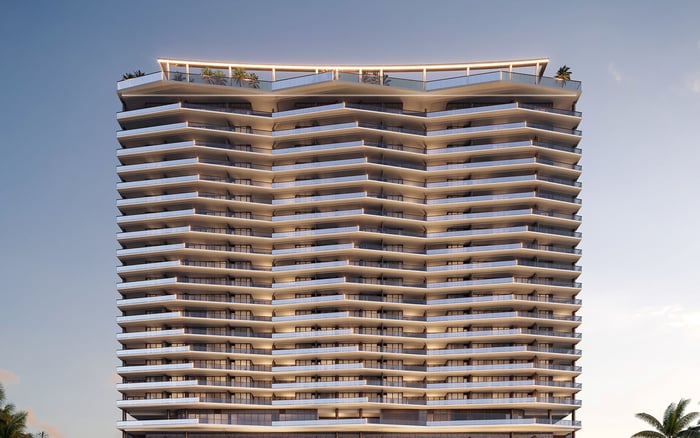
An editorial look at why insurance-certificate requirements belong in the language of quiet luxury at The Delmore Surfside, where operational discipline can protect lifestyle, liquidity, and long-term capital.

Quiet luxury in South Florida real estate is often described through materials, privacy, scale, and restraint. At its most sophisticated, however, it is also operational. It is the absence of friction when a residence is serviced, renovated, maintained, insured, financed, and ultimately resold. For a discreet beachfront address such as The Delmore Surfside, that back-of-house calm is not incidental to ownership. It is central to the value proposition.
Insurance-certificate requirements may sound administrative, but in a high-end condominium they can signal institutional discipline. A certificate-of-insurance process helps confirm that vendors, contractors, service providers, and relevant commercial users entering the property carry appropriate coverage before they create risk for residents and the association. The purpose is not bureaucracy for its own sake. It is to reduce the chance that an owner community absorbs losses tied to uninsured or underinsured third parties.
That is why the topic belongs in a luxury conversation. The buyer evaluating Surfside today is not only looking at architecture, ocean views, amenities, and privacy. The buyer is also reading the building culture: inspections, reserves, insurance, governance, vendor controls, and the seriousness with which foreseeable risk is managed.
Oceanfront ownership carries a distinct risk profile. Hurricanes, salt air, climate exposure, insurance-market pressure, maintenance intensity, and high-value improvements all make operational control more consequential. In that environment, an insurance certificate is not a decorative file. It is evidence that the building is asking basic but important questions before allowing work to proceed: who is coming on-site, what coverage do they carry, what work are they performing, and who is protected if something goes wrong?
The same logic is visible across the luxury coastal corridor. A buyer comparing Surfside properties such as Arte Surfside or Ocean House Surfside may be drawn first to design language, scale, and location. The more seasoned buyer then turns to the less visible issues that preserve comfort over time. Does the building maintain a strong compliance culture? Are vendors screened before they enter common areas? Is there a record showing that risk transfer is being managed consistently?
For a New Project, these questions can be especially important because the first years of ownership often establish the building’s habits. Pre-construction buyers, in particular, should understand that the elegance of a new residence depends on more than the sales-gallery promise. It also depends on how the building will govern itself when the everyday realities of ownership begin.
In luxury condominiums, governance is part of the asset. A beautiful building with casual operational standards may feel effortless until a loss event exposes gaps. By contrast, a building that tracks certificates, renewals, coverage categories, and vendor access can demonstrate that it takes preventable risk seriously. That audit trail may matter to owners, lenders, insurers, and future buyers.
The Delmore Surfside provides a useful lens because its quiet, design-driven positioning naturally invites a broader definition of luxury. The point is not to claim a specific internal policy without the governing documents in hand. The point is to examine what the most demanding owners increasingly expect from properties in this tier: invisible competence. Residents should not feel the machinery of compliance every day. They should feel the serenity that disciplined compliance makes possible.
This is particularly relevant in the post-Surfside-collapse context, where buyers are more attentive to building safety culture and operational seriousness. The conversation has matured. Sophisticated purchasers are no longer satisfied by a polished lobby and a compelling amenity deck. They want to understand whether a condominium is structured to preserve both lifestyle and capital.
A rigorous insurance-certificate program can support three forms of protection. First, it protects lifestyle by reducing avoidable disruption. If a contractor damages common property, causes an injury, or creates a loss during work, the building should not be discovering after the fact that the party lacked proper coverage.
Second, it protects liquidity. Buyers and their advisors increasingly scrutinize association health, insurance posture, reserves, litigation exposure, and governance practices. A building that can show disciplined vendor-risk controls may inspire greater confidence in a resale environment where underwriting and due diligence have become more exacting.
Third, it protects long-term capital. Surprise assessments often follow unmanaged risk, deferred obligations, or events that could have been better anticipated. Certificate tracking is not a complete shield, but it is one practical element in a broader coastal-risk framework. It says the building is not relying on hope where procedure is available.
This Investment logic is not limited to Surfside. Owners studying other ultra-premium settings, from The Surf Club Four Seasons Surfside to nearby coastal enclaves, are increasingly attentive to the quality of management beneath the visible luxury. The best buildings understand that discretion and discipline are compatible. In fact, they reinforce one another.
For buyers and advisors, the certificate conversation should be calm, specific, and practical. Ask whether the condominium requires current certificates from contractors and service providers before access is granted. Ask how renewals are monitored. Ask whether coverage requirements differ by work type, such as construction, maintenance, moving, event production, valet operations, landscaping, security, or other services that may touch common elements.
Also ask who reviews the certificates. A policy is only as good as its administration. Does management simply collect documents, or does it verify that limits, named insureds, endorsements, expiration dates, and scopes of work align with building requirements? Is there a system for preventing expired certificates from remaining in the file? Are commercial tenants, if any, subject to comparable standards when their operations interact with the property?
These questions should not feel adversarial. In the luxury market, they are part of informed ownership. A strong response can deepen confidence in the building. A vague response can indicate that the buyer should continue diligence before relying on design alone.
The enduring appeal of Surfside is its restraint. It offers beach proximity, privacy, and a residential tempo distinct from more theatrical parts of Miami Beach. In that context, The Delmore Surfside suggests a valuable editorial lesson: the next generation of luxury will be judged not only by what residents see, but by what they never have to worry about.
Insurance-certificate requirements belong to that unseen layer. They are a quiet form of care, a way of protecting the owner experience before a problem becomes visible. For the most selective buyers, that may be one of the clearest distinctions between a merely attractive condominium and a truly durable one.
Why do insurance-certificate requirements matter in a luxury condo? They help confirm that vendors and service providers carry coverage before entering the property, reducing the risk that owners absorb avoidable losses.
Does The Delmore Surfside have a confirmed certificate policy? This article does not assert a specific internal policy. It uses The Delmore Surfside as a lens for discussing the operational standards luxury buyers should evaluate.
Who should be covered by certificate tracking? Contractors, service providers, and any relevant commercial tenants or operators accessing the property should be part of the review framework.
How does this relate to quiet luxury? Quiet luxury is not only finishes and privacy. It is also the disciplined back-of-house control that makes daily ownership feel calm and seamless.
Can certificate requirements affect resale perception? Yes. Strong vendor-risk controls can support buyer confidence because they suggest a more serious governance culture.
Are insurance certificates a substitute for reserves or inspections? No. They are one component of a broader risk framework that should also include reserves, inspections, insurance planning, and governance.
Why is Surfside especially sensitive to governance questions? Buyers in Surfside are highly attentive to building safety culture, coastal exposure, insurance pressure, and operational discipline.
What should Pre-construction buyers ask? They should ask how the building plans to manage vendor access, certificate renewals, coverage review, and documentation once ownership begins.
Is this only relevant for Oceanfront buildings? It matters everywhere, but Oceanfront properties face added coastal and maintenance pressures that make risk controls especially valuable.
What is the main takeaway for The Delmore Surfside buyers? The most durable luxury is not only visible in design. It is also found in the systems that protect lifestyle, liquidity, and capital.
For a discreet conversation and a curated building-by-building shortlist, connect with MILLION.
If branded residences are on your mind — as a home or as an allocation — we would be glad to share what we are seeing, privately.
Begin a quiet conversation