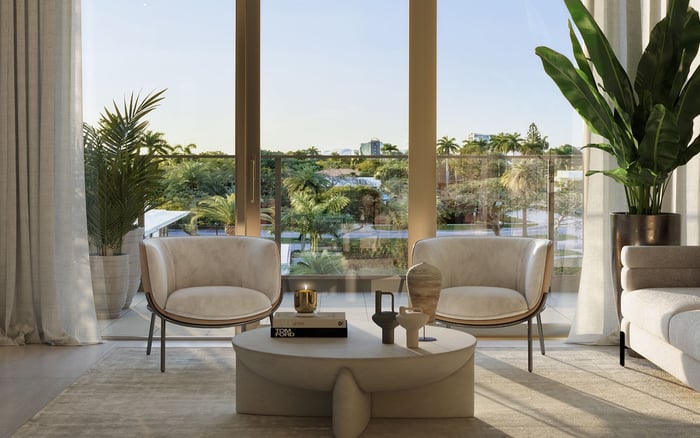
A luxury residence’s view premium should be judged for durability, not just drama. In South Florida, the most compelling corridors combine movement, horizon depth, thoughtful framing, comfort in strong sun, and a lived-in ability to draw the eye long after move-in.
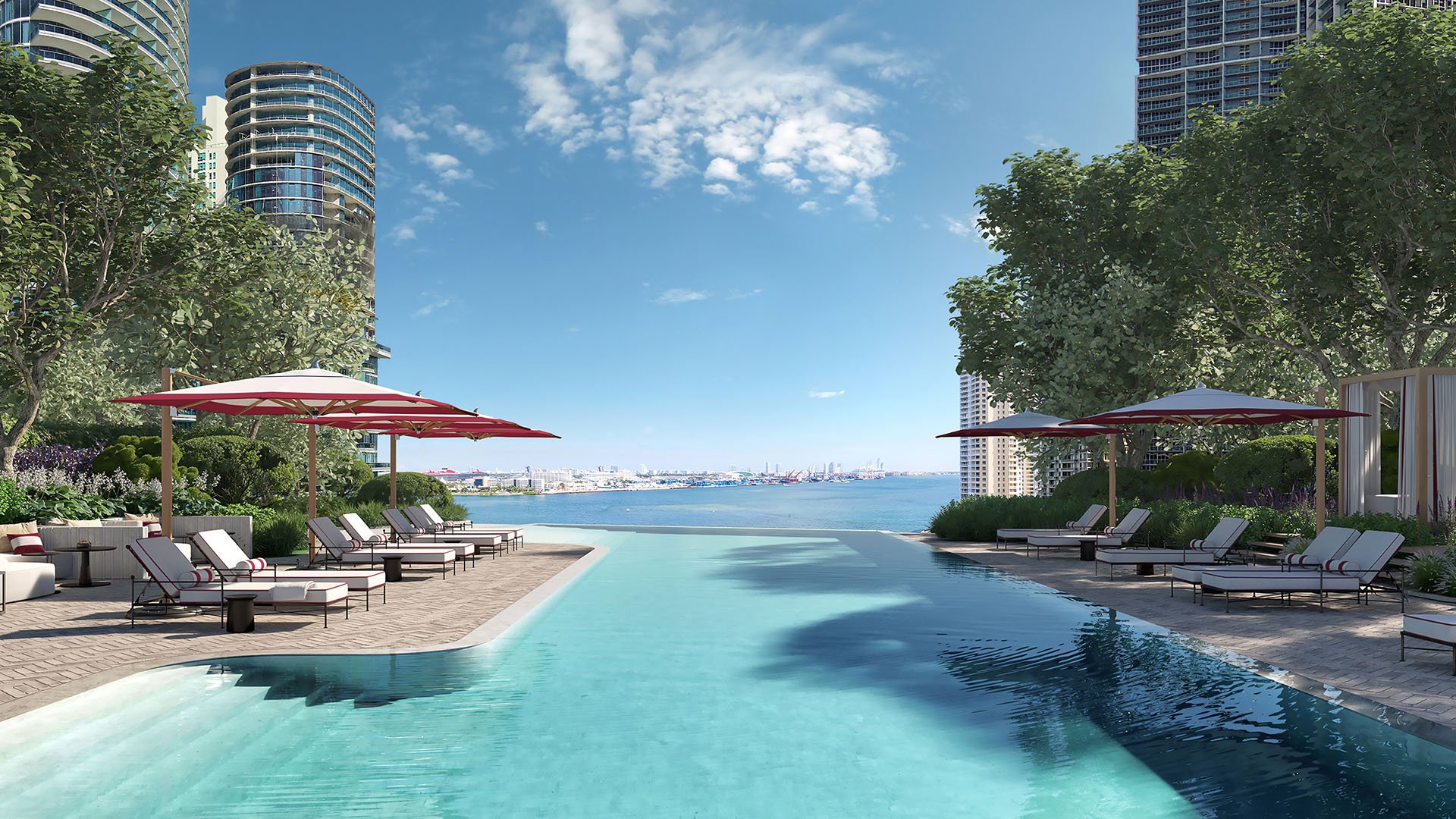
In luxury real estate, a view can feel decisive within seconds. The challenge is that first impressions are often overly flattering. What feels cinematic during a showing may feel merely familiar six months later. The right test is not whether a corridor is dramatic on arrival, but whether it continues to command attention once routine sets in.
That distinction matters in South Florida, where premiums for oceanfront, waterview, and high-floor residences can be substantial. A compelling corridor tends to resist adaptation by offering variation, depth, comfort, and identity. A weaker one relies on novelty alone.
For buyers weighing options in places such as Brickell, Miami Beach, Sunny Isles, or West Palm Beach, the most useful approach is practical: return more than once, observe the room under ordinary conditions, and judge the view as a daily experience rather than a staged moment.
The corridors that hold attention longest usually have some form of change built into them. Moving water, shifting clouds, passing boats, wildlife, and changing light give the eye a reason to return. A static scene, even an elegant one, can flatten quickly if its only appeal is a distant line of towers or an uninterrupted plane of water with little visual activity.
This is one reason certain South Florida settings tend to remain engaging. Along the bay, a residence at Una Residences Brickell invites a buyer to think not only about water, but about whether the corridor includes marine movement, weather drama, and a clean horizon. The same test applies on the beach: does the ocean read as a living surface throughout the day, or only as a beautiful backdrop at sunset?
A useful shorthand is this: if the scene changes without asking anything of you, it is more likely to stay interesting.
A view that triumphs only at golden hour is not necessarily a durable luxury asset. Evaluate it at dawn, midday, sunset, and night. Dawn reveals softness and horizon depth. Midday exposes glare, heat, and the true quality of the glass. Sunset shows how color and contrast behave when the scene is at its most flattering. Night tests whether the corridor still feels dimensional once natural light disappears.
In South Florida, this exercise is especially important because strong sun, humidity, and storm patterns can make a room either luminous or unlivable depending on orientation and glazing. Low-E glass, solar control, and reflection performance are not technical footnotes. They determine whether the owner actually keeps the shades open.
This is where comparable occupied residences become useful. If similar long-held units in the same stack routinely keep blinds closed for much of the day, that is a quiet warning. The view may still be heavily marketed, but daily behavior tells the real story.
A buyer considering The Perigon Miami Beach or Rivage Bal Harbour should be as interested in how a room performs at 1 p.m. in August as at 6:30 p.m. in January.
Experienced designers treat views as composed scenes. The most memorable corridors are framed with intention: the window edges are disciplined, the proportions are balanced, and the focal point is immediately legible. That focal point might be open ocean, a broad bay, a landmark, or a long horizon line. What matters is clarity.
Long sightlines usually feel more expansive and restorative than blocked mid-range views. Horizon depth gives the room psychological breadth. By contrast, a scene interrupted by competing towers can lose force over time because the eye has no single dominant subject.
This is also why a recognizable local identity matters. A generic panorama can be handsome yet forgettable. A corridor with a meaningful sense of place tends to age better, whether that means a layered bayfront perspective, a civic landmark, or a shoreline with unmistakable South Florida character.
In Coconut Grove, for example, a buyer reviewing Vita at Grove Isle would want to ask whether the view corridor is simply broad, or whether it has a composed focal hierarchy and a clear narrative tied to the water and surrounding landscape.
A proper showing encourages you to stare. Real life does not. The more revealing exercise is to spend a few hours in the residence doing ordinary things: reading, answering emails, eating lunch, taking a call. A durable view has a way of reclaiming your attention without effort. You look up because the corridor keeps offering something back.
If, after twenty minutes, the room recedes into the background and the view disappears into habit, the premium may be more fragile than it first seemed. Repeat this test over visits spaced a few weeks apart. If your excitement drops sharply after the initial encounter, adaptation may arrive faster than expected.
This matters even more in resale decisions, where the buyer is not purchasing a rendering but a lived asset. One of the clearest indicators is a similar unit in the same orientation that has been occupied for years. Observe how the residents use the room. Are the windows celebrated or managed? Is the furniture arranged toward the corridor or away from it? These are subtle but revealing signals.
A beautiful corridor can be weakened by conditions outside the glass. Water views deserve environmental scrutiny. The emotional value of the view can change if the surrounding setting is regularly affected by storm disruption or if the outlook loses clarity and pleasure over time.
Noise is equally important. Air traffic, helicopters, seaplanes, and major transportation corridors can turn an elegant visual experience into a distracted daily one. The view is not only what you see. It is the atmosphere in which you see it.
Maintenance also matters more than buyers sometimes assume. Window-cleaning schedules, façade upkeep, and landscape management affect whether a corridor remains crisp or gradually dulls. A glamorous outlook loses authority if salt, haze, deferred cleaning, or unmanaged plantings soften it into a blur.
Finally, ask whether the corridor is genuinely scarce within the building. The more unique the vantage, the more defensible its long-term appeal tends to be. If dozens of nearly identical residences share the same framing and elevation, both owners and future buyers may normalize the experience more quickly.
Personal enjoyment comes first, but market behavior still matters. If certain lines, floors, or orientations in a building have consistently preserved stronger premiums over time, that usually suggests the lived experience continues to justify the spread. The reverse can also be true: a heavily marketed exposure may underperform if owners discover that glare, privacy loss, or visual fatigue limit actual use.
The most sophisticated buyers therefore combine instinct with evidence. They study the corridor itself, then compare it with long-occupied similar residences and the resale pattern those homes have established. A lasting view premium is rarely about spectacle alone. It is about repeat pleasure.
A view corridor is likely to remain compelling if it passes five quiet tests. First, it offers movement and changing light. Second, it performs at multiple hours, not only one magical moment. Third, it feels comfortable enough that shades stay open. Fourth, it has a dominant focal point with real horizon depth or local identity. Fifth, it still pulls your attention during ordinary life.
That is the difference between a view you admire and a view you continue to live with beautifully.
What is the simplest way to test whether a view will age well? Visit more than once and see the same corridor at different hours. A durable view improves under repetition rather than fading after the first impression.
Why do some dramatic views lose their appeal so quickly? Novelty fades. If the scene is static or uncomfortable to live with, the initial thrill often gives way to visual routine.
Are water views always more enduring than skyline views? Not always. Water tends to hold attention when it includes movement, changing light, and a strong horizon, but a skyline with identity can also remain compelling.
How important is glare in South Florida? Extremely important. If strong sun forces shades closed for much of the day, the practical value of the view drops regardless of how beautiful it looks in photos.
What should I look for in a comparable unit? Focus on a residence in the same stack or orientation that has been occupied for years. Its daily use patterns often reveal more than a staged showing.
Can a lower floor still have a lasting premium? Yes, if the corridor has strong framing, privacy, movement, and a clear focal point. Height helps, but composition and comfort matter just as much.
Do landmarks really make a view more valuable over time? Often, yes. Recognizable local features give the corridor narrative and identity, which can slow the feeling of sameness.
Should buyers worry about noise even if the visuals are excellent? Absolutely. Helicopters, flight paths, and traffic can erode the experience of a beautiful corridor in everyday use.
Does maintenance affect view quality that much? It does. Window cleanliness, façade care, and landscape upkeep all influence whether a corridor stays crisp and enjoyable.
What is the best way to shortlist comparable options for touring? Start with location fit, delivery status, and daily lifestyle priorities, then compare stacks and elevations to validate views and privacy.
For a tailored shortlist and next-step guidance, connect with MILLION.
If branded residences are on your mind — as a home or as an allocation — we would be glad to share what we are seeing, privately.
Begin a quiet conversation