A discreet buyer’s guide to separating true architectural volume from sales-gallery spectacle when evaluating double-height ceilings in South Florida luxury residences.
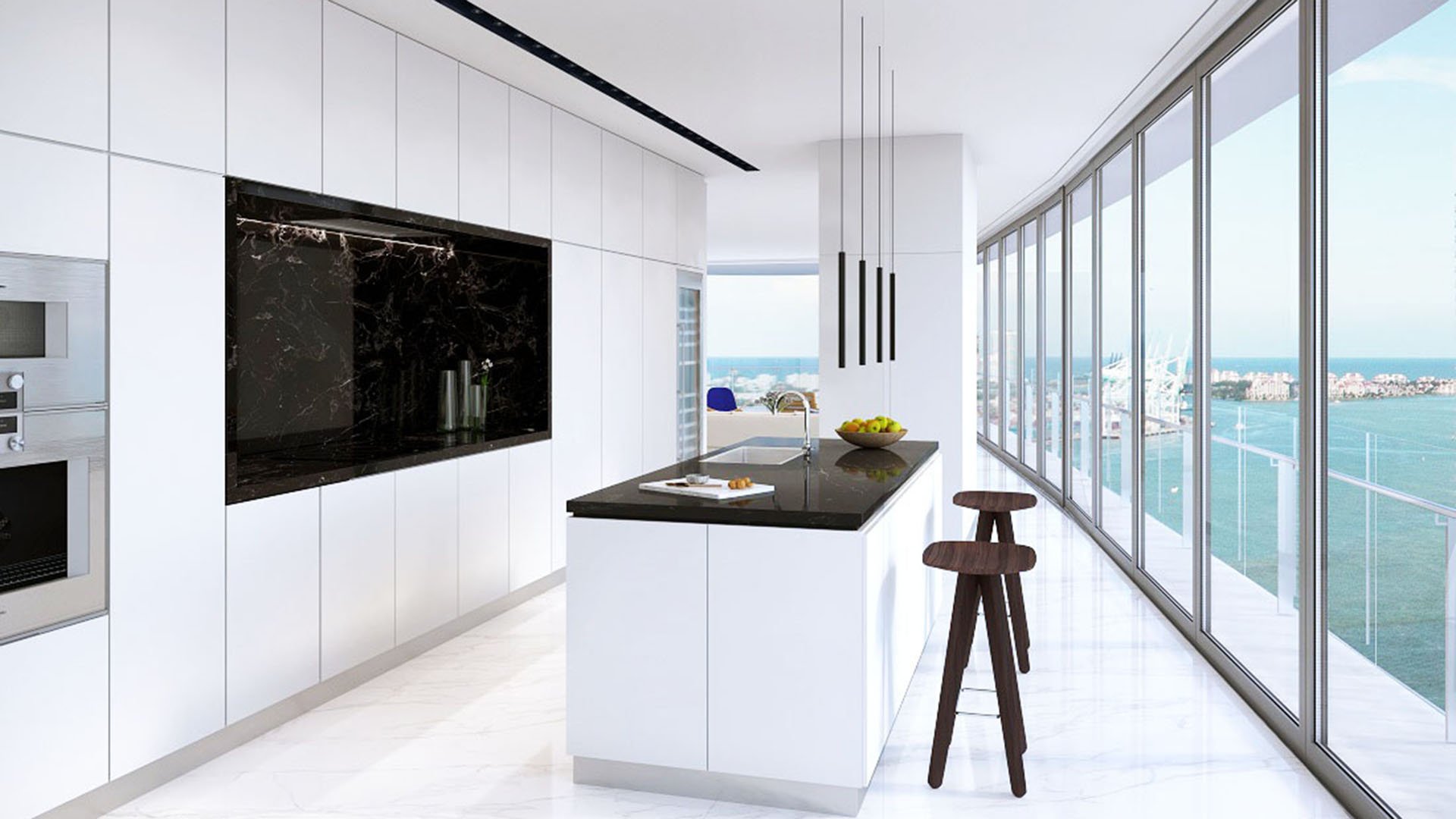
Double-height ceilings have become one of the most seductive phrases in luxury residential marketing. The words imply air, ceremony, light, and an immediate sense of arrival. In South Florida, where glass, water, sky, and terrace living shape the emotional value of a home, vertical volume can be especially powerful. It can also be overstated.
The discerning buyer should treat double-height space as architecture, not as a slogan. A ceiling that photographs dramatically may not live beautifully. A soaring room can feel gracious, but it can also feel hollow, loud, difficult to furnish, or detached from the rest of the residence. The question is not whether the ceiling is tall. The question is whether the height improves the home.
For buyers scanning Miami Beach, new-construction, high-floor, penthouse, terrace, and balcony opportunities, the phrase double-height should prompt a more rigorous read of proportion, plan, light, and daily use. True luxury is not measured only in vertical footage. It is measured in how calmly the room supports life.
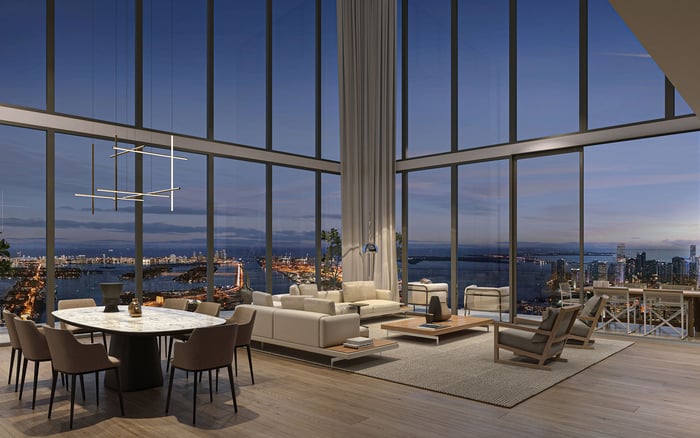
Marketing theater often begins with a single heroic image: a camera set low, angled upward, capturing a wall of glass and a chandelier suspended in space. The image may be beautiful, but it tells only part of the story. Proportion determines whether the room will still feel elegant after the first impression fades.
A well-composed double-height room should have a clear relationship among width, depth, and height. If the ceiling rises dramatically but the footprint is narrow, the space may feel like a shaft rather than a salon. If the room is very tall but lacks architectural anchoring, the furniture can appear stranded. If the upper volume is disconnected from surrounding rooms, the effect may read as a lobby rather than a residence.
When touring, stand in multiple positions. Pause at the entry. Sit where the main sofa would be. Look back toward the kitchen, gallery, or stair. A true double-height living room should feel intentional from all primary viewpoints, not only from the promotional angle.
A rendering can make almost any room feel cinematic. The floor plan reveals whether the drama is livable. Study how the double-height area relates to circulation, privacy, and function. Does the volume belong to the main living room, or is it a small void created to justify a marketing phrase? Does the plan sacrifice usable upper-level space for visual spectacle? Does the surrounding layout give the room a natural purpose?
A credible double-height space typically has a reason to exist. It may frame a significant view, create a formal arrival sequence, connect living and entertaining levels, or allow natural light to travel deeper into the residence. When the volume lacks a role, it can become expensive emptiness.
Also study transitions. The best homes move gracefully from compression to expansion. A lower entry gallery can make a double-height living area feel more powerful. A carefully scaled stair can add sculptural value. A mezzanine or upper corridor, if present, should feel integrated rather than incidental.
In South Florida, glass is part of the dream. The combination of vertical height and broad glazing can make a residence feel almost weightless. Yet the quality of that experience depends on orientation, privacy, glare, and the relationship between inside and outside.
A double-height glass wall is not automatically superior to a more restrained opening. Ask what the glass is framing. Water, garden, skyline, and open sky can justify the gesture. A direct exposure into a neighboring structure may not. Consider how the room feels in bright midday conditions and after sunset. A wall of glass can create glamour at night, but it can also turn the interior into a stage if privacy has not been considered.
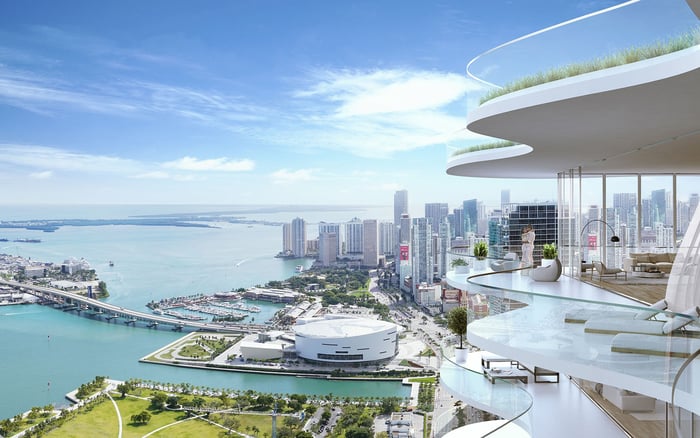
Terrace and balcony connections matter as well. If the double-height room visually promises outdoor living but physically separates you from it, the experience may feel theatrical. The most compelling residences align vertical volume with usable exterior space, creating continuity rather than a backdrop.
One of the fastest ways to identify marketing theater is to imagine real furniture in the space. Renderings often use oversized art, elongated sofas, dramatic pendants, and carefully edited accessories to make a tall room feel complete. In reality, furnishing a double-height space demands discipline.
Ask whether the room can support intimate seating. A luxury living room should not require guests to speak across a cavern. It should allow conversation, reading, entertaining, and quiet evenings without feeling underfilled. If every furnishing decision must become monumental to match the ceiling, the architecture may be overpowering the life it is meant to frame.
Wall space is another clue. Tall blank surfaces can be magnificent when designed for art, paneling, stone, shelving, or subtle architectural detail. Without that thought, they can become unresolved expanses. A double-height room should offer surfaces that feel curated, not merely tall.
A dramatic chandelier can be exquisite, but it should not be the only element making the volume work. Good lighting gives structure to height. It considers evening atmosphere, layered illumination, art placement, task lighting, and the way the room feels when the centerpiece fixture is dimmed or off.
If the sales narrative relies too heavily on one suspended fixture, look closer. The room may need that object to compensate for weak composition. Architectural lighting, concealed details, sconces, integrated millwork, and thoughtful ceiling planes can bring the scale down to human comfort.
A practical buyer should ask how bulbs, controls, cleaning, and maintenance will be handled. Luxury includes ease. A ceiling that creates constant logistical friction may be less glamorous than it appears.
Volume changes how a room behaves. A double-height ceiling can affect acoustics, airflow, and the perception of temperature. In a luxury home, those elements should feel resolved. The space should not echo harshly, feel uneven, or require visual compromises to become comfortable.
Soft materials, rugs, drapery, upholstered seating, wood, textured wall finishes, and art can all help tune a room. The point is not to reject height. It is to see whether the design anticipates the consequences of height. A beautiful residence does not ask the buyer to solve what the architecture ignored.
During a private tour, speak at a normal volume. Notice whether voices carry pleasantly or bounce. Stand near the glass and then farther inside the room. Observe whether the space feels consistent. True luxury is experienced physically before it is explained verbally.
Penthouse residences often carry the strongest association with double-height drama. The expectation is understandable: privacy, sky, views, and entertaining scale can make vertical volume feel natural. Yet the premium should still be earned.
In a penthouse, double-height space should strengthen the identity of the residence. It may create a memorable arrival, enhance a primary entertaining room, or frame a view that feels inseparable from the home. If the room’s main value is that it looks impressive in photographs, the premium deserves careful questioning.
For high-floor buyers, wind, light, exposure, and privacy all shape the experience. The most refined homes feel composed even at great height. The architecture should make the sky feel serene, not overwhelming.
Ask what the double-height space is doing for the plan. Ask whether it improves view, light, circulation, entertaining, or daily comfort. Ask what was traded away to create it. Ask how it will be furnished, lit, cooled, shaded, and maintained. Ask whether the room feels as good from a chair as it does from the doorway.
Most importantly, ask yourself whether the ceiling height contributes to a feeling of permanence. Marketing theater is designed to produce an instant reaction. Architecture is designed to deepen over time. The difference is often felt in silence, after the sales language stops.
What is marketing theater in a double-height ceiling? It is the use of dramatic visuals or language to make height feel more valuable than the actual lived experience supports.
Is a double-height ceiling always better in a luxury residence? No. It is only better when the volume improves proportion, light, views, circulation, and comfort.
What should I look at first during a tour? Begin with proportion. Stand in several places and judge whether the room feels balanced, not just tall.
Can a double-height room be difficult to furnish? Yes. If the scale demands unusually large pieces to feel complete, the architecture may be dominating the interior.
Why do renderings make these spaces look so convincing? Renderings can control angle, light, furniture, and atmosphere in ways that may not reflect daily use.
Should I worry about acoustics? Yes. Speak normally in the room and notice whether sound feels warm and controlled or hollow and distracting.
How does outdoor space affect the value of the ceiling? A strong terrace or balcony relationship can make vertical volume feel connected to South Florida living.
Are double-height ceilings especially valuable in a penthouse? They can be, but only when they enhance privacy, view, entertaining, and architectural identity.
What is the biggest red flag? A room that looks impressive from one angle but feels awkward, empty, or unresolved from everywhere else.
How should a serious buyer evaluate the premium? Compare the emotional impact with practical comfort, usable space, maintenance, and long-term livability.
To compare the best-fit options with clarity, connect with MILLION.
If branded residences are on your mind — as a home or as an allocation — we would be glad to share what we are seeing, privately.
Begin a quiet conversation