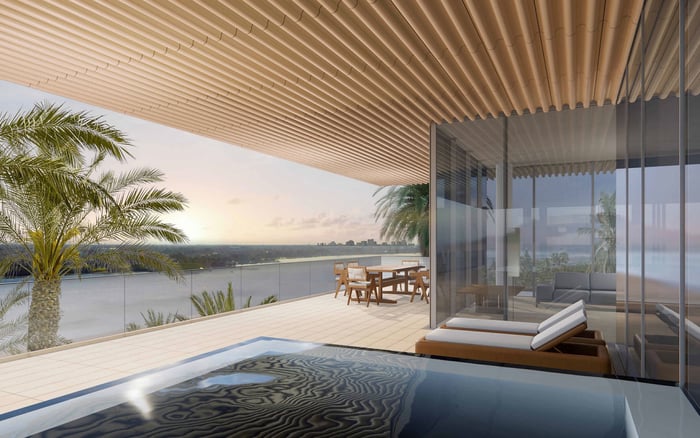
A practical buyer-focused look at how breakfast-room light may shape daily comfort, finish selections, shading strategy, and year-round livability at W Pompano Beach Hotel & Residences.
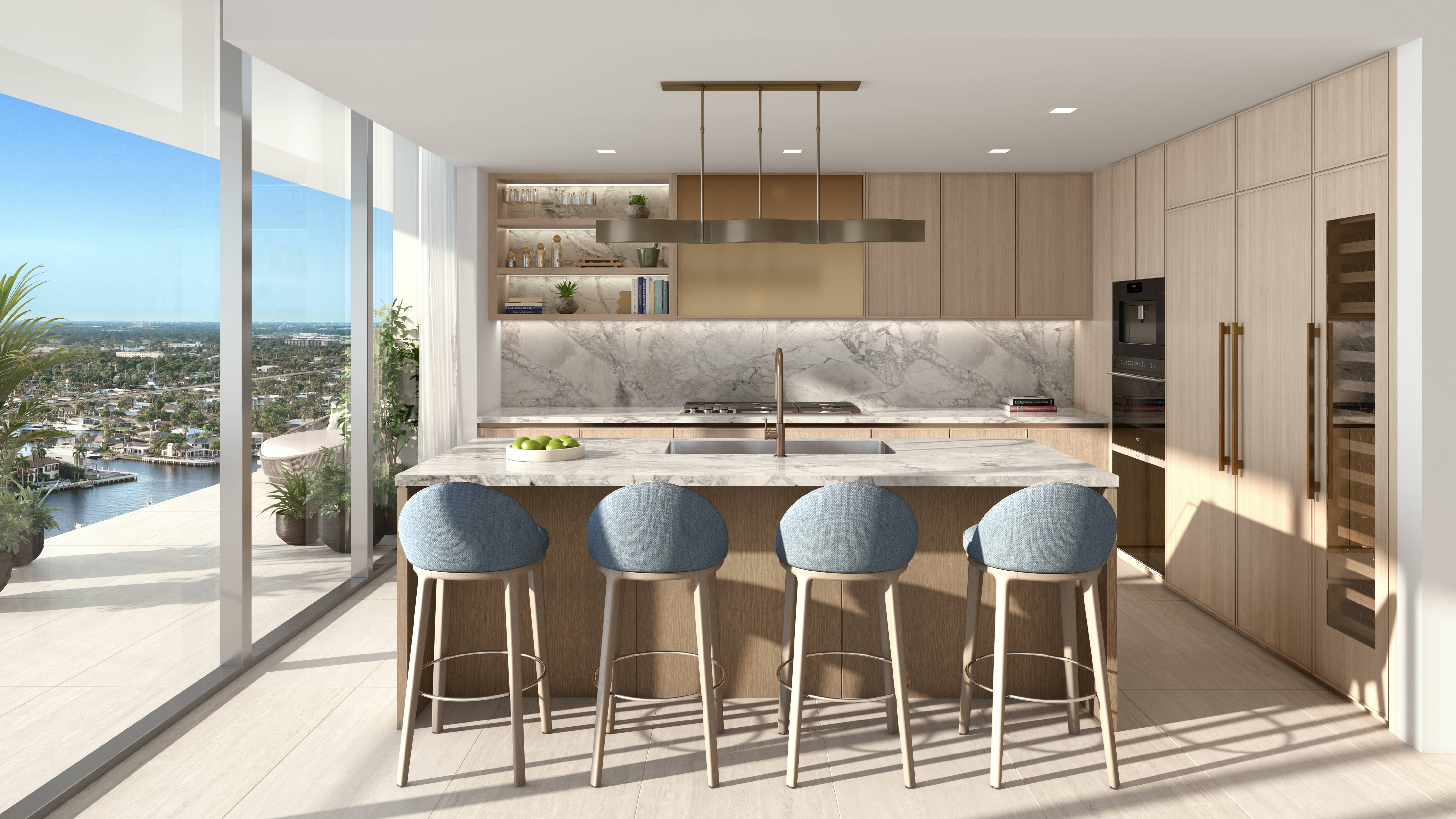
At W Pompano Beach Hotel & Residences, breakfast-room light is not a decorative footnote. For full-time owners, it can become one of the residence’s most frequently experienced qualities, shaping the first hour of the day, the feel of an open plan, and the home’s comfort through changing South Florida conditions.
The instinctive buyer question is often simple: is the residence bright? The better question is more precise: how does morning light behave in the breakfast area across seasons, routines, and exposures? A room can photograph beautifully and still feel too sharp at the hour when coffee, emails, reading, or a quiet family breakfast matters most. Conversely, a space with more controlled light may feel calmer and more usable over a full year.
This is especially relevant for full-time ownership. Seasonal owners may encounter a residence during a narrower part of the year. A full-time owner will live with summer heat, humidity, shoulder-season transitions, and winter mornings. That makes breakfast-room light a practical ownership issue, not simply an aesthetic preference.
East-facing breakfast areas are likely to feel most active in the morning, as sunrise-side glass can bring direct early-day light into open living and dining zones. For some owners, that is the ideal coastal ritual: brightness, horizon, movement, and an immediate connection to place. For others, direct morning light may require careful management, especially if the breakfast area also functions as a laptop station or reading corner.
North- and south-facing exposures may create a different experience. Their breakfast-time light may be more variable or oblique, depending on unit position and seasonal conditions. These orientations are worth comparing against direct east-facing lines because they may offer a softer morning atmosphere, though buyers should verify how the specific residence behaves rather than assuming that less direct light is automatically more comfortable.
West-facing glass is less central to the breakfast discussion, but it still matters for full-day livability. A home that feels gentle in the morning may become more exposed later in the day, and full-time owners should think beyond one preferred hour. The goal is not to chase one perfect exposure. It is to understand how the residence supports the whole day.
In an open-plan kitchen, living, and dining layout, breakfast-room light rarely stays confined to one table. Glare can spill across stone counters, polished floors, cabinetry, seating areas, and television walls. Heat can influence how the kitchen feels while it is being used. Brightness can enhance openness, but excessive direct light may reduce comfort during peak morning hours.
This is why buyers should ask a more architectural set of questions. Where does the light fall at breakfast time? Does it strike the table directly? Does it reflect off pale stone or a glossy cabinet face? Does it create eye-level glare from a seated position? Does the balcony edge soften the light, or does the glass line feel fully exposed?
For database filters, the practical lens may sit under Pompano-beach, Oceanfront, New-construction, High-floors, or Balcony considerations, but the human test is more intimate: how does the room feel when it is actually being lived in?
Floor height can change the light experience. Higher residences may receive broader, less obstructed exposure than lower floors, which can make the breakfast area feel more open and luminous. That advantage may be meaningful, but it can also intensify the need for glare control if morning sun reaches deep into the plan.
Lower floors may experience light differently, potentially shaped by neighboring structures, landscape, podium conditions, or the angle at which light enters the room. The important point is not that one height is universally better. It is that floor height should be evaluated as part of the light equation, along with orientation, glazing, balcony depth, furniture placement, and daily habits.
A buyer considering W Pompano Beach Hotel & Residences should therefore avoid relying only on a view description. Ocean or coastal views may be compelling, but they do not automatically explain glare, heat, privacy, or the way light behaves at the breakfast table.
Window treatments in this context are not merely a design upgrade. They are part of the practical infrastructure of year-round ownership. The right approach helps balance oceanfront brightness with privacy, glare control, and heat management without forcing the residence into permanent darkness.
For full-time owners, flexibility is the key. A breakfast room should be able to feel bright and coastal when the morning is soft, then shaded and composed when direct light becomes too aggressive. The strongest setup preserves the emotional benefit of natural light while allowing the owner to tune the space for comfort.
This is particularly important if the breakfast area serves multiple functions. Many owners use this zone beyond meals: working from home, reading, taking calls, casual entertaining, or simply beginning the day slowly. A room that is comfortable only for a staged breakfast is less useful than one that adapts to real life.
Interior finishes deserve the same scrutiny as exposure. Reflective tabletops, pale stone, polished floors, and glossy cabinetry can all amplify brightness. In a breakfast area with direct morning light, those choices may create sparkle, but they may also produce uncomfortable reflection.
This does not mean owners should avoid refined materials. It means they should select them with the actual light behavior in mind. A matte surface, softer tone, textured textile, or carefully placed rug can change how a bright room performs. The objective is not to mute the coastal setting. It is to create a room that feels composed at the hours it will be used most often.
Buyers should also think carefully about seating orientation. A beautiful view may be less enjoyable if the seated position faces direct glare. In some homes, the best breakfast arrangement is not the most obvious one on a plan. It is the one that lets the owner enjoy light without squinting through it.
Prospective buyers should compare the same plan at different times of day if possible, especially around the hours they expect to eat breakfast or work in the space. If an in-person comparison is not available, the right questions still matter: how does the specific line handle morning glare, how deep does light travel into the open plan, and what shading options are practical?
The most useful conversation is not simply about whether a residence is bright. It is about whether brightness can be managed. A luminous breakfast room can be a lifestyle advantage when the owner has control. Without that control, the same light can become a recurring inconvenience.
For full-time owners, the best breakfast-room setup keeps coastal brightness alive while allowing flexible shading. The room should feel open, but not exposed. Polished, but not harsh. Energizing, but not demanding. That balance is where design becomes daily livability.
Why is breakfast-room light important for full-time owners? Full-time owners experience the room across seasons, heat, humidity, and daily routines, so comfort matters beyond a single showing.
Is an east-facing breakfast area always best? East-facing areas may feel most active in the morning, but buyers should verify glare, heat, and how the light reaches the table.
Can north- or south-facing exposure be preferable? It may be, especially if the light is softer or more oblique during breakfast hours, but the exact unit line should be evaluated.
Does west-facing glass matter for breakfast? It is less central to morning light, but it can affect overall comfort later in the day.
Should buyers ask about glare specifically? Yes. Ocean or coastal views do not automatically explain how morning glare behaves in the breakfast area.
Can higher floors change the breakfast-room experience? Higher residences may receive broader, less obstructed exposure, which can increase both brightness and the need for control.
Why do open plans make this issue more important? Light, glare, and heat can affect the kitchen, dining area, and living space at the same time.
Are window treatments mainly a design choice? No. They are a practical ownership tool for privacy, heat management, and glare control.
Which finishes require extra care in bright breakfast areas? Reflective tabletops, pale stone, polished floors, and glossy cabinetry should be considered in relation to morning light.
What is the ideal outcome for year-round living? The ideal room preserves coastal brightness while allowing flexible shading when direct light becomes too strong.
If you'd like a private walkthrough and a curated shortlist, connect with MILLION.
If branded residences are on your mind — as a home or as an allocation — we would be glad to share what we are seeing, privately.
Begin a quiet conversation