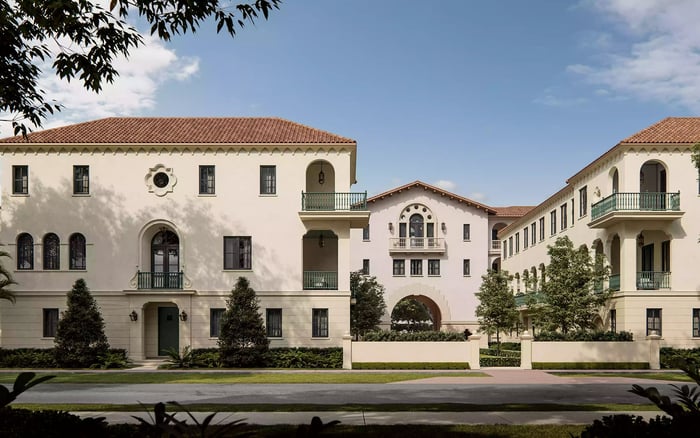
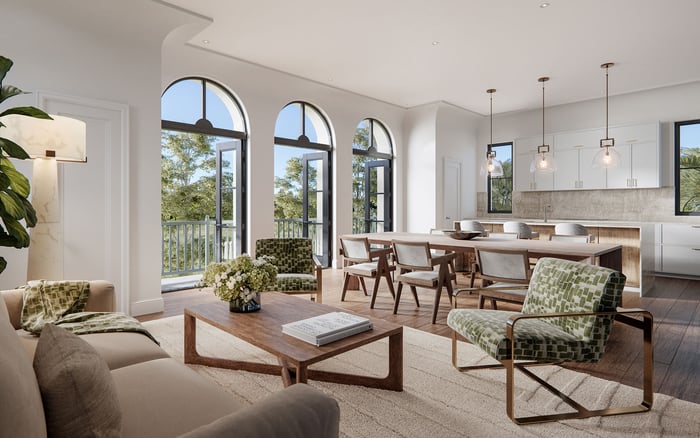
A discreet buyer’s guide to comparing Cora Merrick Park and Ponce Park Coral Gables through the daily operating culture of a luxury residential building.

For sophisticated South Florida buyers, the most revealing comparison between Cora Merrick Park and Ponce Park Coral Gables is not simply finishes, ceiling heights, or square footage. Those details matter, but they describe the private residence. Building culture defines the life around it.
In Coral Gables, where residential expectations are shaped by privacy, walkability, architectural restraint, and long-term ownership confidence, culture becomes a quiet but powerful filter. It is expressed in how residents use shared spaces, how easily an elevator fits into a morning routine, how crowded amenities feel on weekends, and how much influence owners may have over the environment they are buying into.
That is why Cora Merrick Park and Ponce Park Coral Gables should be evaluated not only as luxury residences, but as operating ecosystems. The right building is the one whose daily rhythm matches the buyer’s own standard of ease.
Building culture is not a marketing phrase. It is the lived pattern of a property. It includes the pace of arrivals, the tone of the lobby, the density of amenity use, the predictability of service, and the degree to which residents experience the building as private, social, family-oriented, investment-minded, or quietly residential.
For buyers considering Cora Merrick Park, the cultural question is how the building’s operating personality will feel over time. For those considering Ponce Park Coral Gables, the same question applies, though the answer may differ depending on the project’s amenity framework, resident mix, and ownership expectations.
This is especially important in the Coral Gables market, where luxury is often less theatrical than in waterfront Miami Beach or high-rise Brickell. Buyers may want elegance without spectacle, convenience without congestion, and hospitality without a resort atmosphere. That balance is where building culture becomes a true differentiator.
Amenity density is one of the clearest ways to understand the daily personality of a luxury building. A large menu of spaces can create lifestyle range, but the relevant question is not only what exists. It is how many residents are likely to share it, when they use it, and whether the amenity program supports privacy or encourages constant activity.
In a building with high amenity density, a buyer may benefit from more options for wellness, entertaining, leisure, and family life. Yet the same amenity program can feel very different depending on scheduling, circulation, and resident behavior. A fitness area that feels serene at 10 a.m. may feel constrained before school drop-off or after market hours. A pool deck may feel like a retreat during the week and a social hub on weekends.
For Cora Merrick Park and Ponce Park Coral Gables, amenity density should be read as a cultural signal. Does the building feel designed for residents who use shared spaces daily, or for owners who prefer their residence to do most of the work? Is the amenity layer an extension of private life, or a more active, club-like environment? The distinction is subtle, but for high-net-worth buyers it can define satisfaction.
Elevator wait times may sound operational, but in luxury real estate they are emotional. They shape the first and last minutes of every outing. They affect school runs, dinner reservations, work departures, airport transfers, guest arrivals, and the rhythm of service providers moving through the property.
A buyer touring a model residence can easily focus on views, stone, appliances, and terrace proportions. The more seasoned question is how the vertical circulation will feel when the building is occupied and routines overlap. Peak movement matters. Morning exits, evening returns, event nights, move-ins, deliveries, and service windows all influence the lived experience.
In comparing Cora Merrick Park with Ponce Park Coral Gables, elevator performance should be considered part of the building’s culture rather than a purely mechanical feature. A calm elevator experience supports discretion. A congested one can make even a beautifully designed building feel less composed.
This does not require speculative numbers. It requires disciplined observation and the right questions: How are residents, guests, deliveries, and staff flows separated or coordinated? How does the building manage busy periods? Does the arrival sequence feel protected, efficient, and intuitive? In luxury ownership, time is an amenity.
Owner control is another core distinction between luxury buildings. It speaks to how decisions are made, how standards are maintained, and how the property’s culture evolves after initial sales. For buyers who plan to hold a residence over the long term, this can be as important as the residence itself.
Control is not only about formal governance. It is also about whether the building’s rules, service protocols, rental posture, amenity access, and maintenance priorities align with the owner’s expectations. A building may be visually refined yet culturally mismatched if its operating philosophy does not support the desired level of privacy, predictability, or quiet.
Investment buyers and end users often look at the same building through different lenses. An investment-focused buyer may emphasize liquidity, renter appeal, and future positioning. A primary-residence buyer may prioritize neighbor profile, discretion, and the stability of daily routines. The ideal building culture is the one that can support the intended use without friction.
The comparison between Cora Merrick Park and Ponce Park Coral Gables is best framed as a buyer-fit exercise. Both are part of the Coral Gables luxury residential conversation, but the better choice depends on how a purchaser values amenity density, vertical circulation, and owner influence.
A buyer drawn to a more intimate rhythm may look carefully at how frequently amenities are likely to be used, how residents move through the property, and whether the building feels calm during the busiest parts of the day. A buyer who wants more lifestyle infrastructure may be willing to accept a more active shared environment if the building’s management and design support flow.
The boutique question also matters. Boutique does not automatically mean better, quieter, or more exclusive. It can mean fewer shared users, but it can also mean a more concentrated responsibility for operating costs and community expectations. Conversely, a larger or more amenity-forward building may provide more lifestyle breadth, but it must deliver those services without compromising privacy.
In new-construction decision-making, buyers often study visible features first because they are easier to compare. Building culture requires a different discipline. It asks how the building will feel after the opening energy settles, after every residence is occupied, and after the owner has lived through ordinary Tuesdays as well as holiday weekends.
Before choosing between Cora Merrick Park and Ponce Park Coral Gables, buyers should ask questions that expose the building’s operating temperament. Which amenities are likely to be used daily? Which are occasional luxuries? How does the arrival experience protect privacy? How are service movements handled? What rules support quiet enjoyment? How much influence do owners have over future standards?
The answers may not be found in a brochure. They are revealed through floor-by-floor circulation, lobby sequencing, amenity placement, access control, staffing philosophy, and the intended relationship between private residences and shared space.
For South Florida’s ultra-premium audience, the most important purchase is rarely the most decorated one. It is the one that makes life feel smoother, more private, and more controlled. In Coral Gables, that may be the highest form of luxury.
Why compare Cora Merrick Park and Ponce Park Coral Gables through building culture? Building culture captures the daily experience of ownership, including privacy, circulation, amenity use, and resident expectations.
Is amenity density always a positive feature? Not always. A deep amenity program is valuable when it remains comfortable, well managed, and aligned with how residents actually live.
Why do elevator wait times matter in luxury buildings? They affect daily convenience and the sense of composure that buyers expect from a premium residential environment.
What does owner control mean in this context? It refers to the degree to which ownership structures, rules, and operating standards support long-term comfort and consistency.
Should buyers focus more on floor plans or building operations? Both matter, but operations often determine whether a beautiful residence feels effortless after move-in.
How should a primary-residence buyer evaluate these projects? The priority should be privacy, predictable routines, service quality, and a resident culture that feels compatible.
How should an investment buyer think about building culture? Building culture can influence desirability, retention, perceived prestige, and how the property competes over time.
Does boutique automatically mean quieter ownership? No. Boutique scale can support intimacy, but the actual experience depends on resident behavior, rules, and management.
Why is Coral Gables different from other South Florida luxury markets? Coral Gables often emphasizes residential restraint, neighborhood character, and discretion rather than overt spectacle.
What is the best way to shortlist comparable options for touring? Start with location fit, delivery status, and daily lifestyle priorities, then compare stacks and elevations to validate views and privacy.
For a confidential assessment and a building-by-building shortlist, connect with MILLION.
If branded residences are on your mind — as a home or as an allocation — we would be glad to share what we are seeing, privately.
Begin a quiet conversation