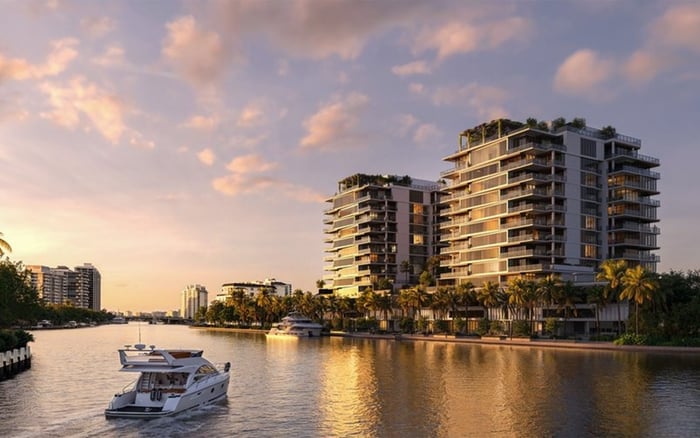
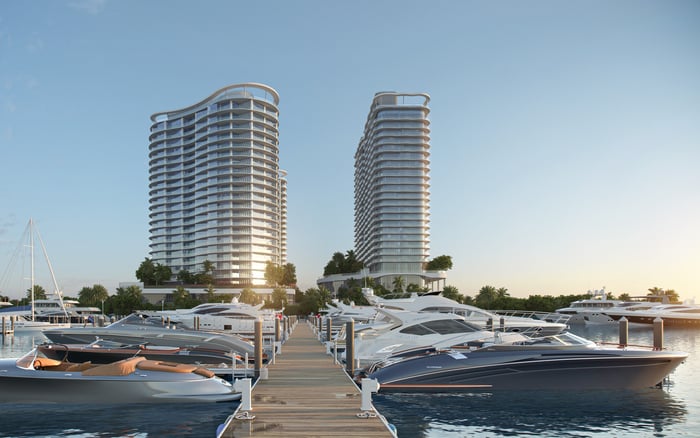
Fort Lauderdale is drawing disciplined luxury buyers who want new-development living without leaning entirely on peak-cycle assumptions. The appeal is a blend of waterfront character, daily usability, selective product depth, and a Broward value framework that can feel more measured than more speculative coastal markets.
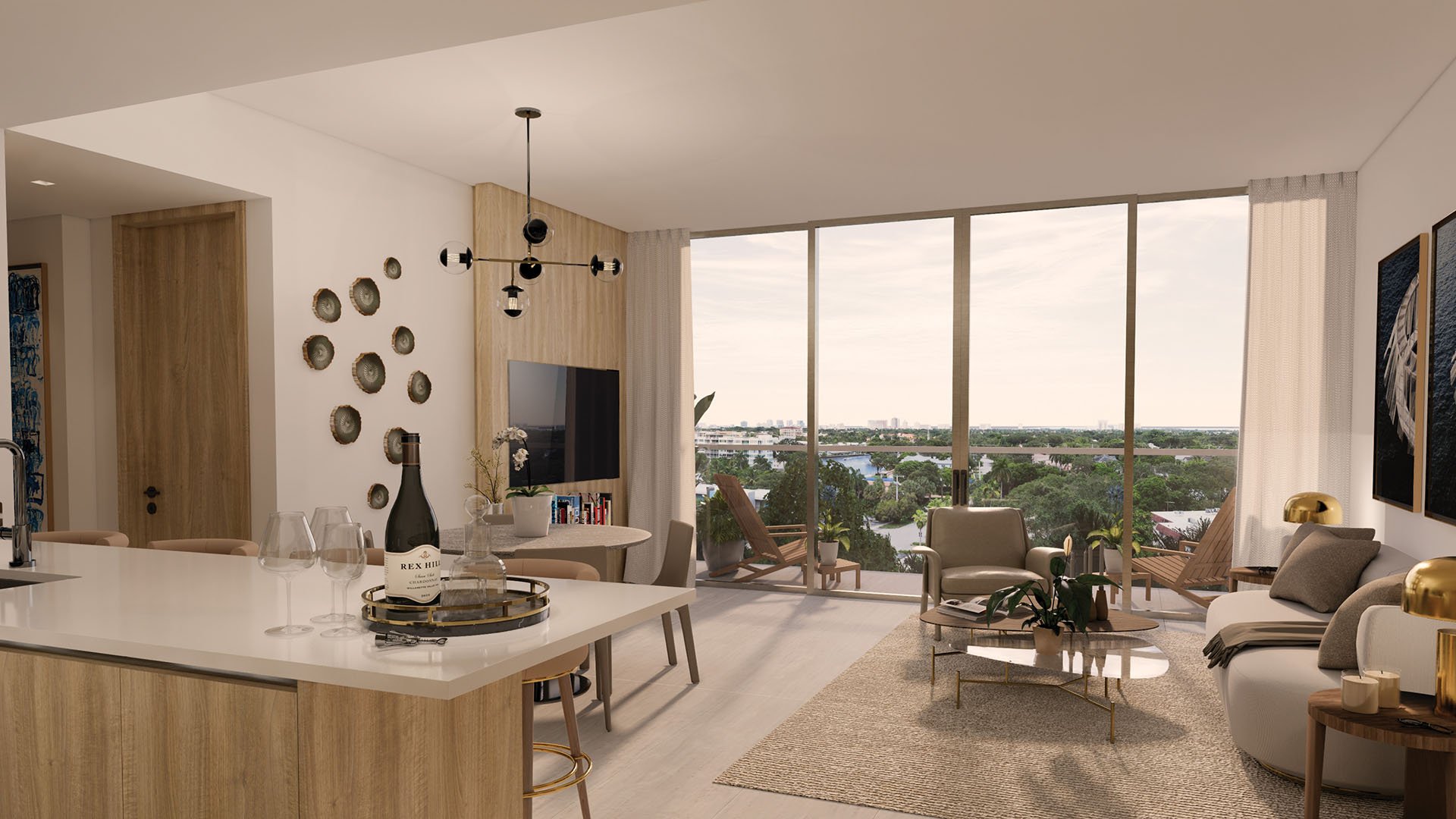
For many high-net-worth buyers, the most sophisticated purchase is no longer the one with the loudest rendering or the most theatrical amenity deck. It is the residence that can be owned through shifting market conditions with composure. Fort Lauderdale has become increasingly compelling for precisely that reason. It offers access to a polished coastal lifestyle, a serious boating culture, and new-development inventory, while still allowing a more measured conversation around basis, carrying costs, and resale logic.
This is not about choosing restraint over luxury. It is about choosing luxury with a clearer margin of safety. In Fort Lauderdale, buyers can evaluate new residences through the lens of real use, not just future appreciation. The city appeals to owners who want contemporary design, improved building systems, resort-style services, and lock-and-leave convenience, but who also want to avoid paying solely for a moment of market enthusiasm.
Fort Lauderdale occupies a distinctive position within the broader South Florida luxury map. It has the boating DNA, waterfront texture, and beach access that define coastal ownership, yet it often presents a different psychological entry point than Miami Beach, Palm Beach, or the most rarefied island enclaves. That distinction matters to buyers weighing lifestyle quality against concentration risk.
The Broward framework can feel especially relevant for purchasers who want proximity to South Florida’s economic and cultural energy without defaulting to the most aggressively priced addresses. For some, Fort Lauderdale offers a more balanced proposition: a luxury home base with strong everyday functionality, an established local identity, and a market that is not dependent on a single buyer profile.
That breadth is a form of discipline. A residence that can appeal to primary users, seasonal owners, boating families, and design-minded downsizers may have more durable exit optionality than a product aimed at one narrow audience. Buyers focused on downside protection are not simply asking what a residence looks like today. They are asking who the next logical buyer could be.
New construction appeals because it reduces uncertainty in the physical asset. Buyers are often drawn to modern floor plans, current code standards, fresh mechanical systems, private outdoor space, wellness features, and the simplicity of moving into a finished environment without immediate renovation exposure. For a luxury buyer, time and execution risk are real costs.
In Fort Lauderdale, that advantage is amplified by lifestyle utility. A well-designed new residence can support a weekday business routine, a long weekend on the water, hosting family, or seasonal occupancy. When the floor plan, parking, views, services, and building operations align with actual use, the purchase becomes less speculative. It is not only a bet on future pricing. It is a home that solves present-tense needs.
Pre-construction can also be attractive, but it requires sharper underwriting. Deposit structure, delivery timeline, sponsor reputation, unit mix, view corridor, and comparable finished product all deserve careful review. The disciplined buyer is not seduced by early access alone. Early access is valuable only when the basis, product quality, and projected ownership experience remain compelling after the excitement of launch has faded.
The luxury buyer’s first defensive question should be liquidity. If circumstances change, how deep is the likely buyer pool? Fort Lauderdale’s appeal is that its best residences can speak to several forms of demand: waterfront lifestyle buyers, South Florida relocators, yacht owners, empty nesters, and international owners seeking a less frenetic base.
Liquidity is not guaranteed by location alone. It depends on specific product choices. A disciplined buyer may prefer a floor plan with practical bedroom distribution over an idiosyncratic showpiece. They may value protected views, usable terraces, sensible monthly obligations, and building amenities that feel operationally sustainable rather than extravagant for the sake of marketing.
This is where investment discipline and personal enjoyment intersect. The best luxury purchases do not require the owner to apologize for liking the home. They also do not require impossible assumptions to justify the acquisition. A residence with broad appeal, rational carrying costs, and a clear lifestyle thesis is often more resilient than one whose value depends on scarcity language alone.
Fort Lauderdale’s marine identity remains one of its defining advantages. The city offers a lifestyle organized around water, movement, and privacy, whether the buyer is focused on beach proximity, canal living, marina access, or elevated views. Oceanfront ownership carries its own emotional premium, but disciplined buyers separate the romance of the water from the mechanics of the asset.
That means understanding exposure, maintenance, insurance considerations, association budgets, and the quality of the building envelope. It also means assessing whether the view is central to long-term value or merely a pleasant accessory. A beautiful outlook can support desirability, but a weak floor plan or inefficient building can still compromise the investment case.
The most durable waterfront purchases tend to balance spectacle with functionality. They offer a sense of arrival, privacy, and visual drama while still delivering practical interior layouts and service standards. Fort Lauderdale is particularly attractive to buyers who want water to be part of daily life, not only a backdrop for occasional visits.
The Fort Lauderdale new-development buyer is often pragmatic, not timid. This buyer may already understand Miami, Palm Beach, or New York pricing. They may be less interested in chasing a trophy address and more interested in building a thoughtful South Florida position. They want quality, but they also want to know that quality is supported by fundamentals.
Many are evaluating the residence as part of a broader portfolio. A second home must compete with other uses of capital. A primary residence must justify convenience, security, and lifestyle improvement. A future resale must be credible to someone other than the original buyer. These considerations are not anti-luxury. They are the modern language of luxury.
Fort Lauderdale also resonates with buyers who want elegance without excessive performance. The city can feel polished but not over-staged. It supports an owner who values boating, dining, beach access, and privacy, but who may not want the intensity of more crowded luxury corridors. For these buyers, discretion itself is part of the value proposition.
A disciplined underwriting process starts with the unit, not the brochure. The buyer should study orientation, ceiling heights, terrace depth, parking, storage, elevator experience, service flow, and adjacency within the building. In luxury real estate, small frictions become large over time.
Next comes the building. The strongest projects are not merely amenity rich. They are coherent. Amenities should support the way residents actually live, not inflate association costs without meaningful use. A fitness center, pool, lounge, spa component, or concierge program matters most when it is scaled intelligently and managed well.
Finally, the buyer should test the exit story. If the owner needed to sell in a less enthusiastic market, what would differentiate the residence? Is it the view, the floor plan, the address, the building reputation, the waterfront position, or the scarcity of comparable new product? The answer should be specific. General optimism is not a strategy.
Fort Lauderdale’s appeal is not that it eliminates risk. No real estate market does. Its appeal is that it can allow a buyer to pursue new-development comfort while maintaining a more grounded purchase thesis. That combination is increasingly valuable in a market where capital is more selective and buyers are more aware of carrying costs, construction quality, and resale depth.
For the right purchaser, Fort Lauderdale offers an elegant middle path. It is coastal, but not one-dimensional. It is luxurious, but it can still reward careful negotiation and product selection. It is aspirational, but it does not require abandoning discipline.
That is why the city belongs in the conversation for buyers who want a South Florida residence that feels both emotionally rewarding and financially considered. The best purchase is not always the most dramatic one. Often, it is the one that still makes sense after the showroom lights are off.
Why is Fort Lauderdale attractive for new-development buyers? It offers contemporary coastal living with a more measured ownership thesis, especially for buyers focused on usability, liquidity, and long-term appeal.
Does downside discipline mean avoiding luxury? No. It means buying luxury with clearer attention to basis, carrying costs, product quality, and the likely future buyer pool.
Is Fort Lauderdale only for boaters? No. Boating is a major lifestyle driver, but the market also appeals to beach-oriented buyers, seasonal residents, downsizers, and primary-home purchasers.
What should buyers review in a new-development purchase? Buyers should examine floor plan, views, sponsor quality, building operations, fees, delivery timing, and the credibility of the resale story.
Is pre-construction riskier than a finished residence? It can be, because timing, execution, and final delivery matter. The opportunity is strongest when the basis and project quality justify the wait.
Why does liquidity matter in a luxury purchase? Liquidity reflects how many future buyers may want the asset. A broader buyer pool can help support a more resilient exit.
Are amenities always positive for value? Not always. Amenities are most valuable when they are useful, well-managed, and proportionate to the building’s long-term operating costs.
How important are waterfront views? Views can be important, but they should be evaluated with layout, exposure, privacy, and building quality rather than treated as the only value driver.
Can a second home still be underwritten carefully? Yes. A second home should be judged by enjoyment, flexibility, carrying costs, and its ability to appeal to a future buyer.
What is the best way to shortlist comparable options for touring? Start with location fit, delivery status, and daily lifestyle priorities, then compare stacks and elevations to validate views and privacy.
When you're ready to tour or underwrite the options, connect with MILLION.
If branded residences are on your mind — as a home or as an allocation — we would be glad to share what we are seeing, privately.
Begin a quiet conversation