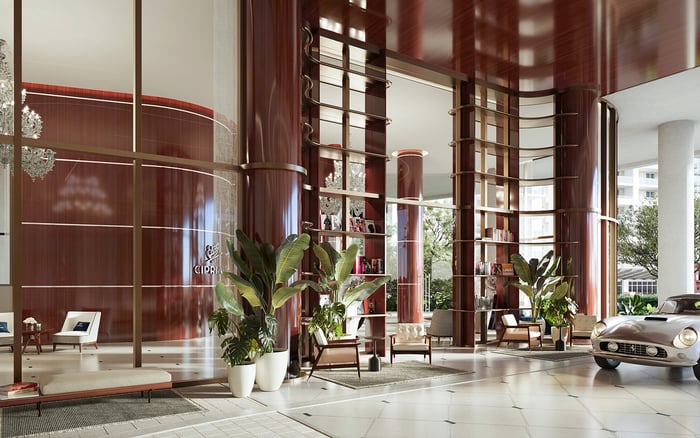
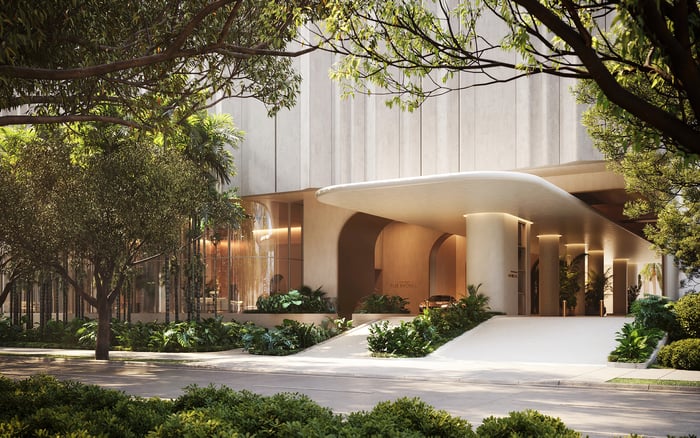
A buyer-focused Brickell guide for serious wine collectors who need functional storage, not just display. The article ranks the most useful residence profiles and explains the due diligence that matters before contract.
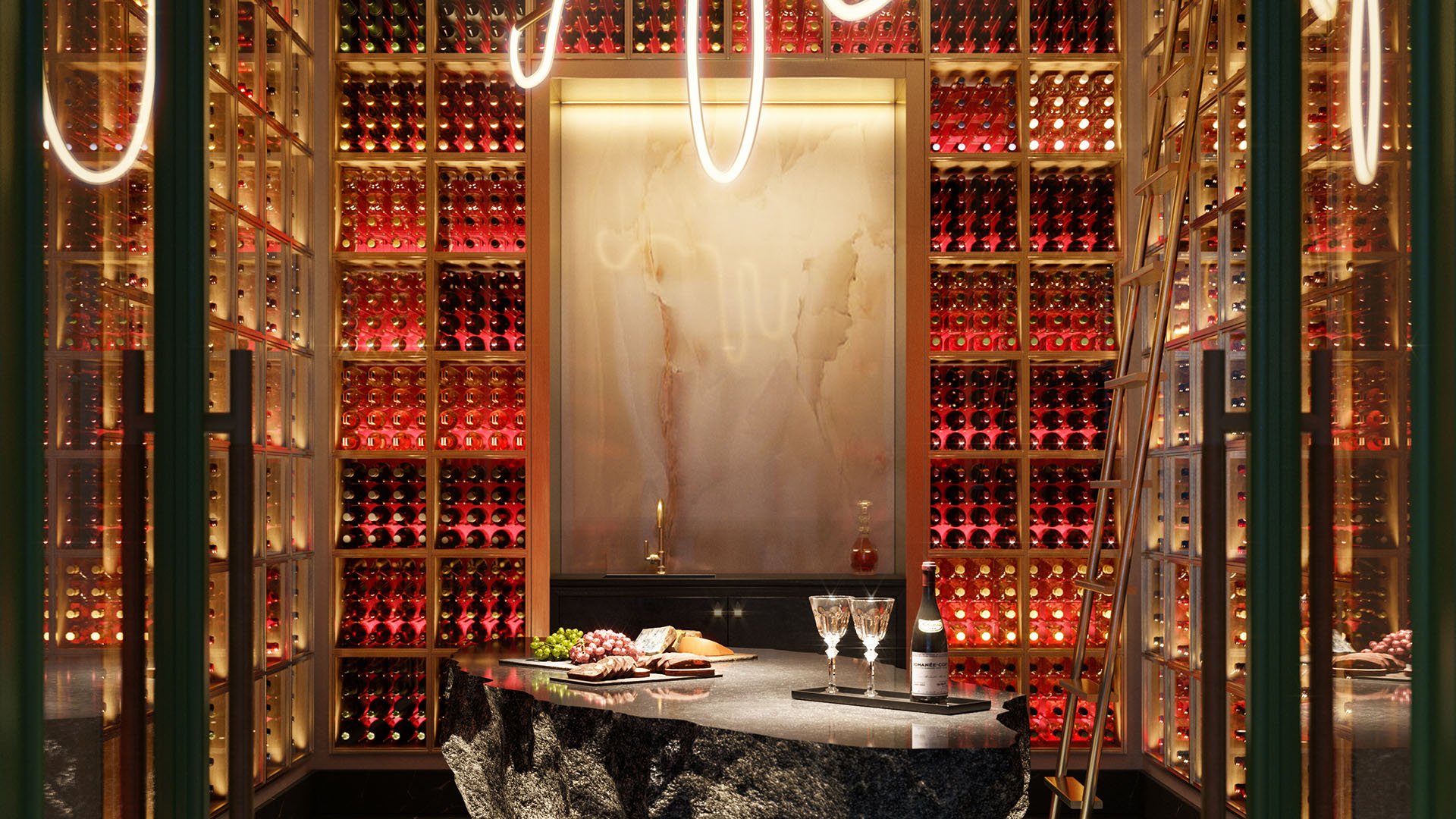
In Brickell, the wine wall has become a familiar design gesture: glass, light, symmetry, and a few impressive labels placed where guests can admire them. For collectors, that is rarely enough. A serious collection requires a quieter form of luxury, defined by temperature discipline, humidity awareness, vibration control, service access, and the ability to separate everyday entertaining bottles from long-hold inventory.
That distinction matters because Brickell buyers often live vertically, entertain frequently, and expect their residences to perform with the polish of a private club. A beautiful display can enhance the mood of a dining room, but it should not be mistaken for a protective environment. The buyer with cases arriving from allocations, auction purchases, or direct relationships with producers needs a residence that can support a genuine storage strategy.
This is especially relevant in Brickell, where high-rise living raises different questions than an estate with a basement cellar. Priorities shift toward mechanical planning, vendor access, elevator logistics, interior space allocation, and whether the building’s service culture can support discreet delivery and maintenance. The search becomes more technical, but also more rewarding.
1. Full-floor or half-floor residence - private cellar potential
The strongest profile for a serious collector is a residence with enough interior depth to dedicate an enclosed, purpose-built room to wine. A full-floor or substantial half-floor plan may allow a buyer to separate the cellar from primary living areas while keeping it close enough to the dining room, catering pantry, or service corridor to feel natural in daily use.
The key is not square footage alone. It is whether the plan can accommodate insulated enclosure, dedicated cooling, secure access, and a layout that avoids direct sun exposure or unnecessary traffic. In this profile, the wine program becomes part of the residence’s private infrastructure rather than a decorative feature.
2. Large corner residence - entertaining wall plus concealed reserve
For buyers who want both presentation and protection, a large corner residence can be especially useful. The public-facing zone may support a beautiful display for dinner service, while a secondary enclosed area can hold the collection that should not be exposed to light, temperature swings, or casual handling.
This dual approach suits Brickell owners who host often but collect seriously. The visible wall becomes hospitality theater; the reserve storage remains disciplined, quiet, and controlled. The best plans make both functions feel intentional rather than improvised.
3. Residence with service-oriented circulation - discreet delivery advantage
Wine logistics can become inelegant when a residence is not prepared for them. Cases arrive, inventory needs to be checked, and vendors may require access for cooling systems or millwork adjustments. A residence with service-oriented circulation gives the owner a calmer way to manage those moments.
The ideal arrangement minimizes the distance between elevator arrival, storage, and entertaining spaces. It also reduces the need to move cases through formal rooms. For collectors, that convenience is not a minor detail; it affects how comfortably the collection can grow.
4. Residence with generous pantry or back-of-house zone - daily-use efficiency
Not every bottle belongs in long-term storage. A refined wine program usually includes several layers: service bottles, ready-to-drink selections, temperature-specific storage, and protected reserve. A residence with a generous pantry, catering kitchen, or back-of-house zone can make that hierarchy easier to manage.
This profile is attractive for buyers who entertain with staff, private chefs, or recurring service teams. It supports a more professional rhythm, allowing wine to be stored, staged, opened, and served without turning the main living room into a workspace.
5. High-design residence with flexible interior envelope - aesthetic integration
Some buyers want storage that is technically serious yet visually seamless. In this profile, the residence offers enough flexibility to integrate millwork, glass, lighting, and climate systems without overwhelming the architecture. The goal is restraint: wine storage that reads as part of the home rather than an accessory added after the fact.
This is where design discipline matters. The most successful executions avoid excessive lighting, awkward placement, and trophy-case thinking. They make room for wine as part of a larger lifestyle, with enough technical backbone to protect what is inside the bottles.
The first question is whether the proposed storage is for display, service, or preservation. Those are three different functions. Display favors visibility. Service favors access. Preservation favors control. A residence can include all three, but not if the buyer assumes one beautiful wall will solve every need.
Temperature is the obvious concern, but it is not the only one. Light exposure, vibration, insulation, maintenance access, and placement within the floor plan all matter. A wall next to bright glazing may look spectacular in renderings, yet it may be the wrong place for wines intended to age. A concealed room near a service zone may be less theatrical, but far more useful.
The best Brickell search is therefore not just about asking whether a building has a wine feature. It is about asking whether the residence can support a wine system. Buyers comparing Baccarat Residences Brickell, Cipriani Residences Brickell, ORA by Casa Tua Brickell, St. Regis® Residences Brickell, and The Residences at 1428 Brickell should treat wine storage as a technical specification to review alongside views, floor height, privacy, and amenity culture.
A decorative wall can add drama to a room. It can frame a dining experience and create a sense of occasion. For a small selection of bottles meant to be opened soon, that may be entirely appropriate. The problem begins when a display wall is treated as a substitute for true storage.
Collection value is protected by consistency. Serious buyers should think in terms of bottle count, acquisition habits, insurance expectations, and how often inventory moves in and out. A buyer with a modest but meaningful collection may need a very different solution from an owner holding investment-grade bottles, large formats, or verticals intended to age over many years.
This is also where privacy enters the conversation. Not every collector wants the full collection visible. In Brickell, where residences often double as social spaces, a layered strategy can be more elegant: a curated display for guests and a protected reserve for the owner.
Wine storage does not end at the apartment door. Deliveries, access protocols, loading areas, staff coordination, and vendor scheduling can all affect the ownership experience. A residence may have the physical space for a cellar, but the building should also support the discretion expected by a serious collector.
Buyers should understand how case deliveries are handled, whether service access feels private, and how maintenance vendors would reach the residence. They should also consider how often they plan to entertain. A home that works beautifully for quiet living may need additional planning if it will host dinners, tastings, or chef-led evenings.
In the ultra-premium segment, these are not eccentric questions. They are part of aligning the home with the way the owner actually lives. For wine-focused buyers, a polished answer can be as meaningful as a sweeping bay view.
Is a wine wall enough for a serious collector? Usually not. A wine wall can be useful for display or short-term service, but long-term storage requires more control.
What should Brickell buyers prioritize first? Start with floor-plan suitability. The residence needs a logical place for controlled storage before finishes are selected.
Does bottle count matter during the search? Yes. A buyer with a few dozen bottles has different needs from a collector planning for cases, large formats, or long holds.
Should wine storage be visible or concealed? Many owners benefit from both. Display can serve entertaining, while concealed storage can protect the deeper collection.
Why is service access important? Deliveries, inventory, and maintenance are easier when cases can move discreetly through the building and residence.
Can a high-rise residence support serious storage? It can, if the interior plan and building operations allow proper enclosure, access, and mechanical planning.
What is the biggest design mistake? Treating wine as decoration first. The best solutions begin with preservation and then refine the visual presentation.
Should buyers ask about humidity and vibration? Yes. Both can affect long-term storage quality, especially for collections intended to age rather than rotate quickly.
Are branded Brickell residences automatically better for wine collectors? Not automatically. The right fit depends on the specific residence, layout, service rhythm, and buyer’s collection goals.
When should a buyer involve a wine-storage specialist? Before contract or early in design review is ideal. That timing helps confirm whether the plan can support the intended system.
To compare the best-fit options with clarity, connect with MILLION.
If branded residences are on your mind — as a home or as an allocation — we would be glad to share what we are seeing, privately.
Begin a quiet conversation