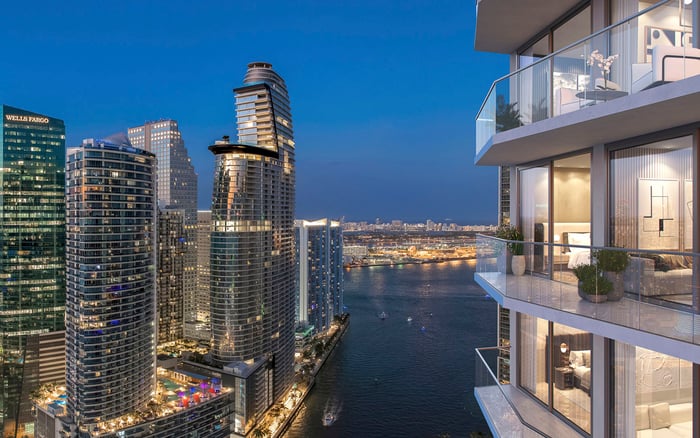
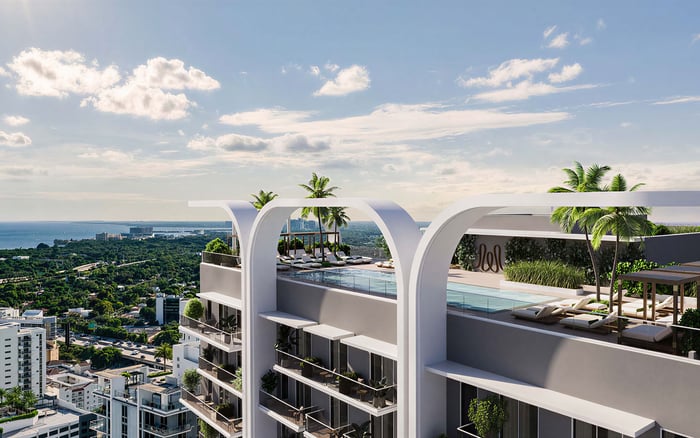
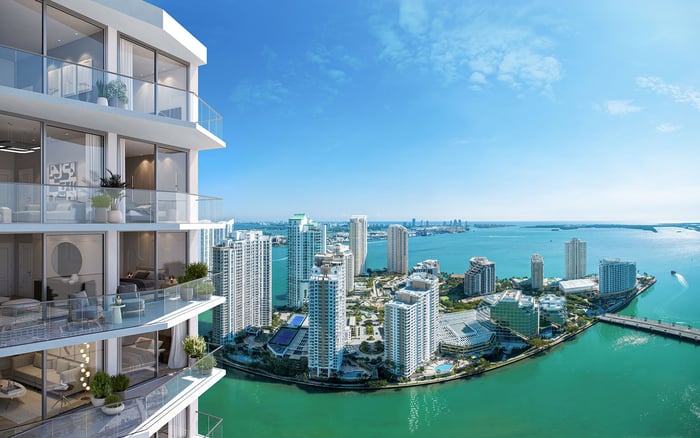
In South Florida, architectural staying power is rarely about launch imagery alone. A tower tends to feel timeless when its materials, proportions, street presence, and maintenance logic remain convincing long after the campaign narrative disappears.
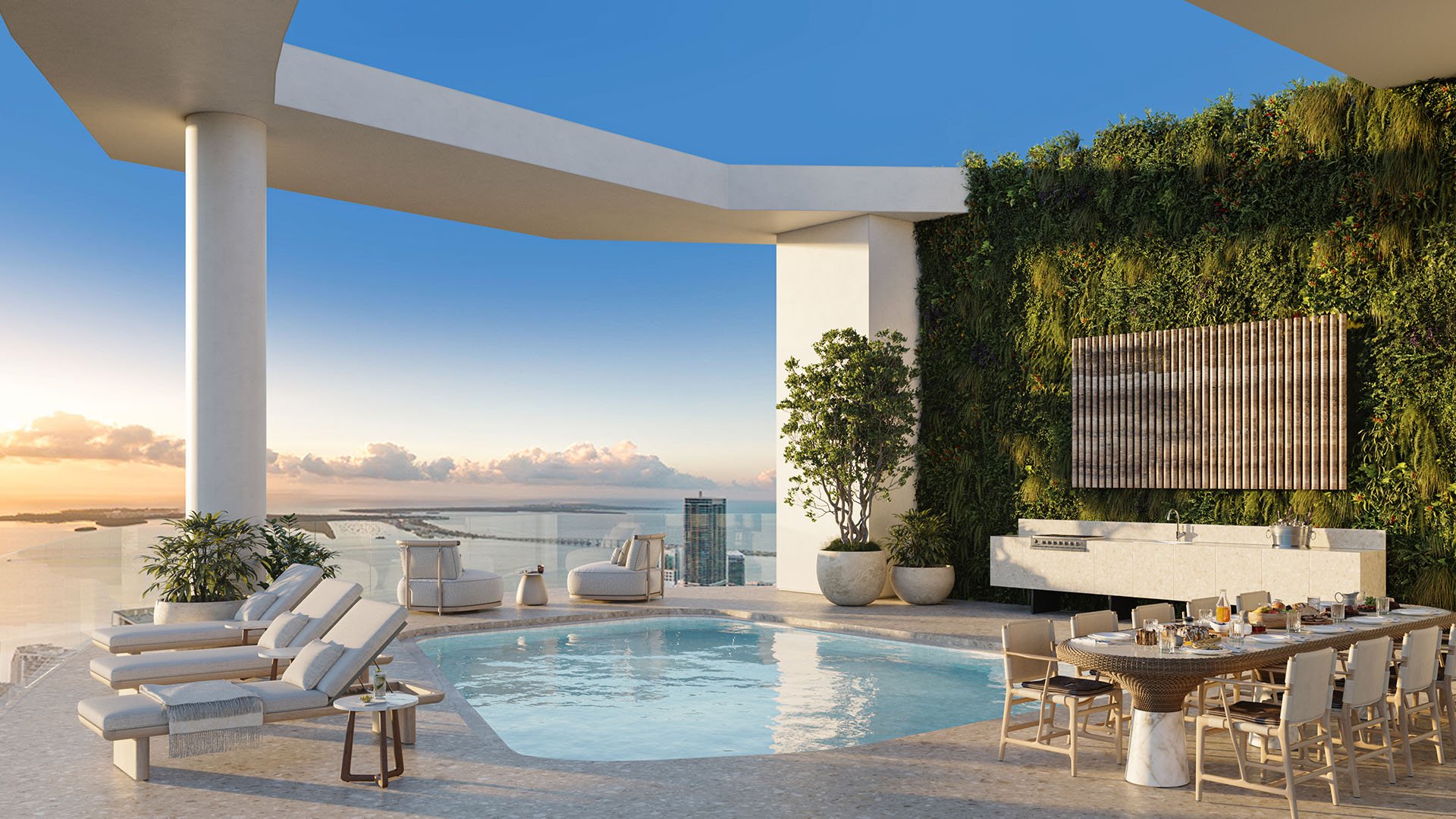
A launch campaign can make almost any new tower feel inevitable. The imagery is immaculate, the storytelling cinematic, and every surface untouched by weather, maintenance cycles, or changing taste. For buyers in South Florida, that is exactly why timelessness deserves a more disciplined lens.
A tower is not timeless because it photographs well in year one. It is timeless when it still feels composed in year ten, when its materials have matured rather than deteriorated, and when its architecture remains elegant without leaning on marketing mythology. In practical terms, that means judging five things with unusual care: material durability, proportion, maintenance burden, urban presence, and whether the building still works for daily living once the launch narrative disappears.
This is especially relevant in markets such as Brickell, Miami Beach, Sunny Isles, and West-palm-beach, where prestige is abundant and visual noise constant. The most durable buildings are often the ones that seem slightly quieter at first glance, then grow more persuasive the longer you study them.
The fastest way to identify a tower that may age poorly is to look for finishes chosen to make an immediate impression rather than endure climate and time. Buildings that rely on stone, glass, and well-resolved metal detailing generally retain their refinement better than towers defined by trend-led finishes or heavily themed decorative gestures.
In South Florida, this is more than an aesthetic question. Salt air, humidity, and intense UV exposure are relentless editors. Painted exterior surfaces, oxidizing metals, and overly intricate façade detailing can lose their crispness quickly in coastal conditions. A timeless tower usually specifies materials that weather evenly, can be cleaned and repaired without drama, and still look convincing once the original showroom sheen is gone.
That is why buyers should study the exterior palette with almost forensic attention. Does the cladding family feel consistent, or does the façade shift among too many visual ideas? Are the metals likely to patinate beautifully, or simply corrode? Does the building depend on novelty coatings and fragile visual tricks? Projects that emphasize calm, material-rich expression, such as The Perigon Miami Beach or The Ritz-Carlton Residences® West Palm Beach, reflect the kind of restraint that often proves more durable than overtly theatrical finishes.
A surprising number of towers are sold on a single visual hook. That can be a sculptural flourish, an extreme silhouette, or a façade move designed to dominate social media. Those gestures may be memorable, but memorability is not the same as timelessness.
Strong proportion is the more reliable predictor. Balanced façades, disciplined fenestration, and a clear sense of compositional order tend to age better than buildings organized around one attention-seeking idea. Raw height is also a weak proxy for lasting elegance. A tower can be tall and forgettable, or relatively restrained and deeply enduring.
Look closely at massing. Articulated forms, setbacks, and layered volumes often help a high-rise feel lighter and more resolved over time than a flat, monolithic slab. Consider how this reads on the skyline and from the street. A building should have enough depth to catch changing light beautifully, but not so much formal agitation that it starts to feel dated once design fashion shifts.
In Downtown and Edgewater, where silhouettes compete intensely, towers like Una Residences Brickell and EDITION Edgewater illustrate why composure often travels farther than spectacle. The eye tends to trust buildings with rhythm and balance.
Timelessness is inseparable from maintenance. Even distinguished architecture loses authority when sealants stain, joints fail, surfaces age unevenly, or replacement parts become difficult to source. Buyers often underestimate this because maintenance does not appear in the campaign film, yet it becomes one of the most important long-term realities of ownership.
Simpler, more modular façade systems are typically easier to keep crisp than highly irregular exterior treatments. Consistent window patterns and disciplined material transitions usually age more gracefully than buildings that combine too many cladding systems, colors, and motifs in one envelope. The issue is not simplicity for its own sake. It is serviceability.
The best question is straightforward: if this tower were stripped of branding and viewed only as an object that must be cleaned, repaired, resealed, and refreshed for decades, would its architecture still feel intelligent? If the answer is uncertain, the design may be more campaign-driven than enduring.
This is also why neutral, material-rich arrival spaces tend to hold up better than highly themed interiors. A restrained lobby can be refreshed without losing its identity. A heavily stylized lobby can date the moment trends turn.
A tower that aspires to be timeless should contribute something to its surroundings. That does not always mean grand public programming, but it does mean the building should meet the street with care. Retail frontage, landscaped edges, humane scale at the base, and a thoughtful pedestrian sequence all help a tower retain relevance after the novelty of its skyline image fades.
Is the building merely an isolated object, or does it understand its neighborhood? Context-sensitive design usually has more staying power than architecture that feels imported from another city and dropped into South Florida without adaptation. Buyers should notice whether the tower acknowledges climate, light, outdoor living, and the local rhythm of public and private space.
In Coconut-grove and Bal-harbour, this lens is especially useful. Projects such as Park Grove Coconut Grove and Rivage Bal Harbour sit within places where texture, landscaping, and neighborhood character matter as much as the tower itself. Buildings that belong to their setting generally age with more dignity than those that seek attention at any cost.
A timeless building does not need the longest amenity list. It needs the right one. Buyers should be more impressed by a few beautifully executed spaces than by a catalogue of gimmicks designed to animate presales.
Quality matters more than count because curated amenities are easier to maintain and more likely to remain useful. The same principle applies inside residences. Efficient layouts, comfortable room proportions, and genuinely usable outdoor space tend to hold value better than apartments designed primarily for dramatic rendering angles. In a coastal market, a well-proportioned Terrace or Balcony is not just visual theater. It is part of daily life, and that practicality contributes to enduring appeal.
Technology deserves the same scrutiny. Smart systems can enhance convenience, but they should be upgradeable rather than treated as the building’s central identity. Tech ages quickly. Architecture should not.
The cleanest test is also the hardest: remove the brand partnership, the celebrity architect aura, the launch language, and the promise of being the next icon. What remains?
If the answer is a building with durable materials, strong proportions, coherent detailing, comfortable layouts, useful outdoor space, and a credible maintenance future, then the tower has a real chance to feel timeless. If what remains is mostly a concept, caution is warranted.
This matters even more for Resale. In Miami-area luxury markets, enduring demand has often gravitated toward clean lines, simple modernism, and durable material expression rather than architecture built around short-term hooks. Fashion can accelerate a launch. It rarely protects a resale position on its own.
Before buying into a new tower, study the façade drawings as carefully as the finishes package. Ask which materials are exposed directly to salt air. Look for consistency in windows, joints, and transitions. Consider whether the massing will still feel graceful when neighboring towers rise around it. Evaluate the arrival experience on foot. Inspect whether balconies are generous enough to be lived in rather than merely photographed.
Then assess the amenity mix through the lens of five-year usefulness, not opening-week impact. Finally, ask the simplest question of all: if this tower were delivered without fanfare, would it still feel like a place of lasting distinction?
That is the standard worth using in South Florida, where glamour arrives easily, but architectural permanence is far rarer.
What is the strongest sign that a tower will age well? Durable materials paired with strong proportion are usually the clearest indicators of lasting architectural appeal.
Is an unusual silhouette always a positive? Not necessarily. Distinctive form can be compelling, but it can also date faster than restrained, balanced architecture.
Why does climate matter so much in South Florida? Salt air, humidity, and UV exposure quickly reveal weak specifications, especially on exterior finishes and detailing.
Should buyers care about façade complexity? Yes. Simpler, more modular systems are often easier to maintain and tend to weather more evenly over time.
Do taller towers usually hold value better? Height alone is not a reliable indicator. Scale, proportion, and livability are more meaningful measures of long-term elegance.
How important are balconies and terraces? Very important in a coastal market. Well-sized outdoor space supports daily living and usually outlasts brochure-driven features.
Can a highly branded project still feel timeless? Yes, but only if the architecture remains persuasive after the branding and launch story are stripped away.
What should buyers look for in common areas? Neutral, material-rich lobbies and shared spaces are generally easier to refresh than highly themed interiors.
Do amenities influence timelessness? Absolutely. A few well-executed amenities tend to age better than a long list of headline-generating gimmicks.
How does this affect purchase strategy? It helps buyers separate launch excitement from enduring quality, which is especially important when evaluating long-term ownership and resale.
If you'd like a private walkthrough and a curated shortlist, connect with MILLION.
If branded residences are on your mind — as a home or as an allocation — we would be glad to share what we are seeing, privately.
Begin a quiet conversation