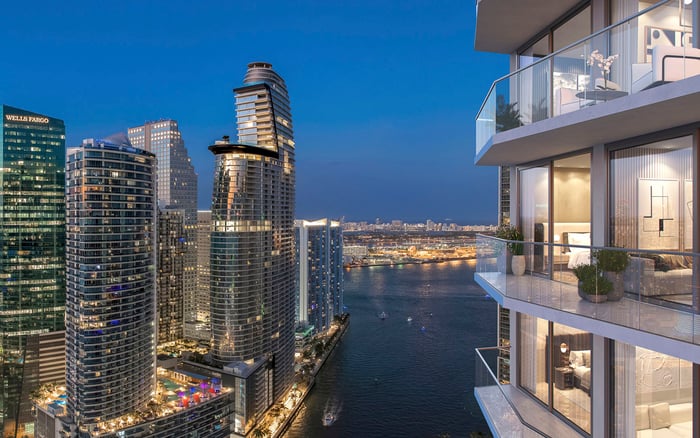
Before closing on a South Florida condominium or branded residence, buyers should look past finishes and views to understand how the association governs, funds reserves, and handles capital risk. The most useful due diligence is practical: review the full reserve study, verify how much of recommended reserves is actually funded, inspect recent budgets and audited financials, and trace the property’s special-assessment history. In coastal markets where salt air, humidity, and storm exposure accelerate wear on façades, roofs, waterproofing, and elevators, governance quality can shape ownership experience as much as design or services. MILLION Luxury outlines the questions that matter most before you sign.

In South Florida’s upper tier, buyers often evaluate a property through architecture, service, privacy, and waterfront position. Yet the ownership experience is shaped just as much by something quieter: the discipline of the association behind the building. A beautifully finished residence can still carry significant future costs if the board is reactive, reserves are thin, or capital projects have been deferred.
That is especially relevant in markets such as Miami Beach, Brickell, Sunny Isles, and West-palm-beach, where coastal exposure can accelerate wear on façades, roofs, waterproofing, paint, windows, and mechanical systems. Salt air, humidity, and hurricane conditions are not abstract concerns. They directly affect when major common elements require repair or replacement, and whether those costs have been anticipated or simply postponed.
For buyers considering addresses such as 57 Ocean Miami Beach, The Residences at 1428 Brickell, St. Regis® Residences Sunny Isles, or Alba West Palm Beach, the essential question is not simply what the building promises. It is how the association plans, funds, approves, and communicates the cost of maintaining that promise over time.
A reserve study is one of the most revealing documents in condominium due diligence. At its best, it evaluates major common-element components such as roofs, HVAC, paint, windows, and elevators, and estimates their remaining useful life and replacement cost. Buyers should ask for the most recent full study, not just a summary page, because the full version shows the assumptions behind recommended funding levels.
Read it with three questions in mind. First, which components are being tracked? Second, how soon are major replacements likely? Third, does the recommended funding level align with the association’s actual balance? A building may present a polished annual budget yet still show a meaningful gap between projected future obligations and the money already set aside.
It is also worth asking whether the reserve study was prepared by an independent engineer or reserve specialist rather than estimated internally. Independent analysis is generally more credible, particularly in high-rise or technically complex properties where elevators, waterproofing, envelope systems, and life-safety upgrades can become expensive quickly.
A related request is the five-year capital expenditure forecast. This is where looming projects often come into view: façade work, elevator modernization, roof replacement, garage restoration, or waterproofing campaigns that may not feel urgent during a showing but can materially affect ownership costs soon after closing.
Numbers matter, but culture matters more. One of the smartest questions a buyer can ask is what percentage of recommended reserves is actually funded. If the association is materially below its own recommended level, there is a greater likelihood that future work will be covered through special assessments rather than existing savings.
Next, clarify whether the association follows a steady accumulation philosophy or a more reactive pay-as-you-go approach. Some boards prefer to keep regular assessments lower and address major costs only when they arise. Others build reserves deliberately, accepting higher ongoing fees in exchange for fewer financial surprises. Neither model is invisible in the records. It will appear in budgets, balances, and meeting minutes.
Ask as well whether reserve funds are held in separate accounts and verify that in recent financial statements or audits. Reserve money is intended for designated capital items, not routine operating shortfalls. Buyers should request audited financial statements for the past three years and compare operating results, reserve balances, assessment income, and any unusual spikes in expense categories.
A single assessment does not necessarily indicate weak governance. Coastal properties face storms, insurance pressure, code-driven projects, and unexpected repairs. The more telling issue is pattern. Request a ten-year history of special assessments and ask whether any assessments are planned, proposed, recently approved, or still unpaid.
This question often reveals the association’s operating style. Repeated assessments can suggest chronic underfunding, deferred maintenance, or a board that tends to act only when pressure becomes unavoidable. Buyers should also ask what triggered prior assessments. Common reasons include storm damage, insurance shortfalls, major repairs, code-required work, or reserve accounts that were too small for already anticipated projects.
Do not stop at the headline number. Ask how prior assessments were structured, whether owners had payment options, and whether the board communicated the rationale clearly. In luxury ownership, predictability and transparency are part of the service standard.
Governance quality often becomes clear once you understand who has authority and how decisions are made. Ask whether the board is still developer-controlled or has fully transitioned to owner control. Governance priorities can shift materially after turnover, especially around reserve discipline, service levels, and capital planning.
Then request the declaration, bylaws, and rules to confirm how reserve decisions and special assessments are approved. In some associations, the board may authorize certain actions directly. In others, owner votes are required. That distinction affects both timing and risk. A necessary project can be delayed if the approval structure is cumbersome or politically divisive.
Review two to three years of board meeting minutes. You are looking for recurring disputes over budgets, repairs, insurance, litigation, reserve contributions, or management performance. Minutes are rarely elegant documents, but they often reveal whether a board is strategic, fractured, transparent, or perpetually behind the building’s physical needs.
Luxury buyers know how to read interiors. The more important exercise is reading the building’s replacement timeline. Ask when the roof, plumbing, electrical systems, elevators, façade, and waterproofing were last replaced or substantially upgraded. If major systems remain largely original in an aging property, the risk of near-term capital calls increases.
This matters across product types, from established oceanfront towers to newer branded addresses. In Resale buildings, the question is often what has been deferred. In New-construction, the focus shifts to turnover, reserve philosophy, and whether the initial governance framework will support long-term maintenance standards once developer control ends.
Insurance can become an indirect source of future assessments, particularly after major storm events. Buyers should ask about recent hurricane or storm claims, the size of deductibles, and whether deductible costs can be passed through to owners by assessment. This is a practical closing question, not a technical one.
Legal and administrative issues deserve similar attention. Check for pending litigation, liens, or regulatory complaints involving the association, because disputes can weaken finances and delay repairs. Ask how long the current management company has served the property and whether it has deep experience with high-rise or complex buildings. Frequent manager turnover can signal instability behind the scenes.
Finally, review the history of HOA fees over several years. Sharp increases may reflect inflation and insurance pressure, but they can also point to deferred maintenance catch-up or previously inadequate reserve funding. A fee trend is most useful when read alongside reserve balances and assessment history, not in isolation.
Late-stage diligence should be precise. Request the estoppel certificate and review it carefully for amounts owed to the association and other status information relevant to the unit and association account. Confirm whether there are any approved but not yet collected assessments, pending owner votes, or unresolved account issues tied to the seller.
At this stage, the goal is simple: to convert governance from a vague impression into a documented risk profile. The best luxury purchases are not merely emotionally compelling. They are operationally legible.
What is the most important HOA document to request before closing? The full reserve study is often the most revealing because it shows projected capital needs, assumptions, and recommended funding levels in detail.
Why is a summary reserve page not enough? A summary rarely shows the component-by-component assumptions that help a buyer understand where future capital pressure may emerge.
How many years of special-assessment history should I review? Ten years is a useful window because it can reveal whether assessments were isolated events or part of a recurring pattern.
Can an approved assessment become my problem after closing? Yes. Buyers should confirm whether any assessment has been approved, proposed, or remains unpaid before they finalize the purchase.
What do board meeting minutes usually reveal? They often expose recurring disputes over budgets, repairs, insurance, litigation, and reserve contributions that may not appear in marketing materials.
Why does developer control matter? Governance priorities can shift after turnover, especially on budgeting, reserves, and the willingness to confront long-term maintenance costs.
Should I worry if HOA fees have risen sharply? Not automatically, but fee increases deserve context because they may reflect insurance pressure, deferred maintenance catch-up, or stronger reserve discipline.
What physical systems should I ask about first? Start with the roof, plumbing, electrical, elevators, façade, and waterproofing because these categories often drive major capital spending.
Does new construction remove assessment risk? No. Newer buildings may have fewer immediate repair issues, but governance, reserve policy, and post-turnover decision-making still matter.
What is the final closing document to scrutinize? The estoppel certificate is essential because it can disclose amounts owed and certain unit and association status details before closing.
For a discreet conversation and a curated building-by-building shortlist, connect with MILLION Luxury.
If branded residences are on your mind — as a home or as an allocation — we would be glad to share what we are seeing, privately.
Begin a quiet conversation