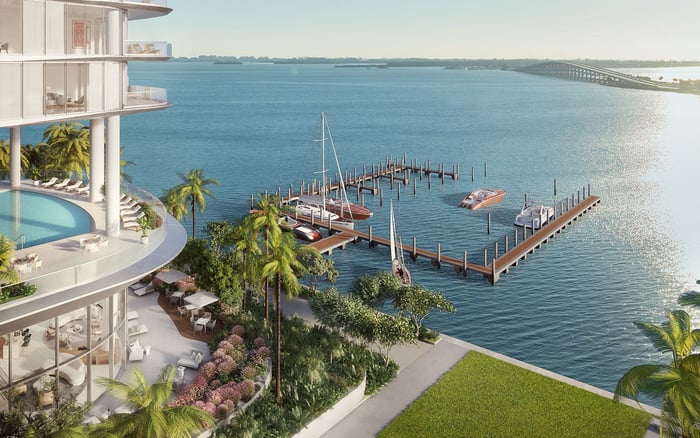
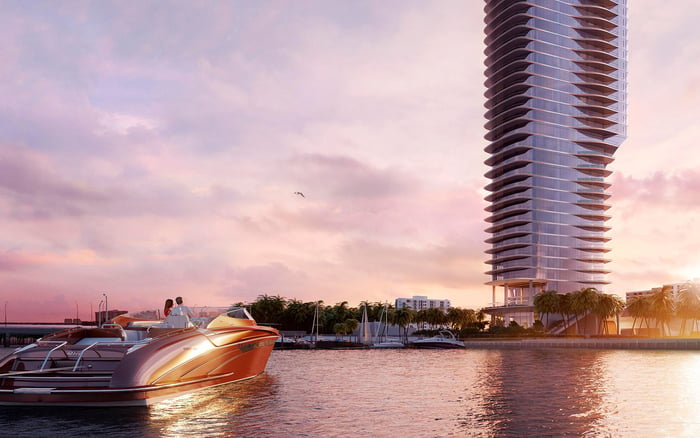
A beautiful dock is not necessarily a practical one. For South Florida boat owners, the right marina is defined less by optics than by fit: depth at low tide, slip dimensions, storm planning, service access, contract terms, and the simple efficiency of getting from residence to open water without friction.

The most seductive marina in South Florida can still be the wrong one for your boating life. True utility begins with compatibility. Before considering lounges, concierge services, or waterfront dining, confirm that the slip actually suits your vessel’s length overall, beam, and draft. Beam clearance matters as much as advertised slip length, and depth should be judged by actual conditions at low tide, not a casual estimate offered on a calm afternoon.
This matters even more in a region where shallow approaches and tidal variation can turn a seemingly acceptable berth into a recurring inconvenience. Ask when the basin or access channel was last dredged, how depth is measured, and whether larger boats routinely enter and exit without timing departures around tide windows. A marina that demands constant operational calculation is not especially useful, no matter how polished it appears.
For owners comparing waterfront lifestyles in places such as Una Residences Brickell or Vita at Grove Isle, this distinction matters. A residence may deliver a refined boating-adjacent experience, but day-to-day satisfaction still depends on where the vessel lives and how easily it can move.
A marina in South Florida has to do more than store a boat elegantly. It must perform under pressure. Storm resilience should be evaluated as a practical operating system: documented hurricane procedures, secure mooring arrangements, infrastructure designed to reduce flood and wind exposure, and staff protocols that feel rehearsed rather than improvised.
The contract deserves the same level of scrutiny. Many marinas require current boat insurance and may also require the marina to be named as an additional insured. Named-storm procedures, haul-out expectations, evacuation timing, and wreck-removal insurance language should all be reviewed before a slip agreement is signed. In this market, those clauses are not administrative fine print. They are part of the marina’s actual utility.
For buyers drawn to the coastal ease of The Ritz-Carlton Residences® Pompano Beach or the yachting culture around St. Regis® Residences Bahia Mar Fort Lauderdale, the lesson is simple: boating convenience is inseparable from storm readiness. A marina that works beautifully in fair weather but becomes opaque or chaotic during hurricane season is not a dependable extension of a luxury lifestyle.
Owners often overvalue spectacle and undervalue route efficiency. In practice, one of the clearest markers of a useful marina is how quickly it connects you to your normal boating pattern. If your weekends revolve around coastal cruising, open-water runs, or regular inlet access, proximity to those routes matters more than a decorative amenity deck.
A well-positioned marina saves time every time you leave the dock. It should also connect easily to the supporting ecosystem: fuel, chandlery, provisioning, and nearby repair support. Fuel availability is not a luxury extra. Confirm that the marina offers the fuel type your vessel requires and that the fueling layout is manageable for your boat’s size. A fuel dock that is difficult to approach is less useful than one with simpler, safer access.
Maintenance access is equally important. A marina becomes far more practical when it can connect you quickly to mechanics, electricians, bottom service, haul-out capacity, or a nearby partner yard for annual work and storm-season planning. If you expect regular service, the marina should function as an operational base, not merely a place to park.
This is where neighborhoods such as Brickell, Coconut Grove, Fort Lauderdale, and West Palm Beach can differ meaningfully in lifestyle rhythm. Owners at Alba West Palm Beach may prioritize clean Intracoastal access and a calmer pace, while residents near urban waterfront districts may care more about proximity to provisioning, crew logistics, and efficient departures.
The difference between an acceptable marina and an indispensable one is often found in the ordinary. Shore power, potable water, clean restrooms, showers, and laundry all materially affect the quality of time spent aboard, particularly for owners who entertain, stay overnight, or spend long stretches on the vessel before and after a run.
Security should be judged in person. Gated dock access, adequate lighting, and monitored areas all contribute to peace of mind. So does the general feel of the property. Is the staff attentive? Are the docks maintained? Do utility pedestals look functional and current? Is access orderly, or does everything feel slightly improvised?
Pump-out capability and waste-handling systems also deserve attention. These are operational necessities for many owners, and they signal whether management treats environmental compliance seriously. In South Florida, spill response and pollution control readiness are practical signs of competence.
Then there is the human side of the layout. Noise rules, generator hours, guest policies, and spacing between slips all shape real enjoyment. A tightly packed dock with poor maneuvering room can make each arrival feel less elegant than the residence from which you departed. For a buyer considering marina-oriented living in Miami Beach or Aventura, these details can matter as much as any finish schedule inside the home.
Slip pricing should be read as a full package, not a headline number. Electricity, water, parking, liveaboard surcharges, and seasonal versus transient pricing can materially change the value proposition. A berth that looks competitive at first glance may become less attractive once the true monthly cost is clear.
Availability is another decisive test. Waiting lists can be long, and size-class availability can be the hidden reason a marina never quite fits your life. Ask whether space is available now, how renewals are handled, and whether seasonal return is meaningfully protected. A marina is only useful if it can support continuity.
Management stability is worth watching as well. Frequent rule changes, unresolved repairs, and vague answers about operations usually point to a less reliable long-term experience. By contrast, professional standards, strong communication, and visible order tend to suggest that the marina is being run for durability, not only appearances.
When touring a marina, walk it as an owner rather than a guest. Bring your vessel specifications. Ask for actual usable dimensions, not approximate ones. Confirm low-tide depth. Review storm procedures. Request the insurance requirements in writing. Check fueling access, service relationships, haul-out options, and whether the marina can support your boating pattern throughout the year.
Also observe what is not being marketed. Look at the condition of cleats, docks, utility connections, and fairways. Notice whether traffic flow is calm or congested. Ask about guest access, parking, liveaboard restrictions, and local rules that affect vessel operations. A marina can be beautiful and still be poorly suited to the way you actually use your boat.
For discerning buyers, that is the central distinction. The right marina is not simply prestigious. It is frictionless. It respects the dimensions of the vessel, the weather realities of South Florida, and the cadence of your life on the water.
What is the first thing to verify when choosing a marina? Start with slip compatibility: usable length, beam clearance, and water depth relative to your boat’s length, beam, and draft.
Why is low-tide depth so important in South Florida? Because shallow water and tidal variation can affect safe access, especially for deeper-draft vessels.
Are storm procedures really that important for a luxury marina? Yes. In South Florida, storm planning is a core operating feature, not an optional extra.
What should I review in a marina contract? Focus on insurance requirements, named-storm procedures, evacuation rules, fees, and renewal terms.
Does fuel service count as an amenity or a necessity? For most owners, it is a necessity, especially if fuel type or dock layout affects how easily you can depart.
How do I judge whether marina security is adequate? Visit in person and evaluate gated access, lighting, monitored areas, and the general orderliness of the docks.
What utilities matter most for day-to-day usability? Shore power, potable water, restrooms, showers, and laundry can meaningfully improve time spent aboard.
Should I care whether a marina can help with repairs? Absolutely. Quick access to mechanics, electricians, haul-out service, and bottom work adds real value.
How important are marina rules on noise and guest access? Very important, because they directly shape comfort, entertaining, and how enjoyable the dock feels in practice.
What makes a marina truly useful over time? Reliable management, clear rules, operational resilience, and a location that supports your actual boating habits.
If you'd like a private walkthrough and a curated shortlist, connect with MILLION.
If branded residences are on your mind — as a home or as an allocation — we would be glad to share what we are seeing, privately.
Begin a quiet conversation