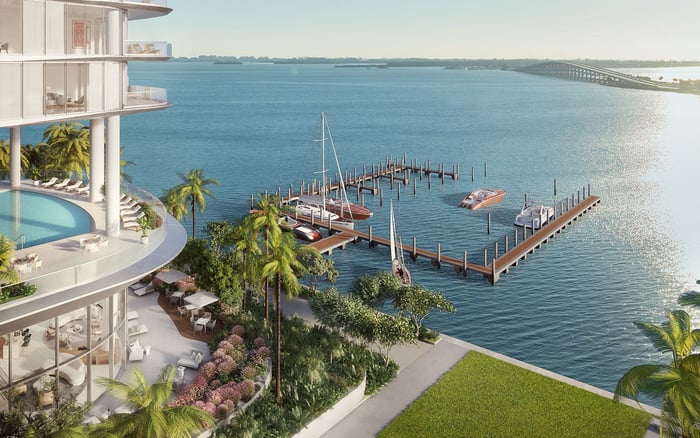
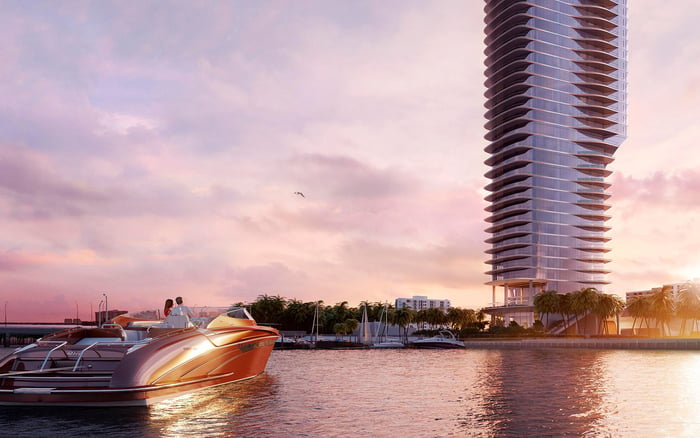
A precise framework for evaluating marina convenience in South Florida, with emphasis on fit, depth, power, storm planning, operations, and the public records that separate infrastructure from polished marketing.
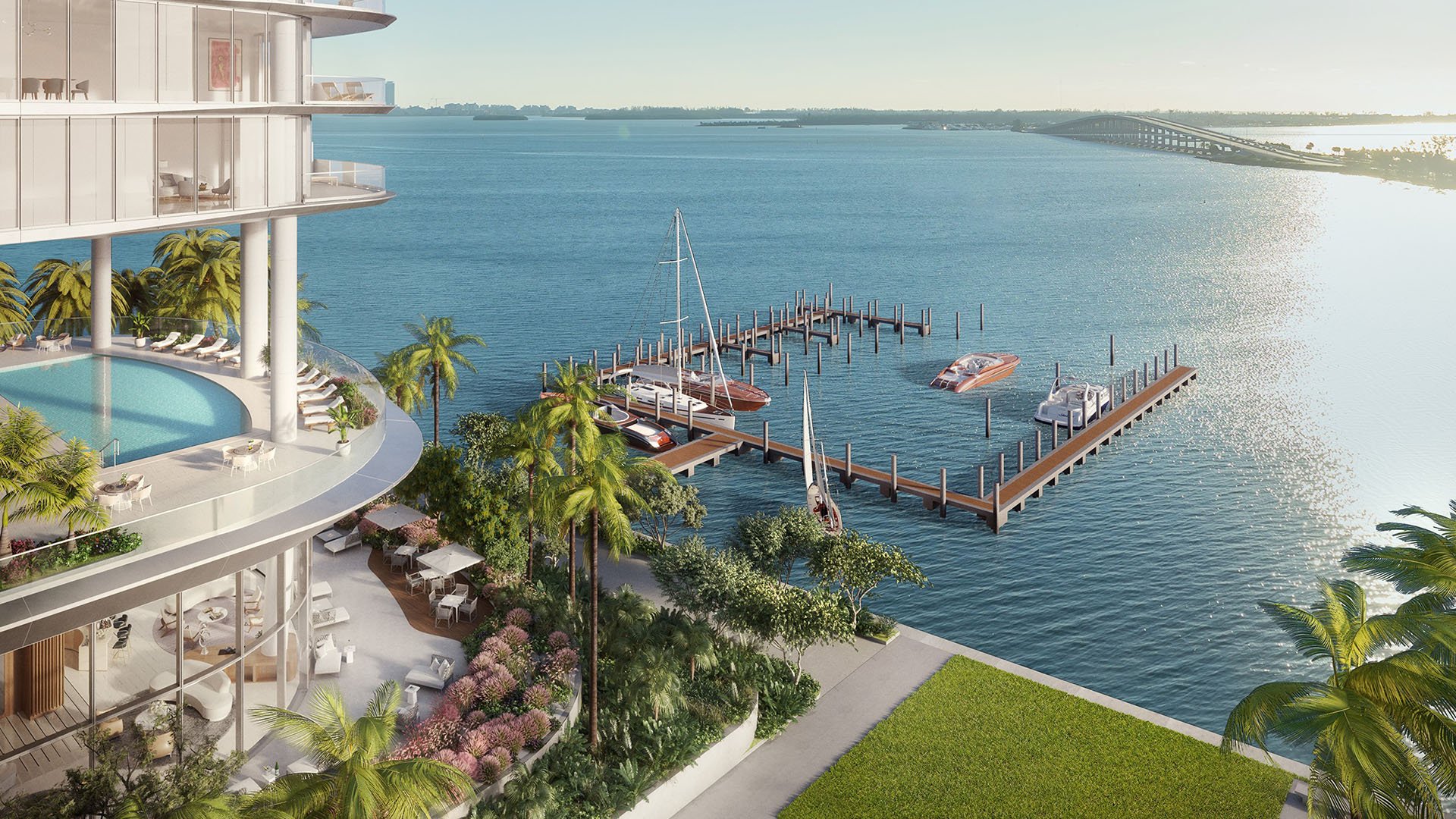
In South Florida, “marina convenience” is often presented as a lifestyle flourish. For a serious buyer, it is something far more concrete: whether a specific vessel can enter, turn, berth, power up, be serviced, and remain operational through the realities of seasonality and storm exposure.
That distinction matters across the region, from Brickell and Coconut Grove to Fort Lauderdale and West Palm Beach. A residence may market an attached dock or nearby marina as though proximity alone resolves the question. It does not. Condo-linked docks can be physically constrained, and waterfront improvements often sit within a permitting framework that affects dredging, seawalls, and future work. What sounds effortless in sales language may, in practice, be limited by draft, maneuvering room, or operating rules.
For buyers considering waterfront living near Una Residences Brickell, Park Grove Coconut Grove, or St. Regis® Residences Bahia Mar Fort Lauderdale, the right question is not whether a marina is “world class.” It is whether the exact boating program suits the exact asset.
The costliest mistake in marina selection is assuming that a phrase such as “accommodates large yachts” answers a technical question. It does not. Buyers should compare the exact berth dimensions, beam limits, shore-power availability, and utility specifications for the precise slip under consideration.
A 70-foot vessel and a 90-foot vessel may both appear to fit on paper, yet practical usability can differ sharply once beam, pedestal placement, adjacent traffic, and turning geometry are considered. Power is equally specific. If the vessel requires 50-amp, 100-amp, or higher service, that capacity should be confirmed slip by slip rather than inferred from the marina’s overall image.
Depth demands the same discipline. “Deep-water access” is a seductive phrase, but navigability depends on actual draft clearance at the slip and throughout the approach channel. A buyer should want current depth information for both. If the marina’s appeal is tied to immediate bay or ocean access, verify the route rather than the adjective.
This is especially relevant for buyers drawn to lifestyle-driven waterfront addresses such as The Ritz-Carlton Residences® Miami Beach or Alba West Palm Beach, where the romance of arrival can obscure the mechanics of berth suitability.
Well-produced marketing tends to blur design, hospitality, and marina operations. A better comparison begins with evidence that the marina is evaluated against operational standards in safety, security, environmental practices, and day-to-day procedures.
Third-party certification is valuable because it imposes an external yardstick. Technical alignment with recognized marine standards is useful for the same reason. It shifts the conversation from mood to measurable practice. For affluent owners, that is not a bureaucratic detail. It is a shortcut to understanding whether the facility takes infrastructure and operations seriously.
Security should be broken into visible and procedural elements: controlled access, lighting, camera coverage, staff monitoring, and written operating procedures. A marina that simply feels polished is not necessarily a marina managed with rigor. The distinction becomes obvious when a buyer asks specific questions and receives precise answers instead of glossy language.
South Florida buyers are accustomed to hearing that a property or marina has been “recently improved.” In waterfront environments, that claim means little unless the work is documented.
Dredging, seawall work, shoreline modifications, and other access-related upgrades often require permits. County and environmental records can help confirm whether the improvements described in marketing were actually performed, whether they were substantial, and whether they may face regulatory constraints in the future. The same review can also illuminate compliance issues tied to waterfront operations, stormwater controls, bilge disposal, or fuel handling.
This is one of the least glamorous but most useful screens in a Marina search. A marina can look pristine on a tour and still carry operational or infrastructure issues that matter to an owner over time. Fuel-dock quality, in particular, warrants its own review. Problems in handling or contamination create direct ownership costs and rarely appear in amenity-driven presentations.
For buyers balancing a residence with boating access in Bay Harbor or North Bay Village, properties such as Onda Bay Harbor can place the marina discussion in a highly appealing lifestyle context. Even so, the discipline remains the same: inspect the infrastructure beneath the aesthetic.
In South Florida, convenience is tested during disruption, not on a calm afternoon. Hurricane readiness is therefore a core buyer question, not a seasonal afterthought.
Ask for a written storm plan. Confirm haul-out options, tie-up procedures, communications protocols, and post-storm operating timelines. A marina that markets resilience but cannot produce a clear operating plan is asking the buyer to trust sentiment over preparation.
Service access is the second half of the equation. Premium ownership becomes inconvenient very quickly if outside contractors face restrictions, if haul-out coordination is cumbersome, or if nearby repair ecosystems are weak. Some marinas excel in social proximity to prime neighborhoods while offering thinner operational support. Others are less glamorous in setting but markedly stronger in service capacity, yard access, and vendor coordination.
That trade-off appears throughout Broward and Miami Beach. The best choice depends on whether the owner prioritizes immediate lifestyle access or a more robust service environment. Neither is inherently superior, but the distinction should be explicit.
Affluent buyers know that friction accumulates in small ways. Marina convenience is often won or lost in these details:
Parking and guest access should be confirmed in writing, especially during peak season. “Ample parking” can become theoretical when occupancy rises.
Noise and wake exposure should be evaluated in person. Only a site visit reveals whether a slip is genuinely calm, whether traffic patterns create regular disturbance, and whether staff are responsive in real time.
Complaint history can also be instructive. Patterns involving billing disputes, maintenance delays, or service failures can tell a buyer more about the operating culture than curated testimonials ever will. Regulatory disputes deserve similar attention. They are not automatically disqualifying, but they can sharpen the diligence process.
For a buyer choosing among residences that suggest a boating-forward life, from Vita at Grove Isle to waterfront product in Aventura or Bal Harbour, the question is not simply where the yacht looks best. It is where ownership feels least interrupted.
A disciplined buyer can reduce the noise by scoring each option across six categories.
First, vessel fit: berth length, beam, turning room, and utility match.
Second, navigability: depth at the slip, depth in the approach, and practical ingress and egress.
Third, operational quality: security procedures, staffing, certification, and maintenance discipline.
Fourth, resilience: written storm planning, haul-out strategy, and post-event recovery.
Fifth, service ecosystem: repair access, contractor policies, fuel-dock confidence, and maintenance coordination.
Sixth, daily usability: parking, guest handling, wake conditions, and ease of owner access.
This framework keeps buyers from overvaluing language such as exclusive, full-service, turnkey, or recently upgraded. Those phrases may describe a marina accurately, but they are not proof. Premium buyers should insist on proof.
What is the biggest mistake buyers make when comparing marinas? Assuming a luxury presentation answers technical questions. True convenience depends on vessel fit, depth, power, and operations.
Does an attached dock always mean better convenience? No. Residence-linked docks can still be limited by draft, maneuvering room, service capacity, or permitting constraints.
What should I verify first for my yacht? Confirm the exact slip’s length, beam limits, shore power, and approach depth before discussing amenities.
Is deep-water access enough to rely on? No. Depth should be checked at both the slip and the approach channel because actual clearance determines usability.
How can I judge marina quality beyond marketing? Compare third-party certification, operating procedures, security specifics, and the documentation behind claimed improvements.
Why do permits matter in a marina review? They can confirm whether dredging, seawall work, and other access-related improvements were actually completed and properly documented.
What makes hurricane readiness a convenience issue? In South Florida, a marina’s storm plan affects whether your vessel can be protected, accessed, and returned to service quickly.
Should fuel docks be evaluated separately? Yes. Fuel handling quality can affect reliability, maintenance costs, and the long-term ownership experience.
Do parking and guest access really matter at this price point? Absolutely. Peak-season congestion can turn a nominal amenity into a recurring operational frustration.
What is the final step before choosing a marina? Visit in person and speak with current users. Site conditions, wake exposure, and staff responsiveness are best judged firsthand.
For a tailored shortlist and next-step guidance, connect with MILLION.
If branded residences are on your mind — as a home or as an allocation — we would be glad to share what we are seeing, privately.
Begin a quiet conversation