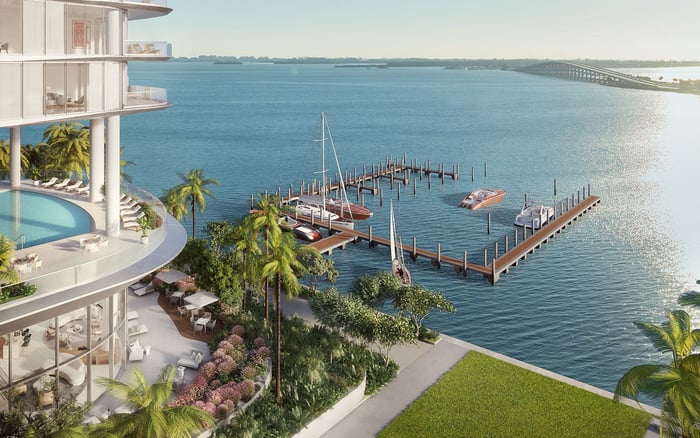
A precise buyer’s guide to evaluating dock length, water depth, and bridge clearance before purchasing a yacht-friendly South Florida residence.
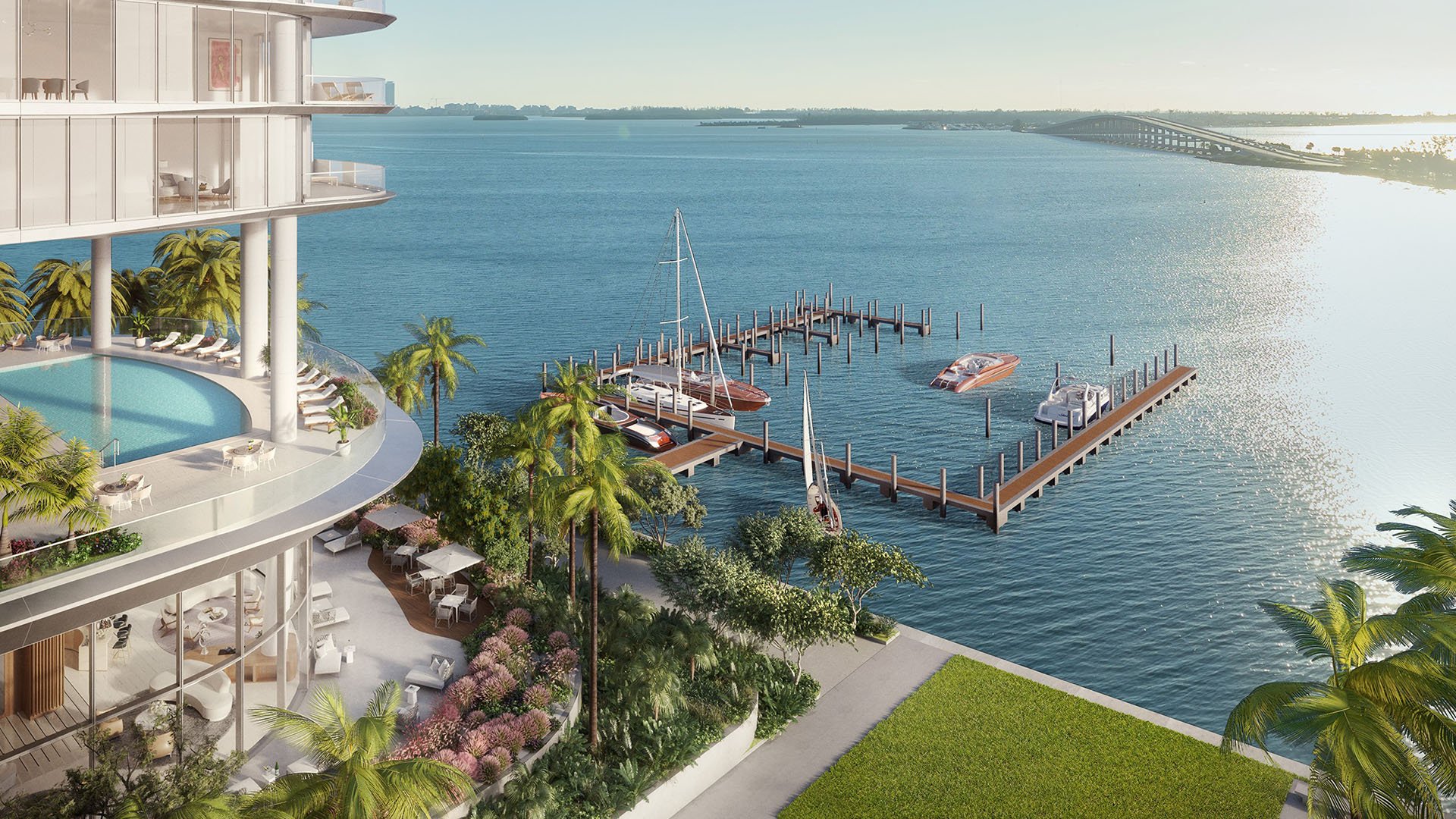
In South Florida, a waterfront address can look flawless on paper yet fail the simplest test: can your yacht actually use it confidently year-round? For discerning buyers, the comparison starts with three variables that define true marine utility: dock length, water depth, and bridge clearance. Everything else, from finishes to frontage, is secondary until those are clear.
That is especially true in markets where elegance onshore can conceal practical constraints offshore. A polished bayfront residence near Una Residences Brickell may offer immediate proximity to the water, but a serious owner still needs to understand the route, the turning room, and the usable dimensions at the dock itself. The same principle applies whether you are considering a canal home near Vita at Grove Isle or a coastal property in Palm Beach County.
The most disciplined way to compare homes is to work backward from your vessel’s LOA, beam, draft, and air draft, then test each property against those requirements under conservative conditions rather than ideal ones.
Dock length is often marketed as a headline number, but headline numbers can mislead. The practical measurement runs from the seawall or shore to the end of the dock structure, and buyers should confirm that the recorded survey and deed reflect the full legal structure rather than relying on promotional language.
As a directional rule, many buyers target a dock length of roughly 1.5 to 2 times the length of their longest vessel. That does not mean every property needs excess footage for its own sake. It means cleats, pilings, boarding comfort, tender movement, and maneuvering room all consume space that the vessel’s published length does not capture. A 50-foot yacht may function best with about 60 to 75 feet of dock, while a 70-footer can require 100 feet or more once real operating room is taken into account.
For MILLION Luxury readers, the critical distinction is between nominal fit and graceful fit. A yacht that technically fits a dock but leaves no room for a clean approach, side access, or future upgrades is not well matched to the property. Buyers trading up should also consider whether the dock can accommodate the next vessel, not merely the current one.
This is where neighborhood context matters. Waterfront inventory around Coconut Grove and Miami’s protected inlets can feel especially compelling, particularly near Park Grove Coconut Grove, but private dock usability still depends on exact dimensions and geometry, not prestige alone.
Depth is the factor most likely to be oversimplified in conversation. A seller may quote a single number at the dock face, yet that tells only part of the story. A yacht-friendly home should be evaluated for depth at the dock face and along the full slip or approach, because the shallowest point, not the deepest one, determines safe use.
Ask one practical question immediately: what tidal reference was used for the depth being quoted? If the number is not tied to low-water conditions, it can overstate what is truly navigable. Sophisticated buyers compare homes based on the lowest likely usable condition, not a favorable reading taken at higher water.
This matters acutely in shallow-prone approaches, where minor shoaling can change real usability without altering the appearance of the property. A home with elegant frontage may still present draft limitations if the approach channel or basin carries less water than expected at lower tides.
Properties along Fort Lauderdale’s boating corridors often attract buyers for this reason, especially around projects such as Andare Residences Fort Lauderdale, where the yachting lifestyle is part of the broader appeal. Yet the principle remains constant across markets: verify the entire path your yacht will travel, from tie-up position to open channel, under conservative tidal assumptions.
If dock length governs horizontal fit and depth governs draft, bridge clearance determines whether your yacht can leave at all. Clearance is the vertical distance from the water surface to the underside of a bridge span, and that number only has meaning when you understand the water-level reference behind it.
A single low fixed bridge between the property and the inlet can make an otherwise attractive home unusable for a yacht with substantial air draft. That is why experienced buyers map the entire route from dock to open water before going under contract, not after.
Do not stop with the bridge nearest the property. Trace every segment out to the inlet, including canals, side basins, intracoastal stretches, and any alternate routes. Cross-checking the surrounding waterway context can also reveal whether a property sits in a calm but tight canal environment or on a more exposed stretch with stronger utility for larger yachts.
In areas where buyers are balancing marine access with a refined residential experience, from residences near Riva Residenze Fort Lauderdale to newer Palm Beach waterfront offerings, this route analysis is often the step that separates an elegant idea from a genuinely serviceable home.
Many buyers assume that a short dock or insufficient depth can simply be corrected later. Sometimes it can. Often, the path is more complicated. Florida seawalls and riparian improvements are regulated, which means extending, replacing, or reconfiguring a dock is not a design decision alone. It can involve setbacks, approvals, and site-specific limitations.
Seawall condition deserves equal scrutiny. Deterioration can affect dock stability, future repair costs, and even the feasibility of certain improvements. If the existing depth is inadequate, dredging may also require environmental permitting before any work can proceed.
Ownership structure matters just as much as construction condition. Buyers should verify whether the dock is a deeded private structure or tied to leased, shared, or municipally controlled mooring rights. That distinction has direct consequences for control, operating flexibility, and future expense.
For comparison shopping, a property near Alba West Palm Beach may inspire a broader waterfront search in the area, but the real decision should rest on legal dock rights, permit history, and local restrictions, not simply proximity to the water.
A standard home inspection is not enough for a yacht-oriented purchase. A professional marine survey should evaluate the depth profile, shoaling risk, dock approach, piling condition, and other marine-specific issues that conventional residential inspections can miss.
Ideally, this inspection should be scheduled near low tide. That timing provides a clearer view of usable depth and can expose condition issues hidden at higher water. It also creates a more realistic stress test for the route your captain will actually navigate.
Buyers should also confirm utility readiness. Shore power, water service, and proximity to fueling or marine service infrastructure all influence whether the property supports true yacht ownership or merely suggests it aesthetically.
Finally, compare exposure. Canal-front homes may offer calmer water and easier line management but tighter maneuvering. More open intracoastal or bayfront settings may provide better depth, yet they can bring greater weather and surge exposure. That, in turn, can affect dock resilience, mooring hardware requirements, insurability, and annual ownership cost.
When comparing yacht-friendly homes, think in layers. First, verify that the dock is legally documented at the length being marketed. Second, confirm usable depth all along the approach under low-water conditions. Third, map every bridge and vertical obstruction to open water. Fourth, review seawall condition, permit history, and ownership rights. Fifth, inspect utilities and marine service practicality.
A waterfront residence should perform as beautifully as it presents. In South Florida’s upper tier, true value lies not just in frontage, but in frictionless departure.
How do I measure dock length when comparing homes? Measure from the seawall or shore to the end of the dock structure, then confirm that the survey and deed match the marketed footage.
What dock length is reasonable for a 50-foot yacht? A practical range is often about 60 to 75 feet, allowing room for hardware, boarding, and easier maneuvering.
Can a 70-foot yacht use a 70-foot dock? Sometimes technically, but often not comfortably. Many buyers prefer 100 feet or more once real operating space is considered.
Why is one quoted depth number not enough? Because the shallowest point along the slip or approach governs safe access, not the deepest reading at the dock face.
What depth reference should I ask about? Ask whether the quoted depth is measured against low-water conditions, since tidal reference can materially change usable draft.
How should I evaluate bridge clearance? Compare your yacht’s air draft with every fixed bridge on the route to open water and verify the water-level reference used for clearance.
Can one bridge really rule out a property? Yes. One low fixed bridge can make an otherwise excellent deep-water home unusable for a tall yacht.
Is a normal home inspection sufficient for a dock property? No. A marine survey is essential to assess piling condition, shoaling risk, approach geometry, and marine infrastructure.
Can I simply extend a dock after closing? Not automatically. Dock changes, seawall work, and dredging can be subject to regulatory review and permitting.
What else matters besides dimensions and clearance? Utility readiness, exposure to storm and surge conditions, and the legal ownership structure of the dock all shape long-term usability.
If you'd like a private walkthrough and a curated shortlist, connect with MILLION Luxury.
If branded residences are on your mind — as a home or as an allocation — we would be glad to share what we are seeing, privately.
Begin a quiet conversation