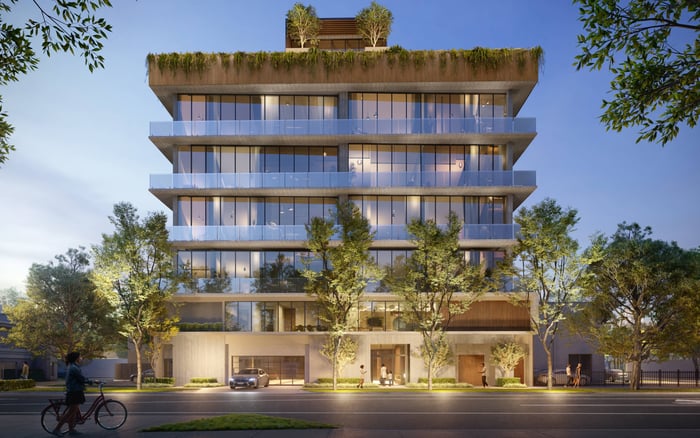
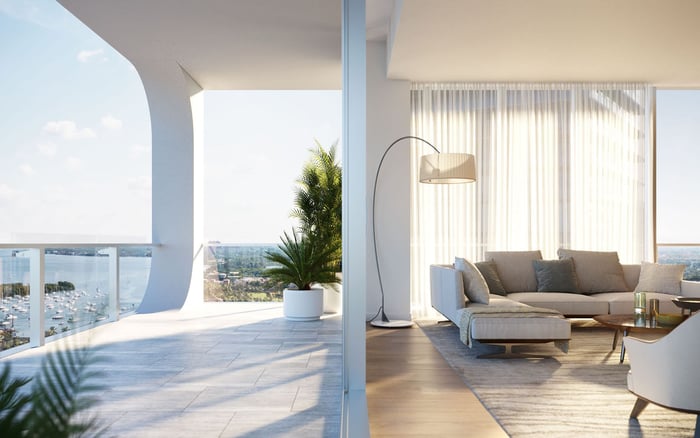
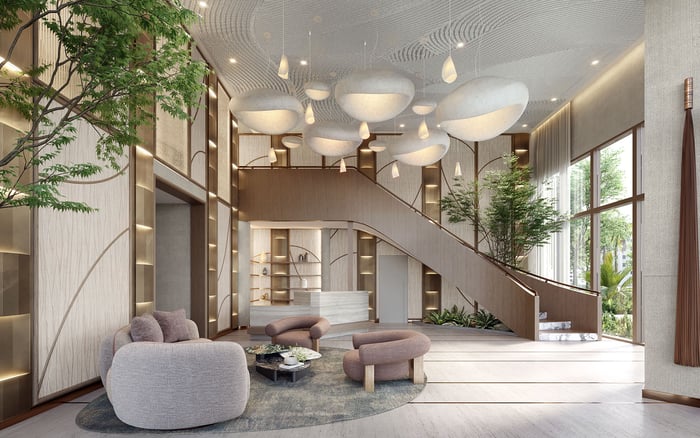
Mr. C Tigertail Coconut Grove speaks to a very specific South Florida buyer: someone who wants the discipline and ease of a luxury hospitality brand, but in a neighborhood that feels residential, walkable, and culturally rooted. Set in Coconut Grove’s village core, the project is positioned less like a sprawling resort and more like a serviced private residence with a refined, boutique sensibility. That distinction matters. In Miami, hospitality-led ownership often suggests beachfront energy, high turnover, and a more transient social rhythm. Mr. C Tigertail offers a different proposition. Here, the appeal is operational ease, personalized service, and a setting defined by mature canopy, established streets, and a sense of neighborhood continuity. For buyers considering a primary home, a second home, or a polished pied-à-terre, that balance can be unusually compelling. Within the broader Coconut Grove landscape, the project sits in conversation with other design-conscious addresses such as [Arbor Coconut Grove](https://www.millionluxury.com/coconut-grove/arbor-coconut-grove) and [Opus Coconut Grove](https://www.millionluxury.com/coconut-grove/opus-coconut-grove), though its hospitality orientation gives it a different personality. The result is a residence concept aimed at owners who value privacy, service, and a more intimate expression of luxury.
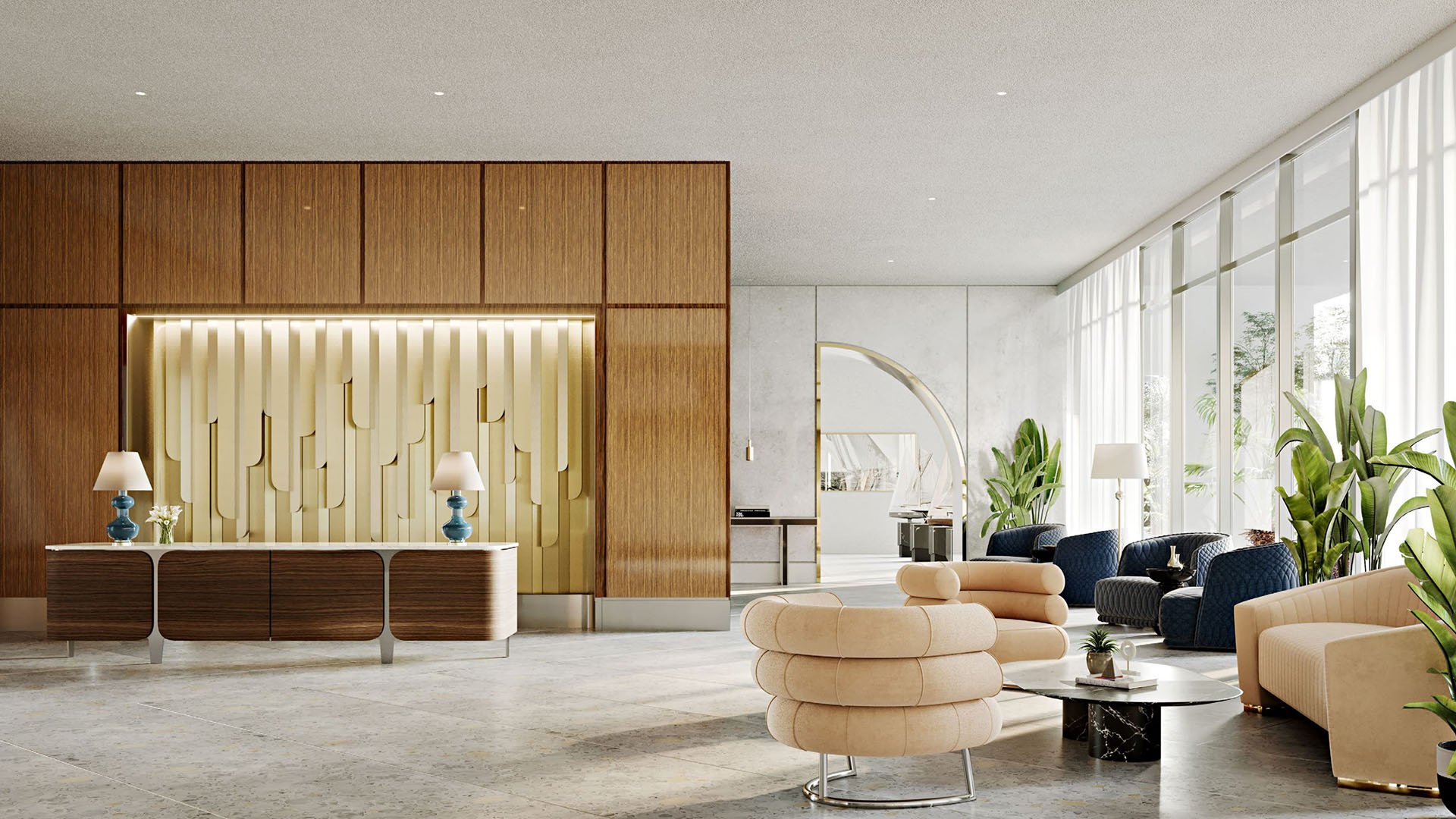
Mr. C Tigertail Coconut Grove is best understood as a residence for buyers who want luxury to feel organized rather than theatrical. The project is framed around boutique-scale hospitality, private residential use, and a polished service environment. In practical terms, that means a home shaped by concierge-minded living rather than the atmosphere of a large destination resort.
Its location in Coconut Grove’s village core is central to the proposition. This is not a beachfront address competing on spectacle. It is a Grove address competing on texture, walkability, and the kind of day-to-day ease that matters more once ownership begins. For discerning buyers in Coconut Grove, that difference can be decisive.
The project enters a neighborhood already associated with design-forward residential living. Buyers familiar with Arbor Coconut Grove, Opus Coconut Grove, and Four Seasons Residences Coconut Grove will recognize the Grove’s appetite for refined, lower-volume luxury. Mr. C Tigertail’s distinction is its more explicit emphasis on hospitality as part of daily ownership.
The most natural buyer here is not necessarily chasing Miami’s loudest address. It is someone affluent who values flexibility, service, and a lower-management ownership experience. That can mean a primary residence for a household that wants staff-level convenience built into the building, or a second home used as a lock-and-leave base without sacrificing polish.
This is also an appealing model for the buyer who wants homeownership to blur elegantly with hotel living. Hospitality-style offerings associated with the concept include concierge, housekeeping, dining, and room-service-style support for residents and guests. The appeal is straightforward: daily life becomes lighter. Arrivals are easier. Departures require less orchestration. The residence feels supported without feeling overprogrammed.
In a market where some branded properties can read as either overtly social or overtly resort-driven, Mr. C Tigertail aims for something more discreet. It is for owners who want service as background, not performance.
Coconut Grove remains one of Miami’s oldest neighborhoods, and that history still shapes the emotional value of living there. The area is known for walkability, a village-like atmosphere, and a local identity that feels markedly different from more tourist-heavy waterfront districts. Mature tree canopy, established streets, and a residential cadence all reinforce a quieter form of prestige.
That setting does important work for a hospitality-led project. In a denser or more transient district, hotel-style service can tip a building toward impermanence. In the Grove, it can do the opposite. It can make full-time living more effortless while preserving a sense of rootedness. That is why a residence like this reads differently from a Miami Beach proposition, even when both trade in luxury.
For buyers comparing service-driven options, The Well Coconut Grove offers another Grove-based perspective, while Mr. C Tigertail occupies its own lane with boutique hospitality and neighborhood integration at the core of its message.
The phrase hospitality polish can be vague unless translated into ownership realities. Here, it suggests a building designed for seamless support: arrival assistance, resident services, housekeeping coordination, and food-and-beverage convenience woven into everyday life. For a busy owner, those details are not ornamental. They are the infrastructure of ease.
This matters especially in the broader serviced-residence conversation, even though buyers should be careful not to reduce every service-led residence to the same category. The stronger distinction at Mr. C Tigertail is not mass-market flexibility. It is personalized service in a more intimate residential setting. The project’s value proposition is framed around personalization and neighborhood fit rather than beachfront prestige.
In that sense, the development fits within a broader serviced-residence niche shaping the top end of South Florida real estate. Buyers are increasingly willing to pay for convenience, but many still want context. They want an address that feels private, measured, and residential first.
The design conversation around Mr. C Tigertail has been framed as a balance between contemporary luxury and Coconut Grove’s tropical and residential character. That is a fitting ambition for this part of Miami. The Grove rewards projects that acknowledge atmosphere and legacy rather than imposing a generic global luxury vocabulary.
Boutique scale is equally important. Mr. C as a brand is associated with curated hospitality rather than a sprawling resort format, and that positioning aligns well with the neighborhood. In Coconut Grove, intimacy can feel more luxurious than magnitude. A building that feels edited, composed, and attentive often has greater long-term appeal than one built around maximum visual impact.
For the boutique buyer, this is where the project becomes particularly persuasive. The luxury is not only in finishes or service menus. It is in the emotional temperature of the building: quieter, more tailored, and less anonymous.
Across South Florida, branded residences are now a major part of the new-project landscape, but not all branded offerings promise the same lifestyle. Some place the emphasis on beachfront status, some on wellness, some on entertainment value, and others on architecture as identity. Mr. C Tigertail is more restrained.
Its competitive strength is that it does not need to perform like a resort to feel complete. For the buyer who has already experienced high-service living, that restraint can read as sophistication. Ownership here is imagined as smooth and cultivated, not overactivated.
That makes it especially relevant for those who want a polished base in Miami without defaulting to the most visible corridors. In a market crowded with maximal statements, the more interesting luxury play can be one that offers discretion, walkability, and operational calm.
Mr. C Tigertail Coconut Grove appears best suited to residents who want service to elevate home life without overtaking it. The address, the brand posture, and the neighborhood all point toward a very particular buyer: someone who values hospitality standards, but wants them delivered in a setting with character and residential depth.
For many affluent purchasers, that may be the more enduring form of luxury. Beachfront glamour has its place, but not every owner wants volume, turnover, or the social tempo that often comes with it. Some want an address where the pleasures are subtler: shaded streets, village rhythm, polished service, and a home that feels cared for whether they are in residence daily or arriving for a shorter stay.
In Coconut Grove, that combination is unusually compelling, and it explains why Mr. C Tigertail stands apart.
What is Mr. C Tigertail Coconut Grove positioned to offer? It is presented as a luxury residential-hospitality project that blends private ownership with boutique-style service.
Where is Mr. C Tigertail located? It is described as being in Coconut Grove’s village core, which supports a more walkable and neighborhood-oriented lifestyle.
Who is the most likely buyer for this project? Buyers seeking a polished primary residence, pied-à-terre, or second home with built-in service are the clearest fit.
Is this a beachfront-style luxury development? No. Its appeal is tied more to neighborhood character, walkability, and personalized service than to beachfront prestige.
What kind of services are associated with the concept? The project is associated with concierge, housekeeping, dining, and room-service-style support.
Why does Coconut Grove matter to the value proposition? The neighborhood offers a quieter, more established, and more intimate residential setting than many higher-volume Miami districts.
How does the project differ from a large resort property? It is framed around boutique-scale luxury and curated hospitality rather than a sprawling resort atmosphere.
Is the design approach traditional or contemporary? It is described as contemporary while still responding to Coconut Grove’s tropical and residential character.
Does the project fit the serviced-living trend? Yes. It aligns with service-led ownership, but its positioning is more private and more residential in tone.
What makes it stand out in Coconut Grove? Its combination of hospitality polish, boutique scale, and village-centered living gives it a distinctive profile.
For a confidential assessment and a building-by-building shortlist, connect with MILLION.
If branded residences are on your mind — as a home or as an allocation — we would be glad to share what we are seeing, privately.
Begin a quiet conversation