A discreet due-diligence guide for evaluating Key Biscayne waterfront condos by looking beyond the view to flood exposure, building condition, reserves, insurance, access, and long-term view protection.
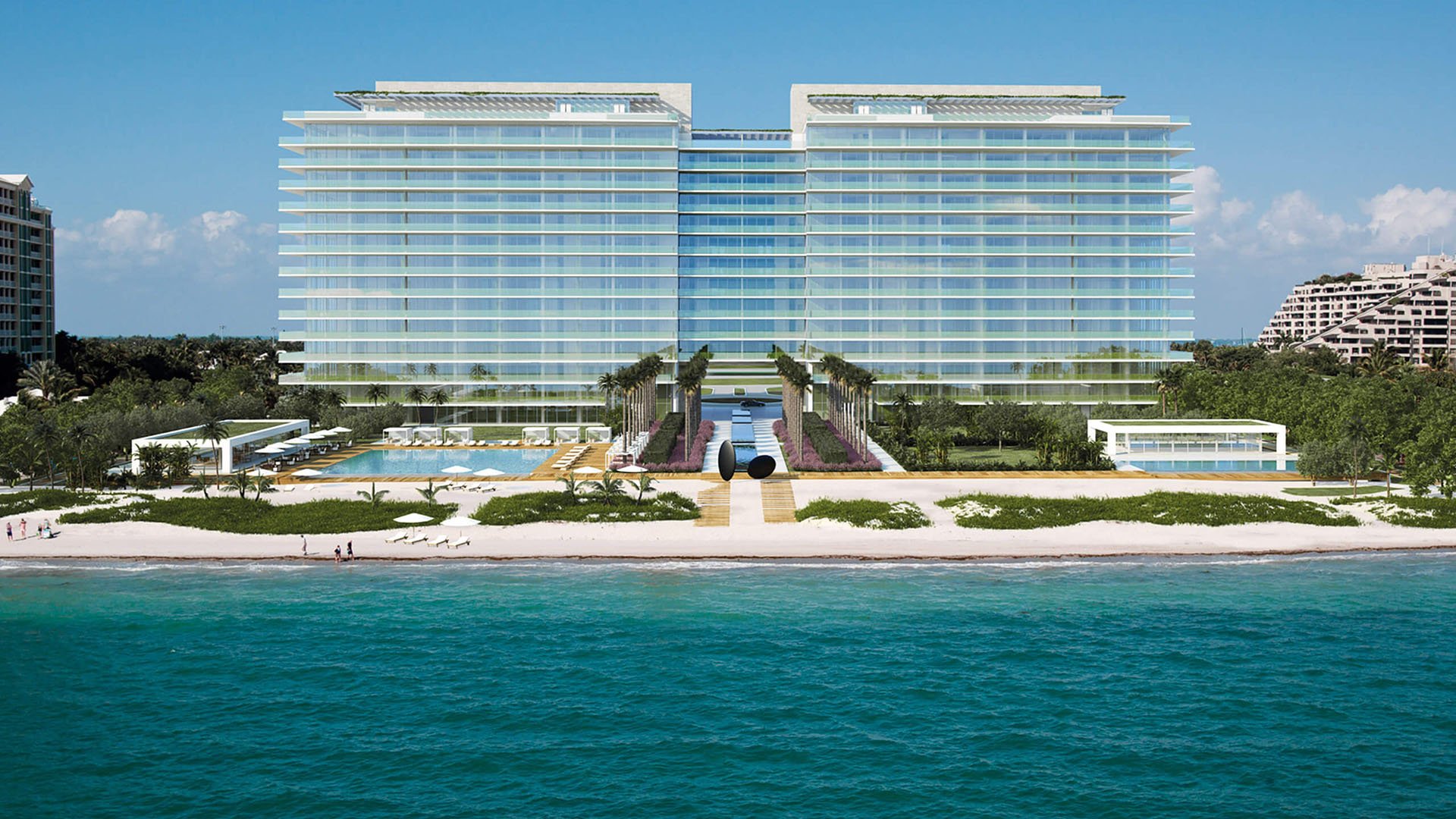
In Key Biscayne, a waterfront condo can seduce quickly. The light moves differently here. Biscayne Bay softens the western horizon, the Atlantic sharpens the eastern one, and the island’s parkland creates rare moments of green relief in a coastal market often defined by glass, water, and height. Yet disciplined buyers understand that a view is not value by itself. It is a premium that must be justified by the building, the site, the association, and the long-term durability of what sits beyond the balcony.
Key Biscayne is a coastal village with a distinct geography. It is reached by bridge, bordered by water, and exposed to the practical realities of hurricane planning, flooding, evacuation, salt air, and access constraints. That does not make the island less desirable. It makes due diligence more important. A luxury buyer evaluating Oceana Key Biscayne or any other waterfront address should begin with the same question: if the view disappeared from the marketing presentation, would the building still underwrite as a strong ownership decision?
This is a Buyer's Guides approach, not a brochure approach. Treat Key Biscayne, Waterfront, Waterview, Oceanfront, and Beach-access as separate questions. Each can add pleasure and scarcity, but each also has a technical side that should be examined before emotion becomes price.
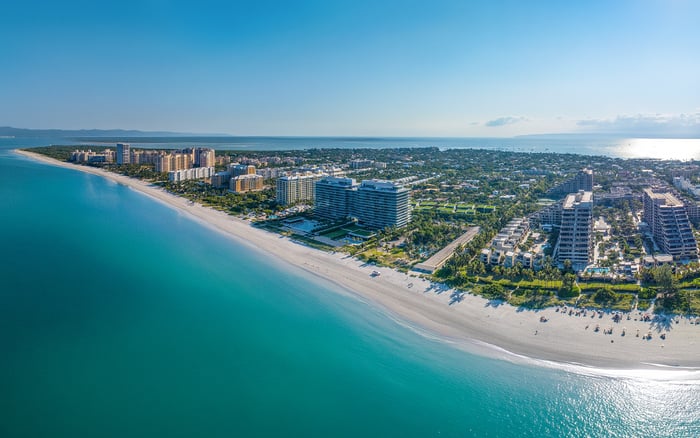
The strongest waterfront decisions on Key Biscayne begin at the map level. The island’s north end is shaped by Crandon Park, a major public park landscape that can influence view permanence, recreational access, and the feeling of openness around nearby buildings. The south end is shaped by Bill Baggs Cape Florida State Park, another protected waterfront landscape with its own effect on beach context, views, and land-use expectations.
Those park-adjacent or park-facing outlooks deserve a different analysis from views that depend on privately owned parcels. A balcony looking toward public parkland may carry a different long-term view-risk profile than one looking over a site that could, in time, be repositioned or redeveloped. The point is not to assume safety. It is to identify who controls the land in the line of sight.
For any view premium, ask what sits between the glass and the horizon. Is it ocean, bay, parkland, a neighboring condominium, a parking area, a club parcel, or an assemblage of private properties? Ownership, legal descriptions, assessed history, and parcel boundaries can help clarify the risk. A beautiful angle over someone else’s developable land should be priced with more caution than an outlook over a protected landscape or open water.
Before assigning value to the balcony, verify the condo’s flood-zone and elevation context by address. For waterfront towers, the question is not simply whether water is visible. It is how water behaves around the building during ordinary seasonal events, severe weather, and abnormal storm conditions.
Storm surge is water rise generated by a storm above predicted tides, and it is central to any oceanfront or bayfront site. King tides, the highest predicted high tides of the year, can worsen coastal flooding and reveal weaknesses that are invisible on a sunny showing day. Ask how the garage, lobby, seawall, loading areas, drainage, elevators, electrical rooms, and access roads perform during these events. A refined lobby loses some of its power if the building’s lower levels are repeatedly stressed.
Sea-level scenarios should also be considered at the neighborhood scale. Low-lying coastal conditions do not affect every building the same way, but they do affect access, perception, future capital planning, and insurance conversations. A buyer comparing Key Biscayne with other waterfront markets, from Continuum on South Beach to The Residences at Six Fisher Island, should apply the same principle: the view may be private, but coastal resilience is shared.
Waterfront luxury is hard on buildings. Salt air, wind exposure, sun, and water intrusion all leave a record. Inspection status matters, especially in older towers. Documentation can help show whether structural, electrical, or building-envelope issues have been identified, whether repairs are complete, and whether future work is funded or still pending.
Request the building’s latest reserve materials when available, then compare planned reserves with actual funding. Do not stop at the monthly maintenance number. A low monthly fee can be less attractive if the reserve schedule suggests major unfunded work. A higher fee can be more rational if it reflects disciplined capital planning, completed restoration, and realistic insurance costs.
Practical questions should be direct. What is the condition of the seawall? How high is the garage? Has the building completed concrete restoration? What is the roof history? Are windows and doors rated appropriately? Where are the generators and critical systems located? How does drainage perform during heavy rain and king tides? Are future projects already reflected in reserves, or will owners likely face additional assessments?
This same discipline applies beyond Key Biscayne. Buyers looking at Una Residences Brickell or Aria Reserve Miami may be drawn to skyline, river, or bay perspectives, but the underwriting remains grounded in building systems, exposure, governance, and capital planning.
A condominium association is part of the asset. Its records can show whether the building is reactive or prepared. Review the governing documents, current budget, financial statements, reserve schedule, insurance policies, meeting minutes, pending litigation disclosures if provided, and recent notices to owners. The goal is not to find a perfect association. It is to understand the personality of ownership before joining it.
Meeting minutes often reveal the tone of governance. Are major repairs discussed openly? Are owners resisting necessary funding? Are insurance renewals creating pressure? Are there repeated water-intrusion issues, elevator concerns, seawall discussions, or garage repairs? These details may never appear in a listing description, but they can materially affect the economics of ownership.
Insurance deserves its own early review. Coastal Florida condo ownership can involve an association master policy, unit-owner coverage, flood coverage, and changing premium availability. Before making an offer, ask for the association’s insurance information and consult qualified insurance guidance for the unit owner’s side.
Key Biscayne’s privacy is inseparable from its access pattern. Bridge access helps define the island’s sense of separation from the mainland, but it also matters during storms, major events, traffic interruptions, and emergency planning. Check the evacuation-zone context for the building and understand how residents are expected to leave, return, and operate if a storm threatens the area.
For second-home buyers, this can be especially important. If you are not present year-round, who secures the unit? How are shutters or impact systems handled? What is the building’s protocol before and after a storm? Are staff and management experienced in storm preparation? Does the garage have known vulnerabilities? Does the association communicate clearly with absent owners?
The quiet luxury of Key Biscayne is real, but it is operational as much as aesthetic. The best buildings make ownership feel calm because the systems behind the calm are serious.
A waterfront condo’s view premium should rise or fall based on quality, angle, height, privacy, and permanence. Uninterrupted water views are not all equal. A direct Oceanfront exposure is different from an oblique Waterview across neighboring rooftops. A Biscayne Bay sunset can command emotion, but if the foreground is privately controlled, that emotion should be balanced against future uncertainty.
Ask your advisor to separate the price into components: interior condition, building reputation, line, floor height, outdoor space, parking, amenities, association strength, and view. Then stress-test the view. What part is protected by water or parkland? What part depends on another owner’s parcel? What part could change through vegetation, renovation, or new construction? A buyer who can answer those questions is less likely to overpay for romance.
Is a direct water view always worth a premium? Not automatically. The premium should reflect permanence, flood exposure, building condition, association strength, and comparable alternatives.
What should I check first in a Key Biscayne waterfront condo? Start with flood-zone context, evacuation status, building inspection history, reserves, insurance, and parcel ownership in the view corridor.
Are park views safer than development-facing views? Views toward protected parkland may have a different long-term risk profile than views over privately owned parcels, but every line of sight should be verified.
Why do king tides matter to condo buyers? They can reveal how the garage, lobby, seawall, drains, and access roads perform during recurring high-water conditions.
Should I review association meeting minutes? Yes. Minutes can reveal repair debates, insurance pressure, reserve concerns, water intrusion, and possible special-assessment risk.
How important are reserve materials? Very important. Reserve materials help show whether major building components are being realistically funded.
Can low monthly dues be a warning sign? Sometimes. Low dues may be attractive, but they should be compared with reserves, insurance costs, repair history, and upcoming capital needs.
What building systems deserve special attention near the water? Seawalls, roofs, drainage, garages, elevators, generators, windows, doors, concrete restoration, and floodproofing all deserve careful review.
Does bridge access affect ownership quality? It can. Bridge access supports the island’s privacy, but buyers should understand traffic, storm planning, evacuation procedures, and emergency logistics.
When should I bring in professional advisors? Before the purchase becomes final. Use qualified legal, inspection, insurance, and real estate guidance while documents can still be reviewed.
For a discreet conversation and a curated building-by-building shortlist, connect with MILLION.
If branded residences are on your mind — as a home or as an allocation — we would be glad to share what we are seeing, privately.
Begin a quiet conversation