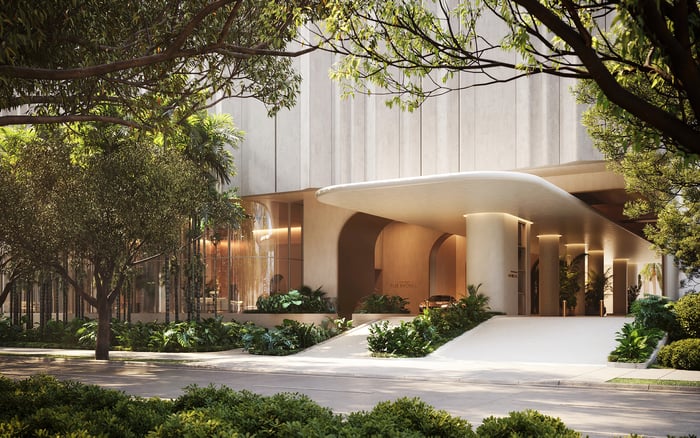
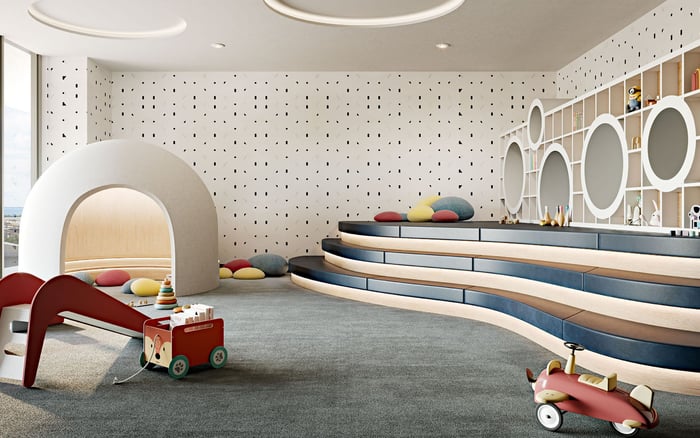
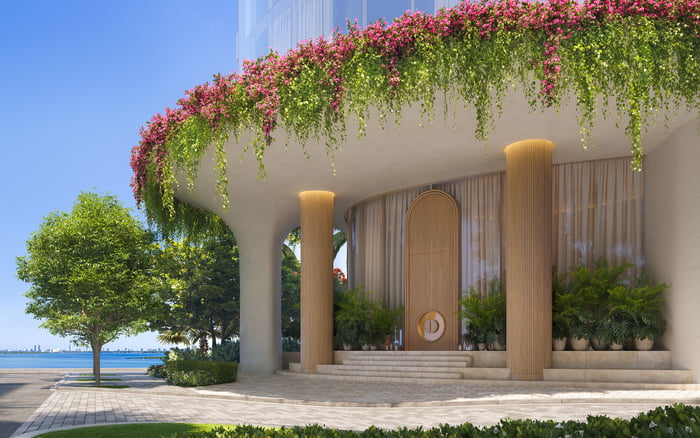
Brickell’s next luxury cycle is less about spectacle and more about buildings that make daily life easier, calmer, healthier, and more private.
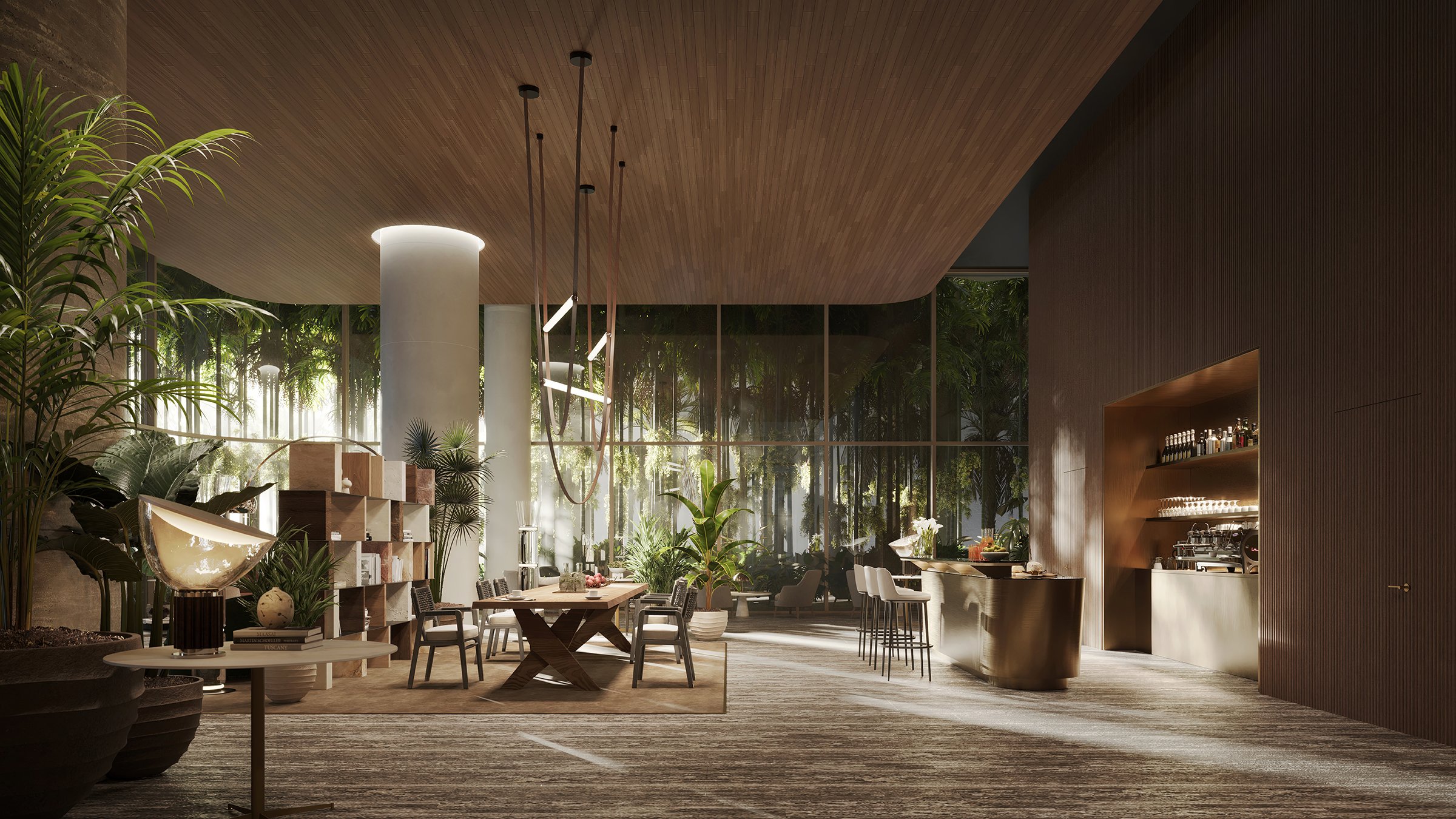
Brickell has never lacked drama. Its skyline is built for arrival, with towers that register from causeways, bayfront terraces, and the elevated rhythm of the financial district. Yet the most compelling movement in the neighborhood is not simply toward taller profiles or louder amenity decks. It is toward residential buildings that feel more composed, more operationally fluent, and more useful to the people who actually live in them.
That is why 619 Residences by Foster + Partners + Nobu Hospitality, The Residences at 1428 Brickell, and House of Wellness Brickell belong in the same conversation. Together, they point to a buyer preference that is becoming more exacting: high-service living without excess theater. The new prestige is not a lobby that overwhelms. It is a building that understands how residents move through a day.
For new-construction buyers in Brickell, the distinction matters. Service is no longer a decorative promise attached to a brochure. It is the invisible infrastructure of comfort, privacy, health, and time management.
High-service living used to be shorthand for valet, concierge, and a generous pool deck. Those elements remain expected in the upper tier, but they no longer define the category. The more sophisticated buyer is asking sharper questions. How private does arrival feel? Is the amenity program useful during the week, not just impressive on a tour? Does the building support wellness with depth rather than vague ambiance? Are interiors calm enough to live with, not merely photograph?
This is where Brickell is maturing. The neighborhood’s luxury buyer is often urban, mobile, and time-sensitive. Many are not seeking resort theater in the middle of the city. They want the efficiency of a financial center, the comfort of a private residence, and the hospitality fluency of a building that anticipates needs without turning daily life into performance.
That is a subtle but meaningful shift. It favors discretion over spectacle, service over staging, and design and architecture that improve routine rather than simply announce status.
The Residences at 1428 Brickell is useful as a lens because its positioning sits at the intersection of privacy, wellness, and architectural identity. In a neighborhood where visibility can be mistaken for value, the stronger luxury argument is often quieter: a building should reduce friction, protect time, and make daily routines feel easier.
That kind of residential value is not only about the scale of a tower or the visual power of its shared spaces. It is about whether the sequence of arrival feels intuitive, whether residents can move between private and shared areas without unnecessary exposure, and whether the building’s lifestyle program supports real habits rather than one-time impressions.
For Brickell buyers, that distinction is increasingly important. A compelling residence should feel considered in the morning, at midday, after travel, and at the end of a long workday. The luxury is cumulative, not theatrical.
The significance of 619 Residences by Foster + Partners + Nobu Hospitality lies in what its positioning suggests about the next chapter of branded residences in Brickell. The brand conversation is no longer only about logos or associations. At the highest level, it is about translating recognizable expertise into residential calm.
Hospitality, when handled well, is not theatrical. It is timing, tone, sequence, and restraint. It is the difference between being noticed and being looked after. A hospitality association can frame expectations around service language, atmosphere, and the discipline of experience, while a major design name can signal architectural ambition and global fluency.
The important point is not spectacle. It is synthesis. A building can be branded, architecturally ambitious, and still feel private. That is the balance Brickell buyers are beginning to reward.
House of Wellness Brickell speaks to another side of the same preference. Wellness is no longer an amenity category satisfied by a gym and a spa-like finish palette. In the luxury market, wellness is increasingly treated as a residential operating system, one that can influence light, movement, recovery, quiet, fitness, food habits, and mental decompression.
The best wellness-driven buildings do not need to feel clinical or performative. They feel efficient, calm, and naturally integrated. Residents should not have to restructure their day around the building; the building should help support the rhythms that keep them functional in a demanding urban life.
That is especially relevant in Brickell, where density, work, travel, and social obligations can make time the ultimate luxury. A wellness-forward address succeeds when it reduces friction and makes healthy routines easier to sustain.
Luxury real estate in South Florida has spent years refining the art of the amenity reveal. But the buyer at the top of the market is increasingly fluent. They can distinguish between a room created for a rendering and a room designed for actual use. They recognize when a building has too many shared spaces and not enough operational logic.
This is why restraint has become valuable. It implies editing. It suggests that the development vision understands hierarchy, privacy, and maintenance. A highly serviced building does not need to overexplain itself. Its value appears in how easy it is to arrive, how naturally residents move from private to shared areas, how quietly needs are handled, and how well interiors can age.
Brickell alternatives such as 2200 Brickell and St. Regis® Residences Brickell also sit within this broader buyer conversation, where the neighborhood is judged less by single amenity moments and more by the total residential experience.
For buyers considering this new tier of Brickell living, the practical evaluation should be disciplined. Start with privacy. The feel of arrival, the rhythm of elevators, the relationship between shared amenities and private residences, and the social temperature of the building can matter as much as the headline features.
Next, study the amenity program for repetition. Does each space have a purpose, or is the plan simply expansive? Wellness areas should be legible, not ornamental. Hospitality should feel embedded, not pasted on. Architecture should support daily life through proportion, access, light, and circulation.
Finally, consider whether the building’s identity will age well. The strongest luxury residences are not those that feel most dazzling on first impression. They are those that remain desirable after the first season, when the true measure becomes routine, service consistency, and the quiet pleasure of living well.
Why is Brickell moving toward high-service living? Buyers increasingly want convenience, privacy, wellness, and daily support in an urban setting rather than amenities designed only for visual impact.
What does high-service without theater mean? It means service, wellness, privacy, and design are integrated into daily life without relying on exaggerated spectacle or decorative excess.
Why is The Residences at 1428 Brickell relevant to this conversation? It reflects the growing interest in Brickell residences where privacy, wellness, architecture, and day-to-day usability are central to the luxury experience.
How does 619 Residences by Foster + Partners + Nobu Hospitality fit the trend? Its positioning connects branded hospitality and design ambition with a more restrained idea of urban residential service.
Why does House of Wellness Brickell matter in this context? It highlights how wellness is becoming part of the operating logic of luxury living, not just an amenity label.
Are branded residences still important in Brickell? Yes, but the strongest branded residences are judged by how well the brand improves service, atmosphere, and residential function.
Should buyers prioritize amenity quantity or amenity usefulness? Usefulness is more important at the top of the market, especially when amenities support daily routines with privacy and consistency.
What should buyers ask when touring a high-service Brickell building? They should ask how arrival, privacy, wellness spaces, staff flow, and shared amenities function during ordinary daily use.
Why is restraint valuable in luxury condo design? Restraint suggests editing, operational clarity, and a focus on spaces that can remain elegant and livable over time.
What is the main takeaway for luxury buyers? The most compelling Brickell residences are shifting toward operational elegance, restrained design, and services that make everyday life easier.
For a tailored shortlist and next-step guidance, connect with MILLION.
If branded residences are on your mind — as a home or as an allocation — we would be glad to share what we are seeing, privately.
Begin a quiet conversation