A discreet buyer’s guide to evaluating elevator redundancy, service continuity, maintenance depth, and lifestyle risk before purchasing luxury real estate in Key Biscayne.
In Key Biscayne, the most desirable residences are often described through water, light, privacy, balcony depth, and the calm of an island address. Yet for a buyer considering a high-floor home, penthouse, or seasonal residence, one of the most consequential questions is also one of the least glamorous: what happens when an elevator is out of service?
Elevator redundancy is not merely a mechanical detail. It is a measure of daily comfort, emergency readiness, staff efficiency, and long-term building stewardship. In a luxury context, it shapes arrivals after dinner, luggage handling before a flight, private chef logistics, family routines, and the ability of service teams to move through the property without disrupting the residential experience.
This is especially relevant in Key Biscayne, where buyers often evaluate Waterfront and Oceanfront living through a lifestyle lens. The view may create the first impression, but the vertical transportation plan determines how gracefully the building functions over years of ownership.
At its simplest, elevator redundancy asks whether the building can continue to function well when one elevator is offline. The answer depends on more than the number of elevator cars. A tower may have multiple cars, but the way they are assigned by stack, floor range, service use, emergency use, or private access can make redundancy either meaningful or merely theoretical.
A buyer should ask how many passenger elevators serve the residence, whether any are dedicated to a limited number of homes, and whether a separate service elevator exists. For larger residences, staff-supported households, and owners who entertain frequently, a true service elevator can be as important as a beautiful lobby. It protects privacy and reduces daily friction.
The question is not, “Does the building have nice elevators?” The sharper question is, “If one car is unavailable, how does the building operate at breakfast, at dinner, during move-ins, and on a holiday weekend?”
Begin with the elevator count serving your specific line or floor. Ask whether the elevator bank is shared by all residences, divided between low and high floors, or restricted to certain tiers. Then ask what happens during scheduled maintenance. A well-managed building should be able to explain how service windows are communicated, how residents are rerouted, and whether peak hours are avoided.
Ask whether the elevator system has emergency power support, and what level of operation that backup power is intended to maintain. A generator may support essential systems, but a buyer should clarify whether that includes one elevator, multiple elevators, cab lighting, ventilation, access control, and related life-safety functions.
Also ask about the maintenance contract. Who services the elevators, how frequently are they inspected, and what is the protocol for urgent calls? The most refined buildings often distinguish themselves not only through design, but through fast response and disciplined documentation.
Finally, ask about age and modernization. Elevator systems have long lives, but they are not timeless. Controls, cab interiors, motors, doors, and destination dispatch systems can require upgrades. A Resale purchase should include careful review of board minutes, reserves, recent assessments, pending modernization plans, and service history.
In a boutique building, one elevator out of service can change the atmosphere immediately. In a larger tower, the impact depends on how intelligently the cars are distributed. Luxury buyers should think in terms of experience: waiting time, privacy, sound, staff routes, deliveries, medical access, and the dignity of arrivals.
A high-floor residence is only as effortless as its access. If a building has limited elevator capacity, a spectacular penthouse can feel less private during peak service periods. If service teams must share passenger cars, the building may feel busier than its architecture suggests. If there is no clear backup plan, even short outages can become memorable for the wrong reasons.
The practical test is simple: infrastructure should disappear into the elegance of daily life. When it becomes visible, delayed, or improvised, it begins to affect value perception.
Key Biscayne buyers often compare island calm with other South Florida settings. In that process, elevator redundancy becomes a useful way to evaluate buildings that may appear very different on the surface.
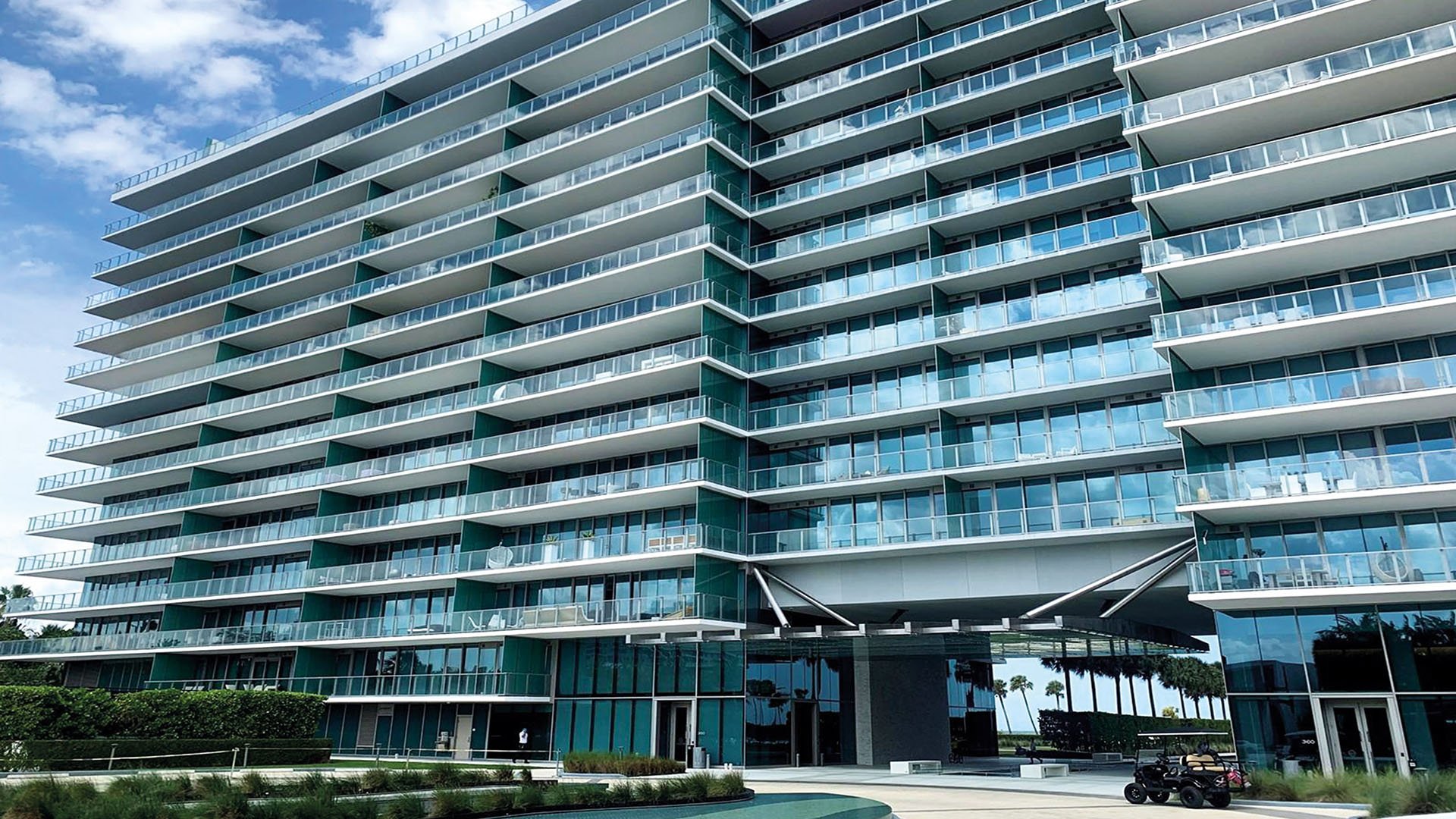
A buyer considering Oceana Key Biscayne may be focused on the rare character of island living, landscaped arrival, beach proximity, and privacy. Still, the same buyer should bring an infrastructure checklist to every showing. Ask how residents, guests, staff, and deliveries move vertically, and how that plan performs when one element is offline.
In Brickell, a waterfront tower such as Una Residences Brickell may appeal to buyers who want a more urban rhythm. In that setting, elevator questions often revolve around density, valet flow, amenity traffic, and the separation of residential and service movement.
For those comparing island-style privacy beyond Key Biscayne, The Residences at Six Fisher Island reinforces the same principle: exclusivity is not only about location. It is also about how quietly and reliably the building performs behind the scenes.
Miami Beach buyers evaluating The Perigon Miami Beach should apply the same discipline. Design, amenity programming, and views may differ by property, but elevator redundancy remains a universal question for high-value vertical living.
Before waiving contingencies, ask for documents that reveal how the building is managed. Minutes may show recurring elevator issues, planned improvements, or owner concerns. Budgets may show maintenance allocations. Reserve studies may identify future modernization needs. Rules and regulations may explain move-in procedures, contractor hours, delivery windows, and service elevator booking.
For New-construction purchases, the questions shift. Ask what the final elevator configuration will be, whether the service elevator is separate, how amenity levels affect elevator traffic, and what warranties or maintenance arrangements will be in place after turnover. Sales materials can describe the experience, but buyers should still request clarity on operational details.
For Resale properties, lived history matters. A doorman, property manager, or long-term resident may be able to describe how the building behaves during busy periods. The goal is not to find a building with no interruptions ever. The goal is to find one with disciplined management, sensible redundancy, and transparent communication.
Ask these questions before making an offer or during due diligence:
How many passenger elevators serve my residence? Is there a dedicated service elevator? Are elevators grouped by floor or stack? What happens when one elevator is down? Does emergency power support elevator operation? How are outages communicated? Are there recurring service issues? Is modernization planned? Are reserves adequate for elevator work? How are move-ins, deliveries, and contractors scheduled?
For luxury buyers, the answer should feel specific. Vague reassurance is not enough. A building that understands its systems can explain them calmly, without overselling.
Elevator redundancy can influence resale confidence because it touches daily life. Sophisticated buyers notice whether a building feels calm or congested. They notice whether staff operations are discreet. They notice whether systems feel current. In premium South Florida real estate, those impressions accumulate.
The finest Key Biscayne purchase is not only the one with the right exposure or terrace. It is the one that continues to feel effortless on an ordinary Tuesday, during a family visit, after a storm watch, or when the building is at full seasonal occupancy. In luxury real estate, resilience is part of refinement.
What does elevator redundancy mean in a luxury condo? It means the building has enough elevator capacity and operational planning to function well when one elevator is unavailable.
Why should Key Biscayne buyers ask about elevators early? Elevator access affects privacy, convenience, staff flow, emergency readiness, and the overall residential experience.
Is the number of elevators enough to judge redundancy? No. Buyers should also understand which elevators serve their floor, whether service use is separate, and how traffic is managed.
Should I ask about generator support for elevators? Yes. Clarify whether backup power supports elevator operation and what level of service is expected during an outage.
What documents can reveal elevator issues? Board minutes, budgets, reserve studies, maintenance records, and rules for move-ins or deliveries may all be useful.
Does elevator redundancy matter more for penthouses? Often, yes. High-floor owners depend more heavily on smooth vertical access and may be more affected by delays.
How does a service elevator improve privacy? It separates staff, contractors, deliveries, and move-ins from the main passenger experience whenever properly managed.
What should New-construction buyers ask developers? Ask about final elevator counts, service separation, amenity traffic, emergency power, warranties, and maintenance planning.
What should Resale buyers look for? Look for consistent maintenance, clear communication, adequate reserves, and no pattern of unresolved elevator disruptions.
Can elevator performance affect long-term value? Yes. Buyers at the luxury level often price not only views and finishes, but also the ease and reliability of daily living.
To compare the best-fit options with clarity, connect with MILLION.
If branded residences are on your mind — as a home or as an allocation — we would be glad to share what we are seeing, privately.
Begin a quiet conversation