A discreet buyer’s guide to evaluating Miami Beach preconstruction condos beyond the initial impact of water, skyline, and sunset views.
A Miami Beach sales gallery is designed to make the horizon feel inevitable. The ocean, the bay, the skyline, the sunset, the terrace rendering: all of it begins working before the buyer has even opened the floor plan. That is not a flaw. In Miami Beach, the view is part of the value proposition. But for a disciplined luxury buyer, it should begin the conversation, not close it.
The better question is not whether the outlook is beautiful. It is whether the residence will remain desirable when the emotional first impression settles into daily life. A preconstruction condo is a promise made through drawings, finish schedules, contracts, and reputations. The buyer’s task is to translate that promise into livability, durability, and eventual resale strength.
This is where the most sophisticated buyers separate romance from underwriting. They can appreciate an oceanfront panorama and still ask whether the elevator sequence feels private, whether the kitchen is scaled for real entertaining, whether the balcony is usable beyond a photograph, and whether the building’s services justify the carrying costs.
A rendering shows atmosphere. A floor plan shows truth. Before assigning value to a waterview, study how the residence actually lives from the moment the door opens. Is the entry gracious or abrupt? Does the eye move naturally toward the glass? Are bedrooms buffered from entertaining areas? Does the primary suite feel calm, or does it borrow drama from the view while sacrificing closet depth, bath proportion, or privacy?
In Miami Beach, glass frontage is seductive, but efficiency matters. Long corridors, awkward columns, narrow living rooms, and compromised furniture walls can quietly diminish the pleasure of a spectacular exposure. The strongest preconstruction residences pair outlook with composition. They allow art, seating, dining, and circulation to coexist without forcing the buyer to choose between beauty and function.
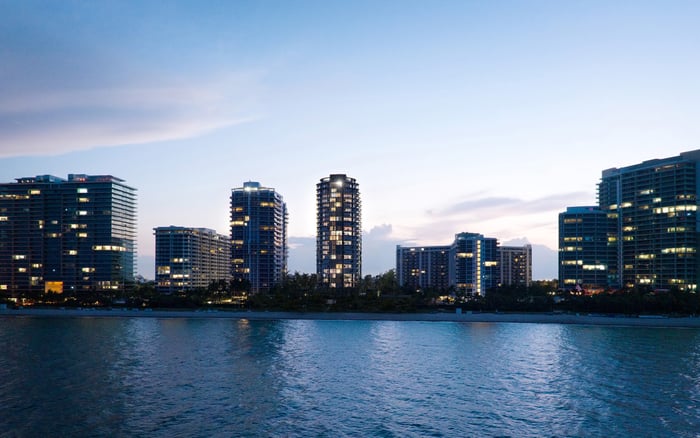
Consider beachfront projects such as 57 Ocean Miami Beach, where the conversation naturally invites scrutiny of light, outdoor space, and how a residence addresses the sand and sea. The view is important, but the test is whether the plan supports the way an owner actually lives in Miami Beach.
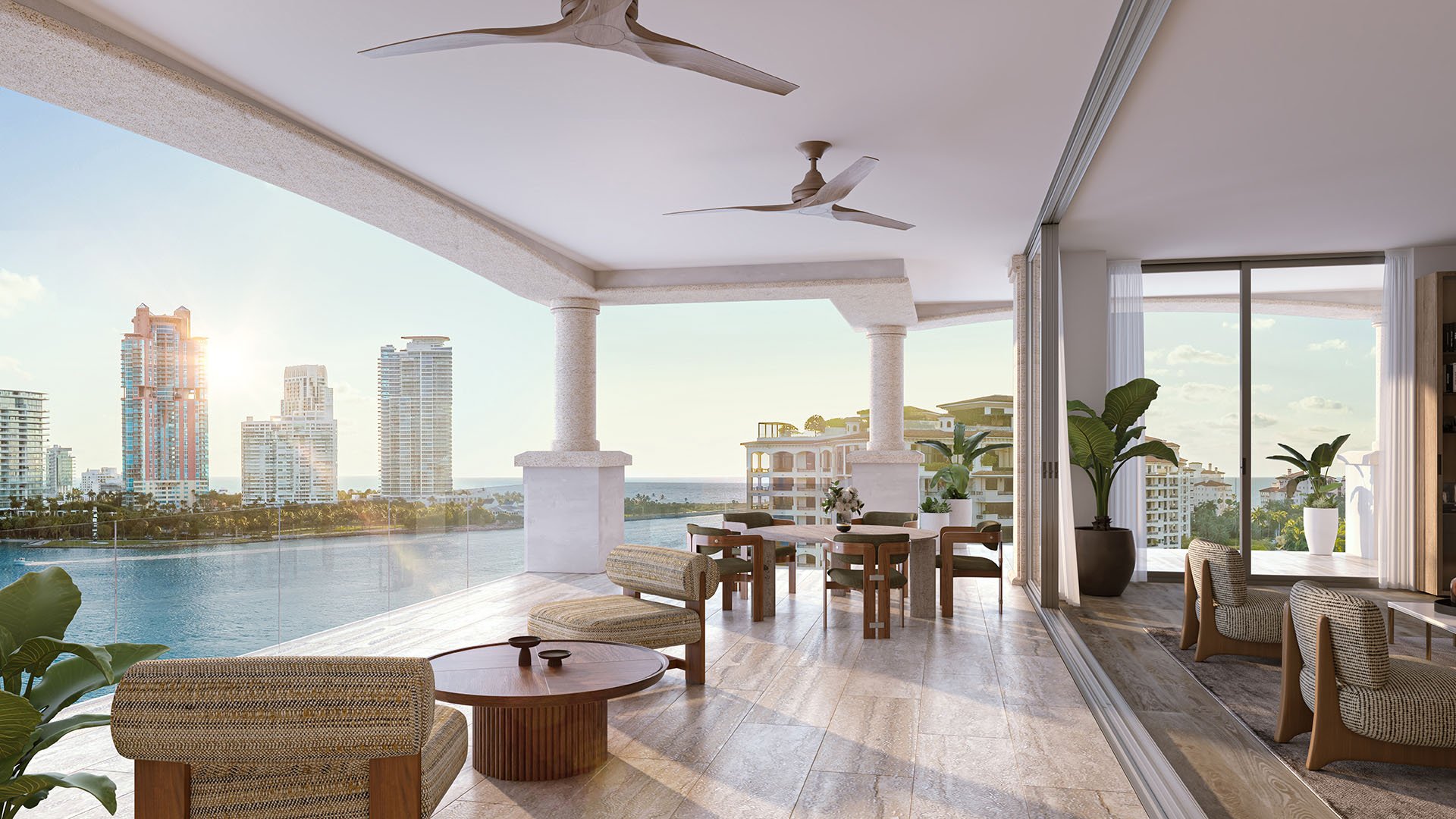
A terrace should never be treated as leftover exterior square footage. In a coastal condominium, it may be one of the most emotionally valuable parts of the residence. Yet not every terrace is equal. Depth, exposure, railing design, wind feel, shade, privacy from neighboring lines, and access points all determine whether the space becomes a morning ritual or an occasional backdrop.
Ask how furniture will sit. Can dining happen outside without blocking circulation? Is the terrace accessed only from the living room, or also from the primary suite? Does the plan allow doors to open in a way that feels seamless, or is the indoor-outdoor promise mostly theatrical?
For a preconstruction buyer, this matters because the terrace often carries the visual dream. The best outdoor spaces are not merely view platforms. They are extensions of the home, scaled for conversation, reading, dining, and the particular softness of Miami Beach evenings.
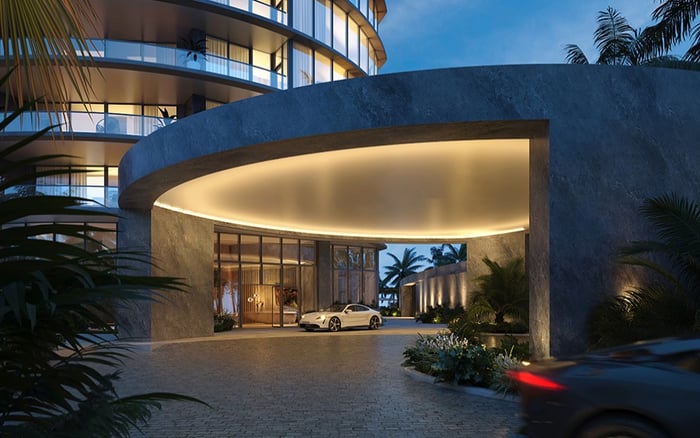
Luxury in Miami Beach is increasingly defined by how a building operates after completion. Architecture creates desire, but management preserves it. A buyer should study the intended service model with the same seriousness given to finishes. Arrival, valet, security, lobby staffing, wellness programming, beach access, pool experience, pet accommodation, and food and beverage concepts can all affect how a residence feels over time.
The most compelling new developments create a sense of privacy without feeling empty, and a sense of service without becoming performative. A building like Shore Club Private Collections Miami Beach invites that level of evaluation because the buyer is not only purchasing walls and views. The buyer is buying into an operating philosophy.
Look closely at how amenities are sequenced. Are they positioned for genuine use, or primarily for brochure impact? Does the building offer calm spaces as well as social ones? Is wellness designed around daily discipline, or simply presented as a collection of fashionable rooms? In the upper tier, restraint is often more convincing than spectacle.
Preconstruction requires trust, but trust should be earned. A polished sales environment is not a substitute for a coherent execution story. Review who is responsible for development, design, construction, interiors, landscape, and operations. Study whether the vision feels integrated or assembled from fashionable parts.
Buyers should also pay attention to the level of detail in the offering materials. Clear finish descriptions, thoughtful residence layouts, credible amenity programming, and consistent messaging suggest a team that understands its product. Vague language and excessive reliance on atmosphere should prompt deeper questions.
The same principle applies across the luxury spectrum, from boutique coastal addresses to larger branded or lifestyle-driven buildings. At The Perigon Miami Beach, for example, the conversation naturally extends beyond the exterior impression to privacy, plan discipline, beach relationship, and the long-term identity of the building.
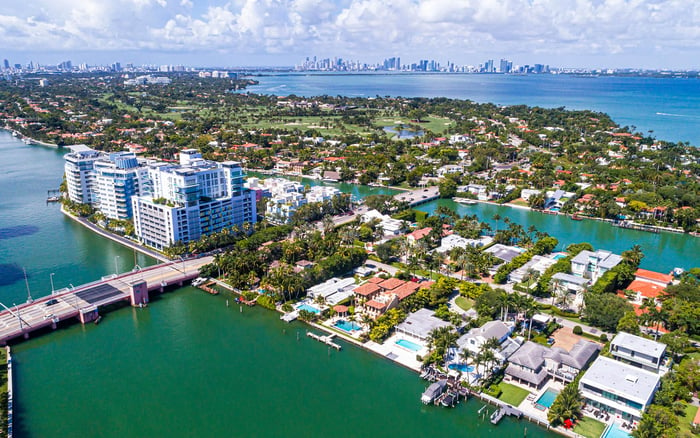
Miami Beach is not a single lifestyle. South of Fifth, Mid-Beach, North Beach, and nearby Surfside or Bal Harbour each carry a different rhythm. Some buyers want walkability and restaurant energy. Others want discretion, sand, wellness, and a quieter residential cadence. A view may look similar on paper, but the daily experience can be entirely different.
A buyer should ask: Where will I have breakfast? How will guests arrive? Is the beach experience public or more secluded? What is the drive pattern at peak times? Does the neighborhood feel like a full-time home, a second-home retreat, or a hospitality extension?
The most useful evaluation shifts attention from the single residence to the life around it. A building such as Five Park Miami Beach belongs in a different lifestyle conversation than a quieter beachfront address, and that distinction should be reflected in how a buyer values the opportunity.
In Miami Beach, material choices are not merely aesthetic. Salt air, sun, humidity, and coastal exposure reward quality and punish shortcuts. The buyer should look closely at exterior systems, glazing, balcony details, mechanical planning, parking strategy, and the seriousness of long-term maintenance thinking.
Inside the residence, finishes should be judged for both beauty and use. Pale stone, lacquered millwork, imported fixtures, and custom cabinetry can be exquisite, but they should also suit the climate and the owner’s lifestyle. A residence meant for frequent entertaining, children, guests, or seasonal lock-and-leave use may require a different specification than a quiet pied-à-terre.
The most durable luxury does not announce itself loudly. It is felt in door weight, acoustic comfort, storage logic, hardware, lighting, drainage, and the absence of daily friction.
A preconstruction price is not just a number. It is a narrative about future scarcity, design quality, location, services, and the developer’s confidence in the market. The buyer’s job is to decide whether that narrative is supported by the residence itself.
Compare the proposed home against completed alternatives, nearby new construction, and the buyer’s own intended hold period. A better view may justify a premium, but only if the rest of the residence supports it. A weaker view may still be compelling if the plan, building, and lifestyle are superior.
At the upper end, The Ritz-Carlton Residences® Miami Beach illustrates why brand, service expectations, and residential privacy must be evaluated together. The right purchase is rarely the one with a single winning attribute. It is the one with the fewest compromises that matter to the owner.
Should I prioritize view or floor plan in a Miami Beach preconstruction condo? Prioritize the combination. A remarkable view can lose value if the plan feels inefficient, exposed, or difficult to furnish.
Is a higher floor always better? Not always. Higher floors may offer broader outlooks, but lower or mid-level residences can feel more connected to landscape, pool decks, or the beach.
How should I evaluate a balcony before the building is complete? Study depth, exposure, access points, railing design, and likely furniture placement. A usable terrace should function as an outdoor room.
What makes an oceanfront preconstruction condo more resilient as a purchase? Strong design, credible execution, practical layouts, thoughtful amenities, and durable materials all help support long-term appeal.
Are branded residences safer choices? A brand can support service expectations, but it does not replace due diligence on the plan, building operations, contract, and location.
How important are amenities in Miami Beach? Amenities matter when they fit daily life. Prioritize spaces you will actually use over features designed mainly for presentation.
What should I ask about before signing a contract? Ask about deposits, delivery expectations, finish specifications, association structure, rental rules, and what can change before completion.
Can a less dramatic waterview still be a better buy? Yes. If the residence has a stronger plan, better privacy, superior service, or a more desirable lifestyle fit, it may be the wiser choice.
Is preconstruction better for a second home? It can be, especially for buyers who want new systems, current design, and time before closing. The key is matching the building to usage.
What is the best way to shortlist comparable options for touring? Start with location fit, delivery status, and daily lifestyle priorities, then compare stacks and elevations to validate views and privacy.
If you'd like a private walkthrough and a curated shortlist, connect with MILLION.
If branded residences are on your mind — as a home or as an allocation — we would be glad to share what we are seeing, privately.
Begin a quiet conversation