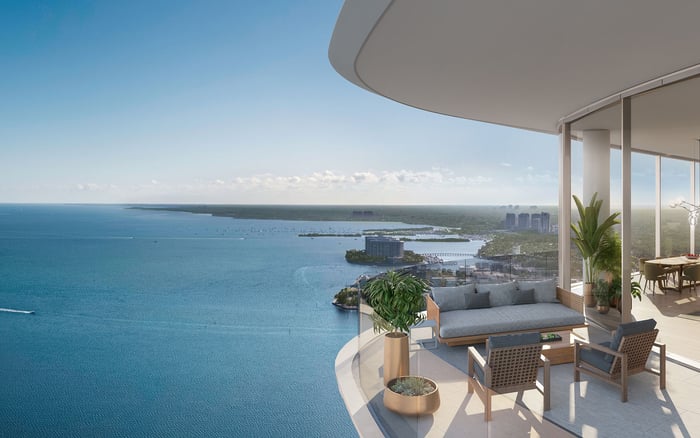
A practical MILLION guide to evaluating acoustic glass in South Florida luxury residences, with attention to privacy, carrying costs, comfort, and daily livability.

In South Florida luxury real estate, glass is often treated first as a view decision. Buyers respond to the ocean line, the bay shimmer, the skyline at dusk, or the cinematic sweep from high floors. Yet the best residences are not defined only by what glass reveals. They are defined by what it filters out.
Acoustic glass sits at the intersection of privacy, daily comfort, and long-term carrying costs. It matters in an oceanfront condominium where wind, surf, traffic, and hospitality energy may all shape the soundscape. It matters in Brickell, where urban activity is part of the appeal, but not something every owner wants inside the bedroom. It matters in Miami Beach, Sunny Isles, and waterfront enclaves where expansive glazing is central to the architecture.
The right question is not simply whether a residence has upgraded glass. The better question is how the entire opening performs: glass, interlayer, frame, seal, door track, installation, exposure, and the way the home is actually lived in.
Acoustic privacy is not the same as absolute quiet. A well-considered glass package should make a residence feel composed. Conversations should feel more contained. Bedrooms should feel more insulated from exterior rhythm. Living rooms should support music, entertaining, and work calls without the sense that the outside world is participating.
For buyers, privacy should be evaluated in layers. First, consider exterior sound: traffic, valet areas, restaurants, boats, pools, service zones, bridges, and mechanical equipment. Then consider interior sound: elevator proximity, corridors, neighboring terraces, and amenity adjacencies. Finally, consider how the plan uses glass. A corner great room, a primary suite wrapped in sliding doors, and a den beside a balcony each ask different things from the envelope.
This is why a quiet five-minute showing may not tell the full story. Visit at different times if possible. Stand near operable doors, not only at the center of the room. Listen in the primary bedroom, bathrooms, closets, and home office zones. Luxury is often revealed in the absence of distraction.
Two terms often come up in acoustic conversations: STC and OITC. They are useful reference points, but they should not be treated as the entire decision. Ask what rating applies to the glass itself and what performance is expected from the assembled window or door system. A strong pane can be weakened by an underperforming frame, poor sealing, or an operable panel that does not close with precision.
Buyers should request clear documentation, not vague language. Ask whether the glass package was selected for sound, impact resistance, energy performance, or a combination of priorities. Ask how sliding doors compare with fixed glass in the same residence. Ask whether any aftermarket treatments have been added and whether those treatments affect warranties, appearance, maintenance, or insurance considerations.
A simple field test can also be revealing. Close every exterior opening, turn off music and television, and listen for the character of the remaining sound. Is it a low urban hum, a sharp mechanical tone, or intermittent impact noise? The nature of the sound matters because comfort is experienced emotionally, not only technically.
Acoustic glass should not be evaluated only as a sound feature. In South Florida, glass also participates in thermal comfort, glare management, cooling behavior, and maintenance expectations. A residence with abundant exposure may feel very different in morning sun, afternoon sun, and evening humidity. Owners who value uninterrupted views should still ask how the glazing works with shades, HVAC zoning, and daily patterns of occupancy.
Carrying costs are not determined by glass alone. They are shaped by the entire ownership profile: building systems, orientation, ceiling heights, terrace depth, shade use, thermostat habits, and how often doors are opened. Still, the envelope is one of the first places to look when a home feels expensive to cool or difficult to keep balanced.
For buyers comparing residences, the most useful approach is comparative rather than theoretical. Walk similar exposures within the same building if available. Notice whether one line feels calmer, cooler, or less glare-prone than another. Ask how the glass system is maintained and whether large panels or specialty doors require particular service protocols.
In coastal and high-rise South Florida, glass conversations often overlap with impact and storm considerations. It is important not to assume that a product optimized for one priority automatically satisfies every other priority at the same level. A buyer should understand how the residence addresses impact, water intrusion concerns, sound control, and energy behavior as distinct but related issues.
This is especially important in waterfront and high-exposure settings, where architecture often celebrates transparency. The most elegant homes make resilience feel invisible. Their glass does not announce itself as technical equipment, yet the owner should still know what was specified, what has been maintained, and what documentation exists.
A sophisticated evaluation includes asking about original specifications, replacements, repairs, seal condition, door operation, and building rules for modifications. In a condominium, the association’s standards may be as important as the individual owner’s preferences.
The best acoustic glass decision is the one that improves daily life. It helps a bedroom feel restful. It lets a home office work as intended. It gives a dining room the right sense of intimacy. It allows a waterfront terrace to be opened when desired, then closed without making the interior feel exposed.
For frequent travelers and second-home owners, acoustic performance can also affect the arrival experience. A residence should feel settled the moment the door closes. For full-time residents, the impact is cumulative. Better sound control can make morning routines softer, evenings calmer, and entertaining more polished.
In MILLION terms, comfort is not a generic amenity. It is a form of discretion. The buyer comparing Miami Beach, Brickell, Sunny Isles, oceanfront, high-floor, and balcony living should evaluate not only the view, but the atmosphere behind the glass.
Begin with documentation. Ask what glass and door systems are installed, what ratings are available, and whether those ratings apply to individual components or the full assembly.
Then move to experience. Visit when the area is active. Close doors completely. Listen from sleeping areas, seating zones, and workspaces. Pay attention to repetitive sounds, not just loud ones.
Review the relationship between acoustic comfort and cooling. Notice heat, glare, shade reliance, and whether the residence feels balanced across rooms. Ask how the home performs when all doors remain closed for an extended period.
Finally, evaluate maintenance. Large glass panels, seals, tracks, and operable doors should feel smooth, secure, and well cared for. In luxury property, performance is not only specified at delivery. It must be preserved through stewardship.
What is the first thing to ask about acoustic glass? Ask whether available performance information applies to the glass alone or to the complete window and door assembly.
Are STC and OITC the only numbers that matter? No. They help frame the conversation, but installation quality, frames, seals, and operable panels also influence the lived experience.
Should I test sound during a showing? Yes. Close all exterior openings, turn off interior audio, and listen from the primary bedroom, office, and main living areas.
Does better acoustic glass always mean lower carrying costs? Not necessarily. Carrying costs depend on the whole envelope, exposure, shading, HVAC behavior, and owner habits.
Is acoustic glass important in waterfront homes? It can be. Waterfront homes may balance views with wind, boats, hospitality activity, terraces, and other exterior sound sources.
Can sliding glass doors perform differently from fixed glass? Yes. Operable panels and tracks should be evaluated carefully because their sealing and operation can affect comfort.
Should hurricane performance and acoustic performance be reviewed separately? Yes. They are related considerations, but buyers should understand how each priority is addressed in the residence.
What rooms deserve the most attention? Primary bedrooms, home offices, media rooms, and living areas near terraces usually reveal the most about daily comfort.
Can aftermarket treatments solve acoustic problems? They may help in some cases, but buyers should review aesthetics, warranties, association rules, and maintenance before relying on them.
What defines a successful acoustic glass package? It should make the home feel private, balanced, and calm without compromising the architecture or the pleasure of the view.
When you're ready to tour or underwrite the options, connect with MILLION.
If branded residences are on your mind — as a home or as an allocation — we would be glad to share what we are seeing, privately.
Begin a quiet conversation