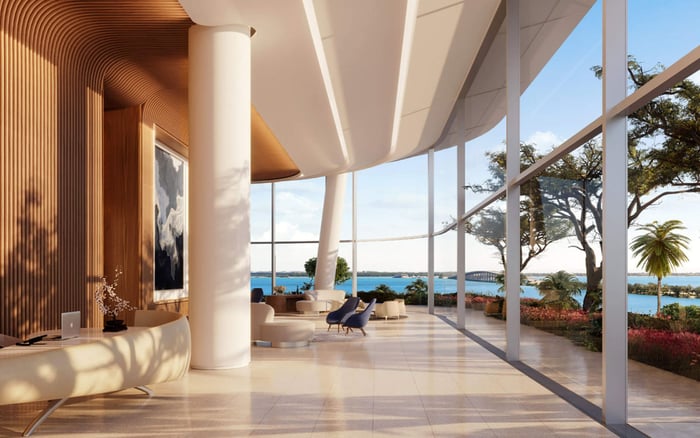
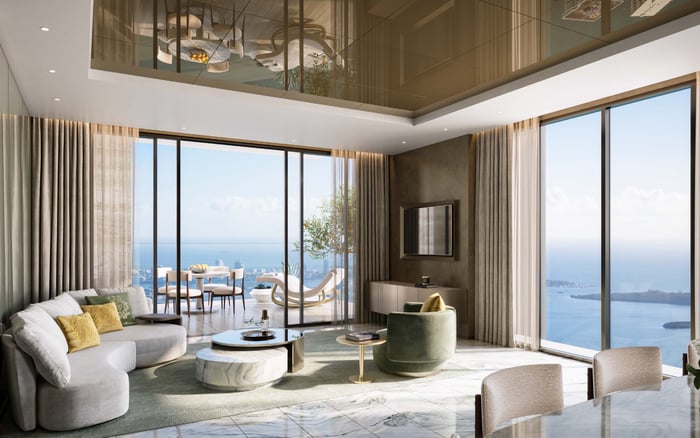
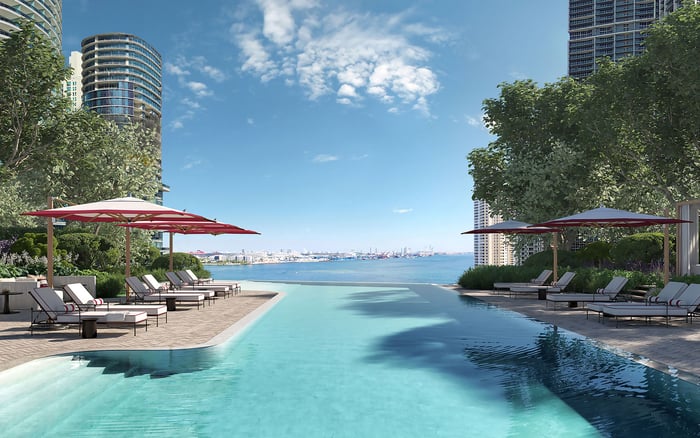
In South Florida’s luxury market, spectacular views can be surprisingly temporary while privacy can quietly become the scarcer asset. This guide shows buyers how to evaluate orientation, tower spacing, terrace exposure, floor height, and future build-out so a residence still feels exceptional after the next wave of development arrives.
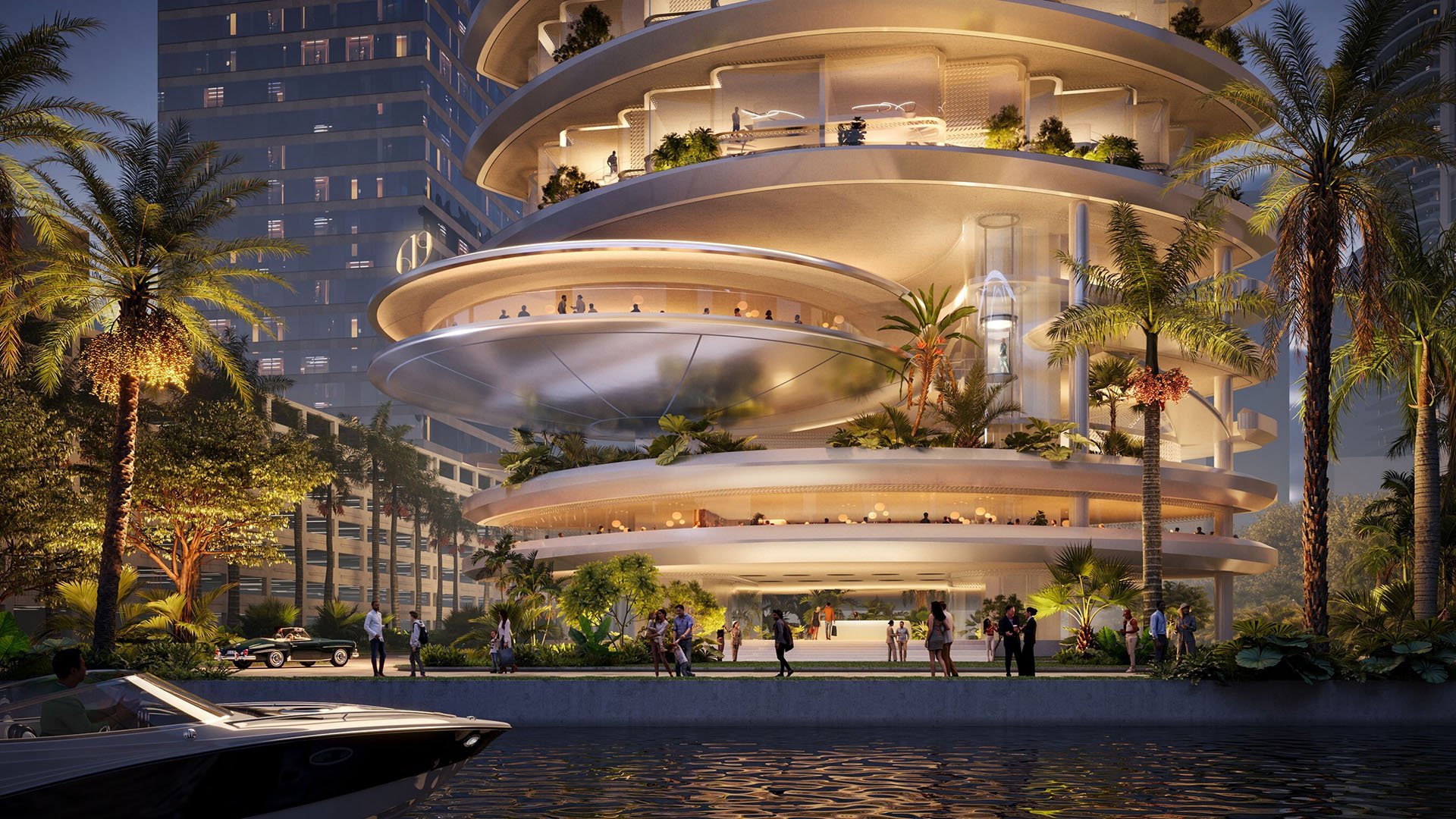
In South Florida, buyers have long paid a premium for visual theater. Ocean horizons, Biscayne Bay sunsets, yacht traffic, city lights, and the slow choreography of weather deliver the kind of daily spectacle that makes a residence feel singular. Yet as more towers enter the skyline, the more important question is no longer simply which unit has the best view. It is which residence will still feel elevated, protected, and private when the neighboring parcel is no longer empty.
That distinction matters. View drama is immediate and emotional. True privacy is cumulative and architectural. One can be captured in seconds; the other becomes clear only after studying sightlines, terrace depth, window orientation, and the future shape of the block. In practical terms, the most sophisticated buyers now judge a home not only by what it sees, but by who may eventually see back.
This is especially relevant in neighborhoods where vertical growth is redefining the experience of ownership. In Brickell and Edgewater, a dazzling skyline-facing exposure can become more intimate than expected once adjacent towers mature. By contrast, certain waterfront, corner, and flow-through layouts can age more gracefully because they borrow distance from water, parks, or low-scale surroundings. That is part of the appeal behind residences such as Una Residences Brickell and Aria Reserve Miami, where orientation and water frontage shape how views and privacy are experienced together.
A render or listing photo usually captures the most flattering angle. Buyers should do the opposite. Stand at the primary living room glazing, then in the dining area, then in the main bedroom, and finally at the terrace edge. The question is not merely what you can see straight ahead. It is what sits at 30 degrees, 45 degrees, and across the diagonal.
Why does that matter? Because direct water frontage can still leave a unit exposed laterally to neighboring balconies, amenity decks, rooftop lounges, or glassy office and hotel structures. A home with a dramatic frontal panorama may still feel uncomfortably mutual if the side sightlines are active. Conversely, a residence with slightly less frontal sweep can feel more luxurious if its side angles are clear and its glazing does not look directly into another stack of homes.
In South Florida, this is where corner residences often outperform simple center-stack layouts. Corners can pull in more view planes, but only when the second exposure opens toward meaningful distance rather than another tower face. That is also why boutique formats in lower-density settings can feel unusually serene. In places like Bay Harbor Islands or Coconut Grove, projects such as Onda Bay Harbor and Vita at Grove Isle appeal to buyers who want water adjacency without the sensation of being staged inside a canyon of glass.
Many buyers default to a simple assumption: higher means safer. Sometimes it does. A higher floor can lift you above street noise, nearby rooftops, and certain direct sightlines. But height alone does not solve privacy if the neighboring tower is similarly tall, closely spaced, or offset in a way that creates a clear visual corridor into your interiors.
The stronger test is to compare height with separation. Ask whether your living room glazing faces open water, a protected setback, a wide boulevard, or simply another parcel that may rise later. A 28th-floor apartment with a meaningful gap to the next building can feel more private than a 48th-floor apartment pressed into a dense cluster.
Terraces complicate this further. Deep terraces can shield interiors and create a transitional layer between inside and outside. Shallow terraces, or fully exposed glass rails without screening elements, can heighten the sensation of being on display. If you plan to entertain often, privacy on the terrace may be just as valuable as privacy in the great room.
This is where oceanfront design often reveals its hierarchy. Buildings such as The Perigon Miami Beach and 57 Ocean Miami Beach illustrate a principle sophisticated buyers understand well: an outward-facing relationship to water can create emotional openness, but the finest homes still manage side protection, curated landscaping, and meaningful separation from neighboring activity.
One of the costliest mistakes in luxury purchasing is confusing today’s openness with tomorrow’s protection. An empty lot, a low commercial strip, or a surface parking field may currently preserve a cinematic view. That does not make it durable.
What tends to hold up better are edges that are naturally or structurally resistant to interruption. Open water is the obvious example. Parks, protected historic districts, established single-family enclaves, broad marina basins, and institutional land with limited vertical potential can also preserve breathing room more effectively than undeveloped parcels.
This is why privacy-minded buyers tend to favor locations where geography does some of the work. On the beach, the ocean side offers a form of visual permanence that inland-facing exposures cannot match. On islands and waterfront peninsulas, the width of the water body becomes part of the residence’s privacy strategy. In quieter enclaves such as Bal Harbour, Surfside, Grove Isle, and select stretches of Fort Lauderdale waterfront, the most enduring value often comes from what cannot easily be built across from you.
A unit can feel private at noon and exposed at night. Daylight washes reflections across glass and can obscure interiors from a distance. Once lights come on after sunset, the relationship changes. Your residence becomes legible to surrounding towers, boats, bridges, and rooftop venues.
Serious buyers should always revisit at night, or at minimum simulate the experience mentally. Where are the neighboring terraces? Are there amenity decks aligned with your principal rooms? Does the powder room window, dressing area, or primary bath become more visible after dark? In highly glazed contemporary towers, nighttime visibility is not a minor issue. It changes how often owners use shades, how freely they entertain, and whether a terrace still feels intimate for dinner.
Certain layouts are naturally better behaved. Flow-through homes often provide relief because they avoid concentrating all major rooms on one exposed façade. Split-bedroom plans can reduce direct view corridors into the primary suite. Private elevator foyers, vestibules, and dedicated service entries strengthen the sense of discretion before you even enter the residence.
The most refined homes also separate public glamour from private retreat. Entertaining rooms can face the dramatic outlook, while bedrooms and baths turn toward calmer exposures. That is often a more intelligent luxury formula than placing every room on the most visually exciting frontage.
For buyers comparing similar price points, the better question is not which unit is more photogenic on day one. It is which one will require fewer compromises in daily life. If shades must stay down most afternoons, if the terrace feels mutual with a neighbor, or if the primary suite has direct lateral exposure, the view premium may not be the value it first appears to be.
When comparing residences, assign separate scores for view drama and privacy rather than combining them too early. Rate each from one to ten.
For view drama, consider horizon width, water presence, skyline composition, sunset or sunrise orientation, and the quality of the approach from key rooms.
For privacy, evaluate lateral separation, direct facing units, terrace shielding, nighttime exposure, elevator arrival sequence, and the likelihood of future build-out nearby.
Then weight privacy slightly higher if this is a primary residence, and weight view drama slightly higher if the apartment is used occasionally and mostly for entertaining. The point is not to eliminate emotion. It is to keep emotion from overpowering durability.
In a market where neighboring towers keep multiplying, the most valuable homes are rarely the ones with the loudest immediate reveal alone. They are the homes where beauty remains intact after the context changes. The finest purchase is the residence that still feels expansive when the skyline fills in, still feels calm after dark, and still protects the rituals of private life while delivering South Florida’s signature spectacle.
Is a higher floor always more private? No. Height helps, but tower spacing, side angles, and facing terraces often matter more.
What is more valuable long term, privacy or view? In dense neighborhoods, enduring privacy often proves scarcer, especially when new buildings keep arriving.
Are corner units always better? Only if the second exposure opens to real distance rather than another façade or amenity deck.
Why should I visit a residence at night? Night reveals interior visibility and sightlines that daylight can hide with reflection.
Do terraces improve privacy? They can, especially when they are deep and partially sheltered rather than fully exposed.
How do I evaluate a supposedly protected view? Focus on permanent edges like ocean, bay, parks, or low-scale surroundings instead of temporary emptiness.
Is oceanfront always the safest choice? The seaward view is durable, but side privacy and neighboring structures still require scrutiny.
What layouts tend to age best? Flow-through and well-zoned plans usually preserve both outlook and discretion more effectively.
Should primary residences be judged differently from second homes? Yes. Full-time living typically places a higher premium on privacy, quiet, and daily comfort.
What is the smartest final test before buying? Stand in each main room and terrace, then study every diagonal sightline, not just the headline view.
For a discreet conversation and a curated building-by-building shortlist, connect with MILLION.
If branded residences are on your mind — as a home or as an allocation — we would be glad to share what we are seeing, privately.
Begin a quiet conversation