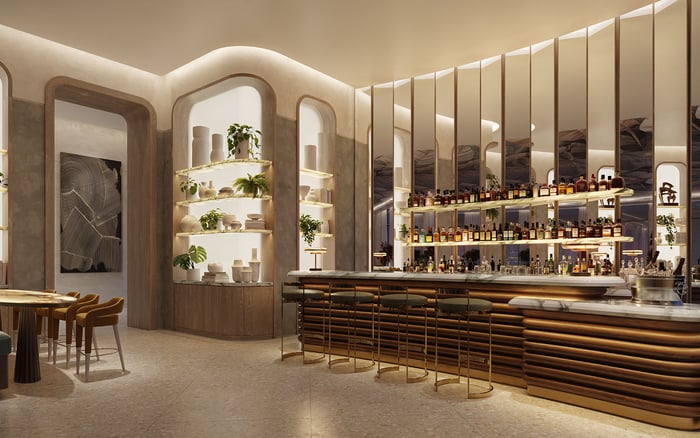
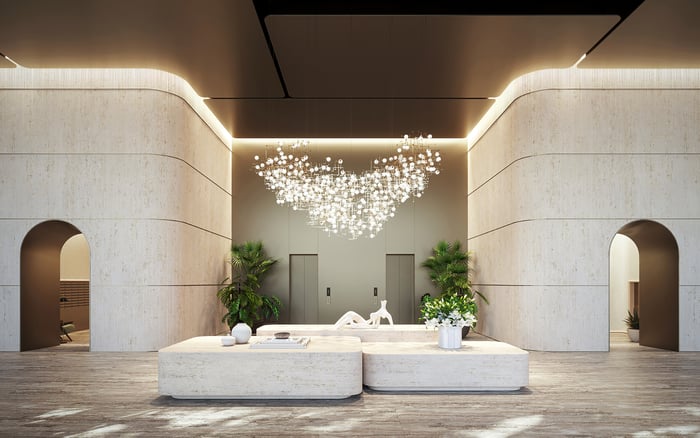
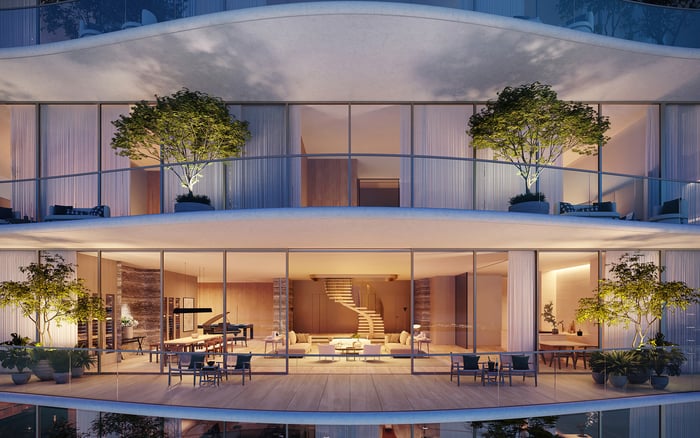
A discreet buyer’s lens on how Faena House Miami Beach and The Residences at 1428 Brickell convert lobby volume, porte-cochère privacy, and valet choreography into daily luxury.
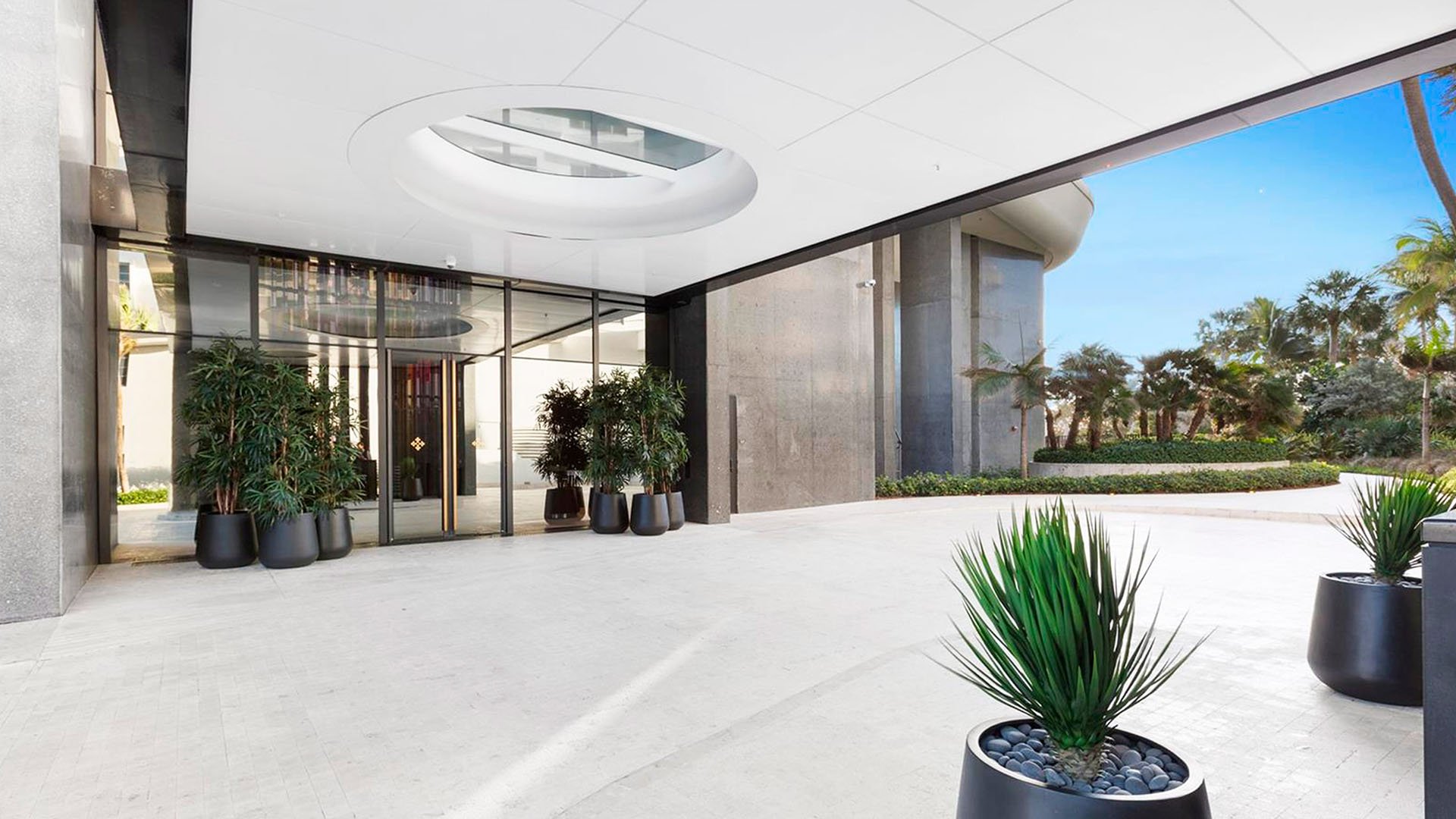
For ultra-prime buyers, the first room of a residence is not always inside the apartment. It begins at the curb: a car slows, a door opens, a valet steps forward, and the building either absorbs the resident into privacy or leaves them exposed to the street. The moment is brief, but in South Florida luxury real estate, it carries disproportionate weight.
Faena House Miami Beach and The Residences at 1428 Brickell make a useful comparison because they occupy two distinct forms of visibility. One sits on the resort and oceanfront side of Miami Beach, where hospitality, beach, cultural, and visitor activity create a vivid public setting. The other belongs to Brickell, where weekday traffic, rideshare movement, and business-district congestion create a different kind of pressure.
The question is not which address has the more glamorous brand language. The sharper question is how each building’s lobby, porte-cochère, and valet system convert that promise into daily residential experience.
Faena House Miami Beach should be read as an arrival case study in a highly visible Miami Beach environment. The lifestyle appeal is clear: proximity to the ocean, resort energy, and the polished atmosphere associated with one of the city’s most recognizable districts. Yet that same visibility makes arrival due diligence more important, not less.
A buyer should look closely at whether the residential sequence feels meaningfully separate from the broader district’s hospitality rhythm. Does the lobby register as a private residential threshold, or does it feel like an extension of the surrounding destination energy? Does the drop-off experience remain calm when beach traffic, hotel guests, and cultural activity intensify nearby?
Lobby volume matters here because scale can either soothe or theatricalize. A grand space is not automatically private. In a resort-adjacent context, the most valuable lobby is not merely photogenic. It is controlled, legible, and emotionally quiet. The ideal arrival allows residents to feel they have crossed from public Miami Beach into a protected residential world.
Weather protection is equally essential. South Florida’s luxury arrival is tested by heat, rain, humidity, and sudden storms. The porte-cochère should be evaluated not only for appearance, but for the comfort of stepping out of a vehicle, greeting guests, receiving packages, and moving luggage without feeling exposed.
The Residences at 1428 Brickell should be assessed through a different lens. Brickell is not a resort district. It is a dense urban core, shaped by office traffic, restaurant arrivals, private drivers, rideshare pickups, and peak-hour movement along Brickell Avenue. In this setting, the entrance sequence must do more than look refined. It must buffer residents from street intensity.
For The Residences at 1428 Brickell, the due-diligence issue is choreography. How does the car approach? Where does waiting occur? Does the protected drop-off feel intuitive, or does the sequence depend on ideal traffic conditions? A buyer should not judge the experience only during a quiet mid-morning visit. The more revealing showing is during a high-friction window, when Brickell is active and the building’s operating logic is under pressure.
The best urban-core arrival systems make complexity disappear. Residents should not have to mentally manage traffic, valet confusion, exposed waiting, or awkward rideshare overlap. The building should feel like a sanctuary, with controlled access and efficient valet movement creating a clean transition from the city into the residence.
In both buildings, the porte-cochère is the crucial hinge between public exposure and private life. It is where residents are seen, greeted, protected, and moved. It is also where guests form some of their strongest first impressions.
A luxury buyer should ask practical questions. Is the porte-cochère fully covered? How many vehicles can stack before the sequence feels pressured? Where do rideshares wait? Are residents separated from guests, delivery traffic, or service vehicles? Is there enough spatial clarity for a first-time visitor to know exactly where to go without creating congestion?
These questions are not operational trivia. They are part of the value proposition. A residence may have exceptional interiors, but if the arrival feels crowded, exposed, or inconsistent, the daily experience is diminished. At the highest end, luxury is not only marble, glass, and view. It is friction removed before the resident has to notice it.
Valet should be understood as an operating system, not a courtesy. In a market where buyers compare buildings across Miami Beach, Brickell, Fisher Island, Surfside, Sunny Isles, and West Palm Beach, a property’s ability to manage arrivals discreetly becomes a form of invisible infrastructure.
At Faena House Miami Beach, the valet question is whether the system preserves residential calm despite the area’s resort-side activity. At The Residences at 1428 Brickell, the question is whether the choreography can handle dense urban circulation without making residents feel as if they are participating in the congestion outside.
For investment and resale purposes, this is especially important. Future buyers, guests, brokers, and appraisers all encounter the arrival sequence before they encounter the residence itself. A strong lobby and drop-off experience can support the perception of quality. A weak one can undermine it, even when the private home is exceptional.
A polished sales presentation can clarify design intent, but it cannot fully reveal operational reality. Buyers should observe the arrival at different times and under different conditions. For Faena House Miami Beach, that means noticing how the entrance feels when nearby hospitality and beach activity are active. For The Residences at 1428 Brickell, it means testing the approach during peak Brickell traffic rather than relying only on quiet-hour impressions.
Bring a guest or advisor and move through the sequence naturally. Arrive by car. Try a rideshare. Watch how valets communicate. Notice whether there is confusion at the curb. Stand in the lobby and ask whether it feels serene or performative. The goal is not to find perfection. It is to understand whether the building’s public-to-private transition matches the way you actually live.
Why does lobby volume matter in a luxury condominium? Lobby volume shapes the first emotional impression of privacy, calm, and quality. It should feel generous without becoming overly public or theatrical.
Is Faena House Miami Beach best judged as a resort-style arrival? Yes, it should be evaluated in the context of Miami Beach’s resort and oceanfront energy. The key is whether the residential arrival remains private within that visibility.
How should buyers evaluate The Residences at 1428 Brickell? Buyers should focus on the building as an urban sanctuary. The entrance sequence must buffer residents from Brickell traffic, rideshare activity, and street intensity.
What is the most important porte-cochère question? Ask whether the covered drop-off creates a smooth, protected, and private transition from the public street to the residential interior.
Why is valet choreography more than an amenity? Valet affects daily timing, discretion, guest experience, and the perception of service. Poor choreography can make even a beautiful building feel less refined.
When should a buyer test the arrival sequence? Visit during busier windows, not only during quiet showings. Peak conditions reveal how the building performs when the street environment is most demanding.
Do Miami Beach and Brickell require different due diligence? Yes. Miami Beach tests separation from resort and visitor energy, while Brickell tests buffering from business-district density and traffic.
Can a beautiful lobby still fail a privacy test? Yes. A lobby can be visually impressive but feel too exposed, too public, or too connected to outside activity for a privacy-sensitive buyer.
Why does resale value connect to arrival design? Resale impressions begin at the curb. Future buyers and brokers often form an initial judgment before they ever reach the private residence.
What should an investment-minded buyer prioritize? Prioritize operational consistency, protected drop-off, controlled access, and a lobby experience that feels durable beyond branding or presentation.
For a discreet conversation and a curated building-by-building shortlist, connect with MILLION.
If branded residences are on your mind — as a home or as an allocation — we would be glad to share what we are seeing, privately.
Begin a quiet conversation