A buyer-focused guide to evaluating neighboring tower exposure before closing on a luxury South Florida residence, with emphasis on privacy, light, view corridors, resale confidence, and due diligence.
In South Florida luxury real estate, buyers are conditioned to study finishes, ceiling heights, amenities, parking, service culture, and the waterline beyond the glass. Yet one of the most consequential variables is often treated as secondary until it is too late: neighbor-tower exposure.
Exposure is not simply whether another building is visible. It is the relationship between a residence and the built environment around it. It involves sightlines, privacy, reflected light, construction possibility, balcony usability, and the emotional quality of waking up in a home that may feel open, framed, or watched. In vertical markets from Brickell and Edgewater to Miami Beach and Sunny Isles, that relationship can influence both daily enjoyment and long-term marketability.
The hidden cost is rarely a single line item. It tends to appear as hesitation from future buyers, reduced confidence in a premium-view claim, a narrower resale audience, or the quiet realization that a room photographed beautifully at noon feels exposed at dusk.
A view is visual. Exposure is experiential. A residence can retain water glimpses and still suffer from uncomfortable proximity to another tower. It can enjoy skyline drama while losing the sense of sanctuary that defines the upper end of the market.
Buyers often focus on what is visible from the living room during a scheduled showing. A more disciplined review asks what is visible into the residence from neighboring homes, amenity decks, corridors, and future balcony lines. The question is not only, “What do I see?” It is also, “Who sees me, and from where?”
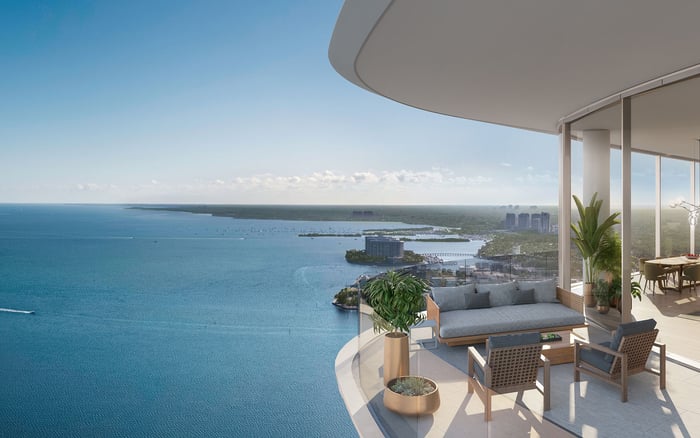
This is especially important in residences with large expanses of glass. The same architecture that creates cinematic interiors can also intensify exposure if another tower sits close to the primary living spaces, bedroom walls, or terrace. Marketing language such as high-floor or water-view can be meaningful, but it does not automatically resolve the privacy geometry of the site.
Before closing, buyers still have leverage, time, and the ability to refine assumptions. After closing, exposure becomes part of ownership. That is why the evaluation should happen before final commitment, not during the first month of residence.
The risk is not always that a home becomes undesirable. In many cases, the residence remains beautiful. The issue is whether the buyer paid for a level of openness, privacy, or view permanence that the home does not truly deliver. Luxury buyers are not simply purchasing square footage. They are purchasing atmosphere, discretion, outlook, and confidence.
A neighbor-tower condition can also complicate future pricing conversations. If two similar residences compete in the same building, the one with cleaner setbacks, stronger privacy, or more protected sightlines may feel easier to position. The other may require more explanation, more staging discipline, or a more patient buyer.
The most useful exposure review is practical and visual. Stand in the primary bedroom, bathroom, kitchen, living room, and terrace. Look not only outward, but diagonally. Towers rarely affect a residence only straight ahead. The most revealing angles often come from corners, side glazing, and balcony edges.
Visit at different times when possible. Morning light, afternoon glare, and evening illumination can change the perceived relationship between buildings. At night, an opposite tower may become more present because interior lights reveal patterns of occupancy. A residence that feels private in daylight may feel more transparent after sunset.
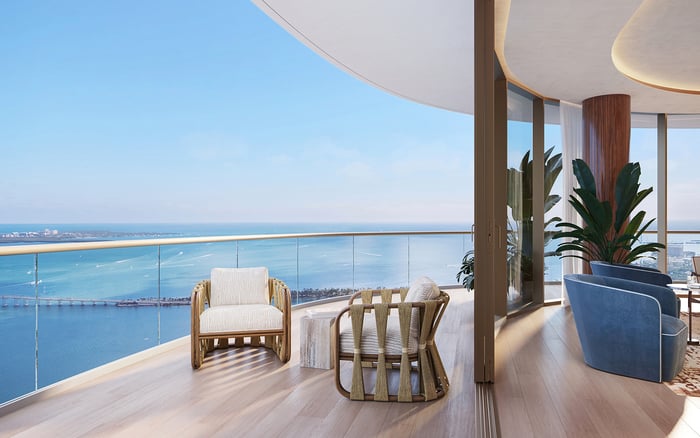
Study the terrace as a living room, not merely as an architectural feature. If outdoor space is central to the purchase, consider whether the terrace feels restful when seated, dining, or entertaining. A balcony with a dramatic view can still be underused if it feels too exposed to neighboring units.
Ask how window treatments will function. Some buyers assume shades solve every privacy concern. They can help, but they also change the experience of the home. If privacy requires shades to remain down for long stretches, the effective value of glass, light, and view may be less than expected.
Existing towers can be evaluated directly. Future towers require more caution. A buyer should understand nearby parcels, neighboring low-rise sites, and the broader development context around the building. The point is not to predict the future with certainty. It is to avoid treating an open view as permanent without a reasoned basis.
In pre-construction and new-delivery settings, renderings and sales galleries may focus on the most flattering outward perspective. That is natural. The buyer’s responsibility is to translate that presentation into lived geometry. Where is the residence in the stack? What direction does the main glass face? What sits nearby today? What could reasonably change around it?
The best outcomes come when a buyer knows exactly what kind of exposure is acceptable. Some clients welcome an urban view with architectural energy. Others want privacy that feels nearly resort-like. Neither preference is right or wrong, but the distinction should be made before a deposit becomes a closing.
Resale value in the luxury tier depends on more than comparable floor plans. It depends on how quickly a buyer emotionally understands the asset. Clean exposure is easy to absorb. It reads immediately in person and in photography. Complicated exposure may still sell well, but it often requires more explanation.
A future buyer may ask why a premium residence feels less private than expected, why the best view is from only one side of the terrace, or why the bedroom requires more screening. Each question adds friction. In luxury sales, friction matters because buyers are choosing among extraordinary alternatives.
This is the quiet financial consequence of ignoring exposure. It can reduce the pool of buyers who feel instant conviction. It can shift a residence from “rare and effortless” to “beautiful, but with a caveat.” At the highest levels, caveats are expensive.
Before closing, evaluate exposure from every major room, not just the view-facing salon. Confirm how the home feels standing, seated, and at night. Consider both privacy inward and outlook outward. Review whether the terrace supports the lifestyle you are paying for.
Separate view quality from view durability. A water glimpse, skyline corridor, or open side angle should be understood in context. If future development is part of the surrounding environment, treat uncertainty as a pricing and lifestyle factor, not an afterthought.
Finally, decide whether the exposure aligns with the intended use. A second home used for brief seasonal stays may tolerate a different condition than a primary residence designed around daily quiet. An investor may think differently again, focusing on buyer objections at resale. The right answer depends on the client, but the review should be deliberate.
The most refined buyers are not seeking perfection in every direction. They are seeking control. They want to know what they are buying, what trade-offs are embedded in the residence, and how those trade-offs compare with the price and alternatives.
Neighbor-tower exposure is rarely dramatic on paper. It is felt in the body, in the pause before opening the shades, in the way guests gather on the terrace, and in the confidence with which a future buyer says yes. Ignoring it before closing can turn an elegant acquisition into a compromised one. Studying it carefully can protect both pleasure and value.
What is neighbor-tower exposure? It is the way a residence relates to nearby towers, including privacy, sightlines, light, and the feeling of openness from key rooms and terraces.
Is exposure only a concern for lower floors? No. Higher residences can still face nearby towers, amenity decks, or diagonal sightlines that affect privacy and view quality.
Can window treatments solve the issue? They can improve privacy, but they may also reduce natural light and the open-glass experience that luxury buyers often value.
Should I visit the residence at night? Yes. Evening conditions can reveal how visible neighboring interiors are and how exposed your own residence may feel after dark.
Does a water view eliminate exposure risk? Not necessarily. A residence can have water-view appeal while still feeling compromised by a nearby tower or angled sightline.
Is this more important in dense neighborhoods? It is especially relevant in vertical districts where towers, setbacks, and future development can shape the living experience.
How does exposure affect resale? It can influence buyer confidence, photography, perceived privacy, and the number of prospects who respond emotionally to the home.
Should investors care about exposure? Yes. Even if the purchase is not personal, future buyers or tenants may react strongly to privacy and view limitations.
Can a beautiful unit still have poor exposure? Yes. Finishes, layout, and amenities may be excellent while the surrounding tower geometry creates a meaningful caveat.
What is the best way to shortlist comparable options for touring? Start with location fit, delivery status, and daily lifestyle priorities, then compare stacks and elevations to validate views and privacy.
To compare the best-fit options with clarity, connect with MILLION.
If branded residences are on your mind — as a home or as an allocation — we would be glad to share what we are seeing, privately.
Begin a quiet conversation