East-facing residences promise luminous sunrise views, but in South Florida that glamour can conflict with all-day comfort. In a cooling-dominated, humid climate, morning solar gain through expansive glazing can bring earlier interior warming, more glare, greater dependence on shades, added stress on air-conditioning, and gradual wear on interiors. For buyers at the top of the market, the more sophisticated question is not whether east-facing exposure is beautiful, but whether the residence has the glass performance, shading strategy, and mechanical capacity to make that beauty livable from breakfast through evening.
In South Florida, east-facing exposure is often presented as an emotional luxury: wake to first light, watch the ocean brighten, and let the residence feel ceremonially connected to the day. The appeal is real. Yet for buyers who expect a home to perform beautifully beyond the first hour of morning, east-facing glamour is not automatically the most livable choice.
The reason is straightforward. East-facing windows receive direct morning sun, and in a warm, humid climate that early solar gain is not a minor atmospheric detail. It can warm interiors earlier, intensify glare across living rooms and bedrooms, and push cooling systems into action sooner than many owners expect. In South Florida, where air-conditioning is typically the dominant household energy load, orientation is not just aesthetic. It is operational.
For the luxury buyer, that means the premium question should be less about sunrise romance and more about whether the residence can sustain comfort across an entire day.
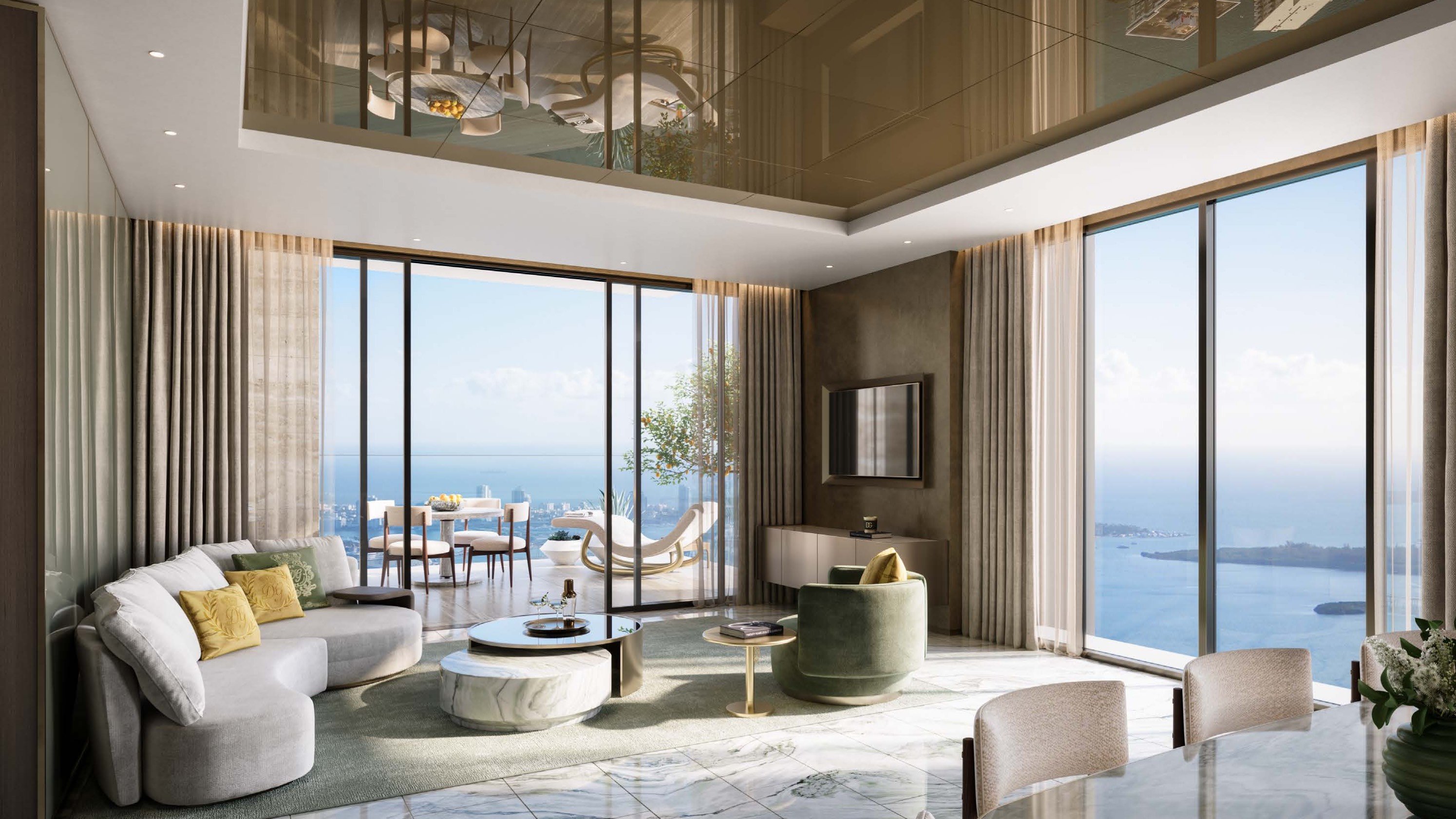
In cooler climates, early sunlight can feel like an advantage. In South Florida, that same light arrives in an environment that is already humid for much of the year. Once solar heat enters through glazing, the interior can feel warmer and heavier than the thermometer alone suggests. That matters in residences with expansive floor-to-ceiling glass, where orientation exerts a stronger effect because more glazing typically means greater potential for solar gain.
This is especially relevant in urban coastal neighborhoods where towers are dense and surfaces retain heat. In Miami, Miami Beach, and Brickell, a residence can begin the day with direct low-angle sun and then continue contending with rising ambient temperatures as the city warms around it. The result is a home that may feel bright and cinematic at breakfast, but more difficult to temper by late morning and early afternoon.
This is why sophisticated buyers increasingly evaluate orientation as one variable in a broader comfort equation, not as a simple status feature.
Heat is only part of the story. Low-angle morning sun can create persistent glare that compromises daily usability. Screens become harder to read, breakfast tables can feel overlit rather than inviting, and artful living rooms may require shades to come down at precisely the hour when the view is meant to be most enchanting.
That contradiction is common in highly glazed residences. The owner pays for dramatic light, then manages that light by filtering it away for comfort. In that sense, an east-facing residence can deliver spectacle without always delivering ease.
Consider glass-forward product in neighborhoods where light is central to the design language, from The Residences at 1428 Brickell to Aria Reserve Miami. In homes of this caliber, orientation should be considered together with glazing specification, shading strategy, and the way the floor plan uses or protects sun-exposed rooms.
Luxury buyers also look beyond temperature. Repeated exposure to UV and visible light can gradually fade textiles, affect certain finishes, and diminish displayed objects placed near sunlit glass. Morning sun may feel gentler than late-afternoon glare, but light exposure is cumulative. A beautiful room can age faster when direct sunlight returns day after day without sufficient mitigation.
This is one reason the most polished interiors in South Florida often rely on a layered envelope strategy: high-performance glazing, carefully chosen window treatments, and furniture placement that respects the path of the sun. An east-facing view can still be highly desirable, but only when the residence protects what it illuminates.
That consideration is especially relevant in design-driven oceanfront homes where interiors are curated as carefully as the architecture itself, such as 57 Ocean Miami Beach and The Perigon Miami Beach. In residences like these, daily comfort and long-term preservation should be part of the same conversation.
All-day livability is more nuanced than a single exposure. Buyers who truly use their residences from morning through evening often benefit from more neutral orientations or mixed exposures that distribute daylight more evenly. These layouts can reduce the sharp morning spike in heat and glare while maintaining brightness throughout the day.
That does not mean east-facing is undesirable. It means it is situational. A buyer who rises early, values a breakfast terrace, and is comfortable using automated shades may love it. A buyer who works from home, keeps a richly furnished interior, or expects consistent comfort across long daytime hours may find mixed or moderated exposure easier to live with.
In lower-scale waterfront or boutique settings, the same logic applies. A residence at Alba West Palm Beach or Onda Bay Harbor may present water-facing allure, but the daily experience will still depend on how intelligently sunlight is managed once it reaches the glass.
Because South Florida is fundamentally cooling-driven, design strategies tend to favor limiting solar gain rather than capturing it. That makes mitigation essential in highly exposed residences. Low-emissivity coatings, solar-control films, exterior shading, overhangs, and quality interior treatments can all reduce heat gain and glare. Strong HVAC capacity also matters, especially in large-volume homes with broad glass spans.
But mitigation is not free. In some residences, the buyer is effectively paying twice: once for the premium orientation and again for the systems and upgrades required to make it comfortable. Retrofit costs for higher-performing window systems or substantial shading improvements can be meaningful. Even in new construction, the right question is whether those solutions are already integrated at a high level rather than left for the owner to solve later.
This is where due diligence becomes more valuable than romance. Ask how the building envelope performs. Ask whether the residence relies on blinds for basic morning comfort. Ask whether the layout places primary bedrooms, breakfast areas, or workspaces directly in the path of early sun. The best home is not the one with the most theatrical light. It is the one that remains elegant to inhabit at 10 a.m., 2 p.m., and 7 p.m.
For South Florida’s luxury audience, orientation should be treated as a balancing act among daylight, thermal comfort, visual comfort, preservation, and operating cost. East-facing exposure can still be wonderful. It is simply not a universal good.
That distinction matters in a market where the visual vocabulary of luxury often privileges glass, openness, and horizon views. A residence can be stunning and still ask too much of its mechanical systems and window treatments. It can photograph beautifully at sunrise and feel less resolved by the middle of the day.
The more informed perspective is that glamour and livability are not always aligned. In South Florida, the best residence is often the one that edits light rather than merely inviting more of it.
Is east-facing exposure bad in South Florida? No. It can be beautiful, but it is not always the best choice for all-day comfort without strong glass and shading performance.
Why does morning sun matter so much here? In a warm, humid climate, early solar gain can make rooms feel hotter sooner and increase daytime cooling demand.
Does east-facing light create glare? Often yes. Low-angle morning sun can reduce visual comfort and lead owners to close shades during prime view hours.
Can large glass walls make the issue worse? Yes. More glazing usually means more potential solar gain unless the residence uses high-performance glass and shading.
Are east-facing units more expensive to live in? They can be, especially if additional cooling, shading, or window upgrades are needed to reach daily comfort.
Can sunlight affect interiors over time? Yes. Repeated light exposure can contribute to fading and wear on fabrics, finishes, and displayed objects.
Is an ocean sunrise still worth it? For many buyers, absolutely. The key is making sure the residence can support that view without sacrificing daily usability.
What orientation is often easier to live with all day? More neutral or mixed exposures can distribute daylight more evenly and reduce the concentrated morning heat-and-glare spike.
What should buyers ask on a tour? Ask about glazing, shading, HVAC capacity, and whether blinds are routinely needed for comfort in the morning.
What is the smartest takeaway for luxury buyers? Treat east-facing exposure as a design condition to evaluate, not as an automatic premium. View quality matters, but performance matters more.
For a discreet conversation and a curated building-by-building shortlist, connect with MILLION.
If branded residences are on your mind — as a home or as an allocation — we would be glad to share what we are seeing, privately.
Begin a quiet conversation