A seamless arrival is not just a fast car handoff. In South Florida luxury residences, the strongest valet programs are evaluated across staffing, circulation, technology, concierge coordination, security, and the quality of resident recognition during peak demand.
In South Florida’s upper tier, valet is no longer a peripheral convenience. It sits alongside concierge, wellness, privacy, and security as part of the service architecture shaping daily life. That matters because a building can promise seamless arrival while still delivering a fragmented experience once a resident reaches the porte cochère.
The right comparison starts with a simple shift in perspective: do not measure valet as a standalone parking function. Measure the full sequence. How does a car approach the arrival court? Is there enough room for queuing without awkward stacking into the street? Does the handoff feel calm and controlled? Is the concierge already aware of the resident’s arrival? Does the transition to elevator access feel fluid, or does the experience break into disconnected steps?
For buyers considering service-led product in Brickell, Miami Beach, Sunny Isles, or West-palm-beach, the distinction is consequential. In a competitive luxury market, amenity quality influences not only day-to-day ease but also perceived prestige and resale appeal.
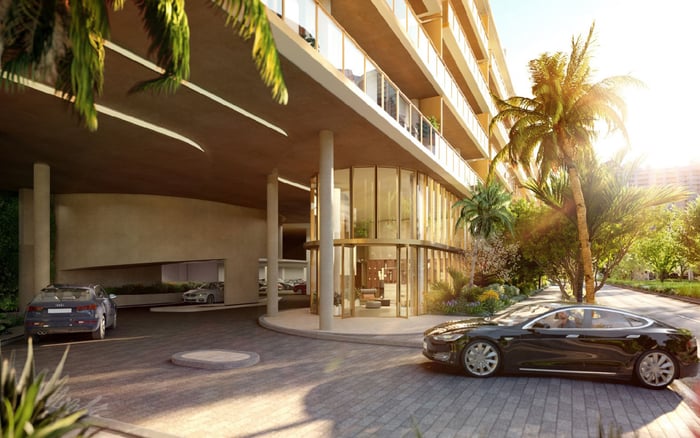
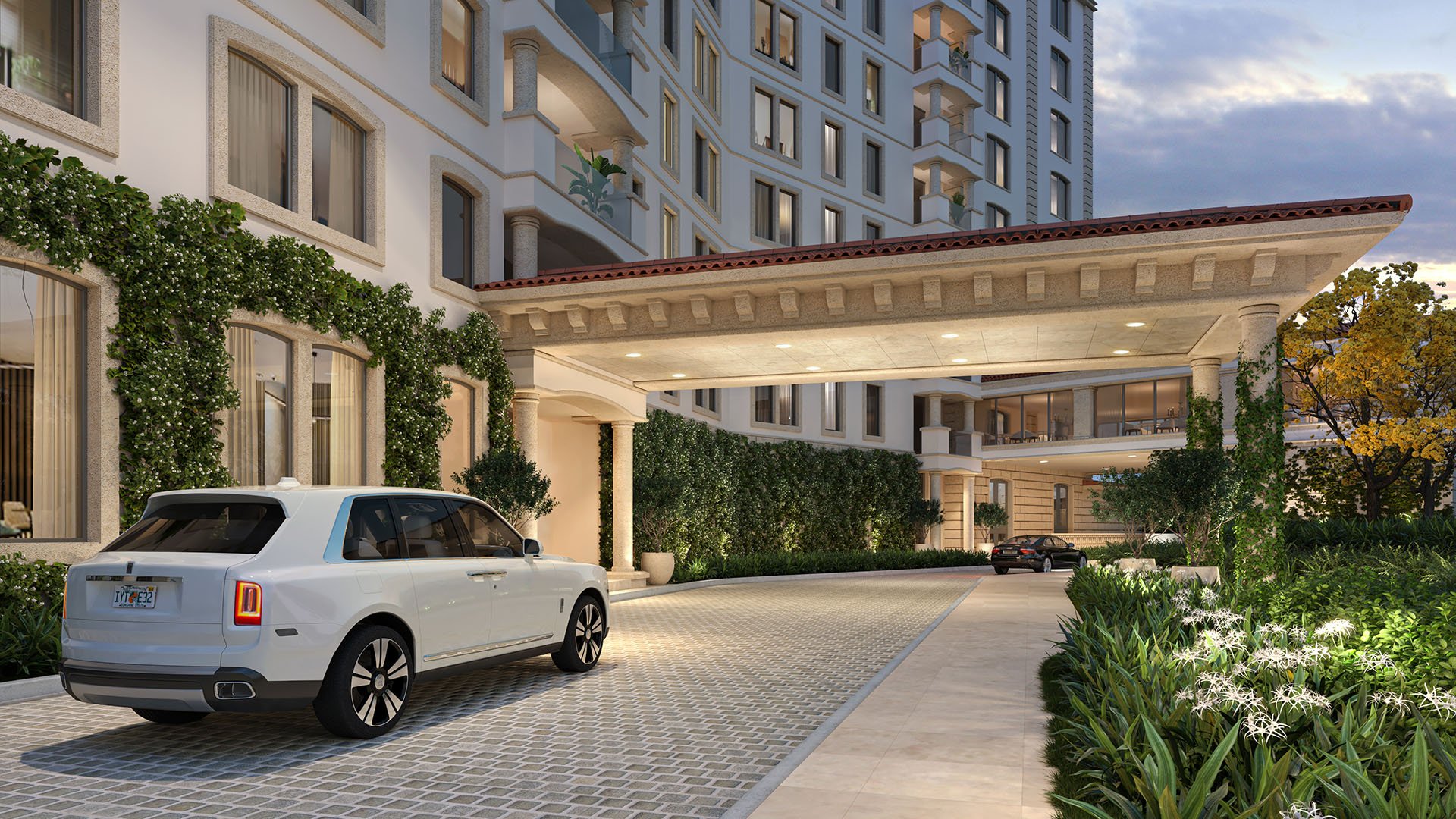
Before asking about apps or staffing, study the arrival court itself. Geometry and circulation often determine whether a building can truly deliver a polished arrival. A handsome porte cochère with a limited turning radius, shallow queuing space, or poor traffic flow may struggle at the exact moments when service matters most.
On a site visit, watch where vehicles pause, how many can be handled at once, and whether guest arrivals interfere with resident traffic. A compact boutique building can operate elegantly if circulation is well resolved. A larger tower can still feel strained if the driveway and parking inventory are too tight for peak demand.
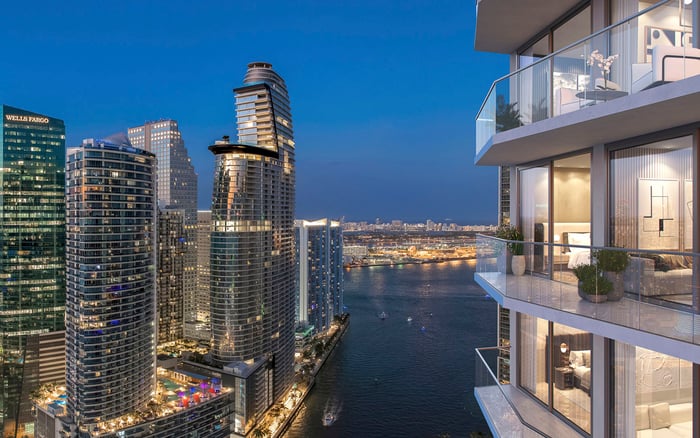
This is especially relevant in design-forward developments where first impressions are carefully curated. At The Residences at 1428 Brickell, St. Regis® Residences Brickell, or The Perigon Miami Beach, buyers naturally focus on architecture and interiors. Yet the real test is whether the arrival sequence supports the same level of refinement when multiple residents, guests, and service vehicles converge.
Many tours occur in the quiet middle of the day, when almost any valet program can appear efficient. That is not when you should form a conclusion. The better test is under real pressure: weekday mornings, early evening returns, holiday weekends, or any period when guest traffic rises.
Peak observation reveals operational truth. You can see whether attendants are adequately positioned, whether backups are anticipated, and whether residents end up waiting in a line the marketing language never mentioned. You can also observe a subtler luxury marker: whether the team remains composed under stress. In premium residential service, calmness is part of competence.
Ask directly how the building handles demand spikes. Is there an overflow plan? Are guest vehicles separated from resident arrivals? What happens when an event in the neighborhood disrupts normal traffic patterns? Buildings that cannot explain their backup procedures may not be as seamless as they sound.
Valet performance may look architectural from the outside, but in practice it is labor-intensive hospitality. A beautiful driveway cannot compensate for inconsistent staffing, weak training, or high turnover among frontline personnel.
Buyers should ask practical questions that management teams sometimes prefer to keep abstract. Is valet provided by in-house staff or a third-party operator? Who supervises service standards? How are new attendants trained on resident preferences, security procedures, and concierge communication? What changes during peak windows?
Consistency matters more than theatrics. In well-run buildings, the staff does not simply move cars quickly. They recognize residents, remember common patterns, and understand when a family with children, a houseguest, or a late-evening arrival requires a different kind of handling. That level of personal recognition often separates a merely efficient operation from a genuinely luxurious one.
In Fort-lauderdale or Aventura, where new product competes heavily on service positioning, these human details can matter as much as the finish palette. A building like Andare Residences Fort Lauderdale may attract attention for its broader amenity profile, but buyers should still press on the staffing model behind the arrival experience.
South Florida buyers increasingly encounter residences that emphasize connected living, app-based controls, and predictive convenience. Valet should fit naturally into that ecosystem. The strongest programs allow residents to request a vehicle, receive status updates, and coordinate arrival before reaching the front drive.
Still, technology should not become an excuse for thin personal service. A polished operation works in both modes: app-driven when the resident prefers efficiency, staff-led when the moment calls for discretion or flexibility. If the system functions only when everything is done manually, it may feel dated. If it functions only through an app, it may feel brittle.
This question is especially relevant in newer, tech-forward towers such as 888 Brickell by Dolce & Gabbana or Waldorf Astoria Residences Downtown Miami, where buyers rightly expect connected service to extend all the way to the curb. Ask whether notifications are real-time, whether guest arrivals can be coordinated digitally, and whether the concierge sees the same information the valet team sees.
A resident does not experience valet in isolation. The operation is strongest when valet, concierge, security, and elevator access feel like one continuous service layer.
This is the moment to test operational integration. If a guest arrives before the resident, does the front desk know immediately? If a package, dinner delivery, or florist needs to be routed while the resident is pulling in, can the team coordinate without confusion? If a driver is waiting, does security handle verification smoothly without creating friction?
Hotel-style residential service has made these transitions more important, not less. Buyers looking at hospitality-inflected addresses such as The Residences at Mandarin Oriental, Miami should pay close attention to whether the building’s arrival sequence is orchestrated with that same level of precision.
A premium arrival experience should feel effortless, but never casual. Key handling, vehicle access, identity verification, and guest authorization all need to be clearly controlled. The most reassuring buildings are those where these procedures exist without becoming performative.
Ask how keys are stored, how drivers and guests are verified, and what happens when someone requests a vehicle on behalf of a resident. Discretion is part of the promise, but so is control. In luxury residential living, security failures at arrival tend to undermine confidence far more quickly than minor delays.
The most useful questions are operational, not decorative. Ask management to describe documented service standards. Ask who oversees the valet vendor, if there is one. Ask how overflow is handled, how many service points exist during busy periods, and how resident feedback is tracked.
Then speak with residents if possible. Marketing can describe seamless arrival, but resident experience is the stronger proof point. If current owners consistently mention smooth recognition, reliable vehicle retrieval, and polished guest handling, the system is likely real. If the answers drift toward occasional confusion, long waits at busy hours, or dependence on one excellent employee, the operation may be fragile.
Ultimately, the best valet programs in South of Fifth, Downtown, Brickell, and West-palm-beach do not feel fast for the sake of speed. They feel anticipated. The car appears when expected. The staff knows who is arriving. The transition indoors is graceful. That is what seamless arrival should mean.
What is the best way to compare valet operations between luxury buildings? Compare the entire arrival sequence, including traffic flow, handoff, concierge coordination, elevator access, and security.
Should buyers focus mainly on vehicle retrieval speed? No. Speed matters, but recognition, coordination, and consistency are often more revealing in a luxury setting.
When should I observe a building’s valet service? Visit during peak arrival windows rather than quiet midday tour hours, when problems are less visible.
Why does the porte cochère layout matter so much? Queuing space, turning room, and circulation design often determine whether service can remain smooth under pressure.
What should I ask about staffing? Ask who operates valet, how staff are trained, and how the building maintains service consistency during busy periods.
How important is technology in valet service? It is valuable when it reduces friction through app requests and notifications, but it should complement, not replace, staff interaction.
What does strong concierge-to-valet coordination look like? It means guest arrivals, deliveries, resident preferences, and elevator access are handled as one integrated workflow.
Should security be part of a valet comparison? Absolutely. Key control, identity verification, and controlled vehicle access are essential to a premium arrival experience.
Can resident feedback tell me more than a sales presentation? Usually yes. Actual users can reveal whether daily service remains polished beyond the initial impression.
Why can valet quality affect resale appeal? In service-driven luxury buildings, well-executed amenities strengthen prestige, buyer confidence, and perceived value.
If you'd like a private walkthrough and a curated shortlist, connect with MILLION.
If branded residences are on your mind — as a home or as an allocation — we would be glad to share what we are seeing, privately.
Begin a quiet conversation