For South Florida buyers balancing family routine, frequent travel, and serious boating, the right purchase is rarely the one with a single standout feature. The sharper approach is to compare each address on three separate axes: assigned school quality, actual airport drive time, and verified marina usability. When those priorities are weighed side by side, compromises become clearer and the shortlist becomes far more intelligent.
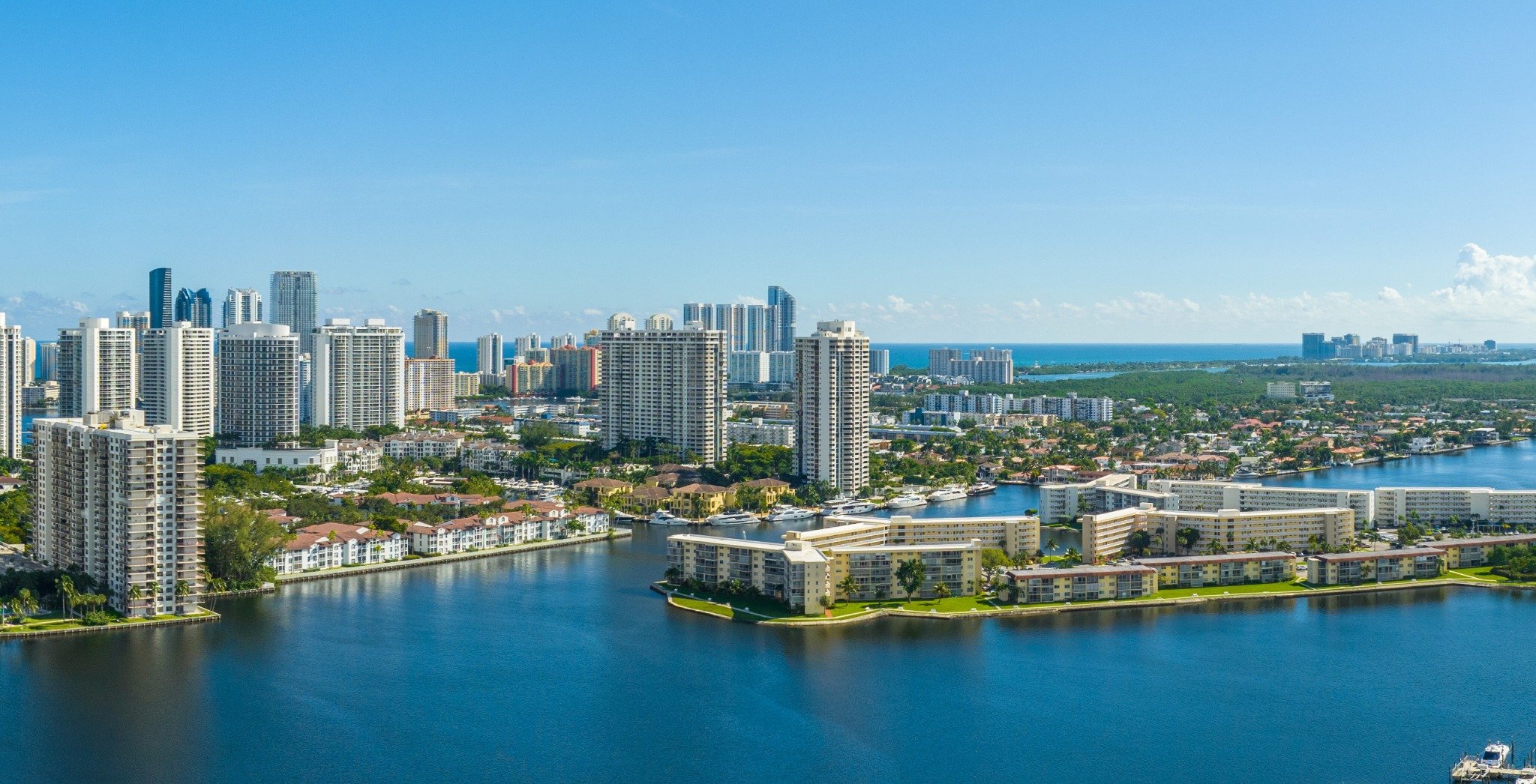
When buyers in South Florida say they want it all, they usually mean three distinct forms of convenience. The first is daily family function, which often begins with school access. The second is recurring time efficiency, especially for households that travel often. The third is lifestyle specificity, which in waterfront markets means not simply proximity to the water, but boating access that is genuinely usable.
The mistake is letting one exceptional trait obscure a weakness in another. A residence can feel ideal because it sits close to the airport, yet be assigned to schools that do not align with your standards. Another may offer a beautiful waterfront setting, but no practical dockage, no reliable slip rights, or a route to open water that is more restrictive than the listing suggests. The disciplined way to compare options is to score each property across three separate axes: assigned school quality, true peak-hour airport drive time, and verified marina usability.
For a buyer considering neighborhoods from Coral Gables to Fort Lauderdale, that framework creates clarity quickly. It also turns a highly emotional search into a more precise one.
School quality should be compared at the address level, not the municipal level. In luxury markets, buyers often speak about a city as though all homes feed into the same public options. They do not. School assignments can vary meaningfully within the same municipality, which means one street can function very differently from another for a family with school-age children.
Assigned schools should be reviewed for each exact property under consideration. That creates a consistent starting point before weighing more personal considerations such as campus culture, program fit, or private-school alternatives. Even households considering private education may still care about public-school assignment because it can influence resale liquidity and the future buyer pool.
In areas that attract family buyers seeking a polished urban lifestyle, this distinction becomes especially important. In Coral Gables, for example, an address near Ponce Park Coral Gables and The Village at Coral Gables may appear to offer a similar lifestyle on paper, yet the practical school picture still needs to be confirmed property by property. The same principle applies in Coconut Grove, where a residence such as Park Grove Coconut Grove may appeal to buyers who want an established residential setting with strong day-to-day livability, but the assigned-school comparison still needs to be exact.
In short, begin with the address. Then evaluate the schools attached to that address. Anything broader is too imprecise for a serious purchase.
Airport convenience is frequently misunderstood because buyers default to map distance. In reality, the variable that matters is drive time at the hours you would actually travel. A home that looks close to the airport in straight-line terms may perform poorly during weekday morning departures or evening returns. For a frequent flyer, predictability often matters as much as speed.
In Miami-Dade, airport benchmarking should usually center on Miami International Airport for searches in Miami, Coral Gables, Pinecrest, and nearby districts. In Broward, Fort Lauderdale-Hollywood International Airport is often the more relevant benchmark for Fort Lauderdale, Aventura-oriented searches, and other northern South Florida locations. That distinction matters because a buyer moving between counties can misjudge convenience if the wrong airport is used as the default reference point.
Test each candidate home at the travel windows that reflect your actual routine: a Monday morning departure, a weekday evening return, and a weekend midday run. When those windows are consistent across every property, the comparison becomes useful. It also reveals something subtle but important: two addresses in the same luxury tier may carry very different friction costs over the course of a year.
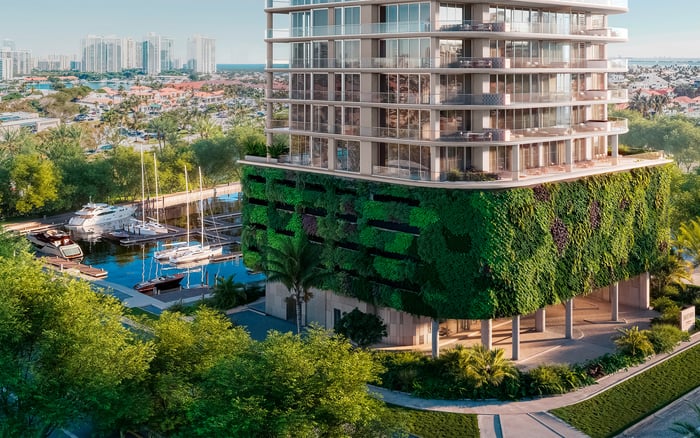
This is where certain submarkets become especially interesting. Coral Gables is compelling because it can balance refined residential character with relatively direct access to Miami International Airport. Fort Lauderdale has its own version of that equation, particularly in projects such as Andare Residences Fort Lauderdale, where the appeal of an urban coastal lifestyle becomes even stronger when the airport run is manageable as well. In Aventura, residences such as Avenia Aventura may attract buyers who want an Intracoastal-oriented setting while still remaining within practical reach of Broward’s primary airport.
Among the three priorities, marina access is the one most easily overstated. Near water is not the same as having direct dockage. A home with a waterfront view is not necessarily a boating property. Even when a building or community suggests marine convenience, the real questions are more exact.
Does the property include deeded dockage or only nearby marina access? Are slips available now, or subject to a waitlist? What vessel sizes are permitted? Is fueling available? What about maintenance support? How quickly can you reach open water, and are there bridge or draft considerations that affect the way you actually use the boat?
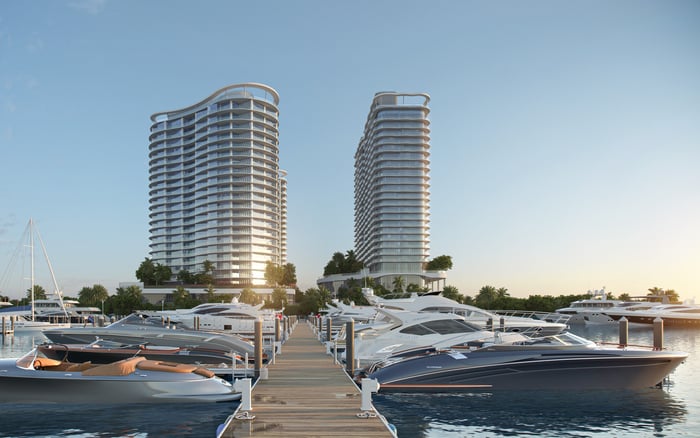
For serious boaters, these details are not secondary. They are the category itself. Broward is especially instructive here because Fort Lauderdale combines dense waterfront neighborhoods with established marine infrastructure, making it one of the region’s clearest boating markets. That helps explain the continued appeal of residences such as Riva Residenze Fort Lauderdale and St. Regis® Residences Bahia Mar Fort Lauderdale for buyers who want a more boating-oriented lens on luxury living.
The principle also applies in Coral Gables, where waterfront and yacht-club amenities can enhance the lifestyle equation, though not every address offers the same marine utility. A beautiful neighborhood reputation should never replace direct verification of dockage rights, vessel limits, fees, and navigational practicality.
Once the three categories are defined, the most effective next step is to assign weight to each one. For some households, schools carry the greatest daily importance because they shape routine five days a week. For others, airport access deserves a premium because travel is constant and the time cost compounds. For a dedicated boater, verified dockage and navigable access may outweigh a modestly longer airport drive.
A clean framework is to rate each property on a ten-point scale in three columns:
Assigned school fit
Peak-hour airport predictability
Marina or dockage usability
Then apply your own weighting. A family with children and regular business travel might emphasize schools first, followed by airport access and then marina utility. Another buyer might reverse the last two. The point is not to create a universally correct formula. It is to avoid making a multimillion-dollar decision on ambiance alone.
This kind of discipline is particularly valuable in mixed-use urban markets such as Brickell, where developments like 2200 Brickell can be highly attractive for access and lifestyle, yet still need to be judged against the full matrix rather than a single dimension. The rare properties are those that truly deliver all three priorities at a high level. That rarity is precisely why buyers should define their compromise rules before touring rather than after falling in love with a view.
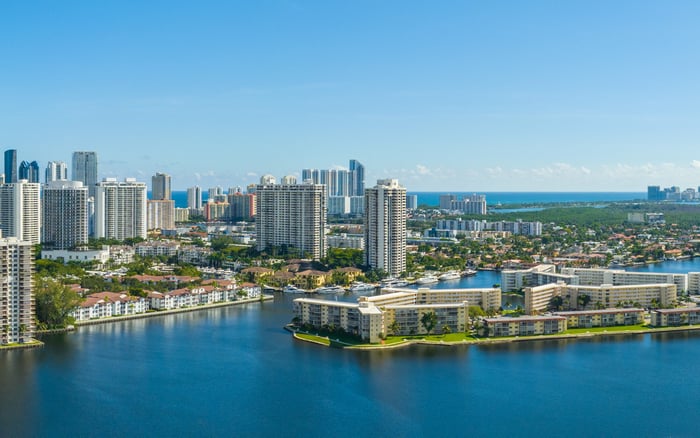
Not every submarket should be judged by the same hierarchy. Coral Gables often appeals to buyers who want an elegant residential setting with family utility and airport convenience in closer balance. Aventura can work for purchasers drawn to an Intracoastal lifestyle who still want reasonable airport access. Fort Lauderdale often rises to the top for buyers whose version of luxury includes meaningful boating infrastructure rather than decorative waterfront adjacency. Pinecrest enters the conversation differently, often as a family-centered search where school access may lead the decision tree and airport access becomes the secondary operational filter.
That is why area reputation is useful, but never sufficient. The finer details of a single address, a single route, and a single dockage arrangement still determine whether a property works in real life.
Luxury buyers are not simply purchasing square footage or finish levels. They are purchasing a pattern of living. If school drop-off is stressful, airport runs are unpredictable, or marina logistics require constant negotiation, the hidden friction accumulates quickly. By contrast, when the three systems work in concert, the home begins to feel truly well chosen.
The best purchases in this category are not always the most obvious. They are the ones where family routine, travel rhythm, and waterfront use align without forcing a constant trade-off. That is a narrow set of opportunities, but it is exactly the set worth pursuing with care.
Should school access be evaluated by city or by exact address? Always by exact address, because school assignments can vary materially within the same municipality.
Is straight-line distance to the airport enough for comparison? No. Real drive time at the hours you actually travel is more useful than map distance alone.
Which airport matters most in Miami-Dade searches? For many Miami-Dade buyers, Miami International Airport is the main benchmark for practical airport access.
Which airport is usually more relevant in Broward searches? Fort Lauderdale-Hollywood International Airport is often the key benchmark for much of Broward County.
What does marina access really mean? It means confirmed usability, such as direct dockage, nearby slips, or a marina arrangement that fits your vessel and habits.
Why is marina access easy to misread in listings? Because waterfront language can sound compelling even when slip rights, vessel limits, or availability are uncertain.
Can a property near water still be a poor boating choice? Yes. Views and proximity do not guarantee dockage, navigability, or convenient access to open water.
How should buyers weigh schools, airports, and marinas together? Score each separately, then assign weight based on your actual routine rather than emotional impressions.
Are some South Florida areas naturally stronger for this balance? Yes, but each address still needs its own analysis because a strong neighborhood reputation alone is not enough.
What is the smartest first step before touring homes? Set your non-negotiables in all three categories so you can identify the right compromises before emotion enters the search.
To compare the best-fit options with clarity, connect with MILLION.
If branded residences are on your mind — as a home or as an allocation — we would be glad to share what we are seeing, privately.
Begin a quiet conversation