A discreet buyer’s guide to evaluating catering flow at Miami Design Residences Midtown Miami, with practical questions for hosting, privacy, service access, terraces, and long-term value.

For buyers considering Miami Design Residences Midtown Miami, catering flow is not a decorative footnote. It is a practical test of how gracefully a residence performs when the home is active, staffed, and full of guests. A beautiful kitchen may photograph well, but an exceptional entertaining residence must also move people, food, glassware, flowers, ice, waste, and service teams with minimal interruption to the host experience.
In South Florida’s luxury market, buyers often begin with views, ceiling heights, finishes, amenities, and parking. Those elements matter. Yet the most discerning owners also ask what happens on a Friday evening when a chef arrives early, a bartender needs staging space, dinner is served indoors, cocktails continue on a terrace, and guests should never sense the choreography behind the evening.
Catering flow is the unseen architecture of hospitality. It touches elevator access, loading routines, back-of-house circulation, kitchen layout, pantry capacity, trash handling, appliance placement, acoustic separation, guest arrival sequence, and the ability for staff to reset a space without crossing the home’s main social axis. In a Midtown Miami setting, where urban convenience is part of the lifestyle proposition, these details can influence both daily comfort and long-term investment appeal.
The strongest questions begin with the owner’s real entertaining style. A buyer who hosts intimate dinners for eight should evaluate different details than a buyer envisioning larger cocktail evenings, art-week gatherings, family celebrations, or catered business receptions. Before focusing on finishes, define the use case.
Ask how a caterer would enter the building, where vehicles can pause, which elevator would be used, and how food moves from arrival to the residence. Then ask the same questions in reverse. Where does dirty serviceware go? How is trash separated? Can staff exit without passing through a guest conversation area? Does the route still work if another resident is moving in, if rain changes arrival timing, or if the evening involves multiple vendors?
A design-forward residence should not force an owner to choose between aesthetics and function. The ideal flow supports atmosphere. Guests should experience lighting, art, fragrance, music, and views, not stacked service bins or staff navigating tight corners with trays.
Many buyers equate catering readiness with a visually impressive kitchen. That is a starting point, not the conclusion. The real test is whether the kitchen can function as a staging zone, a plating area, a social anchor, or all three without conflict.
Ask whether there is enough counter depth for plating, whether refrigeration supports both household use and event overflow, and whether warm food can be held without monopolizing the primary cooking area. If the kitchen is open to the living room, consider whether a chef can work comfortably while guests gather nearby. If the layout includes a concealed pantry or secondary prep zone, ask how it connects to the main dining area and outdoor space.
Sightlines matter as well. A dramatic open kitchen may be ideal for casual hosting, while some owners prefer a more discreet service rhythm. There is no universal answer. The better question is whether the plan supports the buyer’s preferred level of formality.
In a private home, catering teams can often use side gates, garage entries, or exterior service paths. In a condominium setting, vertical circulation becomes central to the hosting experience. Buyers should ask how service access is organized, whether elevator scheduling is required, how advance vendor clearance is handled, and whether deliveries can be coordinated without disrupting resident privacy.
This is especially relevant for owners comparing Midtown Miami with nearby urban luxury areas such as Wynwood, Edgewater, and Brickell. Each neighborhood attracts buyers who value access, design, restaurants, culture, and convenience, but the livability of a residence still depends on the precision of the building’s everyday operations.
Discretion is not only privacy from the public. It is also the preservation of calm inside the residence. A well-managed arrival sequence allows flowers, bar supplies, rentals, and prepared food to appear as if they belonged there all along. Poorly planned circulation can turn even a refined event into a logistical exercise.
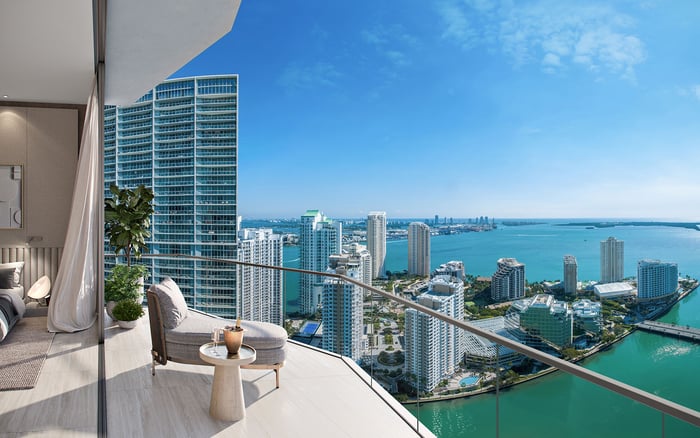
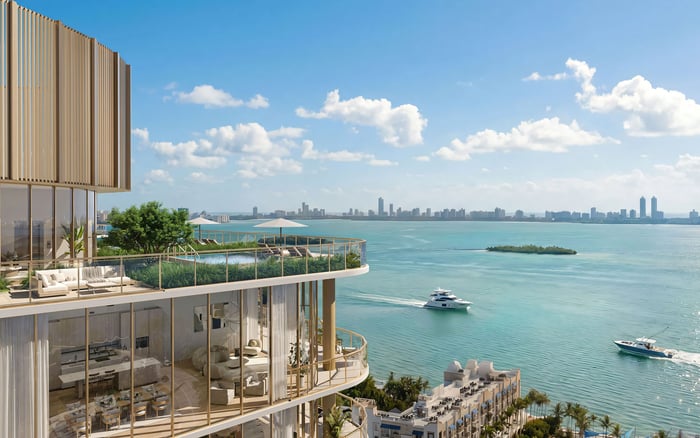
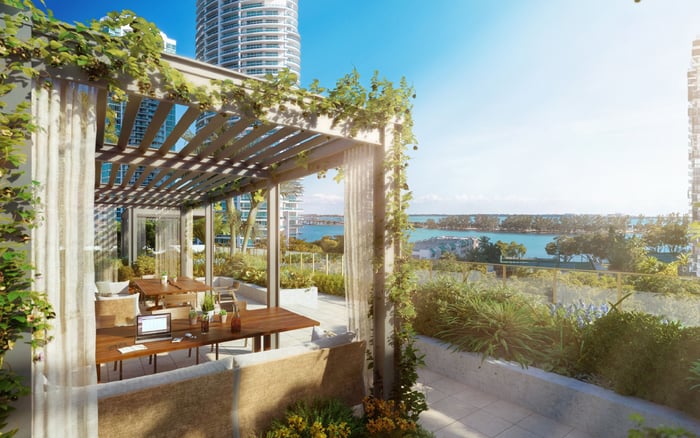
Outdoor entertaining is one of the great pleasures of South Florida ownership, but terrace service introduces its own questions. How does food move from the kitchen to the exterior? Is the path wide enough for trays? Are thresholds easy to navigate? Can furniture layouts support both seated conversation and staff movement? Is there a logical place for a bar, water station, or discreet clearing area?
Buyers should also distinguish between a sunset cocktail hour and a full dinner service. A terrace that works beautifully for two lounge chairs may feel constrained once guests, servers, planters, dining furniture, and lighting are all in place. Ask whether the outdoor area supports the event you want, not simply the photograph you admire.
Noise and lighting deserve the same attention. Catering flow is partly sensory. Staff should be able to move efficiently without doors slamming, carts rattling, or bright task lighting interrupting the mood.
The most useful buyer questions are direct and practical. Where do caterers load in? Can vendors be approved in advance? Are there preferred service windows? Is there a freight elevator or service route? What is the policy for protective floor coverings? Where can rentals be staged? How are ice, beverage, floral, and linen deliveries handled? Can staff use a service restroom? What happens if the event runs later than planned?
Inside the residence, ask for a walk-through that follows the path of a catered evening. Enter as a vendor, not as a guest. Move from arrival point to elevator, from elevator to entry, from entry to kitchen, from kitchen to dining, from dining to terrace, and from social areas back to cleanup. This exercise can reveal tight turns, awkward doors, insufficient staging areas, or overly exposed service paths.
For new-construction buyers, plans and renderings should be studied through a hospitality lens. For resale buyers, existing conditions can be tested more physically. In both cases, the goal is to understand how the home functions when real life becomes layered and active.
Catering flow may not appear as a headline feature, but it can affect how a sophisticated buyer experiences value. A residence that hosts effortlessly is easier to live in, easier to lend to family, easier to staff, and often easier to position when another design-aware buyer evaluates it later.
The strongest homes do not merely provide space. They provide sequence. Arrival feels natural. Drinks appear on time. Dinner transitions without strain. Cleanup happens quietly. Guests remember the evening, not the mechanics.
For buyers weighing Miami Design Residences Midtown Miami, the question is not simply whether the residence can accommodate entertaining. The question is whether it can do so with grace. In a market where luxury is increasingly defined by ease, that distinction matters.
What does catering flow mean in a luxury residence? It refers to how vendors, food, beverages, serviceware, staff, guests, and cleanup move through the home and building during entertaining.
Why should buyers ask about catering flow before purchasing? It can affect privacy, comfort, event quality, and the owner’s ability to host without visible friction.
Is an open kitchen always better for entertaining? Not always. Open kitchens can be social, while more discreet prep zones may better suit formal catered events.
What building questions matter most for catered events? Ask about vendor access, elevator use, loading procedures, service routes, staging policies, and after-event cleanup rules.
How should a buyer evaluate terrace entertaining? Walk the path from kitchen to terrace and consider furniture, thresholds, bar placement, lighting, and staff movement.
Does catering flow matter for smaller dinner parties? Yes. Even intimate dinners benefit from thoughtful plating space, storage, clearing routes, and acoustic separation.
Can catering flow influence investment appeal? It can support broader buyer interest because sophisticated owners often value homes that host with ease and discretion.
What should new-construction buyers review in plans? Study elevator access, entry sequence, kitchen adjacency, pantry space, terrace connections, and potential staging zones.
How does Midtown Miami compare with Brickell or Edgewater for hosting? The neighborhoods differ in setting and lifestyle, but the decisive factor is still how each residence and building operates.
What is the simplest way to test catering flow? Walk through a complete event sequence from vendor arrival to final cleanup and note every point of friction.
For a tailored shortlist and next-step guidance, connect with MILLION.
If branded residences are on your mind — as a home or as an allocation — we would be glad to share what we are seeing, privately.
Begin a quiet conversation