A buyer-focused comparison of two distinct West Palm Beach luxury propositions: Banyan Tree’s branded, wellness-led ownership model near downtown and Alba’s quieter lagoon-front condominium lifestyle.
In West Palm Beach, the most interesting residential decisions are no longer simply about square footage or view corridors. They are about the kind of life an owner wants a building to shape. That is what makes the choice between Banyan Tree Residences West Palm Beach and Alba West Palm Beach so precise.
Both entered the market as newly delivered luxury offerings in 2024. Both speak to buyers seeking a polished West Palm Beach address. Yet they are not pursuing the same buyer psychology. Banyan Tree proposes a hospitality-forward ownership model with wellness embedded in daily life. Alba, by contrast, is built around direct waterfront living on the Lake Worth Lagoon, with a more restrained, residential tone.
For discerning buyers, this is not a matter of which project is more luxurious in the abstract. It is a matter of what form of luxury feels more enduring: a managed, branded environment with spa and service infrastructure, or an independent condominium experience defined by calm water, outdoor orientation, and a quieter rhythm.
Banyan Tree Residences occupies 550 North Quadrille Boulevard, placing it near the downtown core rather than in a secluded waterfront enclave. That distinction matters. The project is less about retreat through isolation and more about creating a highly serviced oasis within an active urban setting.
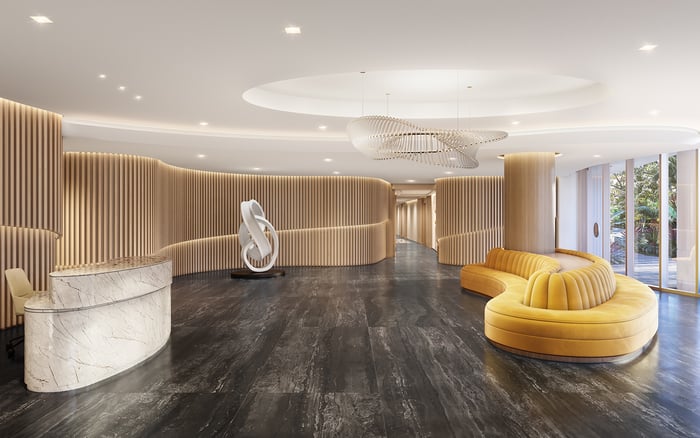
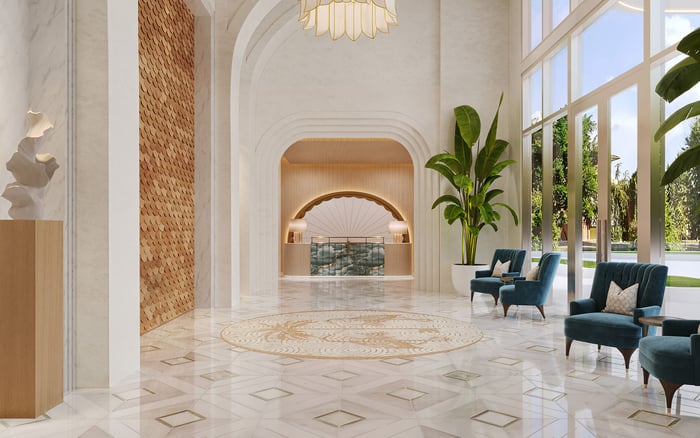
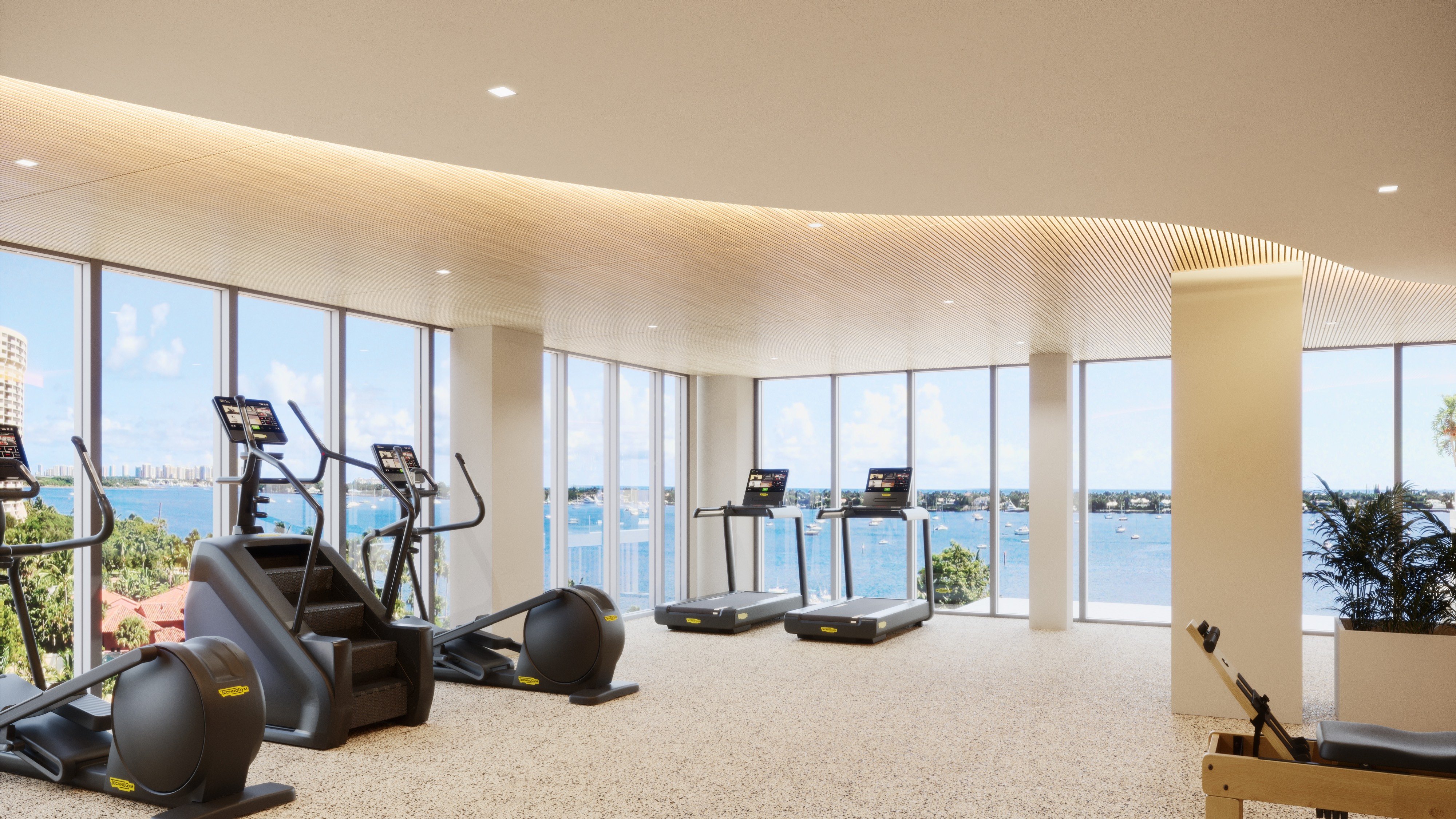
Its proposition is unusually clear. This is a branded residential building tied to Banyan Tree’s resort identity, and the ownership experience is organized around wellbeing. The residential program includes a Banyan Tree Spa, fitness offerings, hospitality-style services, a rooftop pool, co-working space, and curated common areas that extend daily life beyond the residence itself. Residence types span studios and one-bedroom layouts to two-bedroom homes and penthouses, broadening the buyer profile in ways many ultra-luxury projects do not.
In practical terms, Banyan Tree will appeal most to owners who value consistency of service and the reassurance of a globally recognized hospitality language. This is not just about aesthetics. It is about how a building supports the resident on an ordinary Tuesday morning, whether that means a wellness routine, a staff-supported arrival, or amenity spaces that feel like an extension of a private club.
For buyers who have also considered branded or service-led concepts elsewhere in South Florida, there is a conceptual throughline with projects such as The Well Bay Harbor Islands and The Ritz-Carlton Residences® West Palm Beach, where lifestyle programming and hospitality expectations meaningfully shape ownership.
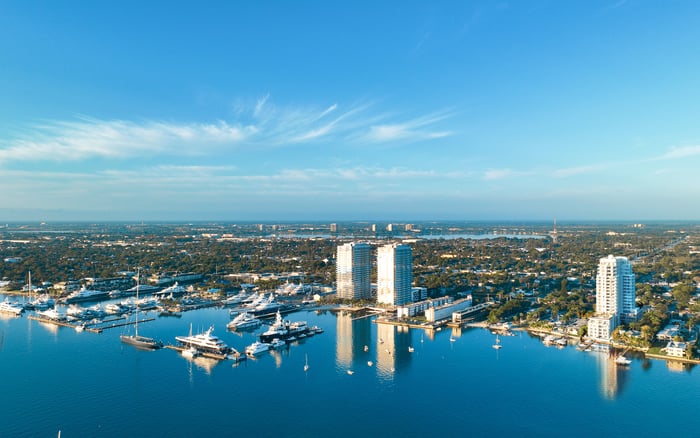
Alba approaches luxury from the opposite direction. Developed as a waterfront condominium on the Lake Worth Lagoon, it places setting at the center of its identity. The architecture, by Arquitectonica, is organized into two towers, Alto and Basso, and the project’s language is notably restrained.
Where Banyan Tree emphasizes service as a defining layer, Alba emphasizes atmosphere. Broad lagoon views, a waterfront promenade, resort-style pool areas, fitness facilities, and marina-oriented features tied to boating access reinforce a quieter, more elemental way of living. The message is not that the building will orchestrate your lifestyle. It is that the location already does much of that work.
This distinction is subtle but important. Alba feels designed for buyers who prefer privacy over programming and who want their home to read first as a residence, not as a branded extension of a hotel ecosystem. The available residence mix, spanning one-bedroom, two-bedroom, three-bedroom, and penthouse layouts, also suggests a buyer pool that may include both primary residents and second-home owners seeking a calmer waterfront foothold.
Within the broader Palm Beach and West Palm Beach conversation, Alba aligns more naturally with the appetite for discreet waterfront ownership seen in places like Shorecrest Flagler Drive, where the address and the water do much of the talking.
The cleanest way to compare these two projects is to ask what residents want from the building after closing.
At Banyan Tree, the building is meant to participate actively in daily routine. Wellness is not an amenity added for marketing polish. It is the operating logic of the project. Owners who want a polished, managed environment near downtown activity may find that deeply attractive, especially if they spend only part of the year in residence and want a building that can provide continuity and ease.
At Alba, the appeal is more spatial and environmental. The lagoon, the promenade, the boating orientation, and the understated architecture all suggest a buyer who wants fewer layers between home and setting. Rather than moving through a branded hospitality narrative, the owner lives in direct relationship with the waterfront.
This is why the comparison is not really spa versus pool, or branded versus unbranded. It is participation versus calm. Banyan Tree offers a more choreographed lifestyle, with wellness and service infrastructure built into the experience. Alba offers a more self-directed one, where serenity comes from the residence and its waterside position.
Luxury buyers often say they want amenities, but what they are usually choosing is emotional tone.
Banyan Tree’s tone is polished, intentional, and globally legible. It speaks to buyers who are comfortable with branded residential ownership, and perhaps even drawn to it, because branding can function as a proxy for service standards and operational rigor. For some, that predictability is a significant asset.
Alba’s tone is more understated. Its modern design favors minimalist architectural expression over overt hospitality cues. That tends to resonate with buyers who want design restraint and who prefer a home that feels composed rather than curated. In a market increasingly populated by high-identity branded projects such as Mr. C Residences West Palm Beach, Alba’s quieter stance may be precisely its advantage.
There is also a difference in how each project frames status. Banyan Tree communicates distinction through association, service, and wellness culture. Alba communicates it through position, outlook, and discretion. Both are credible luxury languages. They simply flatter different instincts.
A downtown-oriented purchaser, or a buyer who values having hospitality-style support folded into ownership, is likely to gravitate toward Banyan Tree. So is the buyer who wants wellness to be an organizing principle rather than an occasional indulgence. The project’s mix of smaller and larger formats may also appeal to those seeking flexibility in use, including a more lock-and-leave profile.
Alba is likely to attract the buyer who wants the emotional steadiness of waterfront living. If boating adjacency, promenade access, and an outdoor-oriented lifestyle matter more than brand affiliation, Alba becomes highly persuasive. It is especially compelling for those who prefer luxury that does not insist on announcing itself.
For investors, it would be premature to make a hard yield or pricing case without current listing data. For end users, however, the distinction is already sharp. One project is fundamentally about a wellness-minded ownership experience. The other is about understated calm at the water’s edge.
If your idea of luxury includes service rituals, branded consistency, a spa-centered amenity package, and a location close to downtown momentum, Banyan Tree Residences West Palm Beach is the clearer fit.
If your ideal home is defined by lagoon views, boating adjacency, modern restraint, and a quieter residential cadence, Alba West Palm Beach is the more compelling choice.
Neither approach is universally better. But for a buyer deciding between them, the answer is elegantly simple: choose Banyan Tree if you want your building to care for your lifestyle, and choose Alba if you want your setting to calm it.
Is Banyan Tree Residences West Palm Beach a branded residence? Yes. It is a branded luxury residential project developed with Banyan Tree and built around a hospitality-forward ownership model.
Is Alba West Palm Beach directly on the waterfront? Yes. Alba is positioned on the Lake Worth Lagoon, and its waterfront setting is central to the project’s appeal.
Which project is better for wellness-minded buyers? Banyan Tree is the stronger fit for buyers who want spa, fitness, and wellbeing programming integrated into daily ownership.
Which project feels quieter and more residential? Alba generally reads as the calmer option, with its emphasis on lagoon views, promenade living, and understated design.
Does Banyan Tree have a downtown location? Yes. It sits at 550 North Quadrille Boulevard, placing it near the downtown core rather than in a secluded waterfront enclave.
Does Alba have boating-oriented features? Yes. Its amenity program includes marina-oriented features that reinforce a waterfront and boating-adjacent lifestyle.
Are both projects luxury condominiums in West Palm Beach? Yes. Both are positioned at the high end of the West Palm Beach new-construction market, but with different buyer narratives.
What residence types are available at Banyan Tree? Publicly disclosed layouts include studios, one-bedroom, two-bedroom, and penthouse residences.
What residence types are available at Alba? Alba offers one-bedroom, two-bedroom, three-bedroom, and penthouse residences.
How should a buyer choose between Banyan Tree and Alba? Choose Banyan Tree for branded service and wellness infrastructure, and choose Alba for waterfront calm, views, and a more independent residential feel.
For a tailored shortlist and next-step guidance, connect with MILLION.
If branded residences are on your mind — as a home or as an allocation — we would be glad to share what we are seeing, privately.
Begin a quiet conversation