A buyer-focused guide to reading district construction, building age, amenity depth, resale dynamics, and long-term value across South Florida luxury condo markets.
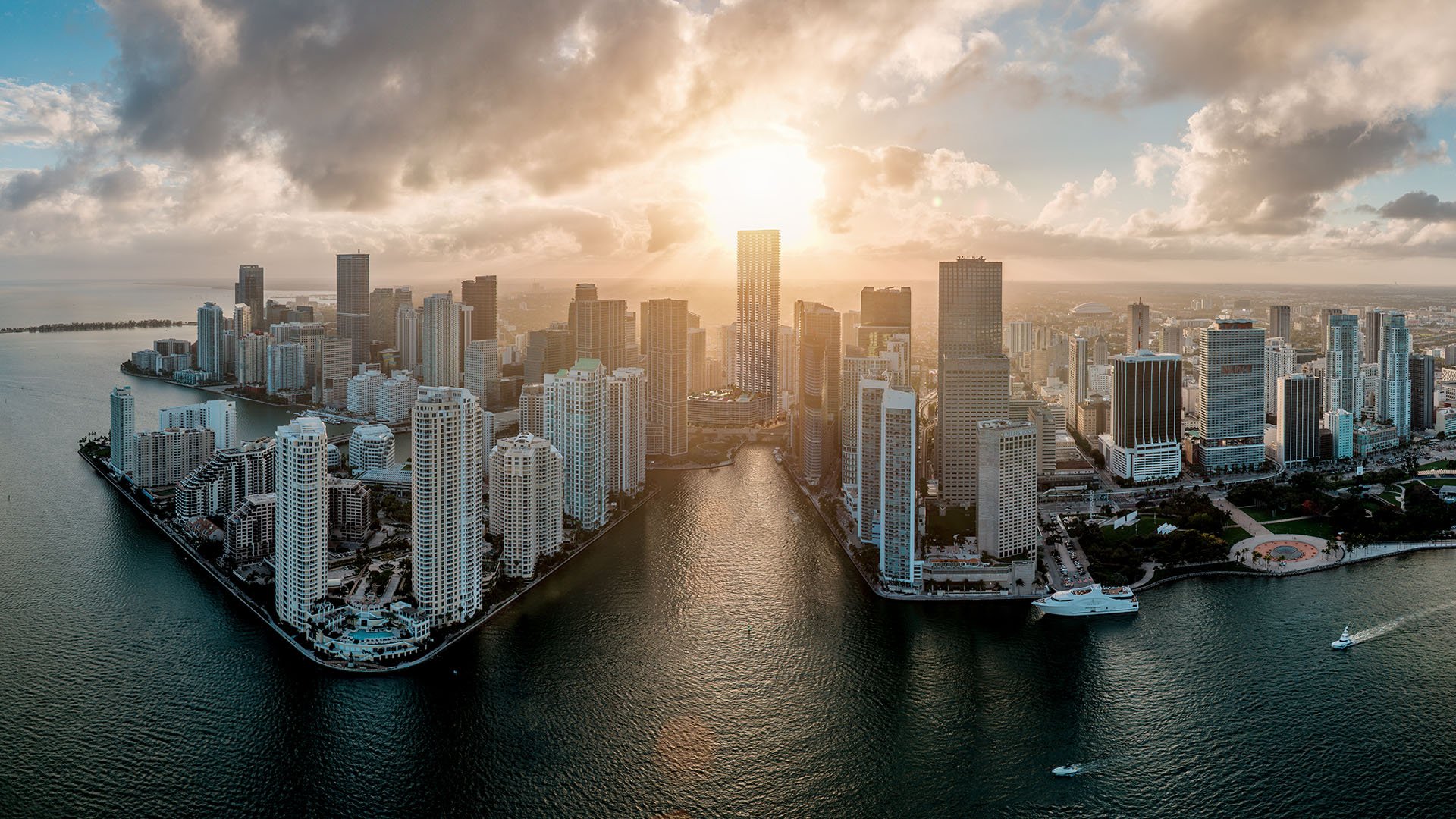
In South Florida luxury real estate, a condominium is never evaluated in isolation. The tower, lobby, service culture, and residence finishes are only one layer of the decision. The more revealing question is how the building sits within its district: what surrounds it now, what may evolve nearby, and whether the area’s construction cycle supports the buyer’s intended use.
District construction is the built character of a neighborhood. It includes the age and condition of neighboring properties, the rhythm of new development, the maturity of streetscapes, the depth of nearby services, and the relationship between residential towers, hospitality, retail, marinas, beaches, parks, and private clubs. Two condominiums with similar square footage can live very differently if one is in a polished, established enclave and the other is in a district still absorbing years of vertical growth.
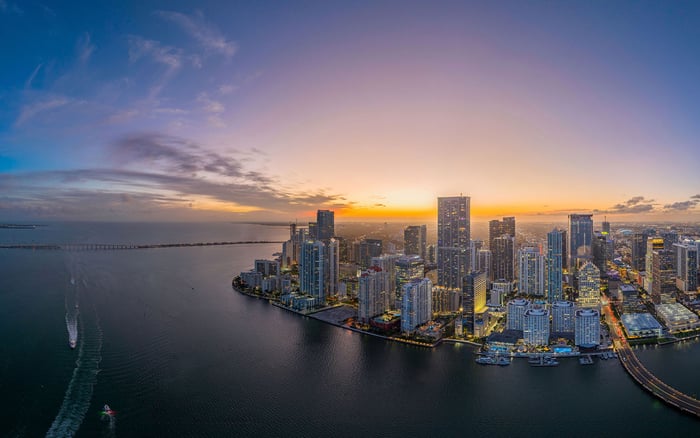
In South Florida, shorthand labels such as Brickell, Miami Beach, and Sunny Isles can conceal very different building generations, while new-construction, resale, and investment goals change the comparison. A disciplined buyer studies the district first, then decides which building generation best fits the brief.
New construction often carries immediate appeal: contemporary architecture, fresh building systems, current amenity programming, wellness spaces, modern parking solutions, and residences designed around today’s expectations for ceiling height, glass, kitchens, closets, and outdoor living. For a buyer who wants first occupancy, current design language, and a cleaner near-term maintenance profile, new construction can be compelling.
Resale condominiums, however, can offer something equally valuable: proof. A completed building has an operating history. The staff culture is visible. The arrival sequence can be experienced. The acoustics, elevator patterns, garage flow, resident mix, and board temperament can be assessed in real time. Views are no longer theoretical, and the buyer can understand how neighboring parcels already affect light, privacy, and water orientation.
The comparison should therefore move beyond “new” versus “old.” The more sophisticated lens is completion risk versus operating evidence. New construction provides optionality and freshness. Resale provides lived-in intelligence.
Luxury buyers often focus on the center of a district, but its edges may be more important. The blocks just beyond a tower can determine noise, access, construction exposure, walkability, privacy, and the daily experience of arriving home. A refined building can still feel compromised if its surrounding district is unsettled, poorly connected, or too dependent on future promises.
When comparing districts, study what is adjacent, not simply what is nearby. A waterfront residence beside mature residential fabric offers a different experience from one surrounded by multiple active development sites. A tower near hospitality and restaurants may suit a pied-à-terre buyer who values energy, while the same context may feel too public for a full-time resident seeking discretion.
District edges also influence resale confidence. Buyers tend to reward locations where the future feels legible. If surrounding parcels are coherent in use, scale, and quality, the building has a stronger neighborhood frame. If the district is in transition, the upside may be attractive, but the buyer must be comfortable with uncertainty.
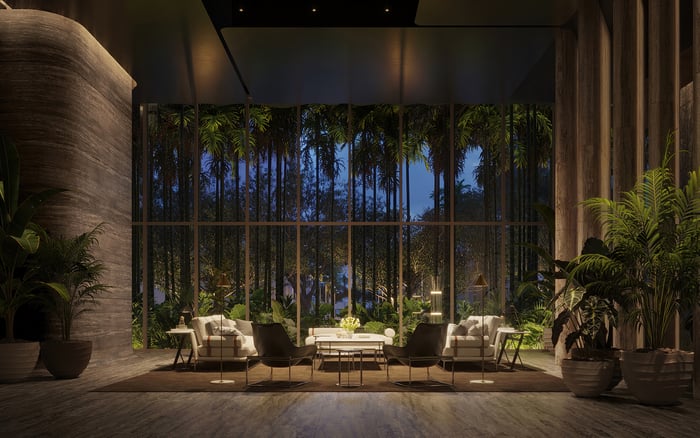
New buildings frequently debut with ambitious amenity packages. The best examples feel like private resorts, blending wellness, dining, lounge, pool, spa, fitness, and owner services into a cohesive lifestyle. For many buyers, this is the central argument for new construction: the building is not merely a place to live, but a carefully choreographed private environment.
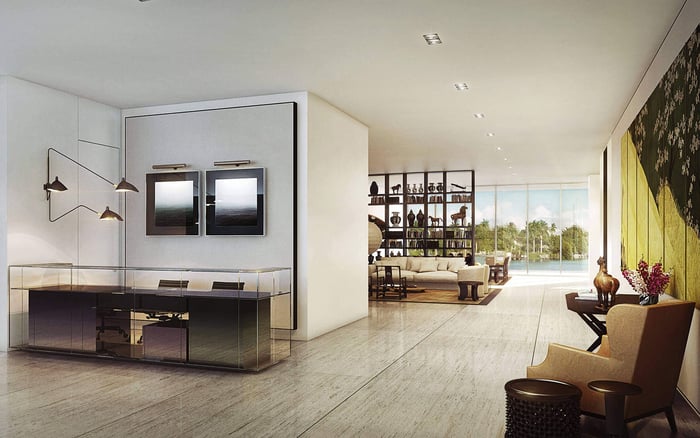
Yet amenities become meaningful only when they are well operated. A resale building allows a buyer to see whether the spaces are used elegantly, whether staffing levels match the promise, whether the pool deck feels serene or crowded, and whether private areas remain private. The luxury is not the square footage of the amenity floor. The luxury is how effortlessly it functions.
The strongest comparison asks three questions. Does the new building’s amenity vision fit the buyer’s daily life? Does the resale building’s amenity operation still feel current? And does the district itself add what the building does not provide, whether beach access, dining, boating, cultural life, or quiet residential character?
The purchase price is only one part of the analysis. New construction may involve staged deposits, closing costs, fit-out decisions, and a period in which the association’s operating rhythm is still being established. Resale may involve more transparent current expenses, but buyers should evaluate maintenance history, reserve posture, insurance environment, and any known capital needs through proper professional review.
A low monthly cost is not automatically attractive if it reflects underinvestment. A higher cost is not automatically negative if it supports elevated staffing, strong maintenance, and a building that protects long-term desirability. In luxury condominiums, financial quality often expresses itself quietly: polished common areas, responsive management, predictable service, and the absence of deferred care.
For investment-minded buyers, the holding period matters. A buyer intending to own for decades may prioritize construction quality, irreplaceable views, and district scarcity. A buyer with a shorter horizon may place more emphasis on liquidity, pricing discipline, and the number of competing units likely to enter the market.
A floor plan can seduce on paper. District construction tells you whether that plan will live well. A large terrace is more valuable when it faces a calm, enduring outlook. A glass-wrapped living room is more enjoyable when privacy is protected. A primary suite becomes more desirable when morning light, elevator location, mechanical noise, and neighboring sightlines all cooperate.
New construction buyers should pressure-test renderings against likely reality. Consider sun exposure, balcony depth, approach roads, service entries, future neighboring construction, and whether the residence is positioned for privacy or display. Resale buyers should visit at different times when possible, listening and observing as much as measuring.
The best residence is not simply the most dramatic. It is the one that supports the owner’s pattern of life: entertaining, retreating, working, hosting family, storing art, managing staff, keeping pets, or arriving quietly after travel.
Every condominium purchase contains risk. New construction can carry timing, delivery, finish, and district-evolution risk. Resale can carry aging-systems, assessment, renovation, and design-obsolescence risk. The better choice is not the one without risk. It is the one whose risks are visible, priced, and acceptable.
Buyers who value certainty may prefer the evidence of a completed resale building in a settled district. Buyers who value first selection and contemporary programming may prefer a new building in a district with persuasive long-term direction. The most resilient decisions usually combine both instincts: newness where it is meaningful, evidence where it is essential.
What is district construction in condo buying? It is the broader built context around a condominium, including neighboring properties, development pace, streetscape quality, access, and lifestyle infrastructure.
Is new construction always better than resale? No. New construction can offer modern design and systems, while resale can provide operating history, visible views, and clearer evidence of daily life.
Why compare the district before the building? The district shapes privacy, noise, access, future value, and the lived experience beyond the residence itself.
What should I look for around a new condo project? Study adjacent parcels, construction activity, traffic patterns, public realm quality, and whether the surrounding area supports the building’s promise.
What makes a resale condo attractive? A strong resale building may offer proven management, established service culture, known expenses, and a clear sense of how the residence lives.
How do amenities differ between new and resale condos? New buildings may offer current amenity concepts, while resale buildings reveal how those spaces actually function over time.
Do district changes affect future resale value? Yes. Coherent, high-quality district evolution can support desirability, while uncertain surroundings may require a more cautious valuation.
Should investors favor new construction or resale? It depends on time horizon, pricing, liquidity, holding costs, and tolerance for delivery or renovation risk.
How important are views in this comparison? Views are central, but buyers should distinguish between protected outlooks, likely future changes, and views already proven in a resale setting.
What is the simplest way to make the final decision? Choose the building and district combination that best aligns with lifestyle, risk tolerance, ownership horizon, and long-term maintenance confidence.
When you're ready to tour or underwrite the options, connect with MILLION.
If branded residences are on your mind — as a home or as an allocation — we would be glad to share what we are seeing, privately.
Begin a quiet conversation