A buyer-focused guide to weighing oceanfront emotion against bayfront functionality in South Florida, using lifestyle, access, views, boating, building rhythm and long-term livability rather than price as the deciding lens.

The most refined waterfront decision in South Florida is rarely a simple contest between ocean and bay. It is a question of rhythm. Oceanfront living carries a particular romance: the horizon, the sound of surf, the ritual of moving from lobby to sand, and the feeling that the residence is aligned with something elemental. Bayfront living answers with a different intelligence: calmer water, boating proximity, skyline drama, sunset light, and a more practical relationship to daily movement.
For a serious buyer, price is too blunt an instrument to settle the matter. A residence may be the more compelling choice because it supports how mornings unfold, how guests arrive, how often the boat is used, how private the terrace feels, or how easily the household moves between beach, school, office, marina and dinner. In that sense, oceanfront and bayfront are not competing labels. They are two distinct philosophies of living.
Oceanfront romance is not merely about being near the Atlantic. It is about sensory authority. The view is expansive and often uncomplicated, dominated by water, sky and light. The most successful oceanfront homes feel ceremonial without needing to perform. They invite a slower morning, a barefoot transition, and the emotional certainty that comes from an uninterrupted horizon.
This is where buildings such as 57 Ocean Miami Beach become useful reference points for the conversation. The buyer is not only comparing a building or a floor plan. The buyer is testing whether the emotional pull of Miami Beach ocean living carries enough daily value to justify prioritizing sand, surf and exposure over other conveniences.
For some households, that answer is immediate. The ocean is the reason to be in South Florida. It shapes the entire ownership experience, particularly for second-home buyers who want the residence to feel distinctly removed from ordinary urban life. For others, the romance can be less practical if beach use is occasional, wind exposure is unwelcome, or daily driving patterns matter more than the direct coastal setting.
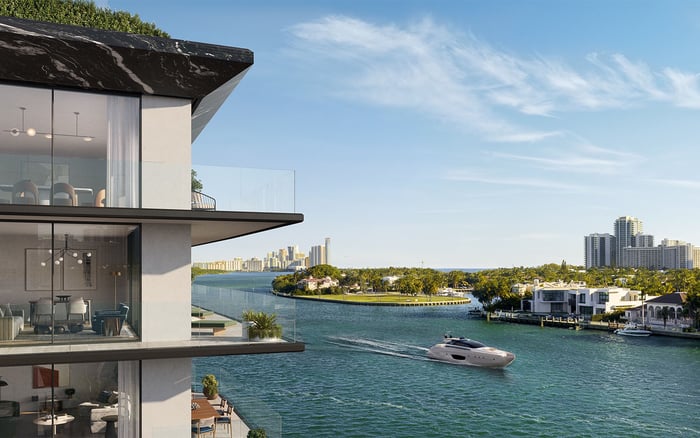
Bayfront practicality should not be mistaken for compromise. In many cases, it is the more sophisticated choice because it acknowledges how waterfront living is actually used. The bay can offer layered views: water, boats, causeways, city lights, and shifting evening color. It can also serve households that want a closer connection to dining, business districts, schools, airports or marinas without giving up the emotional benefit of water.
A residence like Onda Bay Harbor helps illustrate the point. Bay Harbor Islands appeals to buyers who want a quieter residential setting with a water orientation, yet still value proximity to Miami Beach, Bal Harbour and the broader northern Miami corridor. The appeal is not simply the view. It is the way the location can make everyday life feel less forced.
In Edgewater, Aria Reserve Miami belongs to a different urban waterfront conversation, where bay living can connect more naturally to culture, dining and downtown movement. For buyers who spend more time using the city than sitting on the sand, that practical alignment may matter more than the poetry of the ocean.
Not all water views age the same way in daily use. Oceanfront views are often strongest in the morning and in moments of retreat. They can be meditative, clean and cinematic. Bay views are often more dynamic, particularly at dusk, when boats, skyline lights and reflections create a layered scene. Neither is inherently better. The question is which view the owner will actually use, at which hour, and from which room.
A water view from the primary suite has a different value than a water view from a rarely used formal room. A terrace facing water may be beautiful, but its usefulness depends on wind, sun, privacy and furniture depth. Buyers should stand in the living room, kitchen and primary bedroom and ask a simple question: does the water participate in daily life, or is it only an impressive backdrop?
For a Miami Beach buyer, The Perigon Miami Beach can sit squarely within the emotional oceanfront frame. Yet even there, the best comparison is not abstract. It is personal: sunrise versus sunset, beach ritual versus boating rhythm, quiet retreat versus connected mobility.
Waterfront buyers often overvalue the postcard and undervalue access. Beach access can be transformative if it is used several times a week. It can be less decisive if the household primarily wants water as atmosphere rather than as activity. Similarly, a bayfront address can feel more valuable than an oceanfront one if it shortens the routes that define everyday life.
Access includes more than the obvious. It includes elevator flow, parking experience, guest arrival, dog walking, service coordination, boat logistics, school runs and the ability to reach dinner without turning every outing into an event. A beautifully romantic oceanfront home can feel less ideal if each day requires too much friction. A quieter bayfront home can feel far more luxurious if it makes the ordinary parts of life graceful.
For buyers drawn south toward Brickell, Una Residences Brickell offers another way to think about waterfront practicality: bay orientation within a more urban lifestyle. That may suit owners who want water, skyline energy and business access in the same daily orbit.
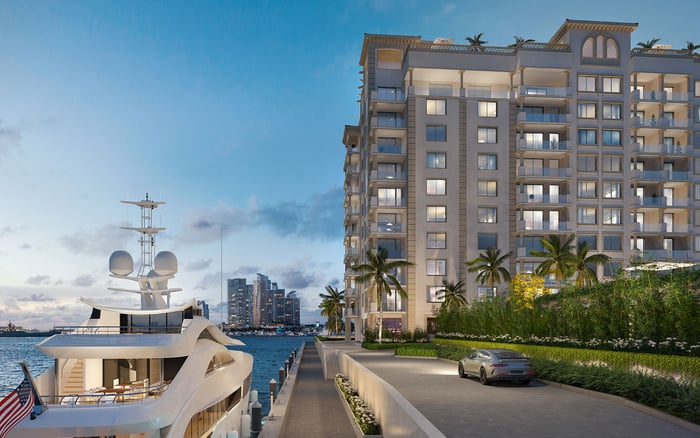
For boaters, the ocean-versus-bay question becomes more specific. The romance of the beach may remain powerful, but proximity to a marina, the importance of a boat slip, and the ease of reaching open water can reshape priorities. A bayfront residence may support boating life more naturally, while an oceanfront residence may support beach life more directly.
This is why the vocabulary matters. Beach access, boat slip and marina are not interchangeable amenities. They represent different patterns of use. A buyer who imagines paddleboarding at sunrise, keeping a tender nearby, or hosting waterfront dinners may favor the bay. A buyer who wants long beach walks, ocean air and immediate sand underfoot may favor the Atlantic. The correct choice is the one that makes the desired ritual easier to repeat.
Oceanfront residences can feel private because the view opens outward and away from the city. Yet beach activity, public shoreline movement and exposure to neighboring towers can complicate that assumption. Bayfront homes can feel more intimate or more observed, depending on width of water, building orientation and neighboring sightlines.
The best test is not the sales-gallery image. It is the lived angle. Look from the terrace into adjacent homes, neighboring balconies and the waterway below. Consider whether evening lighting reveals too much of the interior. Ask whether the primary suite feels serene at night, not only dramatic at noon. Privacy is not a category. It is a condition, and it changes by floor, line and orientation.
Even without making price the deciding factor, buyers should think about future clarity. Oceanfront homes are easiest to understand when they offer an unmistakable beach identity. Bayfront homes are easiest to understand when they offer practical advantages that buyers can feel immediately: views, boating logic, city proximity, residential calm, or a specific neighborhood rhythm.
The weakest waterfront decisions are the ambiguous ones, where the home is neither emotionally compelling nor functionally superior. The strongest decisions can be explained in one sentence: this is the beach retreat, this is the boating base, this is the city waterfront home, this is the quiet family harbor. Clarity is a form of value because it survives changing moods and market cycles.
Before comparing buildings, write down the five rituals the home must support. Morning coffee with horizon light. Walking directly to the sand. Keeping boating easy. Hosting sunset dinners. Reaching work or school with less friction. Then tour oceanfront and bayfront options against that list, not against a generic idea of prestige.
The right waterfront home should make a buyer feel both desire and relief. Desire because the setting has emotional force. Relief because the logistics make sense. When romance and practicality are held together, the decision becomes more durable. Oceanfront may win for the buyer who wants a private relationship with the Atlantic. Bayfront may win for the buyer who wants water woven into a more flexible South Florida life.
Is oceanfront always the more romantic choice? Often, but not always. Bayfront settings can be deeply atmospheric, especially when sunset light, boating activity and skyline views shape the experience.
Is bayfront living mainly about practicality? Practicality is part of the appeal, but bayfront living can also feel elegant, private and visually dynamic when the orientation is right.
Should a second-home buyer favor oceanfront? If the goal is a true beach retreat, oceanfront may feel more transporting. If the home will be used for longer stays, bayfront convenience may matter more.
How should I compare water views? Compare them by hour, room and use. A dramatic view is less important than one that improves the spaces where you spend the most time.
Does boating make bayfront a better choice? For many boaters, yes, because access, storage and route planning can become central to daily enjoyment. The specific building and location still matter.
Can an oceanfront home still be practical? Yes. The best oceanfront homes combine beach access with efficient circulation, privacy, parking, service flow and neighborhood convenience.
What should families weigh most carefully? Families should consider daily routes, beach use, elevator experience, storage, pet routines, guest logistics and proximity to recurring commitments.
Is a higher floor always better for waterfront living? Not necessarily. Higher floors may expand views, while lower floors can feel more connected to water, landscape and immediate outdoor life.
How important is terrace usability? Very important. A terrace should be evaluated for depth, exposure, privacy and comfort, not only for the photograph it creates.
What is the simplest way to choose between ocean and bay? Choose the setting that makes your most repeated rituals easier, more beautiful and less compromised.
If you'd like a private walkthrough and a curated shortlist, connect with MILLION.
If branded residences are on your mind — as a home or as an allocation — we would be glad to share what we are seeing, privately.
Begin a quiet conversation