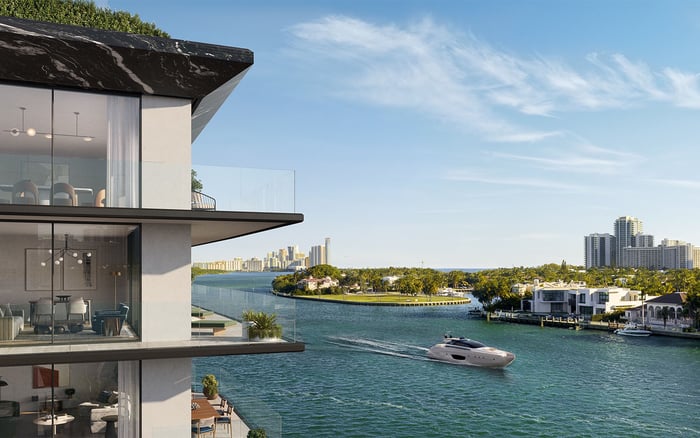
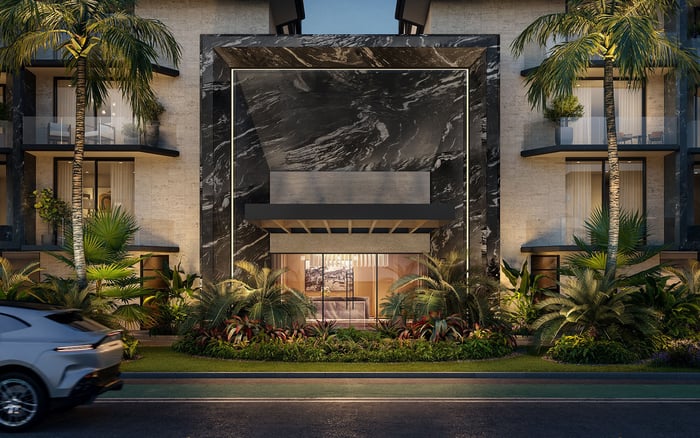
For a certain tier of South Florida buyer, the most expensive address is not automatically the most suitable one. Intracoastal and bayfront homes can offer a more nuanced luxury equation than direct oceanfront property, combining privacy, practical dockage, moderated exposure, and a stronger fit for year-round living. At the highest price points, the decision is often less about prestige and more about how the residence performs every day.
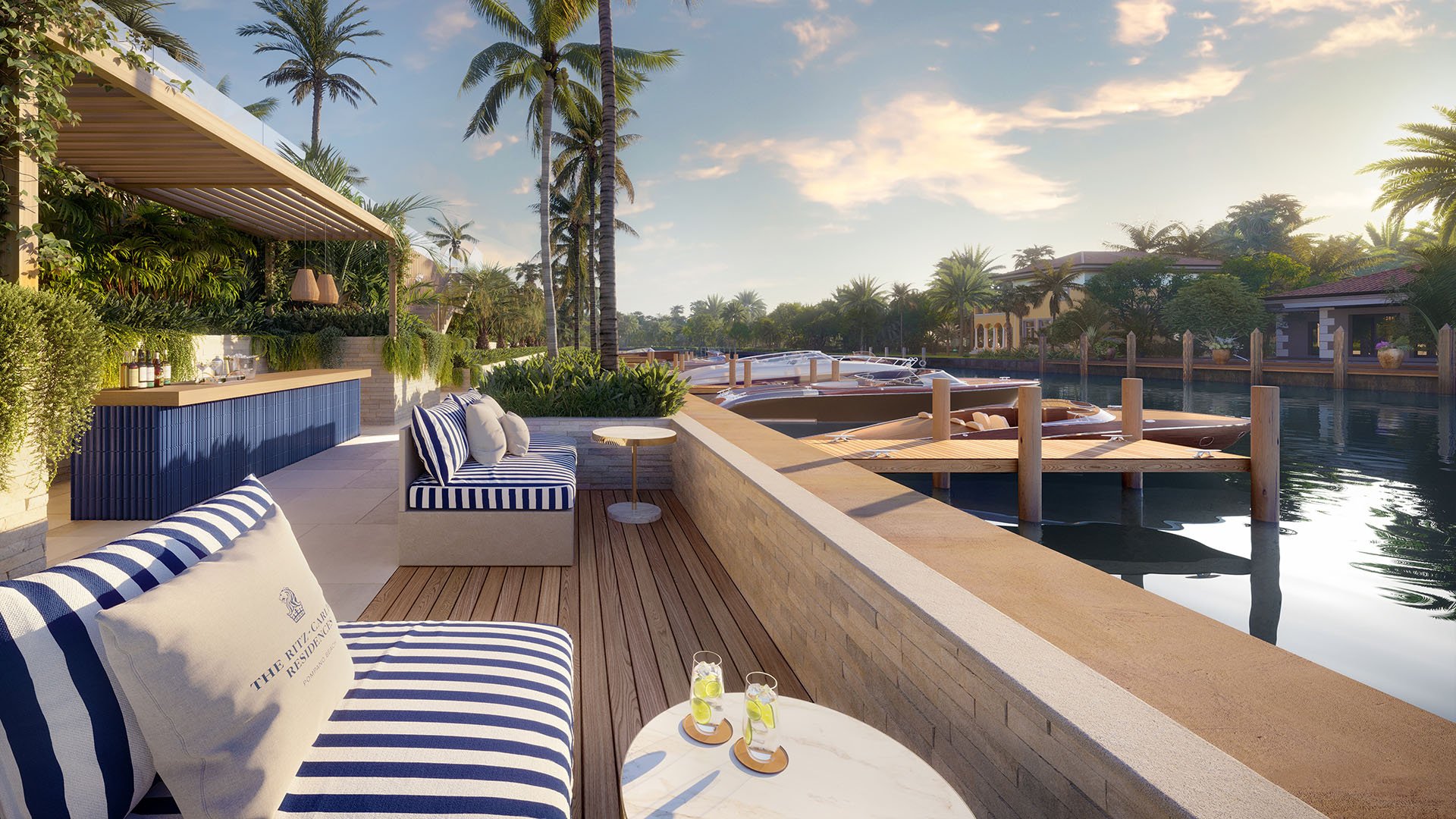
In South Florida, direct oceanfront still carries an unmistakable aura. The view is cinematic, the beach is immediate, and the address conveys a certain kind of arrival. Yet at the highest price points, many buyers are making a more exacting choice. They are selecting Intracoastal or bayfront frontage not because oceanfront is out of reach, but because protected water often aligns more closely with how they actually live.
That distinction matters. The ultra-luxury buyer is rarely purchasing a single attribute. They are acquiring a complete operating environment: privacy, resilience, access, maintenance profile, insurance considerations, and the ability to entertain, dock, and live there comfortably through every season. Within that framework, Intracoastal frontage can emerge as the more intelligent option.
This helps explain why waterfront demand in Florida extends well beyond traditional beachfront product. In markets where prestige is already assumed, subtle performance advantages begin to shape value. A home that functions beautifully every day may prove more compelling than one that simply photographs beautifully from the sand.
The difference between oceanfront and Intracoastal is not merely visual. Oceanfront homes and towers occupy the edge of open-Atlantic wind, wave, and salt conditions. That direct exposure creates a harsher ownership environment over time, particularly for exterior finishes, railings, glazing systems, mechanical components, and other high-touch building elements.
For sophisticated buyers, this is not abstract. It is part of the cost and effort of ownership. Salt air, stronger wind loading, and greater water-intrusion concerns can intensify maintenance cycles and place more pressure on long-term building performance. Even beautifully designed oceanfront assets may demand a higher level of vigilance simply because of where they are located.
By contrast, Intracoastal and bayfront settings often benefit from some shielding by barrier islands and surrounding landforms. That does not eliminate waterfront risk, but it can create a more moderated edge condition. For buyers evaluating a primary residence, or a property intended for extended seasonal use, that distinction can carry real weight.
In the oceanfront segment, residences such as 57 Ocean Miami Beach or The Delmore Surfside embody the allure of direct shoreline living. Their appeal is undeniable. But for some purchasers, the very qualities that make oceanfront so seductive also create a more demanding ownership profile than they want for everyday life.
Many affluent buyers are no longer asking only which waterfront is most iconic. They are asking which one feels most private. Direct oceanfront, especially along well-known stretches of beach, can come with greater public adjacency, more visible activity, and a more resort-driven atmosphere. For certain households, that energy is welcome. For others, it weakens the sense of retreat.
Intracoastal and bayfront homes often offer a quieter residential cadence. The water remains central, but the experience can feel more sheltered, more controlled, and less exposed to foot traffic or tourist patterns. That matters to buyers who value discretion as highly as view lines.
In enclaves defined by calm-water frontage, the appeal is less theatrical and more cultivated. Residences such as Onda Bay Harbor and The Ritz-Carlton Residences® Miami Beach speak to this alternative luxury vocabulary: waterfront living organized around arrival, marina adjacency, and a more private daily rhythm rather than direct beach spectacle.
For many buyers, especially those using the home frequently rather than episodically, that atmosphere is not a compromise. It is precisely the appeal.
At the very top of the market, boating is not a side amenity. It can be the central use case. This is where Intracoastal frontage often pulls decisively ahead of oceanfront property.
A direct oceanfront home may deliver extraordinary surf views, but it typically cannot match the practicality of private dockage in protected water. Buyers who keep serious vessels at home generally prefer a setting where boarding, provisioning, and day-to-day departures are straightforward. The ability to move from house to dock to yacht is a different category of luxury than beach adjacency.
Protected-water frontage also better supports entertaining at scale. Large terraces, outdoor kitchens, guest arrival by boat, and compound-style living all become more natural when the waterfront edge is usable rather than merely scenic. In this context, private dockage can rival, and for some buyers exceed, the value of direct sand access.
That helps explain enduring interest in locations tied to marina culture, including projects such as Una Residences Brickell, where waterview living intersects with a broader boating-oriented lifestyle. For buyers who measure luxury in mobility and convenience, protected frontage can simply offer more.
Today’s elite buyer tends to underwrite ownership more rigorously than the market sometimes assumes. Beauty still matters, but so do flood maps, storm exposure, insurability, and the long-term resilience of a site. These are now part of the luxury conversation.
Waterfront homes are evaluated through a matrix that includes flood-risk exposure and underwriting realities. In South Florida, where sea-level rise, flooding, and shoreline resilience are active concerns, comparatively more manageable waterfront conditions can influence decision-making. Some buyers are not trying to avoid waterfront risk entirely, which would be unrealistic. They are trying to choose the version of waterfront ownership that feels more governable.
Insurance availability and pricing have also become more central to acquisition strategy. At the highest end, that does not necessarily determine whether a buyer can purchase, but it can influence whether an asset feels rational as a long-term hold. A residence with somewhat less direct exposure may offer a more comfortable balance between glamour and manageability.
This preference is increasingly visible in neighborhoods and product types where waterview, boat-slip, and marina access are treated as genuine luxury credentials rather than secondary substitutes for oceanfront positioning.
The clearest distinction may be this: some properties excel as a fantasy, while others excel as a life. Oceanfront often wins the fantasy instantly. Intracoastal frequently wins the life.
For full-time residents, or families that use South Florida as a true base rather than an occasional retreat, protected-water frontage can feel more adaptable. The environment is often calmer. Arrival and departure are easier. Outdoor areas can be more functionally integrated into everyday routines. Privacy tends to be stronger. Dockage, if available, expands the residence from a home into a lifestyle platform.
That is especially relevant in places where buyers want sophisticated design without an overtly transient ambiance. A buyer comparing barrier-island beachfront to a more protected edge may conclude that the latter functions better as a year-round residence, even at the same echelon of spending.
The choice, then, is not between better and worse waterfront. It is between two different expressions of luxury. Oceanfront remains unmatched for beach adjacency and panoramic surf views. Intracoastal and bayfront often offer a richer operational package: quieter surroundings, more usable water access, lower day-to-day exposure to open-ocean conditions, and a setting that can feel more composed over time.
For many South Florida buyers, that is not a retreat from prestige. It is a refinement of it.
Is Intracoastal frontage less prestigious than direct oceanfront? Not necessarily. In the ultra-luxury market, prestige often follows privacy, dockage, and livability as much as beach access.
Why do yacht owners often prefer Intracoastal homes? Protected-water frontage usually makes private docks and daily boating far more practical than direct ocean exposure.
Does oceanfront require more maintenance? It often can, because direct shoreline exposure increases salt, wind, and moisture stress on exterior systems and finishes.
Are insurance considerations affecting luxury buyers? Yes. Insurance pricing and availability are now part of high-end purchase decisions across South Florida.
Is bayfront living quieter than oceanfront? It often is, especially in residential enclaves with less public beach traffic and a more controlled waterfront edge.
Can private dockage be as valuable as beach access? For the right buyer, absolutely. If boating is central to the lifestyle, dockage may be the defining amenity.
Do buyers choose Intracoastal frontage for full-time living? Often, yes. Many see it as better suited to everyday comfort rather than purely resort-style use.
Does protected frontage eliminate flood or storm risk? No. It can offer a different exposure profile, but all waterfront property requires careful risk evaluation.
Are oceanfront condos still highly desirable? Very much so. They remain the first choice for buyers prioritizing beach adjacency and dramatic Atlantic views.
What is the core trade-off between the two? Oceanfront favors direct beach living and spectacle, while Intracoastal favors privacy, dockage, and practical daily use.
To compare the best-fit options with clarity, connect with MILLION.
If branded residences are on your mind — as a home or as an allocation — we would be glad to share what we are seeing, privately.
Begin a quiet conversation