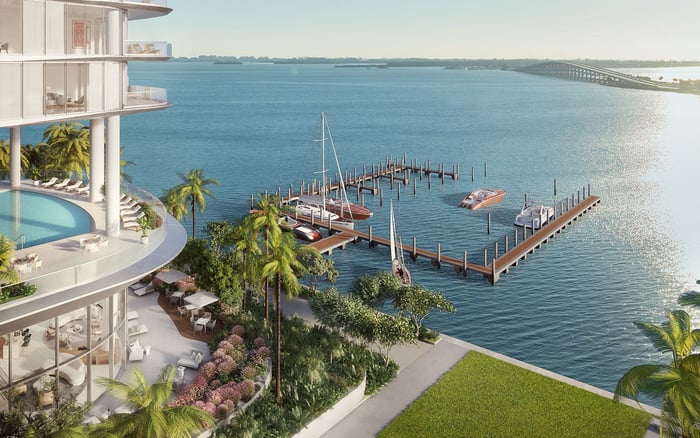
For affluent South Florida buyers, the hardest waterfront decision is often not ocean versus bay, but whether daily life will revolve around the beach, the boat, or a disciplined compromise between the two. The smartest purchases start by separating scenery from rights, convenience from marketing, and prestige from actual utility.
In South Florida, buyers often say they want both beach access and boating. In practice, those are two distinct luxuries, and each commands its own premium. Beachfront homes and condos generally trade above comparable inland properties, but that premium does not always buy the same thing. Sometimes it secures direct sand access. Sometimes it buys little more than an elevated water view and a prestigious address.
That distinction matters because a residence can be exceptional for an oceanfront lifestyle yet disappointing for actual boating. A glamorous tower may deliver sunrise terraces, full beach service, and immediate access to the sand while offering no marina, no legal dock rights, and no practical path for a vessel. In Miami Beach, that is often the central trade-off. Addresses such as The Perigon Miami Beach speak directly to buyers whose first priority is the beach experience itself.
The reverse is equally true. A residence can be highly functional for marina use and daily departures on the water, yet weaker on effortless beach living if the shoreline requires a drive, valet coordination, or club access instead of a simple walk. For many purchasers, the right answer is not choosing one camp entirely. It is identifying the precise compromise that matches how often they expect to swim, entertain, and leave the dock.
Few categories create more confusion than waterfront real estate. Terms like waterfront, oceanfront, bayfront, and boat-accessible are often used loosely, even though they imply very different ownership rights and daily realities. The first task is to verify what, precisely, is being sold.
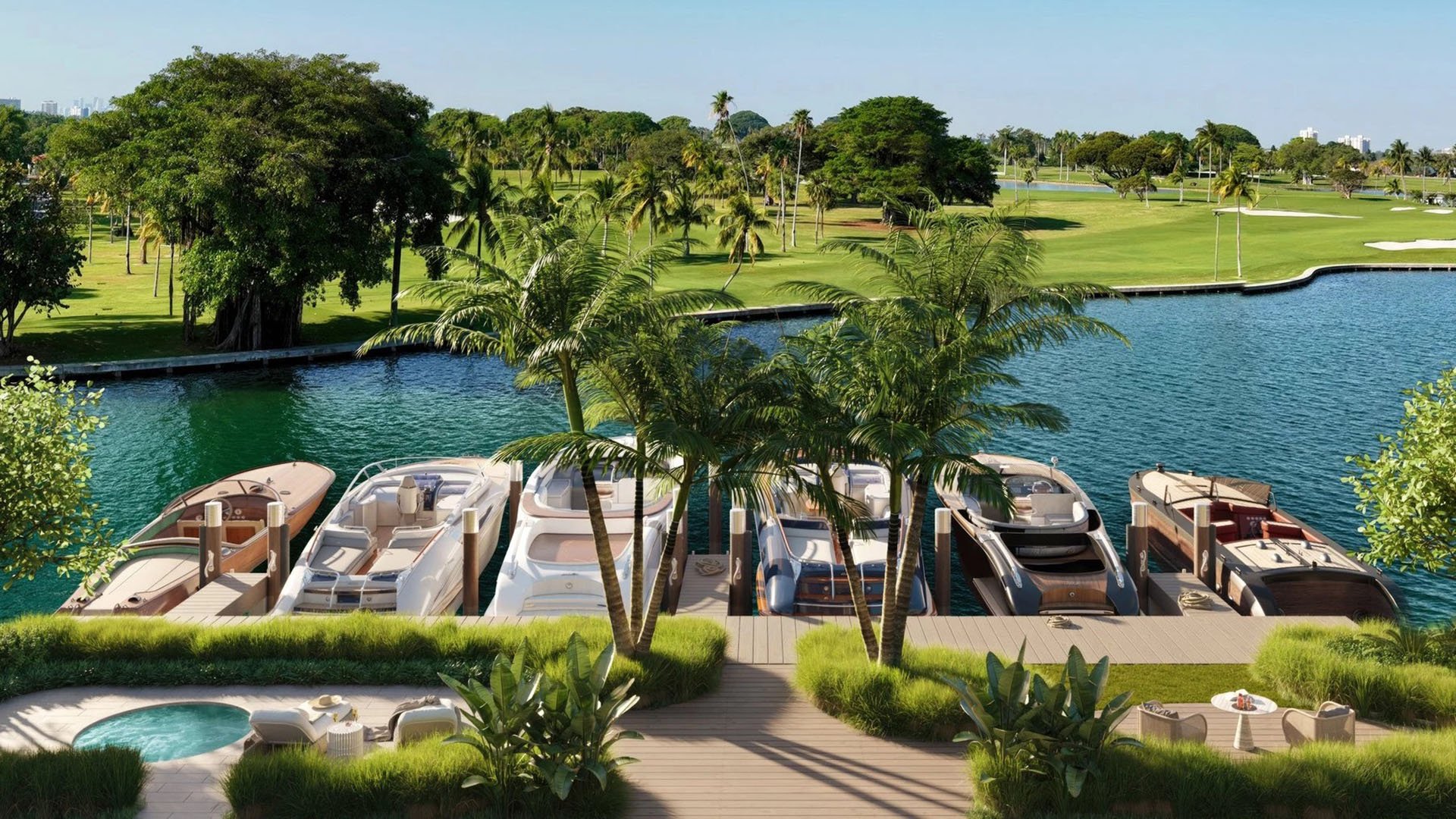
If boating matters, confirm whether the property includes an assigned slip, deeded dockage, leased dockage, or merely proximity to a marina. Marina adjacency is not the same as transferable use rights. A slip controlled by an HOA can carry a very different resale profile than one deeded with the residence. Transfer fees, assignment rules, vessel-size restrictions, and waiting lists can materially alter the ownership experience.
If beach access matters, apply the same discipline. Ask whether the residence has direct frontage, a private or quasi-private beach setup, or simply convenient access to a public beach entrance. The difference between stepping from a lobby onto the sand and crossing several blocks with chairs in tow is substantial, especially in a second-home purchase where convenience is often the real luxury.
When both priorities matter, buyers should reduce the decision to four practical tests.
First, what is the exact distance to the beach? Not the neighborhood reputation, but the real path from front door to shoreline. Five minutes on a map can feel very different once valet, traffic signals, or seasonal crowds are involved.
Second, what is the exact time from dock to open water? Biscayne Bay, Government Cut, and Intracoastal access are not interchangeable. A boating address should be judged by actual navigation time, bridge constraints, channel depth, and how quickly an owner can reach the water they intend to use.
Third, what is the legal status of the slip or dock? Rights should be understood as carefully as title itself. Buyers need clarity on whether dockage is deeded, leased, revocable, or subject to HOA control.
Fourth, what is the total annual carrying cost for both amenities? HOA dues are only part of the equation. Slip fees, dock maintenance, insurance, reserves, and potential seawall or marina capital projects can meaningfully change the economics.
For many buyers, the most intelligent solution sits near the Intracoastal rather than directly on the ocean. This is especially true in Fort Lauderdale, where the extensive canal network and daily boating utility make water access unusually practical. The area rewards owners who plan to use a vessel often rather than admire water occasionally.
That is why a residence such as St. Regis® Residences Bahia Mar Fort Lauderdale and Riva Residenze Fort Lauderdale can appeal to buyers trying to balance boat-slip utility with proximity to the shore. In the right submarket, an owner can preserve beach convenience while gaining a more credible boating setup than many true oceanfront towers can offer.
This does not mean Intracoastal automatically beats oceanfront. It means the compromise is often more elegant there. A short ride or walk to the beach may be a modest concession if it unlocks real dock infrastructure, smoother departures, and stronger day-to-day marine use.
South Florida buyers sometimes compare submarkets as if they were interchangeable expressions of waterfront prestige. They are not.
Miami Beach typically commands stronger pricing for direct beach access. That makes sense for buyers who want the sensory immediacy of the ocean, a high-touch service environment, and broad guest appeal. In this category, the asset is as much about arrival and atmosphere as utility.
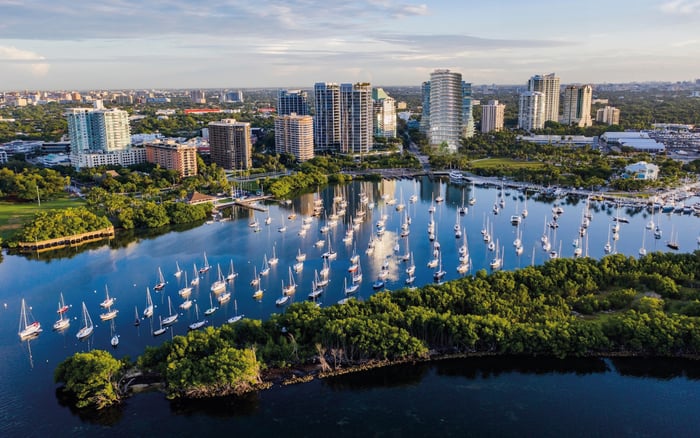
Coconut Grove is more boating-centric than beach-centric. Buyers there are usually making a conscious decision to favor marinas, bay access, and a sailing or yachting lifestyle over immediate walk-out sand access. Projects such as Arbor Coconut Grove and Vita at Grove Isle fit the conversation when the owner values bay orientation and marine culture more than a literal beachfront address.
Coral Gables occupies another lane altogether. Waterfront ownership there can be compelling for purchasers who want private dockage, yacht-club adjacency, and a more residential expression of luxury, even if the nearest true beach is reached by car rather than on foot. That makes Coral Gables attractive to owners whose boating is intentional and frequent, not occasional.
The correct residence depends partly on what you are trying to berth. A center-console used every weekend has very different requirements from a larger yacht. Draft, beam, bridge clearance, turning radius, fueling convenience, and the owner’s tolerance for slow no-wake routes all affect whether a property feels effortless or frustrating.
This is where many visually impressive purchases fail the practical test. Buyers fall in love with a waterfront setting without asking how their vessel actually leaves the property. The right screening question is simple: would this location still be desirable if you used the boat exactly as planned for the next five years?
If the answer is no, the boating premium is misplaced.
Waterfront carrying costs do not stop at taxes and dues. Dockage can alter the economics meaningfully, especially when annual fees, assignment charges, marine maintenance, and reserve obligations are separated from the advertised ownership budget. Buildings with docks, marinas, or seawalls may also face additional reserve burdens and capital planning.
Insurance and flood exposure deserve the same scrutiny. Both beachfront and Intracoastal properties carry climate-related risk, and neither category should be assumed safer by default. Elevation, flood-zone status, building adaptation plans, and long-term resilience all matter to resale and to annual cost.
From an investment standpoint, beach-oriented properties often appeal to a broader audience, while true boating residences can attract a narrower but highly motivated buyer pool. That does not make boating assets inferior. It simply means their value is often more use-case specific.
The most refined South Florida purchase is not the one with the most seductive label. It is the one whose rights, logistics, and carrying costs align with your actual life. If your ideal morning is coffee, sand, and a full-service beach club, buy for direct shoreline access and treat boating as occasional. If your weekends begin at the dock before sunrise, prioritize navigation time, legal dockage, and vessel fit.
If both matter, seek the disciplined middle: near-beach positioning, credible marine infrastructure, and no ambiguity around rights. That is where many of the market’s smartest acquisitions live.
Is oceanfront always better if I want both beach and boating? No. Oceanfront is often strongest for direct sand access, but many buildings are weaker on practical boating rights and marina utility.
What should I verify first on a boating property? Confirm whether the slip or dock is deeded, leased, or HOA-controlled, and whether it transfers with the sale.
Why does Intracoastal access appeal to dual-priority buyers? It often offers a more balanced mix of beach convenience, dock infrastructure, and faster everyday boating use.
Is a marina next door the same as having a slip? No. Proximity to a marina does not guarantee an assigned or transferable slip.
Does Miami Beach usually favor beach buyers over boat buyers? In many cases, yes. The premium there is often tied more closely to direct beach lifestyle than to boating utility.
Is Coconut Grove a beach market? Not primarily. It tends to suit buyers who prioritize bay access, marinas, and boating culture over walk-out beach living.
How should I compare two waterfront properties fairly? Measure exact beach distance, exact time to open water, legal dock rights, and total annual carrying cost.
Do slip costs belong in my housing budget? Absolutely. Dockage, transfer fees, and marine-related charges should be underwritten separately from HOA dues.
Are beachfront properties safer from climate risk than canal-front homes? Not automatically. Both should be evaluated for elevation, flood exposure, and resilience planning.
Which type has broader resale appeal: beach or boating? Beach-oriented residences often appeal to a wider audience, while boating properties can draw a smaller but very focused buyer pool.
For a confidential assessment and a building-by-building shortlist, connect with MILLION.
If branded residences are on your mind — as a home or as an allocation — we would be glad to share what we are seeing, privately.
Begin a quiet conversation