A buyer-oriented guide to evaluating mechanical noise in South Florida penthouses, from oceanfront wind and rooftop equipment to bayfront marina activity and city-core vibration.

In South Florida, silence is a luxury material. It shapes how a primary suite feels before sunrise, how a terrace performs during dinner, and whether a spectacular view remains restful after the first week of ownership. Yet penthouse buyers often compare noise too broadly, treating oceanfront, bayfront, and city residences as if they share the same acoustic profile.
They do not. Each setting has its own sound signature. Oceanfront residences may benefit from the natural masking of surf and wind, while still requiring scrutiny of rooftop equipment, façade pressure, and terrace turbulence. Bayfront residences can feel serene across open water, then shift with marina activity, boat movement, or nearby mechanical plant. City penthouses, especially in dense vertical districts, require careful separation between street noise, amenity noise, elevator cores, shafts, and building systems.
The goal is not absolute silence. In a high-design penthouse, the goal is controlled sound: predictable, well-managed, and aligned with how the residence will actually be used.
Mechanical noise is recurring sound generated by systems, not lifestyle. It may come from HVAC equipment, cooling towers, exhaust fans, elevator machinery, pool equipment, pumps, generators, ventilation shafts, or amenity-level operations. Ambient noise is the broader soundscape: surf, wind, traffic, voices, music, boats, and city activity.
A sophisticated buyer should separate the two during every showing. Ambient noise may be seasonal, social, or tied to a particular hour. Mechanical noise is more likely to repeat, and repetition is what makes it noticeable after move-in. A soft hum may be acceptable in a foyer but intrusive in a bedroom. A brief elevator sound may be tolerable during the day and distracting at night.
Ask where the major mechanical rooms are located relative to the penthouse, whether any equipment sits above or beside the residence, and how air is supplied, returned, and exhausted. The floor plan matters, but the vertical stack matters just as much.
Search labels such as Oceanfront, Waterview, Penthouse, High-floors, Brickell, and Miami Beach can help frame a property search, but they do not replace a room-by-room acoustic review.
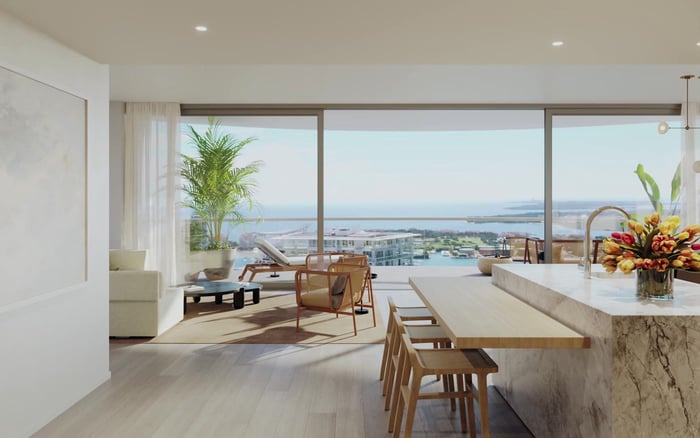
Oceanfront penthouses can be remarkably forgiving because the natural sound of water and wind often masks low-level mechanical hum. That masking can make terraces feel calmer than expected, especially when the soundscape is consistent. For many buyers, this is part of the emotional appeal of living directly on the water.
The caution is that masking is not insulation. A residence may feel quiet on a breezy afternoon and reveal mechanical character late at night when the building is still. Oceanfront towers also place a premium on façade performance, door seals, balcony conditions, and roof-level equipment placement. A penthouse directly below or near mechanical equipment deserves particular attention, even when the interior finish level is exceptional.
During a visit, listen from the primary bedroom, not only the main salon. Close all terrace doors, then open them. Stand near corners, return-air grilles, and bathroom exhaust points. Step outside and listen for rooftop equipment, pool systems, or neighboring building plant. If a terrace is a defining feature, test it as carefully as the interior.
Bayfront living often feels quieter than oceanfront living because the water can appear more protected and visually still. That serenity is one of the great pleasures of a bay-facing penthouse. Yet the acoustic profile is more varied than the view may suggest.
Mechanical considerations include marina infrastructure, ventilation systems serving lower amenities, garage exhaust, emergency equipment, elevator cores, and rooftop or podium-level plant. In some bayfront settings, water carries sound across the basin, allowing a residence to feel visually private while still receiving intermittent sound from nearby activity.
The most effective comparison is time-based. Visit during a weekday, then again when the waterfront is more active. Listen from the bedroom, kitchen, terrace, and any office or den intended for calls. Note whether the most noticeable sounds are distant and atmospheric or localized and mechanical. Localized mechanical sound is the category to investigate further.
Buyers who plan to live with open doors should be especially attentive. A bayfront terrace may perform beautifully for cocktails and dining, but the experience depends on the rhythm of nearby equipment, docks, traffic corridors, and amenity decks.
City penthouses offer a different proposition. Height can reduce certain street-level noises, but it does not automatically remove vibration, sirens, rooftop activity, or sound transfer associated with shafts and mechanical systems. In a city setting, the issue is less the presence of sound than its source, frequency, and path.
A high-floor residence near an elevator bank may need a different review than one set farther from the core. A penthouse beneath amenity space may have a different acoustic character than one beneath a roof with limited access. Mechanical rooms, service corridors, and exhaust pathways should be understood before a buyer becomes absorbed by skyline views.
In districts such as Brickell, buyers should evaluate both weekday and evening conditions. A residence can feel polished and composed at midday, then reveal a different personality when traffic patterns, dining, valet activity, and building operations shift. The best penthouses do not eliminate urban energy. They compose it.
A serious penthouse review should include a deliberate listening sequence. Begin in silence. Ask for music and televisions to be turned off. Pause conversation in each major room for at least a brief interval. Listen near windows, sliding doors, headboards, closets, bathrooms, and HVAC grilles. Mechanical noise often reveals itself at the edges of rooms rather than the center.
Then change conditions. Open and close terrace doors. Turn the HVAC system on and off if appropriate. Move from day spaces to sleeping spaces. Walk the service corridor. Ride the elevator to the floor and listen for acceleration, arrival, and door operation. If there is a private elevator foyer, evaluate it with the same care as the entry gallery.
Return at another time if the residence remains a serious candidate. Afternoon, evening, and early morning can produce materially different impressions. A single showing can confirm beauty, but quiet should be verified through repetition.
Discreet technical questions can reveal a great deal. Ask whether the residence shares walls with service areas. Ask what sits above, below, and beside the unit. Ask where condensers, pumps, exhaust fans, emergency systems, and elevator machinery are located. Ask whether any acoustic upgrades were made within the residence, including glazing, seals, underlayment, or interior assemblies.
For resale penthouses, inquire about prior owner modifications that may affect sound transfer, such as flooring changes, ceiling work, or reconfigured mechanical runs. For new-construction or recently delivered residences, ask how final balancing and commissioning are handled. Keep the language calm and precise. The most desirable buildings expect sophisticated questions.
When a buyer is particularly sound-sensitive, an acoustic consultant can be part of the diligence team. That is especially prudent when the residence will be used as a primary home, recording space, wellness retreat, or work-from-home environment.
Quiet in a South Florida penthouse is not a vacuum. It is a sense of control. Oceanfront quiet may include wind and water. Bayfront quiet may include soft waterfront movement. City quiet may include distant urban texture. The question is whether those sounds belong to the setting or whether a mechanical source intrudes on the residence.
The finest properties make systems feel invisible. Air moves without calling attention to itself. Elevators arrive without dominating the foyer. Amenity decks function without entering the bedroom. Terraces feel usable, not merely photogenic. This is where luxury moves beyond finishes into lived experience.
What is mechanical noise in a penthouse? Mechanical noise is sound from building systems such as HVAC equipment, elevators, pumps, fans, generators, and exhaust systems.
Are oceanfront penthouses quieter than city penthouses? Not always. Oceanfront sound can mask some noise, but rooftop systems, wind, and façade conditions still need careful review.
Can bayfront residences carry sound across water? Yes. Waterfront settings can transmit intermittent sounds from boats, docks, amenities, or nearby buildings, even when the view feels calm.
Does a higher floor always mean less noise? No. Height may reduce some street sound, but proximity to roof equipment, elevator cores, or amenity areas can matter more.
Which rooms should I test first? Start with the primary bedroom, office, and main living area, then evaluate bathrooms, closets, foyers, and terrace doors.
Should I visit a penthouse more than once? Yes. Different times of day can reveal different building operations, traffic patterns, wind conditions, and amenity activity.
What should I ask about rooftop equipment? Ask what equipment sits above or near the residence, how it is isolated, and whether it can be heard from bedrooms or terraces.
Can interior design improve acoustic comfort? Yes. Softer materials, better seals, thoughtful layouts, and selected wall or ceiling treatments can improve perceived quiet.
When should I hire an acoustic consultant? Consider one if you are highly sound-sensitive, buying a primary residence, or evaluating a penthouse near major building systems.
What is the best sign of a well-controlled penthouse? The best sign is consistency: systems feel unobtrusive across rooms, times of day, and terrace conditions.
For a discreet conversation and a curated building-by-building shortlist, connect with MILLION.
If branded residences are on your mind — as a home or as an allocation — we would be glad to share what we are seeing, privately.
Begin a quiet conversation