A practical guide for luxury penthouse buyers comparing freight elevator reservation rules across oceanfront, bayfront, and city buildings in South Florida.

For a penthouse buyer, the view is only one part of the acquisition. The unseen systems of a building often determine how gracefully the residence can be lived in, furnished, maintained, and improved over time. Freight reservations, typically scheduled access to a freight elevator or service lift, belong in that category. They are not glamorous, yet they influence everything from art installation and designer furniture delivery to appliance replacement, terrace landscaping, and post-closing renovations.
At the top of a tower, logistics carry greater weight. A delay at the loading dock can ripple through a moving crew, an installer, a designer, a building manager, and a resident’s schedule. In South Florida, where oceanfront, bayfront, and city penthouses may each have distinct access points and service cultures, the most sophisticated buyers compare freight policies before they become urgent.
The goal is not to find the building with the fewest rules. In a true luxury environment, rules can protect privacy, finishes, circulation, and staff performance. The better question is whether the building’s freight reservation framework matches the way you expect to use the residence.
Oceanfront penthouses often place daily life in a resort-like setting, where the building experience depends on calm arrivals, protected common areas, and consistent service. Freight reservations in these properties should be reviewed with particular attention to the path of travel. Ask how deliveries move from loading area to elevator, whether crews pass guest-facing spaces, and how the building protects lobby, corridor, and elevator finishes during large installations.
Weather and exposure are part of the practical conversation. Coastal conditions can complicate scheduling, especially for oversized furniture, terrace items, or materials that should not wait outdoors. A strong reservation system will clarify arrival windows, staging rules, protective coverings, insurance requirements, and the procedure if a delivery must be rescheduled.
For a penthouse with expansive terraces, buyers should also ask how outdoor furnishings, planters, grill components where permitted, and service equipment are handled. Some items require advance measurements, elevator padding, management approval, or coordination with specialized vendors. The more customized the residence, the more valuable a predictable freight process becomes.
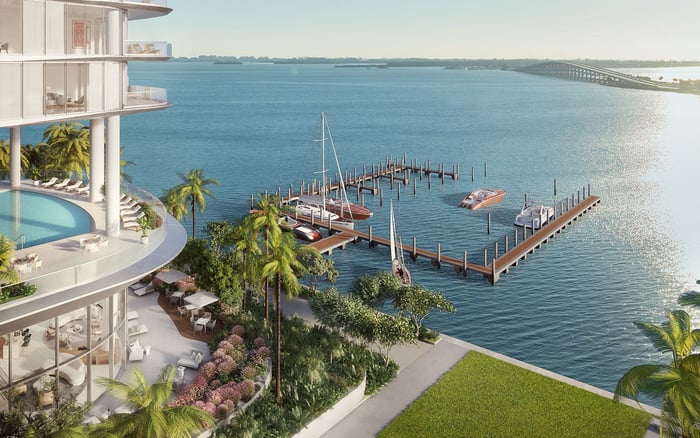
Bayfront residences can offer a softer relationship to the water, with waterview corridors, marina-adjacent settings, or buildings arranged around arrival courts and garages. Freight logistics here often deserve a more nuanced review. The service path may involve garage clearance, ramp access, loading zones, staff elevators, or coordination around porte cochere traffic.
Buyers should ask whether freight reservations are first come, first served, limited to certain days, or restricted by quiet hours. If the penthouse will be used as a second home, timing matters even more. A delivery that seems simple on paper may require an owner representative, a property manager, or a designer to be present. The building’s ability to accommodate that coordination can distinguish a polished ownership experience from a frustrating one.
In bayfront settings, storage is another point of inquiry. If a shipment arrives early, can the building hold it briefly, or must it be refused? Are there designated staging areas, or does everything need to move directly from truck to residence? For art, antiques, and custom furnishings, these answers should be clear before closing.
City penthouses, particularly in dense neighborhoods such as Brickell, place freight reservations inside a faster urban choreography. The issue is not merely elevator access. It is curb access, loading dock capacity, security clearance, parking, peak traffic, vendor check-in, and coordination with residents who may rely on the same vertical infrastructure throughout the day.
In high-floor residences, elevator time can become the most precious variable. Buyers should ask how many freight elevators serve the tower, whether one is shared with staff operations, and how the building manages simultaneous move-ins, contractor visits, and routine service. A well-run city building will typically have clear procedures, defined documents, and staff who can explain the sequence without improvisation.
Fees should be understood in plain language. Some buildings may require deposits, elevator padding charges, after-hours fees, or proof of vendor insurance. The presence of fees is not automatically negative. What matters is transparency, predictability, and whether the rules support the level of discretion expected in a premier tower.
A refined buyer should compare freight reservations as part of building operations due diligence, not as an afterthought after closing. Start with availability. How far in advance must freight time be reserved? Are weekends permitted? Are holiday periods restricted? Can the building accommodate consecutive days for a complex installation?
Next, examine control. Who approves the reservation, and how quickly do they respond? Is there a formal portal, a management email, or a concierge-led process? Is the resident required to be present, or may an authorized representative sign vendors in? For an owner who travels frequently, these details can materially affect convenience.
Then look at physical capacity. Confirm freight elevator dimensions, weight limits, door widths, corridor turns, and access from the loading area. For a penthouse with large-scale furniture, slabs, cabinetry, or collectible design, measurements are not administrative trivia. They determine whether an item can be installed conventionally, requires special handling, or should be reconsidered before purchase.
Finally, understand enforcement. The most desirable buildings are usually protective of residents’ privacy and common areas. Clear enforcement can be a virtue, provided the rules are communicated early and applied consistently.
Oceanfront properties often call for heightened sensitivity to resort circulation, guest experience, weather exposure, and the protection of pristine common areas. Bayfront buildings tend to require careful review of staging, garage access, water-oriented site planning, and occasional marina or arrival-court complexity. City towers emphasize scheduling discipline, traffic awareness, security procedures, and elevator demand.
None of these categories is inherently easier or harder. A boutique oceanfront building may be exceptionally flexible, while a large urban tower may have outstanding logistics because its staff handles complex deliveries every day. The key is to compare the building’s operating culture as much as its written rules.
A useful test is to describe your first 90 days of ownership. Will you move in immediately? Furnish gradually? Install art? Replace lighting? Add terrace pieces? Bring in a designer? If the management team can walk through that scenario calmly and specifically, the building is more likely to support your lifestyle.
Experienced penthouse buyers recognize that freight access is part of asset stewardship. It protects expensive finishes, reduces vendor friction, and allows the residence to evolve without unnecessary disruption. In a market where privacy and service are central to value, the best freight systems feel almost invisible because they are well planned.
The conversation also reveals the building’s broader temperament. A responsive manager, precise reservation form, clear insurance standard, and thoughtful service route all suggest a property that understands luxury beyond aesthetics. Conversely, vague answers can signal future inconvenience, even in an otherwise beautiful tower.
Before signing, request the building’s current freight and move-in policies, then review them with the same seriousness you would give parking, pet rules, rental policy, reserves, and terrace permissions. For a penthouse, the ability to move exceptional objects discreetly and efficiently is not a minor operational detail. It is part of how the residence lives.
What is a freight reservation in a luxury condominium? It is usually a scheduled time to use the freight elevator or service route for moves, deliveries, installations, or contractor access.
Why is freight access more important for a penthouse? Penthouse items are often larger, more customized, and more time-sensitive, so elevator capacity and scheduling can affect the entire installation plan.
Are oceanfront buildings stricter about freight reservations? They can be, especially when protecting resort-style common areas, privacy, and finishes from heavy vendor traffic.
What should bayfront buyers ask first? Ask how trucks, loading areas, garages, staging spaces, and elevator access connect from arrival to the residence.
How does Brickell change the freight conversation? Brickell towers often require tighter planning around traffic, security, loading dock timing, and shared vertical circulation.
Should buyers review freight rules before closing? Yes. The policies can affect move-in timing, renovation planning, designer installations, and future maintenance.
Do freight reservations usually involve fees? They may involve deposits, padding charges, after-hours costs, or insurance requirements, depending on the building.
Can an owner representative manage freight access? Many buildings allow authorized representatives, but the process should be confirmed in writing before scheduling vendors.
What measurements matter most? Elevator dimensions, weight limits, door widths, corridor turns, loading clearance, and the route to the penthouse all matter.
Is the easiest freight policy always the best? Not necessarily. A structured policy can protect privacy, finishes, staff flow, and the long-term quality of the building.
For a confidential assessment and a building-by-building shortlist, connect with MILLION.
If branded residences are on your mind — as a home or as an allocation — we would be glad to share what we are seeing, privately.
Begin a quiet conversation