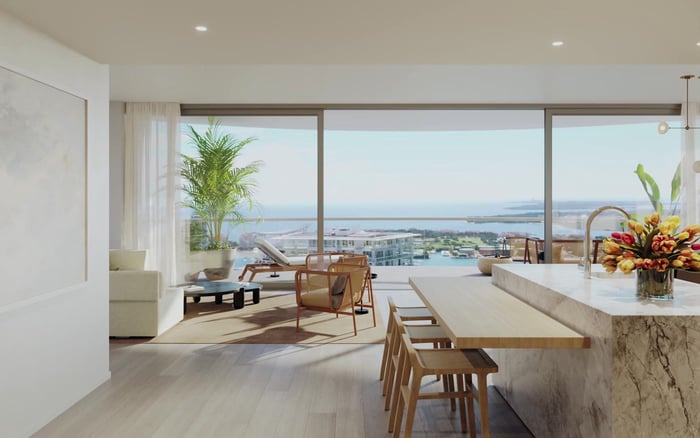
A discreet buyer’s guide to evaluating privacy glazing for South Florida penthouses, from ocean glare and bay reflections to skyline exposure and evening visibility.

Privacy glazing has become one of the most consequential details in a South Florida penthouse, not because it announces itself, but because it determines how comfortably a residence lives. In a market defined by floor-to-ceiling glass, long terraces, reflective water, and neighboring towers, privacy is no longer a simple choice between curtains open or closed. It is a layered decision shaped by tint, reflectivity, interior lighting, sightlines, exposure, and the character of the view.
For a buyer comparing an oceanfront aerie, a bayfront residence, and a city penthouse, the same glass specification can perform very differently. A pane that feels serene above the Atlantic may read as mirrorlike across Biscayne Bay. A glazing treatment that feels discreet at noon may become transparent after sunset. The goal is not to darken the home. The goal is to preserve openness while limiting unwanted visibility.
In search filters, the same buyer may compare oceanfront, waterview, high-floor, penthouse, Miami Beach, and Brickell options, yet each setting asks a different question of the glass. The most intelligent comparison begins with context, then turns to the material itself.
Oceanfront penthouses are judged first by the purity of the view. The line where water meets sky is often the emotional center of the residence, so privacy glazing should not make the view feel heavy, gray, or overly theatrical. A buyer should stand at multiple points in the main living area and confirm whether the glass preserves the color and depth of the water as the light changes.
Morning exposure is especially important in oceanfront homes. Strong light can make ordinary glass feel harsh, particularly in rooms with pale stone, lacquered millwork, or polished floors. Privacy glazing should soften brightness while keeping the interiors alive. If the residence feels dim during prime daylight hours, the treatment may be solving one problem while creating another.
The second test is balcony-to-balcony visibility. Many oceanfront towers are designed to maximize views through broad terraces, which can create oblique sightlines between residences. Look not only straight ahead, but diagonally. A penthouse may feel private from the beach and still feel exposed from a neighboring stack. The right glazing strategy reduces these side-angle intrusions without forcing the owner to rely constantly on shades.
Bayfront living introduces a different kind of intimacy. The water is often closer, calmer, and more reflective. Marina activity, passing boats, and opposite-shore residences can create a more social visual field than the oceanfront. For buyers who want openness by day and discretion by night, bayfront glazing requires careful balance.
During the day, reflective qualities may be welcome. They can blur the view into the home from the water or a neighboring building. At night, however, interior illumination can reverse the equation. A glass wall that felt private at noon may become a lit stage after dinner. The most important showing for a bayfront penthouse is often not midday, but early evening, with the residence lit as it would be during actual use.
Buyers should also compare privacy from seated positions. It is easy to stand near the glass and feel commanding. It is more revealing to sit at the dining table, in the primary bedroom, or on a sofa and consider what is visible from across the bay. True privacy glazing protects the way people live, not merely the way a room photographs.
In dense urban settings, privacy is shaped by height, distance, and opposing glass. A city penthouse may sit above most neighboring structures and still face a comparable tower across the street or corridor. In these homes, privacy glazing must be evaluated as part of a broader lighting plan.
City views are often most beautiful at night, when skyline lights become part of the interior atmosphere. The challenge is that the penthouse also becomes more visible after dark. Buyers should view the residence with typical interior lighting on, including kitchen pendants, bathroom lighting, art lights, and bedroom lamps. Bright, layered interiors can reduce perceived privacy even when the glass itself is sophisticated.
A useful exercise is to assess which rooms require permanent discretion and which can rely on occasional shading. A grand salon may be intended to glow. A primary bath should not. A media room may tolerate darker glazing, while a breakfast area may need softer, clearer glass. The best city penthouses treat privacy as a room-by-room calibration rather than a single building-wide assumption.
Begin with visual neutrality. High-quality privacy glazing should not distort skin tones, flatten the water, or cast an unflattering tint across stone, wood, and art. South Florida residences are often designed around light materials and strong indoor-outdoor continuity, so any color shift becomes immediately apparent.
Next, study reflectivity. Exterior reflectivity can support privacy, but too much can make a residence feel commercial or visually hard. Interior reflectivity also matters. At night, highly reflective interior glass can turn a view into a mirror, especially when lights are bright behind the viewer. A buyer who prizes the skyline after dark should be alert to this effect.
Finally, compare the interaction with shades. Privacy glazing is not a substitute for a complete shading strategy. It should reduce reliance on shades, not remove them from consideration. The most livable residences combine glass, lighting, and window treatments so the owner can choose openness, softness, or full seclusion with ease.
Ask to experience the penthouse at different times of day. Ask how privacy changes from the terrace, from neighboring lines, and from the water or street below. Ask whether any glass treatment is original, upgraded, or part of a larger architectural package. If replacements or enhancements are contemplated, confirm that the approach aligns with building rules and the design intent of the residence.
Most importantly, compare privacy from the owner’s perspective, not the developer’s rendering or the sales gallery impression. The essential question is simple: can you live with the glass open to the view, comfortably, throughout the day and evening? If the answer is yes, the glazing is doing what luxury design should do. It disappears into the experience.
What is privacy glazing in a penthouse? It is glass selected or treated to reduce unwanted visibility while preserving light, view quality, and architectural openness.
Is darker glass always more private? Not necessarily. Darker glass may reduce daylight or alter the view, while reflectivity and lighting conditions can matter just as much.
Why does oceanfront glazing need special attention? Oceanfront homes face strong light and broad horizon views, so privacy solutions should control glare without dulling the water.
Why is bayfront privacy different from oceanfront privacy? Bayfront settings can include closer opposite views, boats, and reflective water, making evening visibility especially important.
What is the biggest privacy issue in city penthouses? Nighttime exposure is often the key issue, because illuminated interiors can be visible from nearby towers.
Should buyers test glazing after sunset? Yes. Evening conditions reveal how the residence appears when interior lighting is on and the exterior is darker.
Can shades replace privacy glazing? Shades help, but glazing can reduce the need to close them constantly and preserve a more open daily experience.
Does privacy glazing affect interior design? It can. Tint and reflection may change how finishes, art, and natural light appear inside the residence.
What rooms need the most privacy review? Primary bedrooms, bathrooms, dining areas, and seating zones should be studied from real living positions.
How should a buyer compare three penthouses with different exposures? Visit each at comparable times, evaluate sightlines from inside and outside, and judge privacy alongside view quality.
For a confidential assessment and a building-by-building shortlist, connect with MILLION.
If branded residences are on your mind — as a home or as an allocation — we would be glad to share what we are seeing, privately.
Begin a quiet conversation