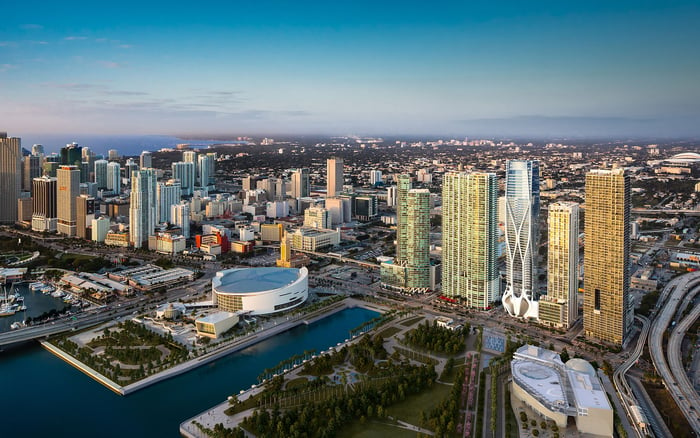
A discreet framework for evaluating Midtown Miami residences near private-club culture while ensuring the home, building, and neighborhood remain compelling on their own.
For a certain South Florida buyer, Midtown Miami’s appeal extends beyond the residence itself. It is the possibility of living near restaurants, galleries, private dining rooms, wellness studios, and social rooms that can make the week feel curated without feeling scripted. That is the essence of a club-adjacent lifestyle: proximity to a broader social ecosystem without allowing that ecosystem to become the foundation of the purchase.
The distinction matters. A home should not depend on an external club, reservation pattern, or membership calendar to feel complete. The strongest Midtown Miami purchase is one where the residence, building, and immediate neighborhood already support everyday life. Club culture can then become an enhancement rather than a crutch.
For MILLION buyers, this is a particularly useful lens because private access can be seductive. The more polished the surrounding lifestyle, the more disciplined the residential evaluation should become.
Begin with repetition, not fantasy. Ask what your week will look like on an ordinary Tuesday, not only during Art Basel, a holiday weekend, or a visiting-guest itinerary. If morning coffee, fitness, work calls, dog walking, dinner, and airport transfers feel effortless without invoking a club, the location has intrinsic value.
A practical exercise is to write two versions of your routine. The first assumes full access to your preferred dining, wellness, and social settings. The second assumes none of them are available that day. If the second version still feels dignified, convenient, and pleasurable, you are evaluating the property on sound footing.
This is where lifestyle becomes a residential discipline rather than a marketing word. The neighborhood should offer enough independent usefulness that you are not forced to treat a club as your dining room, gym, office, and social calendar all at once.
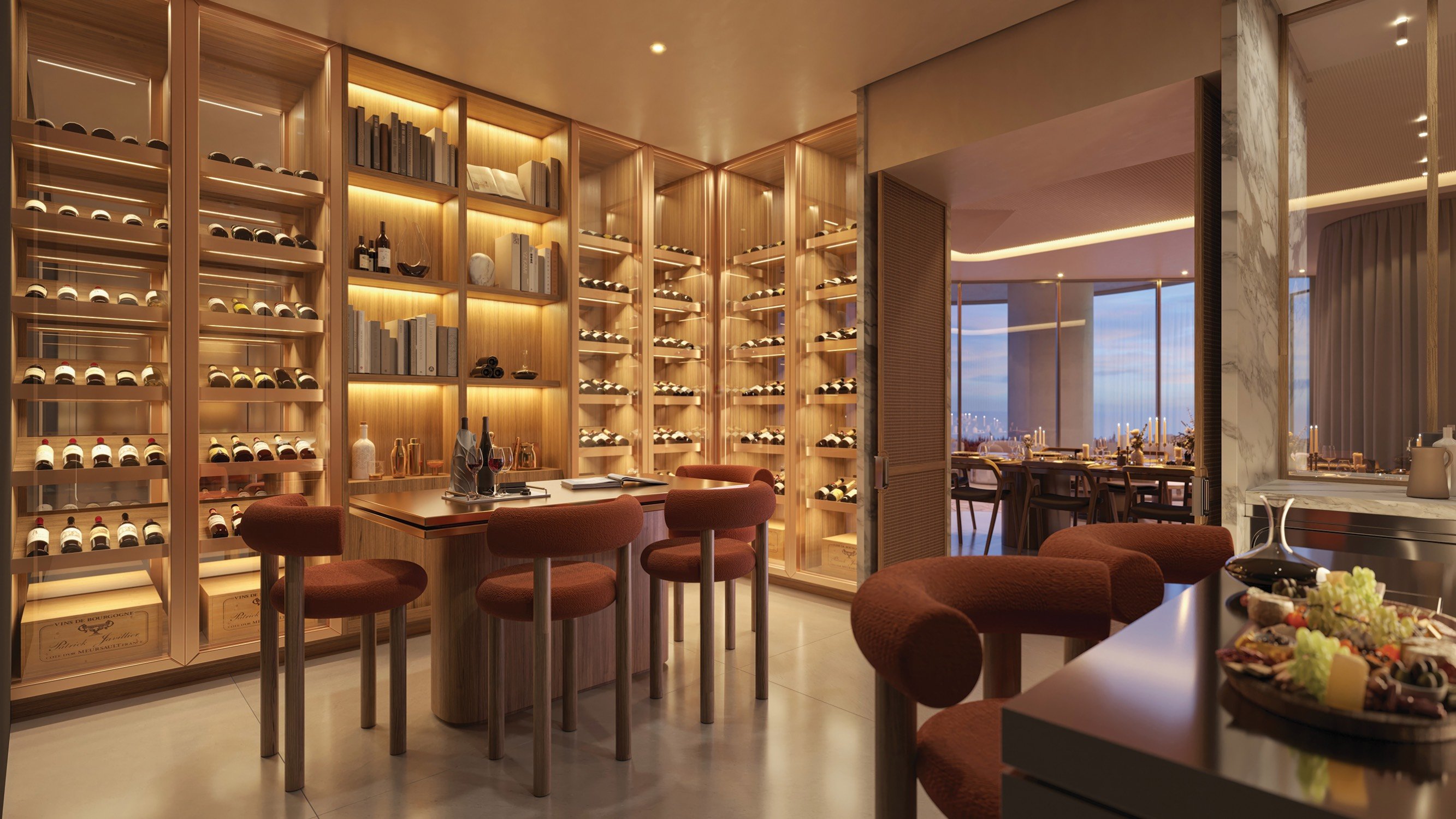
In a club-adjacent purchase, the building’s internal program deserves close scrutiny. The lobby should feel calm when the neighborhood is active. The arrival sequence should feel controlled. Elevators, parking, package handling, guest flow, and security should be evaluated as daily systems, not background details.
Amenities require the same sober reading. A residence near strong social infrastructure should still offer private places to reset: a usable fitness room, comfortable work areas, well-managed outdoor space, and common rooms that do not feel performative. If you would rarely use the building because the outside world seems more exciting, pause. You may be paying for square footage and services that do not match the way you intend to live.
A buyer studying Miami Design Residences Midtown Miami, for example, should evaluate the residence as a complete home first, then consider how the surrounding social and cultural energy adds to the experience. The deeper question remains personal: would this address work on a quiet week?
Midtown Miami can feel different depending on the hour. A polished buyer should experience the area in the morning, at midday, around dinner, and later in the evening. The goal is not to judge the neighborhood by one mood, but to understand whether its rhythm aligns with your tolerance for energy, visibility, and movement.
Do not outsource this judgment to renderings or a single showing. Walk the likely routes you would actually use. Sit in the lobby if permitted. Observe the building entrance. Notice how guests arrive, how rideshare pickups behave, and whether the streets feel intuitive when you are not being guided by a sales team.
This is especially important for buyers comparing Midtown with the Design District or Wynwood, where the appeal often includes creative atmosphere, dining, retail, and visual intensity. The question is not whether energy exists. The question is whether the energy remains an asset when you live with it every day.
Prestige is not the same as utility. A nearby private club may be valuable, but it should not be used to excuse a compromised floor plan, weak storage, difficult parking, or a view corridor that does not satisfy you. Likewise, a fashionable district should not override fundamentals such as light, privacy, ceiling height, terrace usability, and acoustic comfort.
This is where a buyer’s discipline becomes visible. If the home needs the club to feel complete, the residential thesis is fragile. If the home is compelling on its own and the club simply expands the social radius, the purchase is more resilient.
The principle applies across South Florida’s premium market: buy the enduring qualities first. Services, memberships, restaurant patterns, and social preferences can evolve. A well-chosen residence should remain graceful through those changes.
Midtown Miami does not need to be evaluated in isolation. Buyers who want urban culture without club dependency should compare nearby and alternative nodes with the same rigor. In the Design District, Kempinski Residences Miami Design District may appeal to buyers who want a design-forward context, while still requiring the same test of daily independence.
For those drawn to a more artistic urban cadence, Frida Kahlo Wynwood Residences can help frame the contrast with Wynwood. The comparison should focus on how each district supports ordinary life, not only how it photographs or entertains.
Buyers who want a more established financial-district rhythm may also study Brickell. A project such as 2200 Brickell creates a different lifestyle reference point, with a more corporate daily cadence and a separate set of tradeoffs. Downtown Miami adds another lens for buyers who want centrality and skyline energy, but the same rule applies: the residence must work without leaning on external access.
A club-adjacent purchase should be legible to a future buyer who may not share your exact memberships, routines, or social preferences. That means prioritizing flexible layouts, appealing natural light, credible storage, usable outdoor space, and a building culture that feels professionally managed.
Avoid overpaying for an identity that only works for one lifestyle profile. The more the purchase depends on a narrow social routine, the smaller the future audience may become. Conversely, a residence that supports entertaining, quiet work, wellness, privacy, and easy access to multiple neighborhoods can appeal to a wider range of luxury buyers.
The best Midtown Miami acquisition is not anti-club. It is simply not dependent on one. It allows you to enjoy the city’s social architecture while retaining the most valuable luxury of all: choice.
What does club-adjacent living mean in Midtown Miami? It means living near social, dining, wellness, and cultural venues without making any single club essential to daily comfort.
Should I pay a premium for proximity to private clubs? Only if the residence, building, and neighborhood remain compelling even when club access is not part of the day.
How do I test whether I am too dependent on a club? Imagine a full week without using it. If the home still supports your routines elegantly, the purchase is stronger.
What building features matter most for this lifestyle? Prioritize privacy, arrival experience, acoustic comfort, fitness, work areas, guest flow, and dependable daily services.
Is Midtown Miami better than Brickell for this buyer profile? Neither is universally better. Midtown may suit buyers seeking cultural energy, while Brickell may suit those preferring a financial-district rhythm.
How should I compare Midtown with Wynwood? Focus on your tolerance for creative energy, evening activity, and street-level movement, then test both areas at multiple times.
Does the Design District change the Midtown value equation? It can broaden the lifestyle radius, but it should not replace a disciplined review of the actual residence and building.
What is the biggest mistake buyers make with club-adjacent homes? They confuse social prestige with residential quality and overlook practical issues that affect daily life.
Can club-adjacent living help resale? It can, if the property also offers flexible appeal to buyers who may not share the same memberships or routines.
What is the best way to shortlist comparable options for touring? Start with location fit, delivery status, and daily lifestyle priorities, then compare stacks and elevations to validate views and privacy.
If you'd like a private walkthrough and a curated shortlist, connect with MILLION.
If branded residences are on your mind — as a home or as an allocation — we would be glad to share what we are seeing, privately.
Begin a quiet conversation