A buyer-focused editorial on why Key Biscayne appeals to discerning South Florida purchasers weighing pre-construction confidence, deposit discipline and developer credibility.
In South Florida luxury real estate, confidence is rarely built by spectacle alone. The most sophisticated buyers are asking quieter, sharper questions: who is building, how deposits are handled, what the contract actually protects, and whether the location can retain value when the market becomes more selective.
That is where Key Biscayne occupies a distinct lane. It is not trying to match the constant velocity of every urban corridor. Its appeal is more measured: privacy, residential continuity, a limited-feeling setting and a buyer pool inclined to think in years rather than launch cycles. For a purchaser considering pre-construction, that restraint can matter as much as a view, a lobby or a brand name.
Key Biscayne does not remove the need for due diligence. It sharpens it. The island context places a premium on scarcity, discretion and livability, which means a new residence must justify itself not only as a product, but as a long-term holding. In buyer shorthand, Key Biscayne, new construction, investment, Brickell, pre-construction and Oceana Key Biscayne often sit in the same strategic conversation, even when the lifestyle answers are very different.
Much of South Florida pre-construction is sold through momentum. Renderings, amenities, hospitality names and early release pricing all create urgency. Key Biscayne asks a different question: does the project belong in its setting?
That distinction matters. A luxury buyer drawn to Key Biscayne is often less interested in novelty for its own sake than in whether the residence will age gracefully. The island buyer tends to evaluate light, approach, privacy, daily access, service quality and architectural restraint. The emotional decision may begin with the water; the financial decision ends with trust.
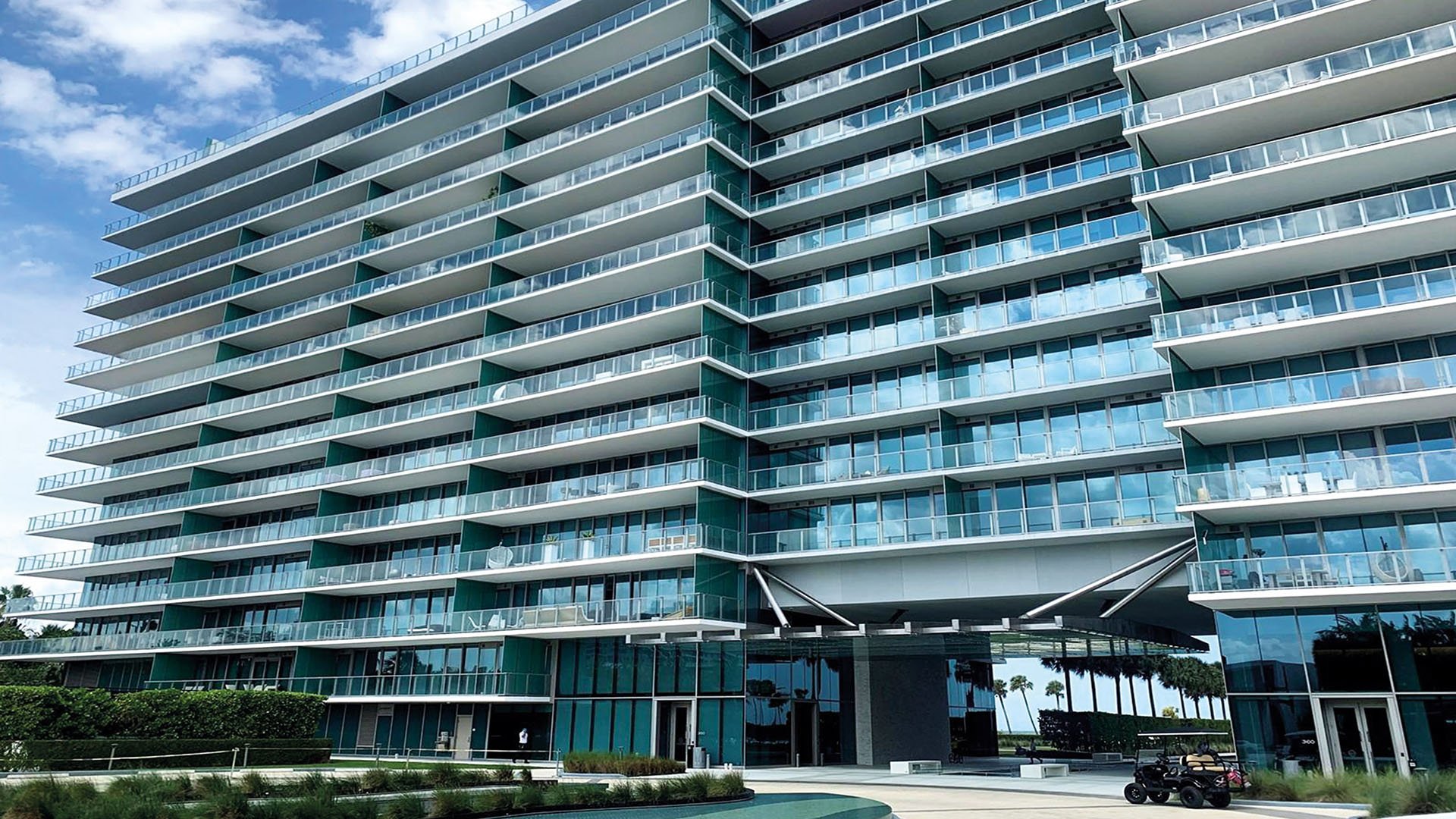
This is why completed references carry weight. A property such as Oceana Key Biscayne gives buyers a tangible point of comparison for scale, atmosphere and the difference between a polished promise and a lived residential environment. In a market where many offerings begin on paper, a finished benchmark helps define what discipline looks like after delivery.
Deposit structure is one of the most revealing parts of a pre-construction purchase. It is not just about how much capital is committed. It is about timing, control, documentation and the relationship between buyer obligation and developer performance.
A serious buyer should look beyond the headline percentage and study the sequence. When is the reservation converted into a binding contract? Where are funds held? What events trigger additional deposits? What happens if construction timing changes? Which provisions are negotiable, and which are fixed by the project’s legal structure?
The strongest buyers treat deposit review as an early risk audit, not an administrative step. They bring counsel into the conversation before emotion becomes commitment. They compare the deposit calendar with liquidity planning, currency considerations, potential financing assumptions and exit flexibility. In Key Biscayne, where the purchase may be tied to family use, second-home planning or legacy ownership, the deposit conversation should feel deliberately conservative.
Developer track record is often reduced to reputation, but reputation alone is not enough. A buyer should ask how a developer has performed across the full arc of a project: acquisition, design discipline, construction execution, closing process, resident handover and post-completion stewardship.
The most relevant track record is contextual. A tower delivered in a dense urban market may demonstrate capital depth and construction sophistication, while a boutique coastal project may reveal sensitivity to scale and resident experience. The Key Biscayne buyer should pay attention to both. The question is not simply whether the developer can build, but whether the developer can deliver the right building for the right place.
This is where comparisons across South Florida become useful. A buyer looking at the energy and convenience of 2200 Brickell is evaluating a different daily rhythm than a buyer focused on island calm. Yet the underlying questions remain the same: contract clarity, delivery credibility, design durability and the likelihood that the residence will remain desirable after the first wave of marketing has passed.
Key Biscayne should not be evaluated in isolation. The most disciplined buyers compare it with Miami Beach, Coconut Grove, Surfside, Brickell and other prime enclaves, not because those markets are interchangeable, but because each solves a different lifestyle equation.
Surfside, for example, often appeals to buyers who want a quieter beachfront experience with a refined residential tone. A project such as The Delmore Surfside may enter the comparison when a buyer is weighing oceanfront presence against Key Biscayne’s more island-oriented identity. Coconut Grove, by contrast, offers a lush, established residential character with strong appeal for buyers who want greenery, boating culture and proximity to the city. Four Seasons Residences Coconut Grove can therefore be part of a thoughtful comparison for those who value service and neighborhood depth.
The point is not to declare one market superior. It is to match risk profile with lifestyle profile. A buyer seeking constant urban access may lean one way. A buyer seeking privacy and continuity may lean another. Key Biscayne’s advantage is that it can make the buyer slow down, which is often exactly what a large pre-construction commitment requires.
Before entering a binding agreement, a buyer should assemble a practical review set. That includes the purchase agreement, deposit schedule, condominium documents, floor plan, specification package, budget assumptions, anticipated service model and any disclosures that define buyer rights and developer obligations.
The review should focus on precision. Are ceiling heights, terrace conditions, appliance packages and finish levels described clearly? Are substitutions allowed? What is the standard for material changes? How are delays addressed? What remedies exist, and what remedies are expressly limited?
The best pre-construction decisions are made when glamour and governance are considered together. A residence can be beautiful and still carry contractual ambiguity. Conversely, a project with disciplined documents, clear communication and a credible sponsor can create confidence before the first permanent view is visible.
Key Biscayne solves the South Florida confidence question by changing the tempo. It encourages buyers to think less like speculators and more like stewards. Deposit structure becomes a tool for discipline. Developer track record becomes a lens for trust. Location becomes more than an amenity; it becomes the framework through which every promise is tested.
For the ultra-premium buyer, that is the real luxury: not urgency, but clarity. Not noise, but conviction. In a market filled with new offerings, Key Biscayne’s strength is that it makes confidence feel earned.
Why does Key Biscayne appeal to pre-construction buyers? It offers a quieter, more residential lens for evaluating long-term ownership, privacy and lifestyle fit.
Is deposit structure more important than price? Both matter, but deposit structure reveals timing, risk allocation and how much flexibility a buyer may retain.
What should buyers ask about developer track record? They should review prior delivery, construction discipline, resident handover and post-completion stewardship.
Should I compare Key Biscayne with Brickell? Yes, because Brickell helps clarify whether the buyer wants urban energy or a more private residential setting.
How early should counsel review documents? Counsel should review before a buyer becomes emotionally or financially locked into the transaction.
Are branded projects automatically safer? No. Branding can enhance service expectations, but contract quality and developer execution remain essential.
What makes a deposit schedule feel disciplined? Clear milestones, transparent escrow language and predictable funding obligations create better confidence.
Is Key Biscayne only for end users? It often attracts lifestyle-led buyers, but long-term investors may also value its residential character.
Can completed buildings help evaluate new projects? Yes. Completed references show how design, service and atmosphere perform after marketing gives way to daily life.
What is the central pre-construction lesson for Key Biscayne? Buy the setting, the contract and the sponsor with equal seriousness, not just the rendering.
For a tailored shortlist and next-step guidance, connect with MILLION.
If branded residences are on your mind — as a home or as an allocation — we would be glad to share what we are seeing, privately.
Begin a quiet conversation